
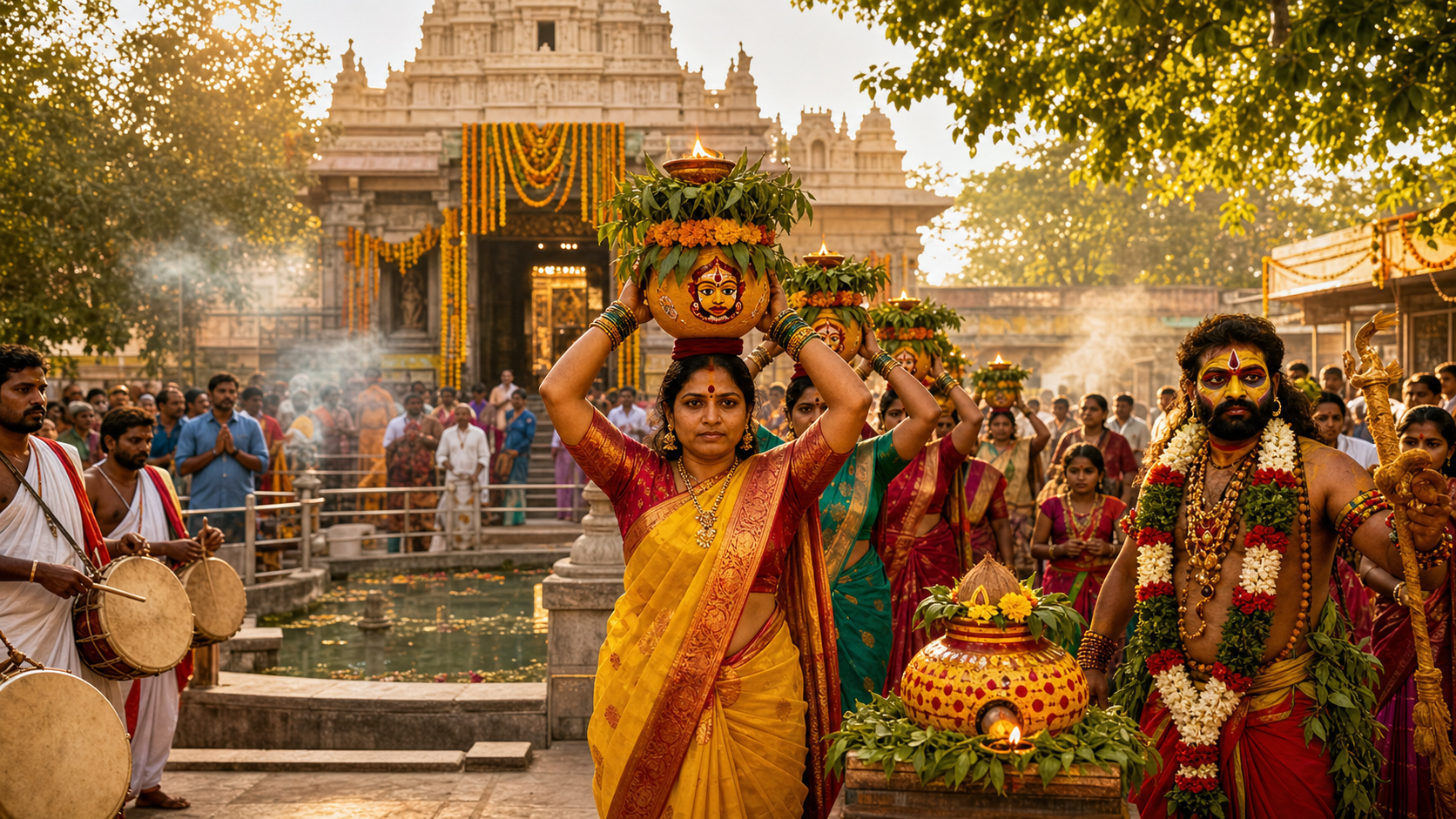
Balkampet Yellamma Temple near Ameerpet in Hyderabad occupies a distinctive place in Telangana’s sacred geography. The temple is closely associated with Goddess Yellamma, a regional and deeply beloved manifestation of Devi, Shakti, Parvati, and Renuka in the living devotional imagination of the Deccan. Among the annual observances connected with the temple, Bonalu remains the most visible and emotionally powerful festival, drawing devotees from Hyderabad, Secunderabad, and surrounding districts.
For 2026, the festival note places Bonalu at Balkampet Yellamma Temple on Sunday, August 9. In the local ritual sequence, the Balkampet observance is commonly connected with the broader Hyderabad Bonalu calendar and is traditionally held after the major Secunderabad Ujjaini Mahankali Bonalu celebrations. Because temple-specific timings, queue arrangements, traffic diversions, and darshan protocols may be adjusted by local authorities, devotees usually benefit from confirming the final schedule with the temple or Telangana endowments announcements closer to the date.
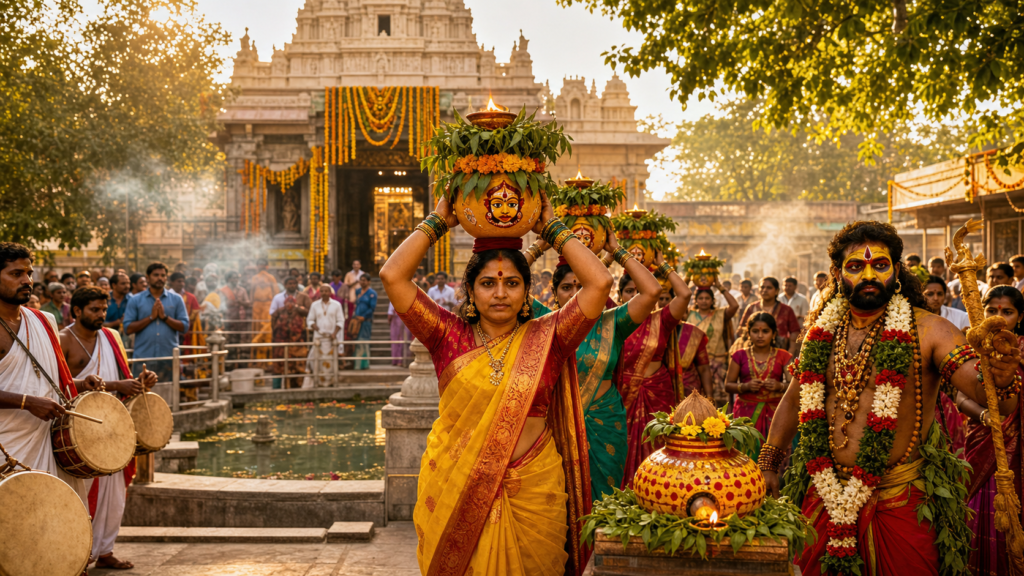
Bonalu is a major Telangana festival celebrated during Ashada Masam of the Telugu calendar, generally falling in July or August. Its ritual heart is the offering of bonam, a cooked food offering traditionally prepared with rice, milk, jaggery, and devotion. Women carry decorated pots, often adorned with turmeric, vermilion, neem leaves, and a lamp, to offer gratitude to the Mother Goddess. The act is not merely ceremonial; it represents thanksgiving, fulfillment of vows, protection of the household, and the continuing relationship between community and Devi.
At Balkampet, the devotional atmosphere becomes especially intense because the deity is revered as a powerful form of Yellamma. The temple is associated with the idea of a bhoogarbha swayambhu vigraham, with the presiding form situated below ground level. This feature gives the shrine a strong sense of sacred depth, as if the presence of the Goddess emerges from the earth itself. For many devotees, the descent toward the sanctum is experienced not only as physical movement but also as symbolic humility before the divine feminine.
The temple’s history is often traced to earlier centuries, with local accounts placing its sacred continuity as far back as the fifteenth century and its renovated form in 1919. Such historical memory matters because temples like Balkampet Yellamma Devasthanam are not only places of worship; they are repositories of regional identity, neighborhood continuity, ritual practice, and inherited forms of community organization. Their importance cannot be measured only by architecture or antiquity, but by the way they shape the annual rhythm of public devotion.
A notable feature of the Balkampet temple tradition is the sacred well associated with Sri Yellamma. Devotees regard its water as theertham and believe it carries healing significance. From an academic perspective, such beliefs reveal the layered relationship between sacred water, health, ritual purification, and temple-centered community life in Hindu practice. The well functions as both a physical feature of the temple complex and a symbol of renewal, cleansing, and divine grace.
Bonalu at Balkampet should also be understood within the larger framework of Shakti worship in Telangana. The festival honors the Goddess not as a distant abstraction but as a protective mother who stands close to the everyday anxieties of families, workers, traders, students, and elders. This is one reason Bonalu continues to feel immediate and personal across generations. The offerings, drums, processions, and devotional songs convert public streets into ritual space, making the city itself participate in worship.
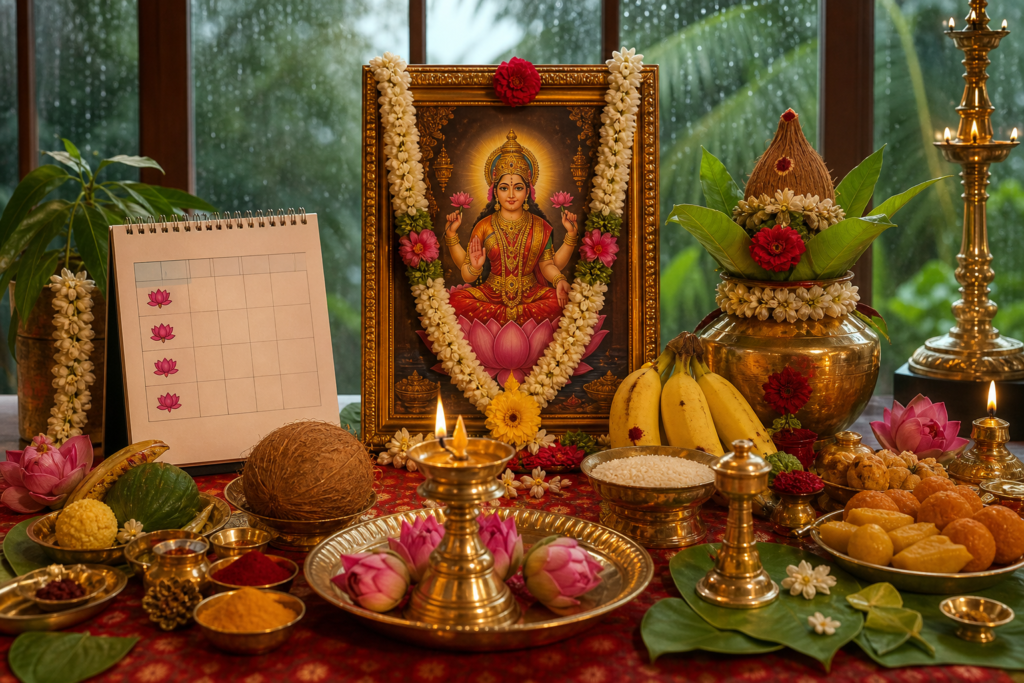
The symbolism of the bonam is technically rich. The pot represents containment, nourishment, and the body as a vessel of devotion. Rice and milk signify sustenance; jaggery adds sweetness and auspiciousness; turmeric and vermilion mark fertility, protection, and sacred power; neem is associated with healing and warding off affliction; the lamp signifies divine presence. When carried with discipline and reverence, the offering becomes a visible theology of gratitude.
Processional elements such as Ghatam and Pothuraju also form part of the wider Bonalu ritual culture in Hyderabad and Secunderabad. Ghatam, a decorated vessel representing the Goddess, is carried in procession and later immersed according to local practice. Pothuraju, popularly understood as the brother and guardian figure of the Goddess, embodies protection, energy, and the martial rhythm of the festival. These forms show how Bonalu integrates devotion, folk performance, embodied ritual, and public participation.
The experience of visiting Balkampet Yellamma Temple during Bonalu is often shaped by sensory density. Devotees encounter the fragrance of turmeric and flowers, the sound of drums and chants, the sight of decorated pots, the movement of queues, and the emotional intensity of families arriving with vows and gratitude. Such festivals demonstrate how Hindu ritual is learned through participation as much as through formal instruction. A child watching elders prepare the bonam absorbs theology through gesture, color, sound, and discipline.
From a cultural studies perspective, Bonalu is also a festival of urban belonging. Hyderabad is a modern technology, trade, education, and administrative hub, yet the festival reveals the continuing strength of local sacred traditions within city life. Balkampet, located near Ameerpet and connected to surrounding neighborhoods, becomes more than a locality during the festival. It becomes a devotional center where regional identity, public memory, and spiritual continuity converge.
The Telangana government has recognized Bonalu as a state festival, which has increased public visibility and administrative support for celebrations across Hyderabad and Secunderabad. This recognition reflects the importance of the festival as a shared cultural inheritance. At the same time, the essence of Bonalu remains rooted in household devotion, neighborhood participation, women’s ritual leadership, and the intimate act of offering food to the Mother Goddess.
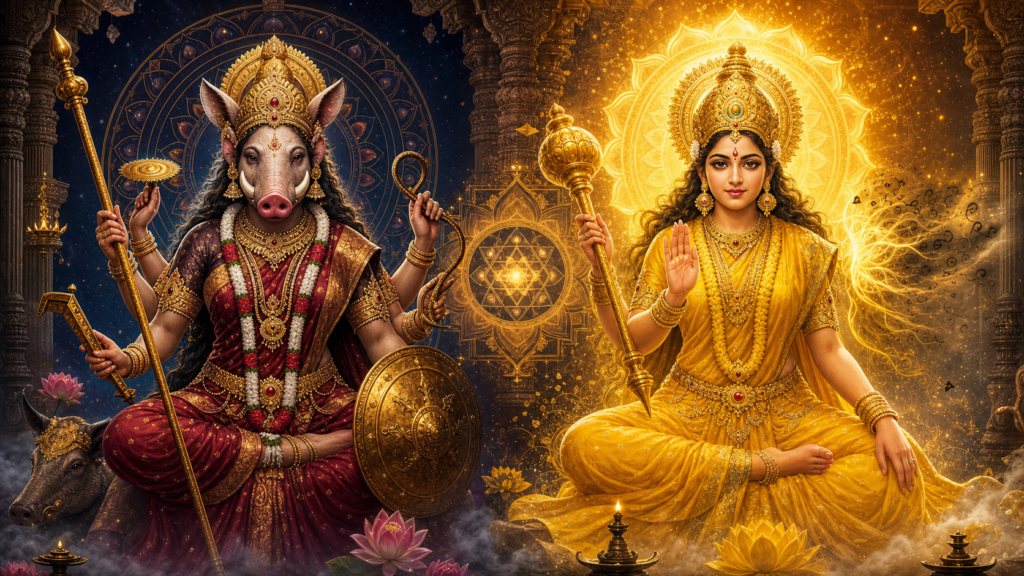
Balkampet Yellamma Temple also demonstrates the plural and localized nature of Hindu traditions. The Goddess is worshipped under many names across regions: Yellamma, Renuka, Mahankali, Pochamma, Mysamma, Peddamma, and other village and urban forms. These names do not fragment devotion; they reveal the capacity of Sanatana Dharma to honor the divine through many forms, languages, customs, and emotional relationships. Such diversity strengthens unity across dharmic traditions by allowing communities to preserve their inherited paths while recognizing a shared sacred vision.
For devotees planning to attend Bonalu at Balkampet Yellamma Temple in 2026, practical preparation is important. Large crowds are expected, especially on the main festival day. Visitors generally need to plan for early arrival, modest traditional dress, hydration, patience in queues, and respect for temple instructions. Those carrying offerings should follow local guidance on permitted materials, queue entry, and designated offering areas. Elderly devotees and families with children may need additional time because crowd movement can become slow near the temple.
The festival is best approached with both devotion and civic responsibility. Bonalu involves thousands of people, and its success depends on cooperation among devotees, temple staff, police, municipal workers, volunteers, and local residents. Keeping pathways clear, avoiding litter, respecting queue discipline, and following safety advisories are practical forms of seva. In a living temple tradition, public order and spiritual sincerity support one another.
The continued popularity of Balkampet Yellamma Temple shows how sacred institutions remain meaningful in contemporary urban India. The temple provides continuity in a rapidly changing city, while Bonalu gives devotees a structured way to express gratitude, fear, hope, healing, and belonging. Its power lies in the combination of ancient Shakti worship, local Telangana culture, women’s ritual agency, and the emotional immediacy of offering food to the divine mother.
In this sense, Bonalu at Balkampet Yellamma Temple is not only a festival date on the Hindu calendar. It is a public expression of devotion, a cultural archive of Telangana, and a reminder that dharmic traditions remain strongest when they unite ritual accuracy with compassion, community discipline, and reverence for diverse forms of the sacred. Source details were reviewed from HinduPad’s page on Balkampet Yellamma Temple Bonalu and broader reference material on Bonalu and the Balkampet Yellamma Temple tradition.
Inspired by this post on Hindu Pad.




Leave a Reply
You must be logged in to post a comment.