

Sant Dnyaneshwar Jayanti 2026 will be observed on September 4, marking the birth anniversary of Sant Dnyaneshwar Maharaj, one of the most influential saint-philosophers of Maharashtra and a foundational figure in the Varkari bhakti tradition. The observance is traditionally connected with Krishna Paksha Ashtami in Shravan Month according to the Shaka calendar followed in Maharashtra, though devotees often confirm the precise tithi and local timing through their regional panchang.
The significance of Sant Dnyaneshwar Jayanti cannot be understood only as a commemorative date. It is a remembrance of a remarkably short life that reshaped Marathi spiritual literature, widened access to the Bhagavad Gita, and gave ordinary devotees a language through which philosophy could become lived experience. Sant Dnyaneshwar, also revered as Jnaneshwar, Jnanadeva, Dnyandev, and Mauli, stands at the meeting point of scholarship, poetry, yoga, bhakti, and social compassion.
Historical tradition generally places Sant Dnyaneshwar’s life between 1275 CE and 1296 CE. He was born in Maharashtra, commonly associated with Apegaon near Paithan, and his samadhi is revered at Alandi near Pune. Although devotional traditions preserve many sacred narratives around his life, the date of composition of his great work, the Jnaneshwari or Dnyaneshwari, in 1290 CE is widely treated as historically significant. That single fact reveals the scale of his genius: still in his teens, he produced one of the most enduring works of Indian spiritual literature.
Sant Dnyaneshwar Jayanti is therefore not merely a birthday celebration; it is a study in how wisdom travels from elite spaces into the life of the people. The Dnyaneshwari, also known as Bhavartha Deepika, is a Marathi commentary on the Bhagavad Gita. Its importance lies not only in its philosophical depth but also in its linguistic choice. By presenting the Gita’s teachings in Marathi rather than restricting them to Sanskrit discourse, Dnyaneshwar made profound spiritual reflection available to farmers, householders, artisans, pilgrims, women, and village communities who lived far from scholastic institutions.
This vernacular achievement remains central to his legacy. In the cultural history of Maharashtra, the use of Marathi in sacred exposition was not a casual stylistic decision. It was a spiritual and social act. It suggested that divine knowledge was not the property of a narrow class, that the deepest questions of atman, dharma, yoga, devotion, and liberation could be discussed in the language of daily life. This remains one reason Dnyaneshwar continues to feel close to devotees even after more than seven centuries.
The Dnyaneshwari is composed in the ovi metre, a form rooted in the oral and musical culture of Maharashtra. Its structure helped philosophical teaching become recitable, memorable, and communal. The commentary follows the Bhagavad Gita, yet it expands the text into a vast spiritual reflection that draws upon Vedanta, Yoga, bhakti, ethical conduct, and practical self-discipline. It is often described as both a literary monument and a devotional guide, because it does not treat philosophy as abstraction alone. It presents knowledge as something that must transform conduct, perception, and relationship with the world.
Sant Dnyaneshwar’s other major work, Amrutanubhava, is regarded as a profound independent philosophical text. After composing Amrutanubhava, tradition records that Dnyaneshwar undertook a pilgrimage to northern India with Sant Namdev and other saints. This journey is important not only as a sacred itinerary but also as a symbol of the wider bhakti network that linked regional traditions across India. Devotion in this world was not isolated; it moved through songs, shared meals, pilgrim roads, temple spaces, and the companionship of saints.
The relationship between Sant Dnyaneshwar and Sant Namdev holds special importance in the Varkari memory. Namdev’s devotion to Vithoba and Dnyaneshwar’s philosophical brilliance together represent two complementary streams of bhakti: emotional surrender and contemplative insight. Their association also illustrates the dharmic principle that different temperaments can walk toward the same truth through different forms of practice. Such an outlook supports unity across Hindu traditions and offers a broader message relevant to Buddhist, Jain, and Sikh seekers as well: spiritual life deepens when knowledge, compassion, humility, and practice meet.
The Varkari tradition, in which Sant Dnyaneshwar occupies a central place, is rooted in devotion to Vithoba of Pandharpur, also lovingly addressed as Vitthal or Panduranga. Its devotional culture is marked by pilgrimage, abhang singing, remembrance of the divine name, humility, service, and reverence for saints such as Dnyaneshwar, Namdev, Eknath, Tukaram, Chokhamela, Janabai, Muktabai, and others. The tradition’s strength lies in its ability to bring metaphysical teaching into a disciplined yet accessible way of life.
For many devotees in Maharashtra, the word Mauli itself carries emotional force. It means mother, and its association with Dnyaneshwar reflects a devotional intimacy that goes beyond formal respect. A saint is not remembered only as a scholar or reformer but as a nurturing presence. The term expresses the feeling that wisdom can shelter, guide, and console. This emotional vocabulary is central to understanding why Dnyaneshwar Jayanti continues to be observed not only in temples and spiritual institutions but also in homes, study circles, kirtans, and community gatherings.
The technical calendar basis of Dnyaneshwar Jayanti also deserves attention. In the Hindu lunar calendar, a tithi is determined by the angular distance between the Sun and the Moon. Krishna Paksha refers to the waning fortnight, and Ashtami is the eighth lunar day. Shravan Month has particular devotional importance across many Hindu traditions, especially in Maharashtra. Because lunar observances depend on tithi timing and regional calendar conventions, the Gregorian date may shift each year. In 2026, the observance is given as September 4.
The connection with Krishna Paksha Ashtami also brings Dnyaneshwar Jayanti close to the devotional atmosphere surrounding Krishna Janmashtami in Maharashtra. This proximity is spiritually meaningful. Dnyaneshwar’s teachings are deeply shaped by the Bhagavad Gita, the dialogue of Sri Krishna and Arjuna. His commentary does not merely explain the Gita; it allows Krishna’s counsel to speak in the cultural voice of Marathi society. Thus, the date of the Jayanti carries both historical remembrance and theological resonance.
A careful reading of Sant Dnyaneshwar’s life shows that his spirituality was not detached from social suffering. Traditional accounts describe the hardships faced by his family, including exclusion and social humiliation. These narratives, even when viewed through a hagiographical lens, communicate an important ethical truth: Dnyaneshwar’s vision of unity did not emerge from comfort alone. It emerged from a life that understood vulnerability, rejection, and the need for compassion. This gives his philosophy a human warmth that purely theoretical systems often lack.
His siblings, Nivruttinath, Sopan, and Muktabai, are inseparable from his spiritual story. Nivruttinath is remembered as his guru, while Muktabai is honored as a saint in her own right. Their family tradition shows how spiritual authority in the bhakti movement could emerge through lived realization rather than institutional privilege alone. This is one reason Dnyaneshwar’s legacy has remained meaningful to communities seeking dignity, access, and inner freedom.
In philosophical terms, Sant Dnyaneshwar is often associated with Advaita Vedanta, yoga, and bhakti toward Vithoba. Yet his contribution cannot be reduced to a single doctrinal label. His writings speak of non-dual awareness while preserving the sweetness of devotion. They affirm the unity of reality while allowing the devotee to love the divine in a personal form. This combination is one of the great strengths of Hindu spirituality: the absolute may be contemplated as formless truth and adored as a beloved presence.
The famous sentiment associated with his teaching, या विश्वाचा आत्मा एक आहे, expresses this expansive vision. The statement points toward the unity of existence and the shared spiritual ground of all beings. In practical terms, such a vision challenges pride, harshness, sectarian arrogance, and social contempt. It encourages the devotee to see spiritual life not as competition between paths but as refinement of perception, conduct, and compassion.
This is where Sant Dnyaneshwar Jayanti becomes especially relevant for the present age. Modern society often separates knowledge from humility, identity from compassion, and religious practice from ethical responsibility. Dnyaneshwar’s legacy offers a corrective. Knowledge should soften the ego. Devotion should widen sympathy. Scriptural study should lead to service. Pilgrimage should cultivate patience. Speech should become truthful and gentle. These values remain practical, not merely devotional.
The annual remembrance also invites reflection on language and cultural preservation. Dnyaneshwar did not reject Sanskrit learning; rather, he carried its philosophical insights into Marathi without diminishing their seriousness. This model is important for all Indian languages today. When dharmic knowledge is taught in living languages, it enters the rhythm of family, memory, festival, song, and ethical instruction. Translation and vernacular expression become acts of preservation rather than dilution.
In Alandi, Sant Dnyaneshwar’s samadhi remains a major pilgrimage center. Devotees visit the sacred town on the banks of the Indrayani River, especially during significant Varkari observances. The Alandi to Pandharpur pilgrimage, in which the paduka of Sant Dnyaneshwar are ceremonially carried in the Palkhi, is one of Maharashtra’s most powerful expressions of collective devotion. The Wari is not only a march; it is a moving school of discipline, equality, music, endurance, and shared faith.
The Palkhi tradition helps explain why Dnyaneshwar remains a living presence in Maharashtra’s public culture. Pilgrims walk together across social and economic differences, singing the names of Vithoba and remembering the saints. The physical strain of the pilgrimage becomes a form of embodied theology. Feet, voice, memory, and community all participate in devotion. This kind of practice demonstrates that bhakti is not sentimentalism; it is organized discipline carried by love.
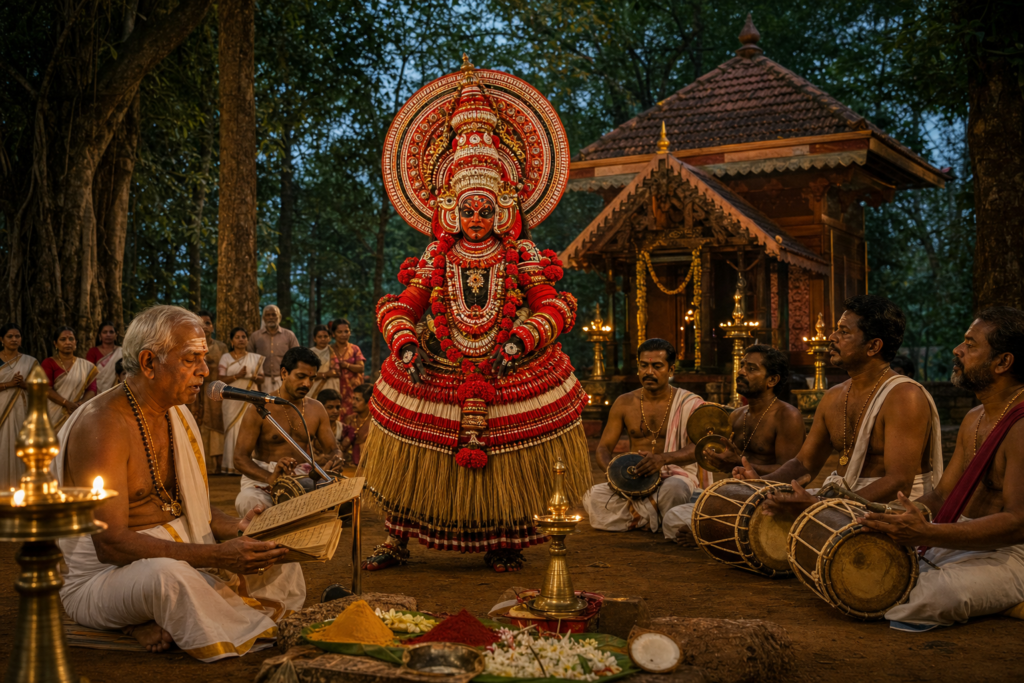
Observances of Sant Dnyaneshwar Jayanti commonly include reading from the Dnyaneshwari, recitation of Haripath, kirtan, bhajan, satsang, visits to temples, charitable service, and reflection on the teachings of the saint. In homes, the day may be marked with simple worship, lighting of a lamp, remembrance of Vithoba, and study of selected verses. In academic and cultural spaces, it provides an opportunity to examine Marathi literature, the Varkari movement, medieval Indian philosophy, and the democratization of sacred knowledge.
Haripath, traditionally associated with Sant Dnyaneshwar, remains especially important in devotional practice. Its abhangs emphasize remembrance of Hari, the value of divine name, and the transformation of ordinary life through devotion. The continued recitation of such compositions shows that spiritual literature survives most powerfully when it is sung, memorized, and woven into daily conduct. A text preserved only in libraries has one kind of life; a text carried on the lips of devotees has another.
From a literary perspective, Dnyaneshwar’s contribution to Marathi is immense. The Dnyaneshwari is not simply an early work; it is a formative work that helped shape the expressive capacity of the language. It demonstrated that Marathi could carry metaphysics, aesthetics, ethical counsel, emotional devotion, and public teaching. Later bhakti poets drew strength from this precedent. The connection from Dnyaneshwar to Eknath, Tukaram, and other saints is therefore both spiritual and literary.
From a philosophical perspective, his work shows how the Bhagavad Gita can be read as a guide to integrated life. Action, knowledge, devotion, restraint, and surrender are not treated as mutually exclusive. Human beings are not asked to flee responsibility but to purify intention. This interpretation remains valuable for householders, professionals, students, and community leaders who must live spiritually while participating in the world.
From a civilizational perspective, Sant Dnyaneshwar Jayanti affirms the dharmic capacity to honor plurality. The saint’s world included Sanskritic learning, Nath yogic influence, Varkari devotion, Krishna bhakti, Advaitic insight, and vernacular creativity. These were not experienced as contradictions but as mutually enriching streams. Such a model is vital for a blog dedicated to unity among Hinduism, Buddhism, Jainism, and Sikhism, because it emphasizes shared values: discipline, compassion, wisdom, self-transformation, and reverence for realized teachers.
Sant Dnyaneshwar’s life also offers a sober lesson about the relationship between youth and wisdom. Modern culture often assumes that age alone produces insight, yet Dnyaneshwar’s major works emerged when he was very young. This does not romanticize immaturity; rather, it shows that spiritual seriousness, disciplined guidance, and deep receptivity can accelerate inner growth. His example continues to inspire students and young seekers who want learning to be more than career preparation.
At the same time, Dnyaneshwar Jayanti should not be reduced to nostalgia. The best tribute to Sant Dnyaneshwar is not only admiration but assimilation. His teachings ask for a shift in how knowledge is used, how speech is purified, how difference is handled, and how devotion becomes service. A society that reads the Dnyaneshwari but ignores humility has missed the point. A devotee who chants but remains harsh has not fully heard the saint.
The emotional force of the Jayanti lies in this continuing relevance. Devotees remember a young saint who turned pain into poetry, philosophy into public wisdom, and devotion into a shared path. Scholars remember a writer who transformed Marathi literature. Pilgrims remember Mauli, whose presence is felt on the road to Pandharpur and in the sacred atmosphere of Alandi. Families remember a teacher whose words can still guide daily life.
On September 4, 2026, Sant Dnyaneshwar Jayanti will invite devotees to return to the essential questions: What is knowledge for? How should devotion shape conduct? How can language serve liberation? How can communities honor spiritual diversity while remaining rooted in dharma? Dnyaneshwar’s answer, preserved in literature, pilgrimage, and living memory, is that wisdom becomes complete only when it becomes compassionate.
Thus, Sant Dnyaneshwar Jayanti 2026 is both a sacred observance and an intellectual inheritance. It honors the birth of a saint who made the Bhagavad Gita sing in Marathi, strengthened the Varkari tradition, and left a vision of unity that continues to guide seekers. His life remains brief in years but vast in influence. For Maharashtra, for Hindu spirituality, and for the broader dharmic world, Sant Dnyaneshwar Maharaj remains a luminous example of knowledge joined with love.
Inspired by this post on Hindu Pad.






Leave a Reply
You must be logged in to post a comment.