
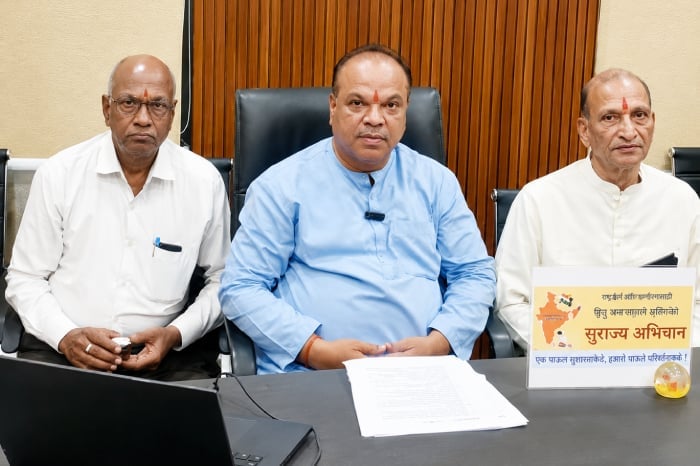
The allegation raised by Surajya Abhiyan over the condition of the Ujani reservoir and the Bhima river is not merely a local grievance. It points to a wider governance failure in which vital water bodies, meant to sustain drinking water, agriculture, fisheries, pilgrimage routes, and ecological life, are being described as “flowing poison” because pollution control measures have allegedly remained neglected despite judicial and human rights scrutiny.
The immediate concern is severe pollution in the Ujani reservoir and the Bhima river, both of which carry practical, economic, and cultural importance for Maharashtra and downstream regions. The Bhima river is a major tributary of the Krishna river, and the Ujani dam, also known as Bhima dam, is a large multipurpose reservoir associated with irrigation, drinking and industrial water supply, hydroelectric generation, and fisheries. When such a water system deteriorates, the damage is not confined to a single town or department; it travels through farms, households, markets, temples, village wells, and public health systems.
Surajya Abhiyan’s criticism is directed at administrative apathy. According to the complaint summarized in the source material, responsible departments have failed to act effectively even after direct orders from the Supreme Court and repeated reminders from the National Human Rights Commission. If this account is accurate, the issue moves beyond routine inefficiency and enters the domain of institutional non-compliance, where agencies entrusted with public welfare appear to have ignored the very mechanisms designed to protect citizens.
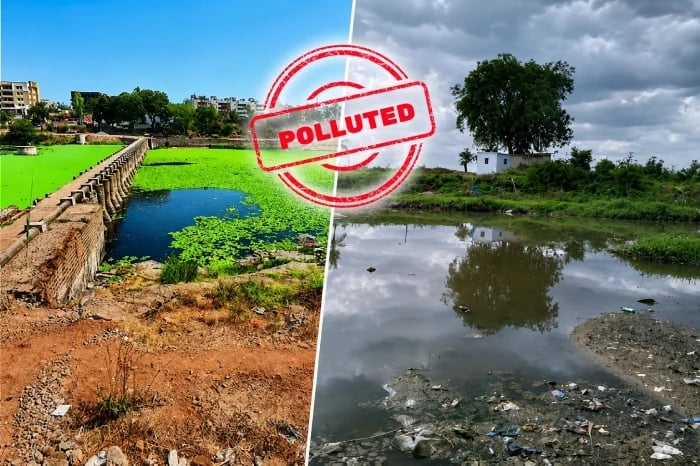
The phrase “flowing poison” is emotionally charged, but it captures a real technical danger when untreated sewage, industrial effluents, chemical residues, agricultural runoff, and solid waste enter a river system faster than natural dilution, treatment infrastructure, or enforcement can respond. In hydrological terms, a river is not an open drain; it is a living transport system. Once contaminants enter the flow, they can affect dissolved oxygen levels, microbial load, nutrient balance, sediment chemistry, aquatic biodiversity, and ultimately the safety of water used by human communities.
India already has a legal framework for this problem. The Central Pollution Control Board explains that the Water (Prevention and Control of Pollution) Act, 1974 was enacted for the prevention and control of water pollution and for maintaining or restoring the wholesomeness of water in the country: https://cpcb.nic.in/water-pollution/. This makes pollution control a statutory obligation, not an optional administrative preference.
Under this framework, pollution control boards, local bodies, irrigation departments, municipal authorities, and enforcement agencies cannot treat river pollution as someone else’s burden. The Water Act model assumes monitoring, consent regulation, prevention of unlawful discharge, sewage treatment, inspection, sampling, and corrective action. When these functions fail, the technical failure becomes a civic failure: citizens bear the health risk while institutions exchange files.
The human rights dimension is equally important. The National Human Rights Commission exists to protect rights connected with life, liberty, equality, and dignity under the constitutional and legal framework: https://nhrc.nic.in/. Polluted water directly affects dignity because it forces families to choose between unsafe water, expensive alternatives, delayed medical care, or migration from places they have long depended upon.
In Indian constitutional thinking, environmental protection has often been connected with the right to life under Article 21. Clean water is not a luxury within this understanding; it is an enabling condition for health, livelihood, and social stability. A village that receives contaminated water does not experience pollution as an abstract environmental metric. It experiences it as stomach illness, skin disease, loss of fish catch, damaged crops, distrust of public supply, and anxiety during every summer shortage.
The Ujani reservoir’s importance makes the problem sharper. Publicly available background information identifies Ujani as a major reservoir on the Bhima river, supporting irrigation, water supply, fisheries, and regional water management: https://en.wikipedia.org/wiki/Ujjani_Dam. While such background sources do not replace official field testing, they help establish why pollution here has a wider regional significance.
A technical reading of the crisis suggests that the core questions are measurable. How much untreated sewage enters the Bhima river system? Which municipalities, industrial units, drains, and settlements contribute to the load? Are sewage treatment plants installed, functional, under-capacity, or bypassed? Are effluent treatment plants inspected regularly? Are water quality readings published in a form citizens can understand? Are violations penalized, or are notices issued without follow-through?
These questions matter because administrative apathy often hides behind complexity. River pollution is rarely caused by one single pipe. It usually emerges from a chain of failures: weak town planning, inadequate sewage networks, non-functional treatment plants, illegal connections, poor solid waste handling, lax industrial monitoring, seasonal flow stress, and weak coordination between departments. A serious response must therefore be systemic rather than symbolic.
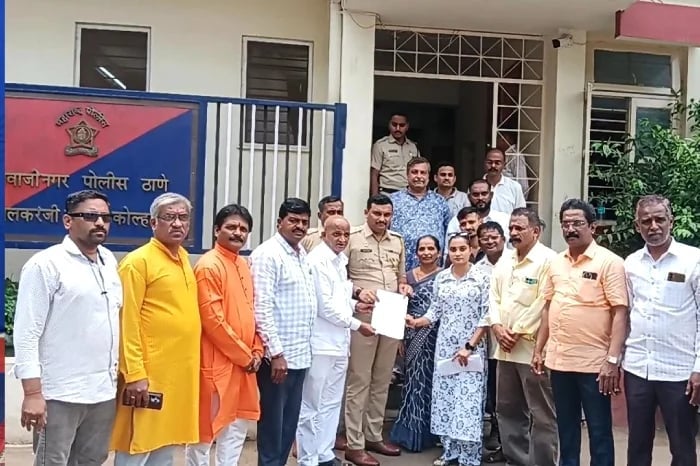
The alleged disregard of Supreme Court directions and NHRC reminders is particularly troubling because environmental governance depends on enforceable accountability. Court orders and commission reminders are meant to correct inertia. If departments can ignore them without consequences, the public message becomes corrosive: law exists on paper, but polluted water continues to flow through real lives.
There is also a social and civilisational dimension to this issue. Rivers in India are not treated only as physical channels of water. They are linked to memory, pilgrimage, agriculture, food, ritual, and shared community life across dharmic traditions. Hindu, Buddhist, Jain, and Sikh ethical traditions all contain strong ideas of restraint, stewardship, non-harm, reverence for life, and responsibility toward the wider ecosystem. Protecting a river is therefore not a narrow environmental campaign; it is a duty aligned with Dharma, public health, and intergenerational justice.
This does not mean that river protection should be reduced to sentiment. Sentiment without enforcement leaves the river polluted. The more responsible approach is to combine ecological reverence with scientific monitoring, legal compliance, transparent budgeting, and time-bound public works. Emotional attachment to rivers should strengthen evidence-based governance, not replace it.
The first practical requirement is transparent water quality data. Citizens should be able to see periodic readings for biochemical oxygen demand, chemical oxygen demand, dissolved oxygen, faecal coliform, heavy metals where relevant, pH, turbidity, ammonia, nitrates, phosphates, and other indicators. Without public data, pollution remains a rumor for some, a lived suffering for others, and an avoidable controversy for officials.

The second requirement is sewage accountability. Urban and peri-urban sewage is one of the most persistent threats to Indian rivers. Treatment plants must not exist only as infrastructure on paper. They must be mapped against actual sewage generation, connected to sewer networks, monitored for inflow and outflow quality, audited for downtime, and protected from political neglect after inauguration ceremonies are over.
The third requirement is industrial compliance. Any industrial discharge into the river basin must be traceable, consent-based, monitored, and penalized when it violates standards. Online monitoring can help, but technology is not a substitute for enforcement. If polluters learn that penalties are cheaper than compliance, pollution becomes a business cost and the river becomes the silent victim.
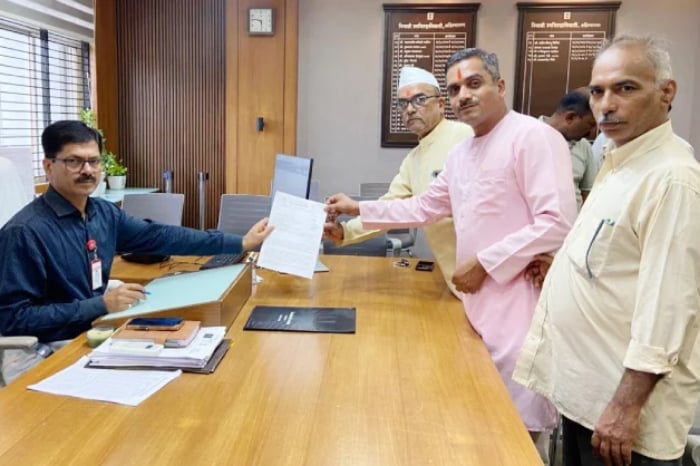
The fourth requirement is departmental coordination. River pollution cannot be solved if the irrigation department, municipal bodies, pollution control board, district administration, health department, and rural water supply agencies work in isolation. The river does not recognize bureaucratic boundaries. A basin-level command structure with clear responsibility, deadlines, published minutes, and escalation procedures is essential.
The fifth requirement is community participation. Farmers, fisherfolk, pilgrims, local residents, temple committees, civil society groups, and public health workers often notice pollution patterns before official reports do. Their observations should be converted into structured reporting channels rather than dismissed as agitation. Surajya Abhiyan’s intervention shows how civic pressure can force neglected environmental questions back into public debate.

At the same time, public debate must remain factual. Allegations should be tested through water samples, compliance records, inspection reports, and court filings. Administrative bodies deserve scrutiny, but scrutiny should be anchored in evidence. This protects the credibility of the environmental movement and prevents officials from dismissing legitimate concerns as exaggeration.
The public health implications deserve special emphasis. Contaminated water can increase the risk of gastrointestinal disease, skin infections, vector-related problems near stagnant polluted stretches, and long-term exposure concerns where chemical contaminants are present. Even when families boil water, not all contaminants are addressed. Safe water requires source protection, treatment, distribution integrity, and regular testing.
Agriculture also suffers when polluted water becomes normalized. Farmers may depend on available river or canal water even when quality is questionable. Over time, pollutants can affect soil quality, crop safety, livestock health, and market confidence. A reservoir that was meant to reduce scarcity and support rural prosperity cannot be allowed to become a carrier of hidden risk.
The moral issue is simple: those with the least power often pay the highest price for polluted rivers. Urban discharge may begin far upstream, but rural families, fisherfolk, and downstream settlements may face the consequences. Environmental injustice often looks like this: the benefits of urban growth are concentrated, while the waste is exported through water.
A credible restoration plan for the Ujani reservoir and Bhima river should therefore include a public pollution inventory, drain-wise action plans, treatment capacity audits, strict deadlines for sewage infrastructure, real-time monitoring where feasible, independent sampling, health surveillance in affected villages, and penalties for non-compliance. It should also include ecological restoration through wetlands, riparian buffers, desilting where scientifically justified, and protection of natural drainage channels.
The Supreme Court and NHRC references in the source material indicate that the issue has already crossed the threshold of ordinary complaint. Once constitutional courts and human rights institutions are involved, departments cannot plausibly claim ignorance. The question is no longer whether the problem exists in public discourse; the question is whether the state machinery will act with seriousness equal to the scale of the harm alleged.
Surajya Abhiyan’s charge should be read as a demand for accountable governance. It asks whether environmental law, court directions, and human rights reminders have practical force on the ground. It also asks whether the public can trust institutions to protect common resources before they become unfit for use.
The larger lesson is that clean rivers require disciplined administration, not occasional outrage. A river becomes polluted gradually, through repeated permissions, ignored violations, untreated flows, delayed projects, and weak monitoring. It is restored in the opposite way: through daily compliance, transparent data, honest budgets, scientific planning, and public accountability.
The Bhima river and Ujani reservoir must be treated as public trust resources. Their protection is an environmental duty, a governance test, a human rights obligation, and a cultural responsibility. If “flowing poison” is allowed to become the accepted condition of a major water system, the failure will not belong to one department alone. It will reflect a deeper erosion of public duty, one that citizens and institutions must correct before the damage becomes irreversible.
Inspired by this post on Hindu Jagruti Samiti.







Leave a Reply
You must be logged in to post a comment.