
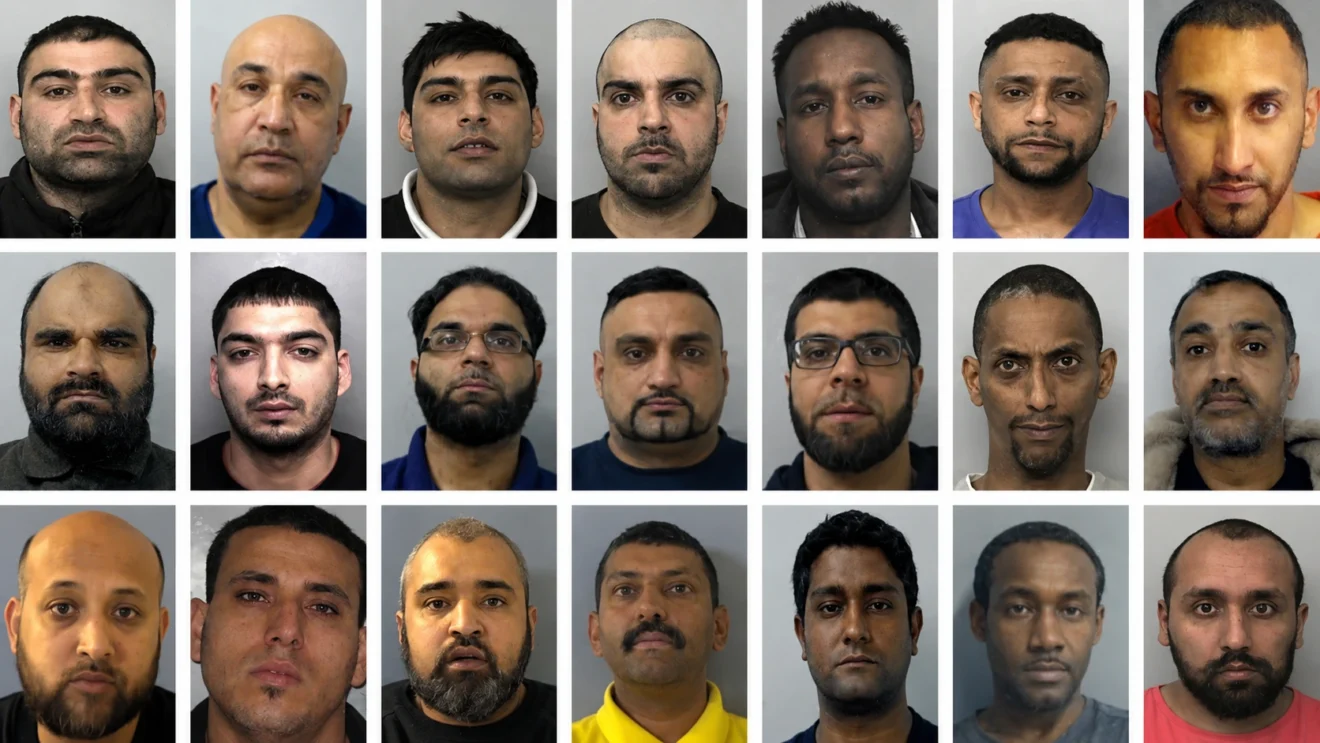
The controversy around Rupert Lowe’s Rape Gang Inquiry Report has reopened one of Britain’s most painful public questions: what happens when institutions become more afraid of appearing prejudiced than of failing children. The issue is not whether an entire ethnic or religious community should be blamed for the crimes of offenders. It must not be. The issue is whether police, councils, social workers, health services, politicians, and media institutions can describe reality accurately when the facts are socially uncomfortable.
A June 2026 article in The Dossier framed the matter sharply, citing Lowe’s report on the alleged systematic targeting of vulnerable girls in towns across Britain. The article focused on girls from working-class White British backgrounds and on offender groups described in several local cases as Pakistani, Asian, or Muslim. That framing has political force, but an academically responsible treatment must add two cautions: official reviews have repeatedly warned against collective blame, and the available national data remains too weak to support sweeping claims about all offenders, all victims, or all communities.
The verified public record is already grave enough without exaggeration. The 2014 Jay Report into Rotherham estimated that at least 1,400 children were sexually exploited between 1997 and 2013. Other high-profile cases in Rochdale, Telford, Oxford, Newcastle, Bristol, Derby, Halifax, and elsewhere showed recurring patterns of grooming, coercion, trafficking, rape, intimidation, and institutional delay. In several of these cases, convicted offender groups included men of Pakistani heritage or wider Asian backgrounds. In other cases, offenders came from different backgrounds. The safeguarding lesson is therefore precise: ethnicity, culture, locality, gender, age, occupation, and offender networks must be recorded honestly because all relevant risk factors matter.
The most important word in this debate is not race; it is child. A child cannot consent to exploitation. A child in care, a child with disabilities, a child from a chaotic home, a child looking for affection, or a child frightened into silence remains a child. Many survivors were wrongly treated as troublesome teenagers, unreliable witnesses, or participants in their own abuse. That institutional adultification of adolescent girls was one of the deepest failures identified across multiple reviews. It allowed predators to present coercion as romance and allowed professionals to downgrade abuse into lifestyle, risk-taking, or family dysfunction.
The 2025 National Audit on Group-based Child Sexual Exploitation and Abuse, led by Baroness Louise Casey, described group-based child sexual exploitation as a form of abuse involving multiple perpetrators coercing, manipulating, and deceiving children into sex. It identified repeated failures in information sharing, leadership, data quality, offender profiling, victim support, and criminal justice follow-through. Its data points were sobering: around 500,000 children a year are likely to experience some form of child sexual abuse; police recorded just over 100,000 child sexual abuse and exploitation offences in 2024; about 17,100 contact offences were flagged as child sexual exploitation; and a new police dataset identified around 700 recorded group-based child sexual exploitation offences in 2023. The audit stressed that these figures almost certainly understate reality because reporting and recording remain incomplete.
The technical problem is partly definitional. Terms such as child sexual abuse, child sexual exploitation, group-based exploitation, organised abuse, street grooming, gang abuse, trafficking, and online exploitation are not always used consistently across police forces, councils, schools, health bodies, and courts. When each agency stores information differently, a child’s risk profile becomes fragmented. One service may record truancy, another sexually transmitted infection, another missing episodes, another taxi-related intelligence, and another suspected criminal exploitation. Without shared identifiers and interoperable systems, the pattern remains invisible until the abuse has hardened into an organised case file.
The ethnic-data problem is equally serious. The 2020 Home Office paper on group-based child sexual exploitation characteristics of offending stated that the evidence on offender ethnicity was limited and often poor in quality. It noted that some high-profile cases involved mainly men of Pakistani ethnicity, while some research found group-based CSE offenders most commonly White and other studies suggested over-representation of Asian and Black offenders in particular samples. Its careful conclusion was that no one community or culture is uniquely predisposed to offending, but local agencies should not ignore cultural characteristics where they are relevant to a real offender group.
Casey’s 2025 audit sharpened this point. It found that ethnicity of perpetrators was still not recorded for two-thirds of perpetrators in relevant data, making national conclusions unreliable. It also said there was enough evidence from local police data and from major prosecutions involving men from Asian ethnic backgrounds to warrant closer examination. That is the balance Britain avoided for too long: refusing collective suspicion while also refusing institutional blindness. Honest data protects children and protects innocent communities from rumour, political manipulation, and retaliatory hatred.
The phrase ‘fear of looking racist’ therefore requires careful handling. Anti-racism, properly understood, protects equal dignity and equal justice. It does not require silence about offenders, victims, patterns, or institutional failure. When public officials suppress relevant information because they fear reputational damage, community tension, media criticism, or political backlash, they do not practice tolerance. They abandon the vulnerable. The result is a civic inversion in which adults protect the image of institutions while children carry the cost.
The survivor accounts cited in Lowe’s report, including those attributed to Chloe and Fiona, fit a wider pattern described in prior inquiries: families reported missing children, named suspected men, warned authorities about organised targeting, and often felt dismissed. The specific quotation attributed to a police call handler in Fiona’s case should be treated as an allegation unless independently verified, but the broader theme is consistent with documented failures elsewhere. Families were sometimes reprimanded for the language they used, while immediate safeguarding action lagged behind. A system designed to protect children became preoccupied with managing speech.

The headline figure of 250,000 girls, circulated in relation to Lowe’s report, must also be approached with methodological discipline. It is not the same as an official national count of confirmed grooming-gang victims. At the same time, official sources admit that child sexual exploitation is deeply under-reported and poorly captured. The correct conclusion is neither complacency nor sensationalism. Britain lacks reliable, complete, comparable national data on group-based child sexual exploitation, and that failure itself is a public scandal.
Media behaviour matters because public attention influences institutional courage. When coverage becomes selective, euphemistic, or factional, survivors experience another form of erasure. Yet media criticism should also be precise. The problem is not that every newsroom must amplify every political report in the same tone. The problem is that child protection should not depend on whether facts are convenient for a preferred ideological narrative. A credible press must be able to say that offenders in a particular case came from a particular background while also saying that innocent people from that background bear no guilt.
The governance failures exposed by these cases were multi-agency failures. Police missed patterns, councils mishandled risk, children’s services lacked grip, schools and health services did not always connect warning signs, licensing systems failed to control transport-related risks, and political leaders often preferred reassurance over scrutiny. Casey’s audit recommended stronger law, better data collection, improved inter-agency information sharing, review of past cases, a more serious organised-crime approach to exploitation, stronger taxi licensing, and research into social drivers of group-based abuse. The government’s response accepted the need for major reform and a statutory inquiry.
By June 2026, the new national inquiry chaired by Baroness Anne Longfield had begun focusing on areas including London, Oldham, Bradford, and Keighley. That inquiry will matter only if it avoids the old cycle of outrage, report, recommendation, drift, and forgetting. Britain has already produced reviews, parliamentary debates, local inquiries, audits, police operations, and national strategies. Survivors do not need another archive of apologies. They need prosecutions where evidence supports them, expunging of unjust convictions linked to exploitation, trauma-informed support, institutional accountability, and measurable safeguarding reform.
There is a deeper social lesson here for plural societies everywhere. Multiculturalism cannot mean the suspension of moral judgment. Secular governance cannot mean fear of naming criminal patterns. Community harmony cannot mean protecting adult sensitivities while children are harmed. Equally, justice cannot mean turning the crimes of some men into suspicion toward millions of law-abiding people. A mature society must hold two truths together: offenders must be named accurately, and communities must not be demonised collectively.
For readers shaped by Dharmic traditions, this distinction is not abstract. Hindu, Buddhist, Jain, and Sikh ethical traditions all place weight, in different ways, on truthfulness, protection of the vulnerable, restraint from hatred, and responsibility for social order. A Dharmic civic response would reject both cowardice and collective vengeance. It would insist on satya, truthful naming of facts; ahimsa, refusal to punish innocents; and dharma, the duty to protect those without power. That ethical frame is especially relevant when public debate becomes heated, tribal, and easily exploited.
The British grooming-gang scandal is therefore not only a criminal-justice issue. It is a test of institutional truthfulness. A state that cannot record ethnicity accurately cannot understand offender networks. A police force that cannot treat missing girls as urgent safeguarding cases cannot claim child-centred practice. A council that fears reputational harm more than abuse has misunderstood public service. A media culture that turns victims into ideological props has failed journalism. A political class that notices children only when the issue becomes electorally useful has failed moral leadership.
The path forward is demanding but clear. Britain needs reliable national data, local threat profiles, mandatory recording of relevant suspect and victim information, serious organised-crime methods for group exploitation, specialist survivor support, strict accountability for agencies that ignored warnings, and a public language capable of precision without hatred. The fear of looking racist did real damage when it discouraged adults from naming patterns that could have helped protect children. The cure is not racial suspicion. The cure is disciplined truth, equal justice, and an uncompromising commitment to every child’s safety.
Inspired by this post on Hindu Post.







Leave a Reply
You must be logged in to post a comment.