
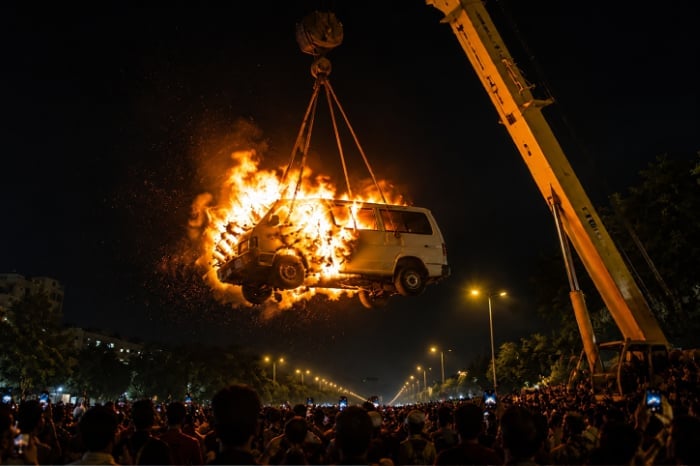
The incident reported from Badnagar in Ujjain district has become a serious case study in how public religious processions, symbolic display, crowd behaviour, and public safety can intersect in a volatile manner. According to media reports, a four-wheeled vehicle was lifted nearly 40 feet into the air with the help of a crane during a Moharram, or Muharram, procession on 23 June 2026 and was then blown up using firecrackers. The video of the stunt circulated widely, drawing public outrage, administrative attention, and concern about the safety of bystanders.
The most immediate concern was not merely the spectacle itself, but the engineering and safety risk involved. A vehicle suspended from a crane above or near a crowd creates multiple hazards: cable failure, structural imbalance, falling debris, blast shock, fire spread, panic movement, and secondary injuries in a crowded street environment. Even when firecrackers are used instead of industrial explosives, the public-risk profile remains significant because the blast is uncontrolled, the debris path is uncertain, and crowd density can make emergency response difficult.
Reports state that the vehicle carried a provocative banner reading “Look, we have returned”. This phrase has been interpreted by some local voices as an attempt to send an intimidating message to Hindus. That allegation requires careful handling: it should be recorded as an allegation and a public perception, not treated as a judicial finding. In a sensitive social environment, the difference between fact, interpretation, and accusation matters because careless language can deepen mistrust rather than support accountability.
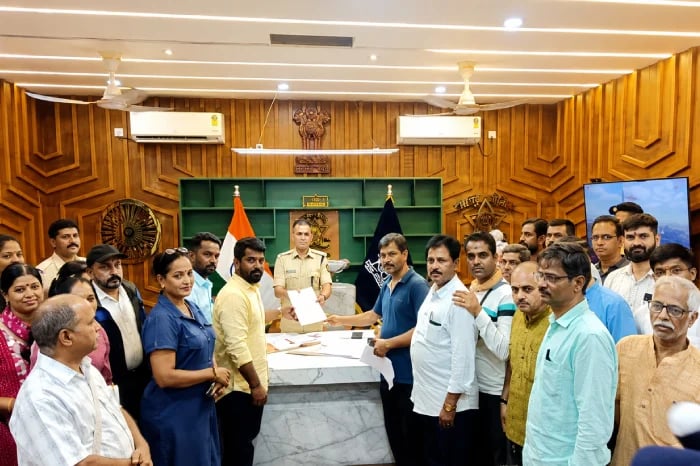
Police action reportedly followed after the video went viral, with four youths booked in connection with the stunt for endangering public safety and related offences. This administrative response is important because public order is not only about preventing direct violence; it is also about preventing reckless displays that can trigger fear, panic, retaliatory sentiment, or communal suspicion. A responsible investigation should examine permissions, the role of organisers, the crane operator, the source of firecrackers, the route conditions, and whether any official safety protocols were ignored.
From a civic perspective, the Badnagar incident raises a broader question about the regulation of religious processions in India. Processions are deeply embedded in the public life of many communities, including Hindu, Buddhist, Jain, Sikh, and Muslim communities. They can express grief, devotion, remembrance, identity, and collective discipline. Yet when spectacle overtakes restraint, the spiritual or commemorative purpose of a procession can be overshadowed by competitive display, public provocation, and avoidable risk.
Moharram has a distinct religious and historical meaning for many Muslims, especially as a period associated with the remembrance of Karbala and the martyrdom of Imam Hussain. In many Indian towns, it has also developed layered local traditions, with participation, observation, and shared cultural memory varying by region. That context should not be erased. At the same time, any public observance, regardless of community, must remain within the boundaries of law, safety, and respect for neighbours.
The reported banner is central to why the episode provoked such strong reactions. Public messaging during a procession is never neutral when it is displayed in a charged setting. Words, slogans, music, route choices, and visual symbols can either reassure surrounding communities or create apprehension. If a phrase is understood locally as triumphalist, threatening, or targeted, the burden falls on organisers and authorities to address the concern promptly and transparently.
For Hindu residents and organisations who felt alarmed, the concern appears to be not only the physical blast but the possible meaning attached to it. In public life, fear is often shaped by symbols as much as by physical danger. A suspended vehicle exploding over a procession route, combined with a provocative line, can be perceived as a performance of dominance even if the accused later claim that it was intended only as a dramatic stunt. That gap between intention and public perception is precisely why civic restraint is essential.
At the same time, public response must avoid collective blame. Accountability should be directed toward the specific individuals, organisers, equipment providers, and decision-makers involved in the act. A dharmic and civilisational approach to public order requires justice without indiscriminate hostility. Hindu society has long preserved the principle that firmness in defending public safety can coexist with discipline, restraint, and respect for lawful process.
The technical failure in this case lies in the apparent absence of a basic risk assessment. Any event using cranes, suspended loads, firecrackers, loud sound, dense crowds, and public roads should require a documented safety plan. That plan should include load certification, operator licensing, blast exclusion zones, fire-control measures, emergency medical access, police barricading, crowd movement planning, and route-level permissions. Without these safeguards, a public procession can quickly become a preventable disaster zone.
The incident also illustrates the role of viral video in contemporary public order. A local act, once recorded and distributed online, can become a regional or national controversy within hours. This can help expose dangerous behaviour and compel official action, but it can also amplify anger before facts are complete. Responsible public discussion therefore requires two commitments at once: demanding enforcement and refusing exaggeration.
For administrators, the lesson is straightforward. Permission for processions cannot be treated as a routine paperwork exercise. Authorities must evaluate the nature of props, sound systems, vehicles, cranes, pyrotechnics, slogans, and crowd estimates in advance. If an event involves symbolic material likely to inflame communal sentiment, preventive dialogue with organisers becomes necessary. If an event involves dangerous machinery or explosives, strict prohibition or controlled professional supervision should be mandatory.
For community leaders, the responsibility is equally serious. Religious and cultural events draw legitimacy from self-discipline. When organisers permit reckless displays, they risk harming their own community’s credibility and disturbing relations with neighbours. A procession should not become a platform for intimidation, competitive aggression, or performative lawlessness. Public faith traditions are strongest when they demonstrate dignity under visibility.
For ordinary citizens, the incident is a reminder that communal harmony is not maintained only through slogans of peace. It is maintained through everyday enforcement of shared norms: no threatening banners, no dangerous stunts, no illegal explosions, no obstruction of emergency routes, and no attempt to humiliate another community. These rules protect everyone. They protect Hindu processions, Sikh nagar kirtans, Jain yatras, Buddhist gatherings, and Muslim observances alike.
The Badnagar case should therefore be understood as a public safety issue, a governance issue, and a social trust issue. The law must determine culpability based on evidence. The administration must clarify how such a stunt was allowed to occur. Community voices must insist that religious observance cannot be used as a cover for intimidation or unsafe spectacle. That balanced approach is the only way to protect both public order and the dignity of India’s diverse religious life.
The strongest response is not anger without discipline, but accountability with clarity. If the allegations of intimidation are substantiated, they should be addressed under appropriate law. If the main offence is reckless endangerment, that too deserves firm action. In either case, the message from civil society should be consistent: public roads are shared spaces, religious processions carry public responsibility, and no community’s sacred observance should be distorted into fear, provocation, or danger.
Contemporaneous reports referenced for factual context include coverage by The Times of India on the Ujjain van stunt and Navbharat Times reporting on the 23 June 2026 video and police action.
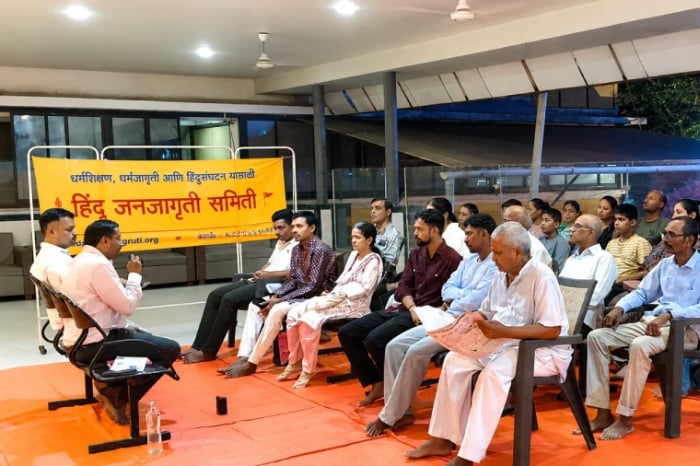
Inspired by this post on Hindu Jagruti Samiti.




Leave a Reply
You must be logged in to post a comment.