
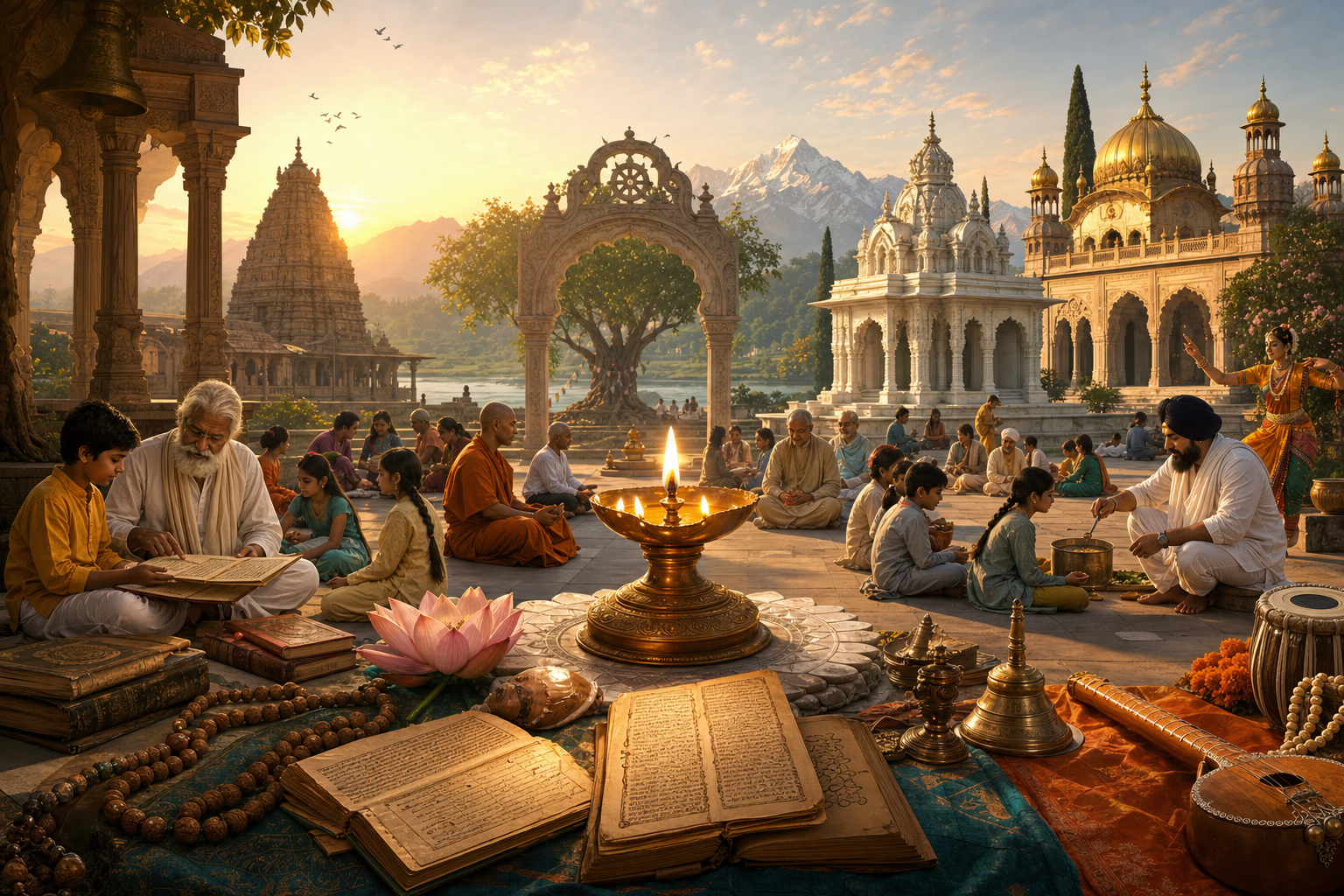
The survival of Vedic revelations across many centuries is not merely a matter of historical endurance; it is evidence of a civilizational framework that continued to speak to both material and spiritual needs. A culture remains alive when it offers meaning, discipline, ethical orientation, social cohesion, intellectual inquiry, and practical guidance for ordinary life. In that sense, Vedic culture and the wider Dharmic traditions of Hinduism, Buddhism, Jainism, and Sikhism represent more than inherited customs. They form a living knowledge system through which communities have understood the self, society, nature, duty, liberation, and the relationship between human action and cosmic order.
The question of why culture should be preserved is often misunderstood. Preservation does not mean freezing society in an earlier century, nor does it require uncritical acceptance of every historical practice. It means protecting the core principles, texts, languages, arts, rituals, values, and institutions that allow a civilization to renew itself without losing its identity. A society that loses contact with its cultural memory becomes dependent on borrowed frameworks for interpreting its own experience. A society that understands its cultural inheritance can engage modernity with confidence, discrimination, and dignity.
Vedic and Dharmic culture has endured because it was never limited to a narrow ritual system. It preserved methods of inquiry, disciplined transmission, philosophical debate, poetic expression, social ethics, ecological sensitivity, and practices of inner refinement. The Vedas, Upanishads, Itihasas, Puranas, Agamas, philosophical darshanas, bhakti literature, Buddhist sutras, Jain agamas, Sikh bani, and countless regional traditions together demonstrate a remarkable civilizational capacity: the ability to hold unity and diversity at the same time. This is why cultural preservation in the Indian context must be understood as the preservation of plurality, not uniformity.
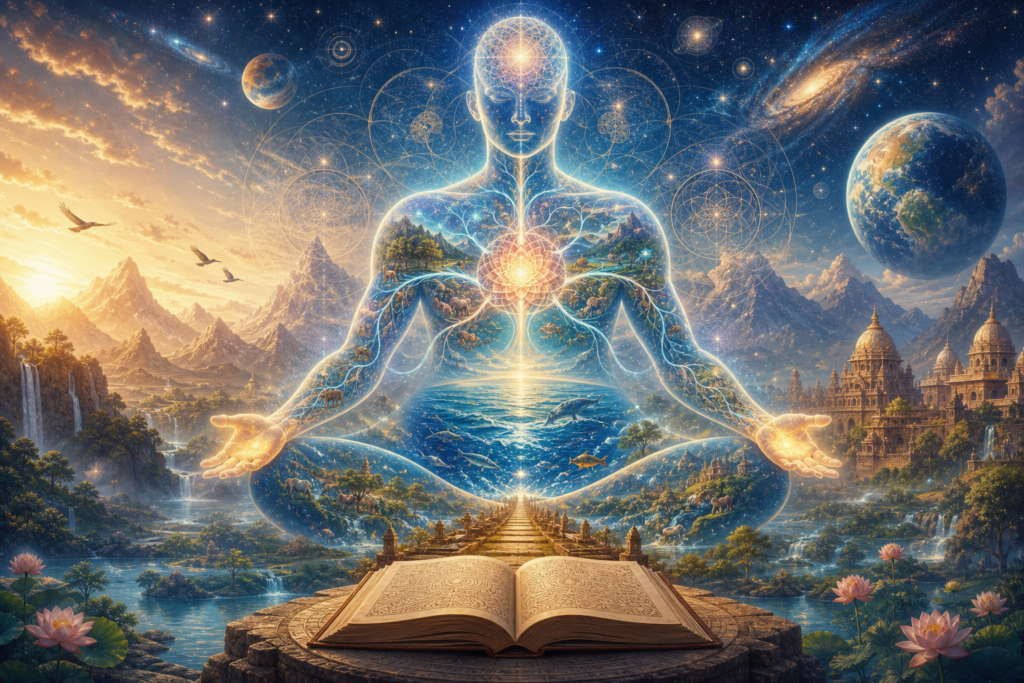
One of the most significant features of Vedic wisdom is its integration of the visible and the invisible dimensions of life. Human beings are not treated merely as economic units, political subjects, or biological organisms. They are moral, intellectual, emotional, social, and spiritual beings. The pursuit of artha and kama is placed within the regulating framework of dharma, while moksha offers a higher horizon for human aspiration. This fourfold vision prevents life from collapsing into either material indulgence or world-denying abstraction. It gives society a balanced grammar for responsibility, prosperity, restraint, and liberation.
Institutions that study ancient Indian scriptures have repeatedly encountered a wide range of knowledge embedded in these traditions. The material includes metaphysics, grammar, phonetics, astronomy, mathematics, medicine, polity, ethics, aesthetics, music, ritual science, ecology, psychology, and contemplative practice. The point is not to claim that every modern discipline is already complete in ancient texts. Such exaggeration weakens serious scholarship. The stronger and more accurate claim is that Indian knowledge traditions developed sophisticated methods of observation, classification, reasoning, memorization, debate, and practice, many of which remain worthy of careful study.
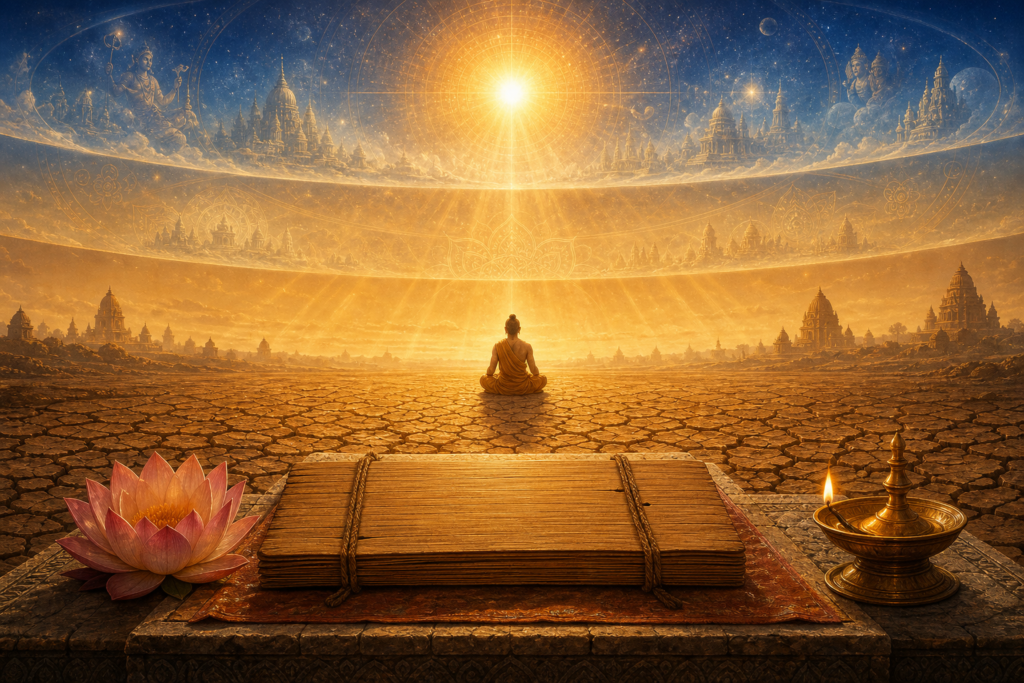
The oral preservation of the Vedas is one of the most technically impressive achievements in world intellectual history. Complex recitation methods such as pada, krama, jata, and ghana were designed to preserve sound, sequence, accent, and meaning with extraordinary precision. This was not casual memorization. It was a disciplined technology of transmission, supported by years of training, teacher-student accountability, phonetic science, and community reverence. When such practices are preserved, society preserves not only sacred sound but also a model of concentration, fidelity, humility, and intellectual rigor.
Culture also carries ethical memory. Concepts such as dharma, ahimsa, satya, seva, aparigraha, karuna, tyaga, shraddha, and lokasangraha have shaped moral imagination across Dharmic traditions. Hinduism, Buddhism, Jainism, and Sikhism differ in theology, metaphysics, ritual practice, and historical development, yet they share a deep concern for self-discipline, compassion, truthfulness, non-harm, service, and liberation from ego-centered existence. Preserving culture therefore supports ethical continuity. It allows each generation to inherit not only stories and ceremonies but also tested ways of asking what kind of human being one ought to become.
The emotional importance of cultural preservation can be observed in everyday life. A festival lamp lit at dusk, a grandparent reciting a story from the Ramayana or Mahabharata, a child learning a mantra, a family visiting a temple, a community sharing langar, a Jain household practicing restraint, or a Buddhist practitioner cultivating mindfulness all reveal how culture enters the body before it becomes a theory. These practices create belonging. They teach continuity without requiring lengthy explanation. They remind individuals that they are part of a lineage of memory, responsibility, and hope.
Language is central to this preservation. Sanskrit, Pali, Prakrit, Tamil, Kannada, Telugu, Bengali, Punjabi, Marathi, Odia, Assamese, Malayalam, Gujarati, Hindi, and many other languages have carried Dharmic philosophy, poetry, liturgy, law, music, and regional memory. When languages weaken, entire worlds of nuance become inaccessible. Translation is valuable and necessary, especially in a global age, but translation alone cannot replace the subtlety of inherited vocabulary. Terms such as dharma, karma, atman, shunyata, ahimsa, seva, bhakti, jnana, yoga, and moksha cannot be fully reduced to single English equivalents. Preserving culture therefore requires preserving linguistic depth.
Rituals also deserve a more careful interpretation than they often receive. In a shallow reading, rituals may appear to be repetitive gestures. In a deeper reading, they train attention, sanctify time, structure family life, align the individual with community memory, and give form to gratitude. Lighting a lamp, offering water, chanting, circumambulation, fasting, pilgrimage, meditation, kirtan, dana, vrata, and collective worship are embodied forms of philosophy. They translate abstract values into disciplined action. When performed with understanding, rituals become educational instruments rather than mechanical habits.
Preserving culture also strengthens social resilience. Communities with living traditions possess shared symbols, shared calendars, shared stories, and shared modes of service. These become especially important during crisis. Temples, gurudwaras, monasteries, mathas, pathshalas, community halls, and cultural associations have historically provided education, food, shelter, dispute resolution, artistic training, and moral guidance. In modern societies marked by loneliness, fragmentation, consumerism, and rapid technological change, such institutions can provide continuity and social trust when they remain inclusive, accountable, and ethically grounded.
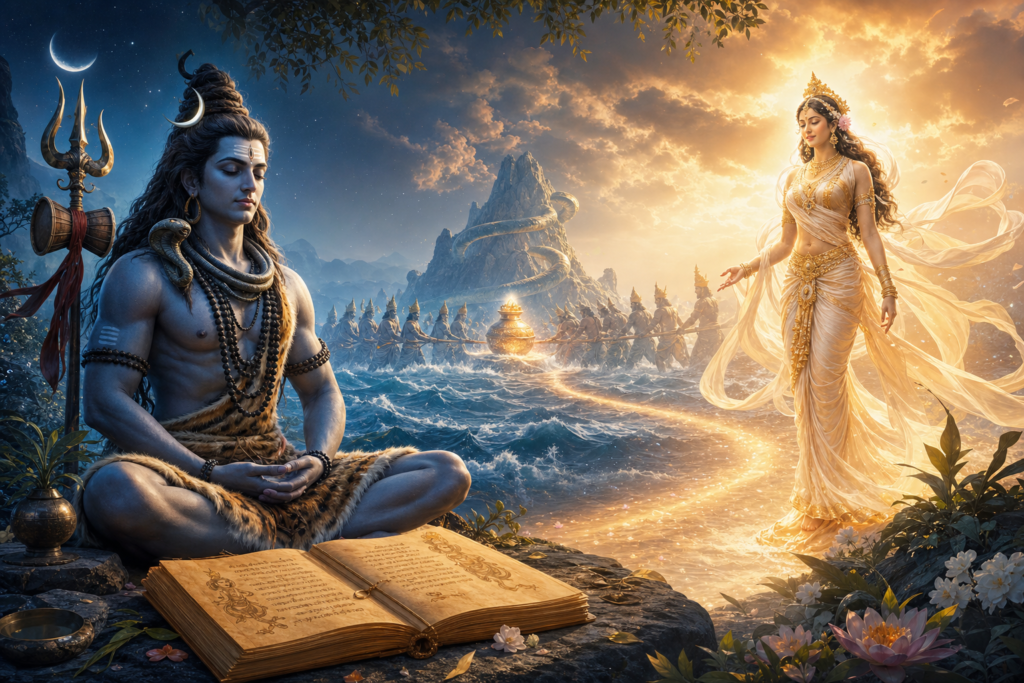
The preservation of Dharmic culture is also inseparable from the preservation of philosophical diversity. Indian civilization produced multiple schools of thought: Advaita, Vishishtadvaita, Dvaita, Samkhya, Yoga, Nyaya, Vaisheshika, Mimamsa, Buddhist traditions, Jain philosophy, Sikh theology, Shaiva, Shakta, Vaishnava, Smarta, and many regional sampradayas. These traditions debated vigorously, disagreed deeply, and yet contributed to a shared intellectual ecosystem. Such diversity is not a weakness. It is a civilizational strength. It teaches that truth can be approached through disciplined inquiry, experience, devotion, reason, ethics, and contemplation.
This point is especially important for unity among Dharmic traditions. Cultural preservation must not become a project of narrow identity or sectarian competition. Hindu, Buddhist, Jain, and Sikh traditions each possess distinct sacred histories and theological frameworks, but they also share civilizational conversations, ethical vocabularies, geographic memories, pilgrimage cultures, artistic forms, and philosophical concerns. A mature approach honors difference without hostility. It recognizes that Dharmic unity is not sameness; it is respectful coexistence rooted in shared civilizational soil and mutual commitment to truth, compassion, discipline, and liberation.
Culture also preserves ecological wisdom. Many Indian traditions view rivers, mountains, forests, animals, plants, seasons, and agricultural cycles as sacred or morally significant. This does not mean every historical practice was ecologically perfect, but it does mean that the cultural imagination resisted a purely extractive view of nature. Sacred groves, river reverence, cow protection, tree worship, seasonal festivals, fasting disciplines, and pilgrimage geography helped cultivate an awareness that human life is embedded in a larger order. In an age of climate anxiety and ecological degradation, such cultural memory has renewed relevance.
Artistic preservation is another essential dimension. Classical dance, temple architecture, sculpture, music, textile traditions, painting, storytelling, theatre, folk songs, martial arts, and festival crafts encode theology, history, community identity, and technical excellence. Bharatanatyam, Kathak, Odissi, Kuchipudi, Yakshagana, Sattriya, Carnatic music, Hindustani music, kirtan, bhajan, shabad, Buddhist art, Jain manuscript painting, and temple sculpture are not decorative leftovers from the past. They are knowledge systems in aesthetic form. To preserve them is to preserve ways of seeing, listening, moving, remembering, and worshipping.
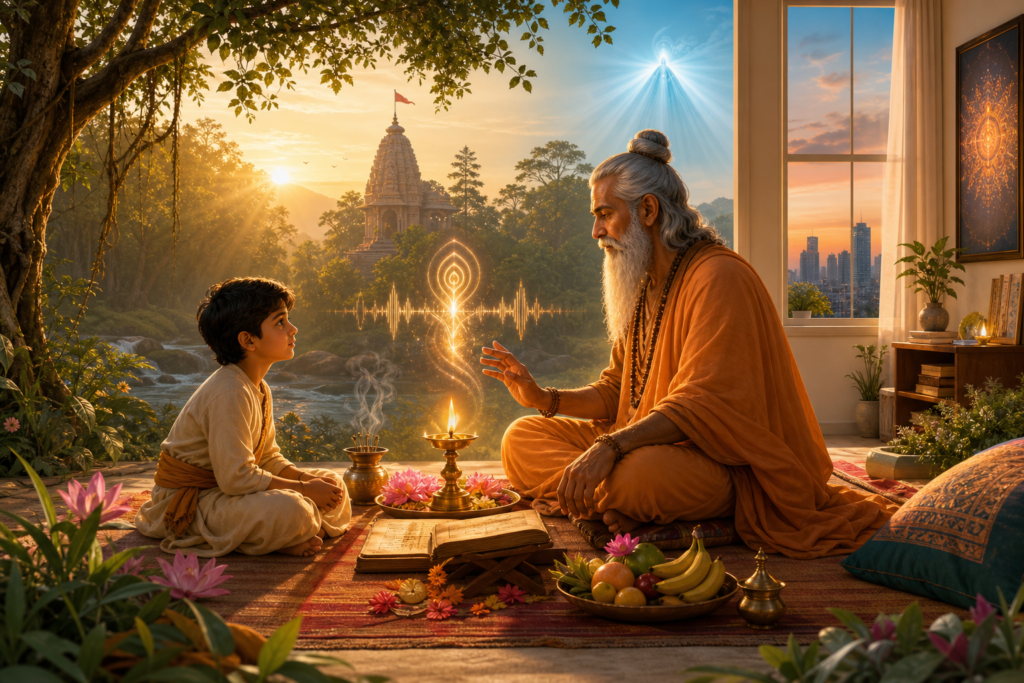
At the same time, preservation requires discernment. No living culture can survive by merely repeating forms after their meaning has been forgotten. Education is therefore crucial. Children and young adults should not be asked only to obey inherited practices; they should be helped to understand them. Why is a mantra recited? Why is a festival observed? Why is food offered before eating? Why is non-harm considered a high virtue? Why do different traditions emphasize different paths? When cultural education welcomes inquiry, tradition becomes intelligent rather than authoritarian.
Modern technology can support this effort when used responsibly. Digital archives, manuscript preservation, online classes, language tools, virtual lectures, documentary projects, podcasts, searchable databases, and community platforms can expand access to cultural knowledge. Yet technology should serve the tradition rather than flatten it into short-lived entertainment. A thirty-second clip cannot replace disciplined study, embodied practice, or guidance from competent teachers. The challenge is to use modern tools for transmission without reducing sacred and philosophical knowledge to spectacle.
Preservation also requires historical honesty. A culture is not strengthened by romantic exaggeration, denial of internal problems, or hostility toward other communities. It is strengthened by rigorous scholarship, respect for evidence, reverence for genuine achievements, and courage to reform where necessary. Dharmic traditions have long contained mechanisms for debate, commentary, reinterpretation, renunciation, reform, and renewal. Preserving culture therefore includes preserving the right to ask serious questions. A civilization confident in its foundations does not fear inquiry; it refines itself through it.
The family remains one of the most important institutions of cultural continuity. Festivals, food practices, stories, songs, names, blessings, pilgrimages, and daily disciplines are often transmitted at home before they are studied in formal settings. However, modern families face migration, time pressure, linguistic loss, intergenerational distance, and digital distraction. Cultural preservation in this context must be practical. Short daily practices, meaningful festival observances, shared reading, regional language learning, community service, and respectful intergenerational conversation can make culture livable rather than burdensome.
Diaspora communities illustrate this challenge sharply. Outside India and South Asia, culture can either become fragile or become consciously cherished. Temples, gurudwaras, Jain centers, Buddhist viharas, language schools, youth camps, dance classes, scripture study circles, and community festivals help younger generations understand that heritage is not an embarrassment to be hidden but a resource to be understood. At the same time, diaspora preservation must avoid turning culture into mere nostalgia. It should connect inherited wisdom with contemporary ethical life, civic responsibility, and interfaith respect.
The preservation of culture is also a matter of intellectual independence. Civilizations that do not study themselves are often interpreted through categories imposed by others. Colonial scholarship, missionary polemics, ideological reductionism, and superficial modern commentary have sometimes distorted Indian traditions by treating them as superstition, mythology, social control, or exotic spirituality alone. A balanced academic approach must neither reject all external scholarship nor surrender interpretive authority completely. It should combine philology, history, anthropology, philosophy, lived practice, and traditional learning.
Preserving Vedic and Dharmic culture ultimately means preserving a way of asking fundamental questions. What is the purpose of life? What is the nature of consciousness? How should desire be disciplined? What is righteous action? How should communities balance individual freedom and collective duty? How can suffering be understood and reduced? What is the relationship between knowledge and humility? These questions remain as urgent today as they were in ancient times. The continued relevance of the tradition lies in its refusal to separate outer order from inner transformation.
The most constructive model of preservation is therefore dynamic continuity. It protects sacred texts, rituals, languages, arts, and institutions while allowing thoughtful adaptation. It respects elders and teachers while educating youth with clarity. It honors Hinduism, Buddhism, Jainism, and Sikhism in their distinctiveness while strengthening Dharmic harmony. It welcomes scholarship without losing reverence. It embraces modern tools without surrendering depth. It reforms social weaknesses without discarding civilizational wisdom. Such preservation is not a retreat from the future; it is preparation for a more rooted future.
Culture should be preserved because it is the memory of a people, the discipline of a community, the language of belonging, and the moral imagination of a civilization. Vedic wisdom and the wider Dharmic traditions have survived because they addressed the whole human being: body, mind, intellect, society, nature, and spirit. To preserve them is to protect a living inheritance that can still guide education, ethics, ecology, family life, social harmony, and spiritual growth. When preserved with humility, scholarship, and inclusiveness, culture becomes not a museum of the past but a lamp for the present and a responsibility toward the future.
Inspired by this post on Hindu Pad.


Leave a Reply
You must be logged in to post a comment.