
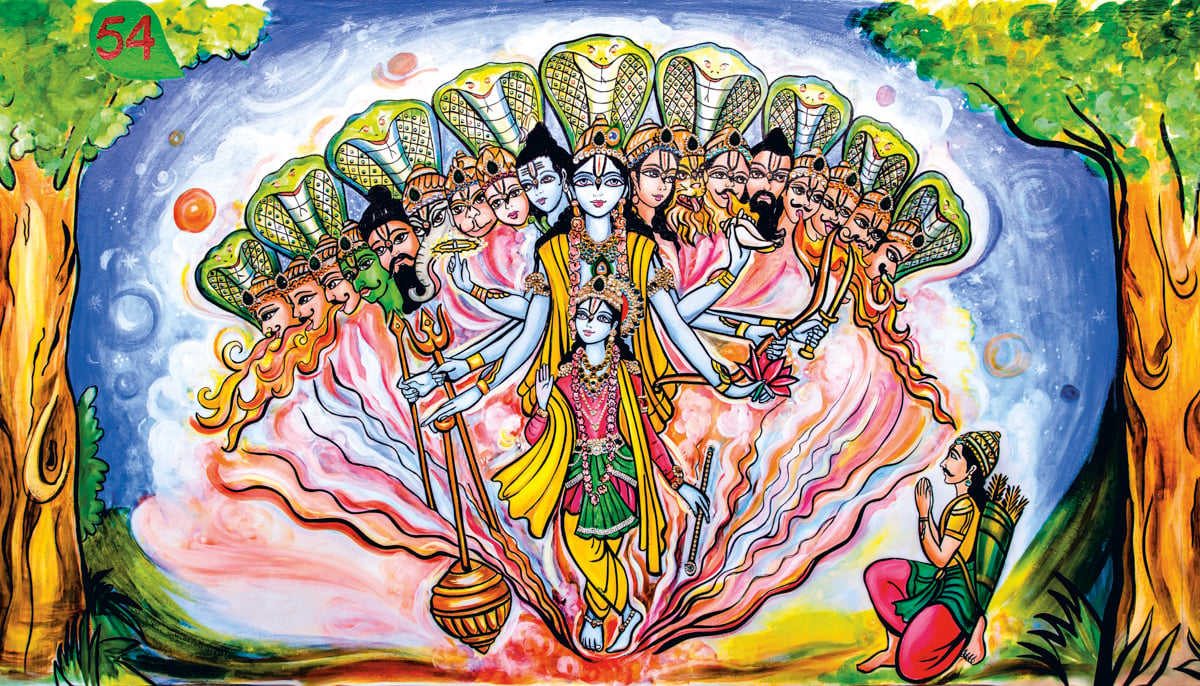
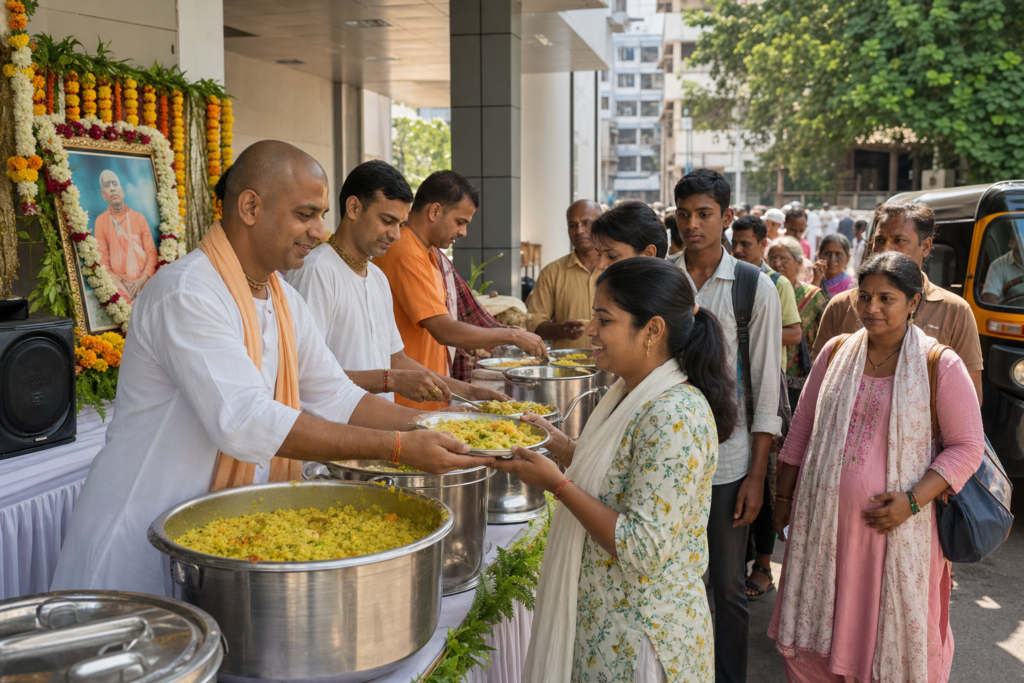
Timeless questions have always stood at the center of spiritual life: Who am I? Where do I come from? Why am I here? Where am I going? What is the purpose of my life? These questions are not merely abstract philosophical exercises. They arise in moments of silence, grief, wonder, devotion, success, failure, and moral crisis. A person may encounter them while reading the Bhagavad Gita, sitting for meditation, serving a community meal, walking through a temple, listening to kirtan, or simply facing the limits of ordinary ambition. Across Hinduism, Buddhism, Jainism, and Sikhism, such questions are treated with seriousness because they reveal the human longing for truth, freedom, love, and inner transformation.
For thousands of years, seekers have turned toward scriptures, teachers, rituals, philosophical schools, and contemplative disciplines to understand the nature of the self and the purpose of human birth. Books, lectures, online courses, and intellectual debate can provide language, structure, and inspiration. Yet knowledge by itself does not necessarily produce realisation. One may know a doctrine, repeat a verse, define the soul, describe karma, or explain moksha with precision, and still remain inwardly unchanged. Realisation begins when knowledge becomes lived insight. It is not only something understood by the mind; it is something verified in consciousness, conduct, and love.
In the dharmic traditions, this distinction between information and transformation is central. Hindu thought often distinguishes between ordinary knowledge and direct knowing, between conceptual understanding and experiential wisdom. The Upanishadic inquiry into the Self, the Bhagavad Gita’s teaching on devotion and disciplined action, the Buddhist emphasis on direct insight into suffering and impermanence, the Jain stress on purification of the soul through right faith, right knowledge, and right conduct, and the Sikh path of naam, seva, and remembrance all point toward a similar principle: truth must be embodied. It must become visible in humility, clarity, compassion, restraint, courage, and devotion.
Realisation may be described as a decisive awakening in which borrowed ideas become direct insight. It is often experienced as an inward recognition that changes the way a person relates to the body, mind, emotions, other beings, and the Divine. Such realisation does not normally arrive through argument alone. Reason is valuable because it protects the seeker from confusion, superstition, and emotional excess. However, reason becomes complete only when joined with disciplined practice, ethical refinement, contemplative attention, and love. In this sense, realisation is not anti-intellectual; it is trans-intellectual. It includes knowledge but is not limited to knowledge.
Self-realisation is commonly understood as the direct recognition that one’s deepest identity is not exhausted by the physical body, changing emotions, social labels, or restless thought. In Hindu vocabulary, this insight is often connected with atman, the inner Self, which is beyond the fluctuations of the mind. In practical terms, the beginning of Self-realisation may appear as a loosening of fear, a reduction of ego-centered reactivity, and a more stable awareness that life is not defined only by pleasure, pain, praise, blame, gain, or loss. The seeker begins to witness inner movements rather than be completely ruled by them.
Yet the bhakti traditions of Hindu spirituality insist that Self-realisation is not necessarily the highest completion of spiritual life. A person may understand the eternal nature of the soul and still remain incomplete if the heart has not awakened to Divine Love. In Vaishnava and broader bhakti theology, the purpose of life is not merely to know that the self is spiritual, but to enter a living relationship with Bhagavan, the Supreme Person. This relationship is cultivated through remembrance, chanting, service, surrender, worship, meditation, and love. The movement from Self-realisation to God-realisation is therefore the movement from spiritual identity to loving communion.
God-realisation, in the devotional framework, is not a psychological mood or a vague feeling of comfort. It refers to the unveiling of Divine presence in which egoic self-importance recedes and the devotee begins to perceive life as held by, sustained by, and directed toward the Divine. The Bhagavad Gita repeatedly teaches that the Supreme is known most intimately through bhakti. In Chapter 18, Verse 55, Krishna states that through devotion one truly knows Him and then enters into Him. The verse does not dismiss knowledge or action; it places them within the transformative power of devotion.
Bhakti is sometimes misunderstood as mere emotion. In a technical sense, bhakti is disciplined love. It includes feeling, but it is not reducible to sentiment. It involves the training of attention, the purification of intention, the steady remembrance of the Divine, and the offering of one’s actions. It softens the ego while strengthening moral responsibility. It allows the seeker to move beyond a spirituality centered on personal achievement and toward a life shaped by surrender, gratitude, and service. This is why bhakti can be intellectually simple and spiritually profound at the same time.
The path of love does not reject other dharmic approaches. Rather, it gives them warmth and relational depth. Jnana without love may become dry intellectualism. Karma without love may become mechanical duty or social performance. Yoga without love may become self-optimization. Ritual without love may become habit. Love does not replace knowledge, action, meditation, or ritual; it animates them. When bhakti enters these disciplines, study becomes reverence, work becomes service, meditation becomes intimacy, and worship becomes a sincere offering of the whole person.
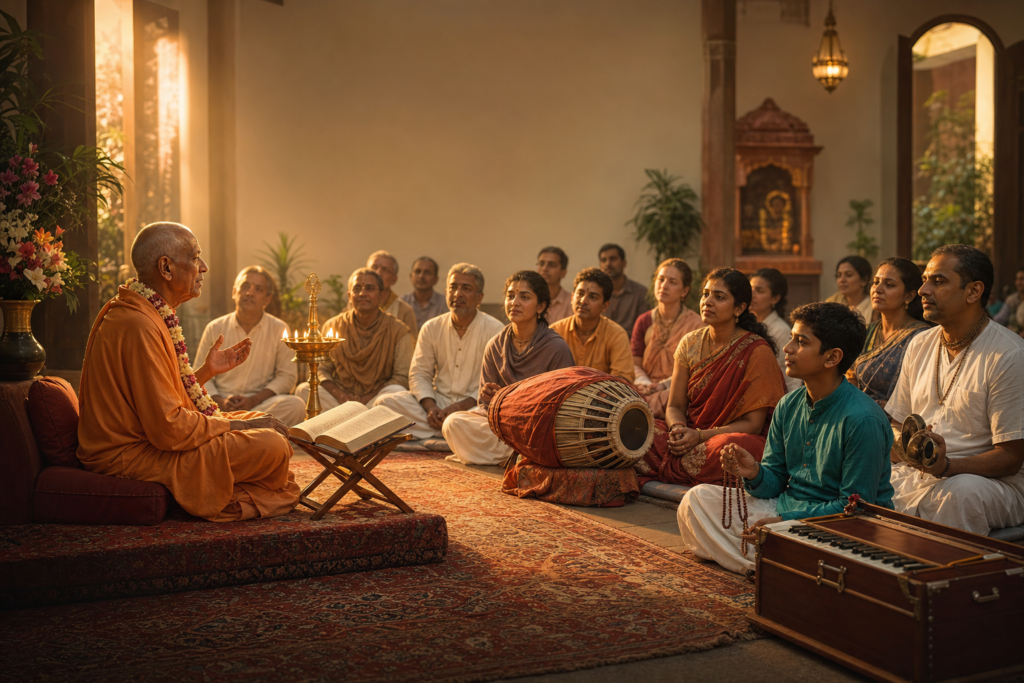
Atma Kriya Yoga, as presented within the Bhakti Marga tradition, is one example of a structured sadhana intended to awaken this devotional transformation. The term sadhana refers to disciplined spiritual practice, and its importance is widely recognized across dharmic traditions. A method may include breath, mantra, meditation, mudra, concentration, prayer, and ethical intention. The value of such practice lies not only in technique but in regularity. A seeker may feel inspired for a day, but transformation requires repeated return. The daily act of sitting for practice becomes a way of reorienting the mind and heart toward the highest aim.
From a yogic perspective, the body, breath, mind, and subtle energy are interconnected. Breath practices influence attention and emotional regulation. Mantra steadies the mind and sacralizes speech. Meditation cultivates inwardness and discernment. Devotional remembrance directs consciousness toward the Divine rather than toward scattered desires. When these elements are practiced with sincerity, they gradually reshape the inner life. The purpose is not merely relaxation, though calmness may come. The deeper purpose is purification, concentration, surrender, and awakening of bhakti.
The source tradition also places great emphasis on grace. In many bhakti lineages, grace is not treated as a substitute for effort but as the higher force that makes effort fruitful. Human effort prepares the vessel; grace fills it. This relationship between effort and grace appears in many forms across dharmic life. The farmer tills the soil, plants the seed, and waters the field, but the mystery of germination is not manufactured by willpower alone. Similarly, the seeker practices, studies, chants, serves, and restrains the ego, yet realisation arrives as a gift that exceeds calculation.
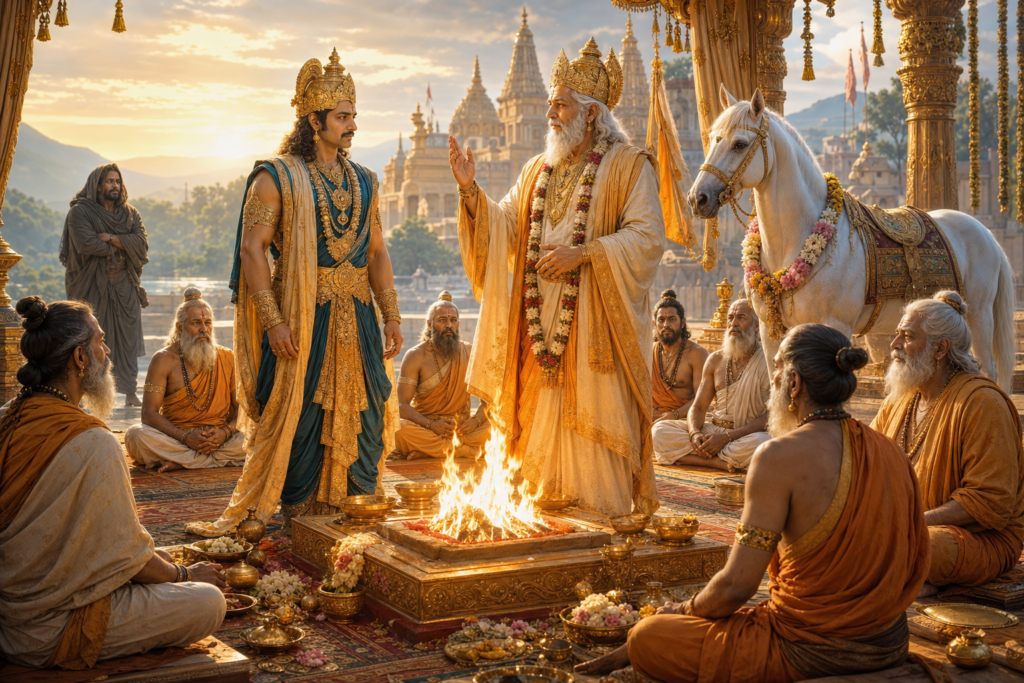
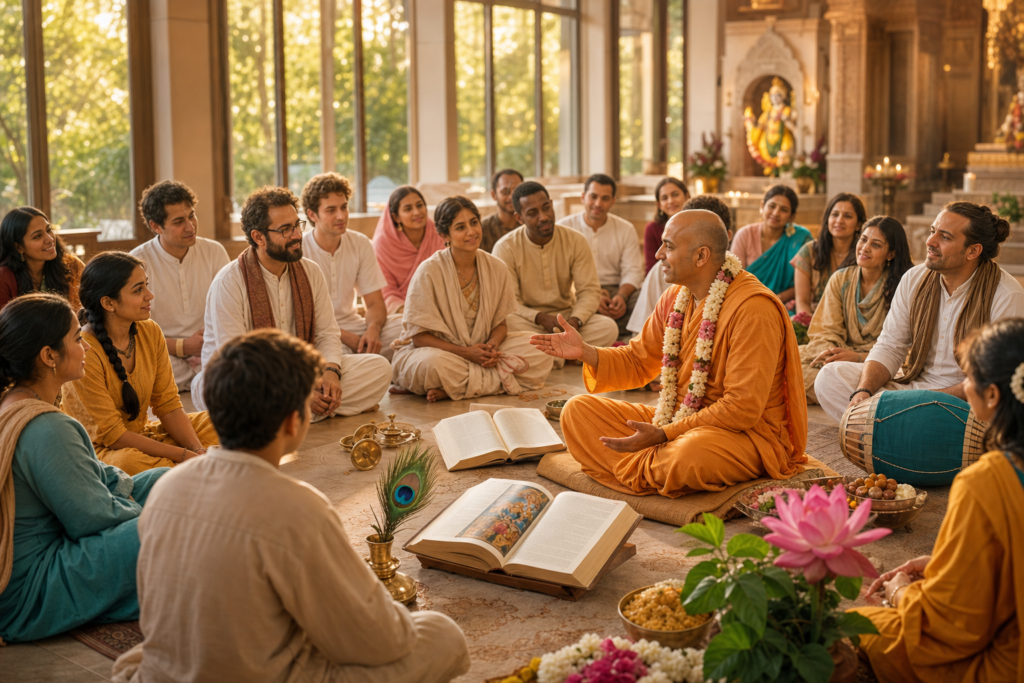
The role of the guru must be understood within this framework. In classical Indian spiritual culture, the guru is not merely a lecturer or institutional authority. The guru is a guide who has walked the path and can direct the disciple beyond confusion, self-deception, and spiritual pride. This does not remove the need for discernment. Dharmic traditions consistently warn against blind ego, false claims, and shallow imitation. Proper guidance is valuable because higher realisation is subtle, and the mind can easily mistake emotion, imagination, or intellectual confidence for genuine transformation.
Shaktipat, often translated as the descent or transmission of spiritual grace, is described in some yogic and devotional lineages as a sacred initiation through which the student receives support for deeper practice. Interpretations differ across traditions, and the language around initiation should be approached with respect and clarity. Its essential point is that spiritual life is not viewed as a purely individual project. The seeker participates in a lineage, receives instruction, enters a discipline, and becomes accountable to a higher aim. This lineage-based view preserves continuity while preventing spirituality from becoming a private invention shaped only by preference.
Effort remains indispensable. A sincere aim is repeatedly emphasized in yoga and bhakti because the direction of desire determines the direction of life. If the aim is only material gain, spiritual practice may become another tool for ambition. If the aim is only emotional comfort, practice may remain shallow. If the aim is Self-realisation, the seeker moves toward inner freedom. If the aim is God-realisation, the seeker offers even the desire for personal attainment into Divine Love. The highest devotional orientation is not merely to become free, but to belong wholly to the Divine.
This distinction is emotionally important because many modern seekers experience spiritual life as a search for relief from stress, anxiety, loneliness, or meaninglessness. These concerns are real, and yoga and meditation can help create stability. However, the dharmic understanding of spiritual practice is far deeper than wellness. It asks what kind of person one is becoming. It asks whether knowledge has produced humility. It asks whether meditation has increased compassion. It asks whether worship has softened judgment. It asks whether love has become more expansive, disciplined, and selfless.
The unity of dharmic traditions becomes especially visible here. Hindu bhakti speaks of loving surrender to Bhagavan. Sikh tradition emphasizes loving remembrance of the Divine Name and service to all. Jain dharma stresses non-violence, self-restraint, and purification from karmic bondage. Buddhist traditions cultivate compassion, mindfulness, wisdom, and liberation from suffering. Their metaphysical languages differ, and those differences should not be erased. Yet each tradition recognizes that the untrained ego cannot be the final authority. Each calls the human being toward discipline, compassion, truthfulness, and liberation from narrow self-centeredness.
For this reason, love should not be confused with passivity or vague tolerance. In dharmic life, love is linked with dharma. It seeks harmony without abandoning truth. It honors diversity without collapsing all paths into sameness. It supports pluralism without turning spiritual commitment into indifference. A mature devotee can be deeply rooted in a chosen path while respecting other sincere paths. This balance is vital for Hindu, Buddhist, Jain, and Sikh communities because dharmic unity does not require uniformity. It requires mutual respect, shared ethical seriousness, and recognition that spiritual growth must reduce hatred rather than intensify it.
The Bhagavad Gita offers a powerful framework for this integration. It presents action, knowledge, meditation, and devotion as interrelated disciplines rather than isolated compartments. Krishna does not ask Arjuna to escape responsibility; He asks him to act with clarity, surrender, and devotion. The inner battlefield is therefore not only a metaphor for conflict but also a technical map of human psychology. Confusion, attachment, fear, pride, grief, and moral hesitation must be brought into the light of wisdom. Bhakti then gives that wisdom a living center: love of the Divine.
In practical life, realisation through love may begin modestly. It may appear as the ability to pause before speaking harshly, to remember the Divine during difficulty, to serve without demanding recognition, to forgive without denying justice, or to study scripture with reverence rather than vanity. It may be seen when a person stops treating spiritual knowledge as a badge of superiority and starts allowing it to reform ordinary conduct. The home, workplace, temple, classroom, and public square all become testing grounds for realisation.
Love also transforms the meaning of discipline. Without love, discipline can feel burdensome, rigid, or ego-driven. With love, discipline becomes an offering. Daily meditation is no longer only a technique; it becomes a meeting. Chanting is no longer only repetition; it becomes remembrance. Study is no longer only analysis; it becomes listening. Service is no longer only activity; it becomes worship. This shift is subtle but decisive. It changes the seeker’s relationship to time, effort, and even failure. A missed practice or distracted mind becomes an occasion for renewed humility, not despair.
The emotional core of the path lies in longing. Bhakti literature often treats longing for the Divine as a sacred force. Longing reveals that the heart has begun to recognize its true object. Ordinary desire moves outward toward possession; devotional longing moves inward and upward toward union, surrender, and intimacy with the Divine. This longing is not escapism. It can make a person more present, more ethical, and more available to others because the center of life shifts from self-protection to Divine remembrance.
Spiritual realisation therefore cannot be measured only by visions, mystical experiences, or dramatic claims. Dharmic traditions tend to test inner attainment by its fruits: steadiness, compassion, humility, truthfulness, non-violence, devotion, service, and freedom from compulsive ego. Experiences may come and go, but character reveals the depth of practice. If knowledge produces arrogance, it has not yet ripened. If meditation produces indifference to suffering, it has not yet matured. If devotion produces sectarian pride, it has not yet become pure love.
This point is especially important in the digital age, where spiritual information is abundant but sustained transformation is rare. A person can consume endless teachings, compare lineages, debate terminology, and collect practices without committing deeply to any path. The result may be spiritual restlessness rather than realisation. The traditional emphasis on sadhana offers a corrective. Choose a noble aim. Receive sound guidance. Practice consistently. Cultivate humility. Serve others. Study deeply. Remember the Divine. Let love refine knowledge until it becomes wisdom.
Attaining realisation through love is ultimately a disciplined re-education of the heart. It begins with timeless questions, passes through study and practice, matures through self-examination, and flowers in devotion. It does not dismiss the intellect; it purifies its purpose. It does not reject the body; it uses embodied practice as a vehicle. It does not deny the world; it learns to see the world as a field for dharma, service, and Divine remembrance. It does not flatten all dharmic paths into one formula; it honors their depth while recognizing their shared call to transformation.
The most meaningful answer to the question “What is the purpose of my life?” may not be found in a sentence alone. It is discovered as life itself becomes aligned with truth, love, and the Divine. Knowledge points the way, practice clears the path, grace opens the heart, and bhakti gives the journey its deepest meaning. In that movement from knowing about truth to living in truth, realisation ceases to be an idea and becomes the quiet, luminous center of a transformed life.
Inspired by this post on Bhakti marga blog.






Leave a Reply
You must be logged in to post a comment.