
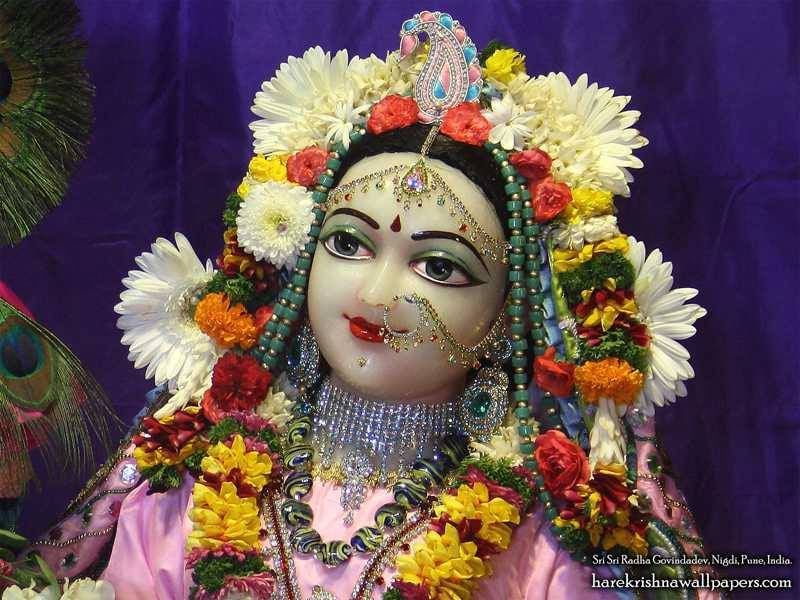
The mystery of Radha occupies a central and deeply refined place within Hindu spirituality, especially within Vaishnava and Gaudiya Vaishnava traditions. Radha is not merely presented as a devotional figure associated with Krishna; she is revered as the highest expression of divine love, the compassionate feminine energy of God, and the gateway into the most intimate dimensions of bhakti. In this theological vision, spirituality is not reduced to power, abstraction, or escape from the world. It becomes a relationship of love, surrender, humility, and spiritual intimacy.
Radhanath Swami’s reflection from The Journey Home captures the moment when the mystery of Radha began to illuminate the inner meaning of the bhakti tradition. After years of searching, study, travel, and encounters with saints and sadhus, the discovery was not simply another doctrine to be understood intellectually. It was a realization that the deepest truths of yoga were not hidden in extraordinary powers or philosophical conquest, but in devotion, tenderness, and the soul’s longing for divine love.
Within many modern understandings of yoga, the word often evokes posture, breath, meditation, or disciplined self-mastery. Classical yoga certainly includes these dimensions, yet the bhakti traditions of Vrindavan reveal another possibility: yoga as loving union with the Divine. Bhakti does not discard knowledge, discipline, or renunciation; rather, it fulfills them by orienting the whole person toward selfless love. Radha stands at the heart of this revelation because she embodies devotion in its purest and most complete form.
The saints of Vrindavan have long understood Radha as the keeper of bhakti’s most confidential mystery. Their theology does not see liberation merely as freedom from suffering or absorption into undifferentiated being. It points toward a more relational and emotionally rich spiritual destiny: participation in divine love. In this framework, the highest perfection is not domination over nature, acquisition of siddhis, or even the solitary attainment of peace. It is loving service within the eternal relationship of Radha and Krishna.
This is why the original reflection speaks of a reality beyond worldly pleasure and beyond liberation understood only as oneness with God. The language of an eternal dance and an endless night of love belongs to the poetic and theological imagination of Vrindavan, where divine reality is experienced not as cold metaphysics but as rasa, sacred relational flavor. Radha is the one who grants entry into this realm because she represents the supreme capacity to love Krishna without selfishness, calculation, or demand.
In Gaudiya Vaishnava theology, Radha is often understood as Krishna’s hladini shakti, the internal pleasure potency through which divine bliss becomes relationally manifest. This idea is technically profound. God is not imagined as incomplete without creation, nor as emotionally dependent in a human sense. Rather, the Divine is understood as eternally full, and Radha reveals the fullness of divine love within that fullness. She is the energy through which love is tasted, shared, and reciprocated.
The term shakti is essential here. In Hindu philosophy, shakti means power, energy, capacity, or dynamic potency. It is not secondary to divinity; it is divinity in active expression. Just as fire cannot be separated from heat, or the sun from light, the Divine cannot be separated from divine energy. Radha, in this devotional vision, is not an accessory to Krishna. She is the intimate, inseparable energy of Krishna, the supreme form of devotion, and the compassionate doorway into Krishna’s heart.
This understanding helps explain why Radha-Krishna worship is so central in Vrindavan. Krishna is rarely approached in isolation within these traditions. Radha and Krishna together express a complete theology of the Divine as both the possessor of energy and the energy itself, both the beloved and the love that unites the beloved with the devotee. Their relationship is not ordinary romance elevated into religion; it is theological poetry used to express the highest intimacy between the soul and God.
The humility of the Vrindavan saints becomes especially meaningful in this context. Their spiritual greatness is not displayed through spectacle. Their depth is shown through surrender, simplicity, and longing. The original reflection observes that their yearning to connect with Radha gave rise to intense and genuine humility. This point is spiritually significant because bhakti treats humility not as weakness, but as the natural condition of a heart that has perceived the vastness of divine love.
For many seekers, this is immediately relatable. Intellectual study may clarify ideas, and disciplined practice may stabilize the mind, but the heart often remains restless until it encounters love as a spiritual principle. A person may read scriptures, visit sacred places, and meet teachers, yet still feel that something essential is missing. Bhakti addresses that missing center. It speaks to the human experience of longing, vulnerability, gratitude, and the desire to love and be transformed by love.
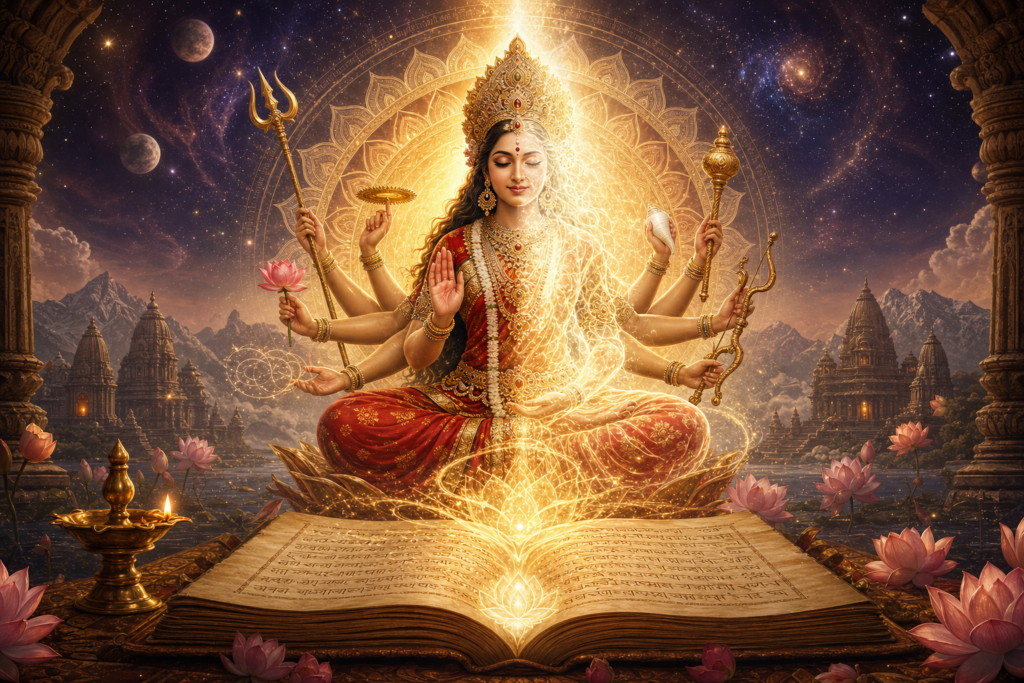
Radha’s mystery also deepens the understanding of the Sacred Feminine within Sanatana Dharma. The feminine aspect of divinity is not treated as a late addition or symbolic courtesy. It is woven into the structure of Hindu thought through Devi, Shakti, Lakshmi, Saraswati, Durga, Sita, Parvati, Radha, and countless regional and philosophical expressions. The Vedic and Puranic imagination recognizes that ultimate reality cannot be adequately understood through exclusively masculine categories of command, authority, and transcendence.
Radha brings forward the nourishing, compassionate, relational, and receptive dimensions of the Divine. These qualities should not be misunderstood as passive. In bhakti, compassion is powerful, surrender is transformative, and tenderness can defeat ego more completely than force. The saints of Vrindavan show that the soul does not ascend by conquering God, but by becoming transparent to grace. Radha’s presence teaches that the highest spiritual strength may appear as softness, patience, and selfless love.
The reflection beside Mother Yamuna is symbolically important. Rivers in Hindu spirituality are not merely geographic features; they are living presences, sacred mothers, purifiers, and witnesses to the journeys of seekers. Yamuna, especially in Krishna bhakti, carries the memory of Vrindavan’s divine pastimes. To sit by Yamuna and contemplate Radha is to encounter a spiritual landscape in which theology, memory, nature, and devotion become inseparable.
The account also places Radha within a wider comparative religious context. Many traditions have preserved some intuition of the divine feminine or sacred feminine presence. Christian devotion has honored Mary, while Christian esoteric and historical discussions have often reflected on Mary Magdalene. Jewish mystical traditions have contemplated Shekinah as the indwelling presence of God. Certain Sufi lineages have expressed reverence for Fatima as a model of purity, spiritual nobility, and sanctified feminine presence. These comparisons do not erase theological differences, but they show that the human search for divine compassion often turns toward maternal, relational, and feminine symbols.
From a Dharmic perspective, however, the divine feminine receives a particularly expansive and systematic place. Hinduism does not confine feminine divinity to metaphor alone. Devi can be supreme reality. Shakti can be cosmic power. Lakshmi can be grace and abundance. Saraswati can be wisdom and speech. Durga can be protection and moral courage. Sita can be fidelity and strength in suffering. Radha can be the highest devotion and the deepest love of Krishna. Together, these forms demonstrate a spiritual civilization in which feminine divinity is philosophically serious, ritually central, and emotionally transformative.
This vision also supports unity among Dharmic traditions. Hinduism, Buddhism, Jainism, and Sikhism differ in doctrine, practice, and metaphysical language, yet they share a civilizational respect for inner discipline, compassion, humility, liberation from ego, and ethical transformation. Radha’s bhakti does not need to be used as a sectarian boundary. It can be appreciated as a profound Hindu expression of a wider Dharmic insight: the human being is transformed most deeply when ego gives way to reverence, service, and love.
Bhakti is sometimes misunderstood as emotionalism, but the Radha tradition demonstrates a far more disciplined and philosophically mature path. Genuine devotion requires purification of intention. It asks whether love is mixed with possession, pride, fear, or the desire for recognition. It examines whether spiritual practice is being used to become superior to others or to become more available to divine grace. In this sense, Radha is not only an object of reverence; she is a mirror held before the heart.
The contrast between yogic powers and divine love is especially important. Many spiritual traditions warn that extraordinary capacities can become distractions if they strengthen ego. The yogis of Vrindavan described in the reflection appear great precisely because they have no interest in being seen as great. Their aspiration is not control over the world, but absorption in Radha’s service. This is one of bhakti’s most radical claims: the highest spiritual attainment may be hidden beneath external simplicity.
Radha’s mystery also challenges modern ideas of success. Contemporary life often rewards visibility, assertion, competition, and measurable achievement. The bhakti tradition asks a different question: has the heart become softer, clearer, and more capable of selfless love? A person may gain influence and still remain spiritually impoverished. Another may live quietly, chant sincerely, serve others, and carry within the heart a wealth that cannot be measured by social recognition.
This is why the theology of Radha remains relevant beyond temple walls and scriptural study. It speaks to families, communities, and societies in which power often overshadows care. When the nourishing and compassionate dimensions of life are dismissed, institutions become efficient but cold, religious communities become rigid, and personal relationships become transactional. Radha restores the primacy of love as a sacred principle. She reminds the devotee that truth without compassion can become harsh, and discipline without love can become dry.
At the same time, Radha’s love is not sentimental softness. It is spiritually demanding because it calls for the surrender of self-centeredness. In the bhakti tradition, divine love is not merely feeling affection for God; it is the reorientation of one’s entire being toward service. The devotee learns to ask not only what can be received from the Divine, but how life itself may become an offering. This is why Radha’s love is described as supreme: it is free from selfish bargaining.
Vrindavan’s saints understood this with rare depth. Their devotion to Radha was not abstract theology but lived experience. Through chanting, remembrance, service, pilgrimage, study, and humility, they cultivated an inner life centered on Radha-Krishna. The landscape of Vrindavan became a sacred text: Yamuna, forests, temples, pathways, songs, and festivals all carried the memory of divine love. Such sacred geography teaches that spirituality is not only believed; it is inhabited.
The emotional force of Radhanath Swami’s reflection lies in the gradual movement from fascination to reverence. Radha first appears as a mystery that eludes understanding. Then, through the example of saints, she becomes the key to understanding bhakti itself. This movement is familiar to serious spiritual inquiry. Many truths begin as concepts, become questions, then become living realities through experience, association, and grace.
The mention of apprehension about committing to one path is also psychologically honest. Spiritual seekers often value openness, and openness can be a virtue when it prevents narrowness. Yet endless hesitation can also keep the heart at a distance from transformation. Bhakti does not demand contempt for other paths; it asks for sincerity, steadiness, and a willingness to enter deeply. Radha’s path invites commitment not through coercion, but through attraction to divine love.
This distinction matters for interfaith and intra-Dharmic harmony. Deep commitment to one tradition need not produce hostility toward others. In fact, mature bhakti should increase humility and respect. The recognition of Radha as the supreme expression of divine love within a particular Vaishnava framework can coexist with reverence for other Dharmic paths and their methods of liberation, wisdom, service, and discipline. Unity does not require sameness; it requires mutual respect rooted in truthfulness and humility.
Radha’s theological importance can also be understood through the relationship between love and knowledge. In many Indian philosophical systems, knowledge is indispensable for liberation. Bhakti does not reject knowledge, but it insists that knowledge reaches its fullness when it matures into love. To know Krishna truly is not only to define Him metaphysically, but to love Him. Radha is therefore the highest teacher of the knowledge that becomes devotion.
Scriptural and poetic traditions have expressed this in multiple ways. The Gita Govinda of Jayadeva gives lyrical form to the longing of Radha and Krishna. Vaishnava acharyas developed sophisticated accounts of Radha’s place in divine reality. Gaudiya Vaishnavism, shaped by Sri Chaitanya Mahaprabhu and later theologians, elevated the mood of Radha’s devotion as the highest aspiration of the soul. These traditions show that Radha bhakti is not peripheral sentiment, but a major theological current within Hindu spirituality.
For readers approaching this subject academically, it is important to recognize that Radha’s prominence developed through layered textual, devotional, regional, and theological traditions. Her presence is especially vivid in medieval bhakti poetry, temple worship, kirtan traditions, and the living devotional culture of Braj. Historical development, however, does not reduce spiritual significance. In Hindu traditions, revelation often unfolds through scripture, saintly interpretation, sacred geography, poetry, and lived practice together.
For readers approaching Radha devotion personally, the central lesson is accessible even without advanced theological training. The heart longs for a love that is not exploitative, temporary, or ego-driven. Radha represents that love in its divine form. Her mystery asks the human being to become receptive, sincere, humble, and courageous enough to love without making the self the center of everything.
The feminine divinity of Radha also has ethical implications. A society that reveres the divine feminine should cultivate dignity, respect, and protection for women in lived practice. Theology cannot remain beautiful in poetry while social conduct ignores compassion and justice. Radha’s presence should refine the way communities think about care, relational responsibility, and the spiritual dignity of every person. The worship of Shakti must inspire the honoring of life.
This does not mean reducing Radha to a modern political symbol. Her meaning is primarily theological and devotional. Yet authentic theology inevitably shapes conduct. If Radha is honored as the supreme energy of divine love, then harshness, arrogance, exploitation, and spiritual pride become contradictions of her message. The devotee’s life must gradually become more gentle, truthful, and service-oriented.
The reflection on Mary, Shekinah, Fatima, and other sacred feminine motifs can help contemporary readers understand the universality of this intuition. Across cultures, religious communities have sensed that divine reality must include mercy, nearness, nurture, beauty, and compassionate presence. Sanatana Dharma gives this intuition an unusually rich theological vocabulary through Shakti and Devi traditions, and Radha stands among the most intimate expressions of that sacred feminine reality.
Still, Radha’s uniqueness should be preserved. She is not simply a general symbol of femininity. She is specifically the beloved of Krishna, the embodiment of supreme bhakti, and the revealer of the highest devotional rasa. Her mystery belongs to the living world of Vrindavan, to the chanting of Krishna’s names, to the tears of saints, to the discipline of humility, and to the soul’s longing for loving union with the Divine.
The most enduring insight from this reflection is that spirituality must recover its compassionate center. When power and control dominate religious life, the heart of dharma becomes obscured. Radha redirects attention to love, tenderness, humility, and grace. She reveals that the feminine aspect of the Divine is not ornamental, but essential to a complete understanding of God, the soul, and the purpose of yoga.
In the end, the mystery of Radha is not solved as one solves an intellectual puzzle. It is entered through reverence. It is approached through bhakti, seva, kirtan, remembrance, and humility. It is recognized in the saints who give up the hunger for prestige and become absorbed in divine love. It is felt when the heart begins to understand that the highest truth may not be domination, liberation alone, or abstract perfection, but love so pure that it transforms the soul completely.
Radha therefore remains one of the most profound figures in Hindu spirituality: the Sacred Feminine as divine love, Shakti as compassion, and bhakti as the soul’s highest destiny. Her mystery continues to call seekers beyond superficial religion, beyond egoistic spirituality, and beyond the restless search for power. It calls them toward Vrindavan’s deepest secret: that the heart of reality is love, and the path into that love is illuminated by Radha.
Inspired by this post on Dandavats.






Leave a Reply
You must be logged in to post a comment.