
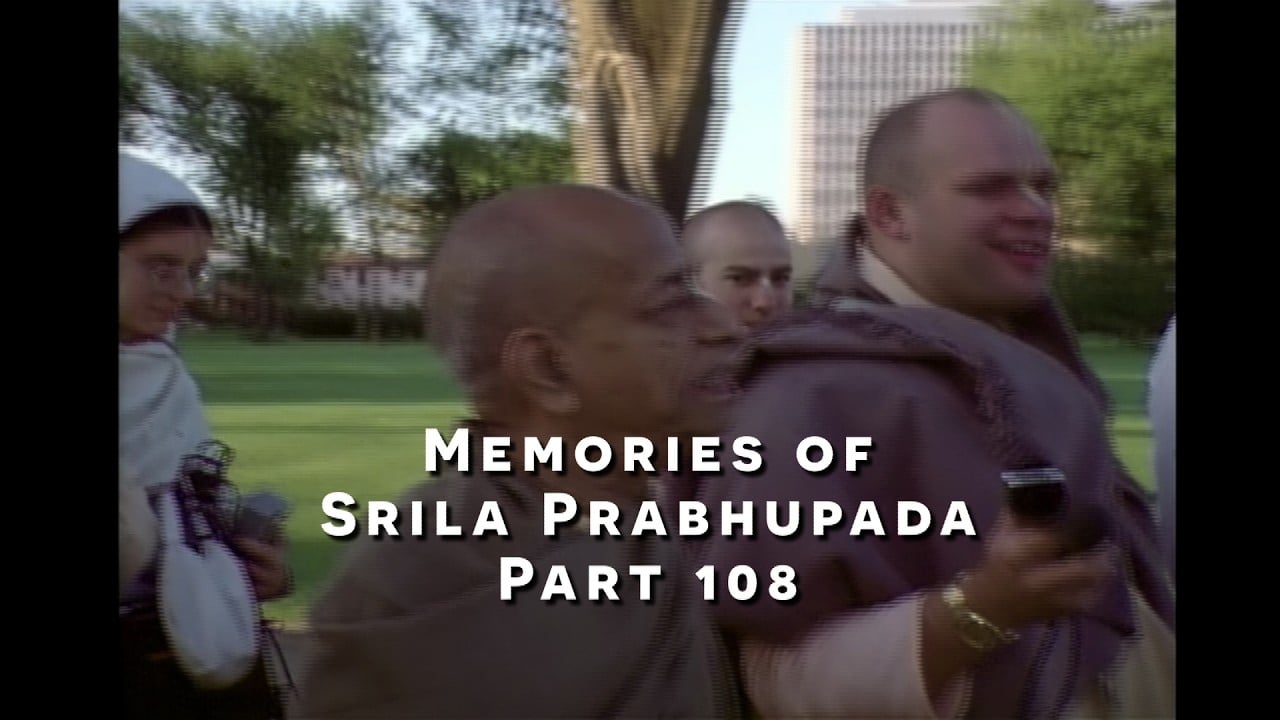
Prabhupada Memories – DVD 108, featuring Dhrti dasi, Rama Das Abhirama Das, and Sabhapati, belongs to a valuable body of oral history within the Hare Krishna Movement. The recording preserves devotional remembrance rather than presenting a formal biography, and its importance lies in the way personal testimony becomes a historical source. Through such recollections, Srila Prabhupada is remembered not only as the founder-acharya of ISKCON, but also as a spiritual teacher whose daily conduct, discipline, compassion, and theological clarity shaped the lives of individual disciples across cultures.
The title itself signals the nature of the material: these are memories. In the study of spiritual traditions, memory is not a secondary or decorative element. It is a method by which communities transmit values, preserve lived examples, and connect doctrine with human experience. A scripture may state the principles of bhakti, guru-seva, humility, surrender, and disciplined practice; a remembered encounter shows how those principles were embodied in a specific time, place, and relationship.
Srila Prabhupada, born Abhay Charan De in 1896, carried the Gaudiya Vaishnava tradition into a global modern context. His work included translations and commentaries on foundational Sanskrit texts such as the Bhagavad Gita, Srimad Bhagavatham, and Caitanya Caritamrita. Yet his influence cannot be understood only through books, institutions, temples, or public lectures. It also has to be understood through the testimony of those who watched him eat, walk, speak, correct, encourage, chant, translate, and interact with people from many backgrounds.
DVD 108 therefore stands within a larger devotional archive. It invites attention to the personal dimension of religious history: how disciples perceived the presence of a guru, how they interpreted instruction, and how ordinary incidents became formative spiritual lessons. Dhrti dasi, Rama Das Abhirama Das, and Sabhapati appear in this context as witnesses to a living tradition. Their value is not merely that they were present, but that their memories help later generations understand how Srila Prabhupada’s teachings were received, practiced, and internalized.
In academic terms, such a recording may be read as oral history, devotional testimony, and community memory at the same time. Oral history does not replace textual evidence, but it adds texture to it. It helps answer questions that formal documents often leave untouched: What did spiritual discipline feel like in the early years of ISKCON? How did disciples experience correction from Srila Prabhupada? What kind of emotional atmosphere surrounded his presence? How did his instructions move from philosophical teaching into daily habits?
The relevance of these memories is especially strong because Srila Prabhupada’s mission was both ancient and modern. He presented Krishna bhakti as rooted in Sanatana Dharma, the Vedic tradition, and the teachings of Sri Chaitanya Mahaprabhu. At the same time, he addressed modern anxieties: alienation, consumerism, spiritual confusion, moral instability, and the search for meaning in societies increasingly shaped by material ambition. His disciples often came from very different cultural backgrounds, but many found in his words a coherent spiritual framework for life.
The Hare Krishna Movement, as represented in these memories, is not simply a social movement or a religious organization. It is a discipline of transformation centered on the holy name, devotional service, scriptural study, prasadam, deity worship, and community life. Personal remembrance matters because these practices are not abstractions. They require guidance, repetition, correction, and a living example. Srila Prabhupada’s disciples frequently remembered him as someone who made philosophy practical and made devotion accountable.
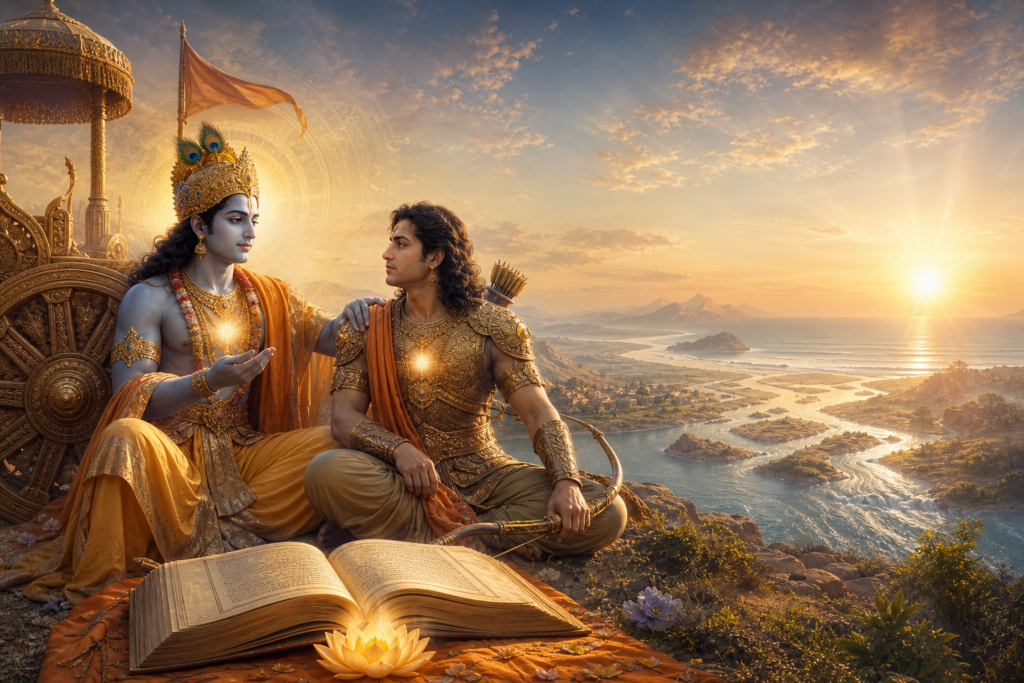
One of the strongest themes associated with Prabhupada memories is the guru-shishya relationship. In Dharmic traditions, the guru is not treated as a mere lecturer or institutional administrator. The guru transmits understanding, models conduct, and helps the disciple align life with dharma. In Gaudiya Vaishnavism, this relationship is inseparable from bhakti, because devotion to Krishna is cultivated through hearing, chanting, service, and surrender under guidance. The memories in this series are therefore spiritually significant because they illuminate how disciples encountered that guidance in concrete situations.
Such recollections also reveal the difference between charisma and character. Charisma may attract attention, but character sustains a spiritual movement. Srila Prabhupada’s historical legacy rests not only on his ability to inspire large audiences, but on the disciplined consistency of his life: rising early, translating sacred texts, insisting on sadhana, protecting standards, encouraging service, and placing Krishna at the center of every undertaking. For many viewers, the emotional force of these memories comes from seeing how those standards affected real people.
The presence of Dhrti dasi, Rama Das Abhirama Das, and Sabhapati in DVD 108 also points toward the diversity of discipleship within ISKCON. Srila Prabhupada’s movement was not limited to one ethnicity, class, or region. It drew men and women into a shared devotional vocabulary while retaining the deeply personal nature of each seeker’s journey. This is an important feature of Sanatana Dharma: unity does not require uniformity. The principle of bhakti can harmonize different personalities, abilities, and life histories through a shared orientation toward Krishna.
This point is particularly important for a broader Dharmic audience. Hinduism, Buddhism, Jainism, and Sikhism each maintain distinct theological and philosophical identities, yet they share civilizational concerns about discipline, self-transformation, compassion, ethical responsibility, and liberation from ego-centered living. The remembrance of Srila Prabhupada should therefore be approached not as a sectarian possession, but as part of a wider Dharmic conversation about how spiritual teachers preserve wisdom in times of cultural disruption.
Prabhupada’s teachings were firmly Vaishnava, but their practical implications often speak across traditions. The emphasis on self-control, sacred sound, food sanctified by offering, respect for scripture, humility before the Divine, and service to others resonates with many streams of Indian spirituality. The academic importance of DVD 108 lies partly in this layered character: it records memories of one teacher within one tradition, while also illuminating broader questions about guru, discipline, devotion, and cultural continuity.
The medium of video gives these memories a distinct power. Written testimony preserves words, but video preserves tone, pause, facial expression, and emotional register. When disciples speak about Srila Prabhupada, the listener can often sense the continued presence of gratitude, reverence, and responsibility. This does not make the testimony beyond analysis; rather, it makes the testimony richer. A mature reading can honor the devotion while still recognizing the historical value of the material.
For contemporary readers and viewers, one of the most relatable aspects of such memories is the struggle to convert inspiration into practice. Many people admire saints, teachers, and sacred texts from a distance, but the challenge begins when ideals must govern daily life. Srila Prabhupada’s disciples often describe a spiritual environment in which philosophy had to become punctuality, cleanliness, chanting, service, restraint, study, and responsibility. This is where bhakti becomes more than sentiment. It becomes a structured way of living.
The emotional connection in these memories arises from the recognition that spiritual life is rarely neat or effortless. Disciples may feel enthusiasm, confusion, correction, joy, fatigue, surrender, and renewal. A teacher’s role is not to flatter the disciple’s ego, but to help redirect consciousness toward the Divine. Srila Prabhupada’s remembered interactions often carry this quality: affectionate yet exacting, compassionate yet uncompromising, personal yet rooted in scripture.
From a technical perspective, the preservation of such oral histories is also a form of religious archiving. Movements that expand quickly across continents face the danger of losing early memories, local details, and first-generation experiences. The Prabhupada Memories series helps protect that fragile layer of history. It allows later devotees, scholars, and interested observers to examine how the early ISKCON community understood its founder, its mission, and its responsibilities.
Memory, however, must be handled responsibly. Devotional remembrance should not be treated as casual anecdote, nor should it be inflated beyond what it can support. A balanced approach recognizes that each speaker offers a particular perspective shaped by time, place, relationship, and spiritual experience. The strength of DVD 108 is not that it exhausts the subject of Srila Prabhupada, but that it contributes another set of voices to a larger mosaic of testimony.
The mention of the Prabhupada Memories channel also matters. Digital platforms have changed how religious communities preserve and circulate teachings. Earlier generations depended on temples, printed books, letters, recordings, and personal association. Today, seekers may encounter Srila Prabhupada first through a lecture clip, a scanned book, a kirtan recording, or a memory video. This creates opportunity and responsibility. Access becomes easier, but interpretation still requires seriousness, humility, and grounding in authentic tradition.
In the context of Hindu spirituality and Vaishnava practice, Srila Prabhupada’s legacy remains inseparable from the chanting of the holy names: Hare Krishna, Hare Krishna, Krishna Krishna, Hare Hare, Hare Rama, Hare Rama, Rama Rama, Hare Hare. The memories surrounding him repeatedly return to the practical force of this mantra. Chanting was not presented as a cultural ornament. It was presented as a direct method for purification of consciousness and restoration of one’s relationship with Krishna.
Another recurring dimension of Prabhupada’s legacy is his insistence that spiritual knowledge should be intellectually serious. He did not present bhakti as anti-rational emotion. His commentaries engaged metaphysics, ethics, cosmology, psychology, social order, and the nature of consciousness. This is why academic engagement with his work remains important. The memories of disciples gain depth when placed alongside his written corpus, because the personal and philosophical dimensions illuminate each other.
DVD 108 therefore encourages a double reading. On one level, it is a devotional resource for those who already revere Srila Prabhupada. On another level, it is a document for anyone interested in the transmission of Dharmic traditions in the modern world. It shows how a teacher’s authority is remembered through small details, how disciples interpret transformative encounters, and how spiritual communities construct continuity after the physical departure of a founding figure.
The presence of women and men within the memory tradition also deserves attention. Dhrti dasi’s inclusion alongside Rama Das Abhirama Das and Sabhapati reflects the fact that the early movement was shaped through varied forms of service. Devotional history is often distorted when only public leadership is remembered. Oral testimony helps recover the contributions of those whose service may have unfolded in kitchens, temples, printing efforts, travel, teaching, administration, worship, and personal sacrifice.
For a modern audience, this point carries practical value. Spiritual movements survive when remembrance includes service, not only status. Srila Prabhupada repeatedly emphasized that sincere service offered to Krishna carries spiritual weight. Such a framework can help contemporary communities avoid the narrowing of history into celebrity narratives. The quiet labor of disciples, householders, renunciants, teachers, cooks, publishers, and organizers belongs to the real history of bhakti.
The broader lesson of this recording is that sacred tradition becomes durable when it is lived. Books preserve doctrine; institutions preserve structure; rituals preserve continuity; memories preserve the human warmth of transmission. When these elements remain connected, a movement can carry both intellectual clarity and emotional depth. Srila Prabhupada’s life and legacy continue to be studied precisely because they stand at the meeting point of scripture, practice, institution-building, and personal transformation.
There is also a cautionary lesson here. Memory can inspire, but it should lead to practice rather than nostalgia. The purpose of remembering a spiritual teacher is not merely to admire the past. It is to ask what responsibilities remain in the present: How should sacred texts be studied? How should temples serve communities? How should devotees speak across traditions with dignity? How should bhakti be practiced in homes, workplaces, and public life? How can unity among Dharmic traditions be strengthened without erasing theological differences?
In this sense, Prabhupada Memories DVD 108 has contemporary relevance beyond its archival function. It invites reflection on leadership, humility, discipline, and spiritual inheritance. The memories of Dhrti dasi, Rama Das Abhirama Das, and Sabhapati help keep alive the question that every serious tradition must face: how can reverence for the past become intelligent action in the present?
The most constructive way to receive this material is with gratitude and discrimination. Gratitude honors the disciples who preserved their experiences. Discrimination prevents sentimentalism and encourages deeper study. Together, these attitudes allow the recording to function as a bridge: between personal memory and historical understanding, between Vaishnava devotion and wider Dharmic reflection, and between admiration for Srila Prabhupada and renewed commitment to spiritual practice.
Ultimately, the enduring significance of Prabhupada Memories – DVD 108 lies in its portrayal of living bhakti. It points toward a spiritual culture in which the guru is remembered through transformed lives, not merely through formal praise. It also affirms a wider principle central to Hindu spirituality and Sanatana Dharma: wisdom becomes powerful when it is heard, practiced, remembered, and passed forward with humility.
Inspired by this post on Dandavats.





Leave a Reply
You must be logged in to post a comment.