
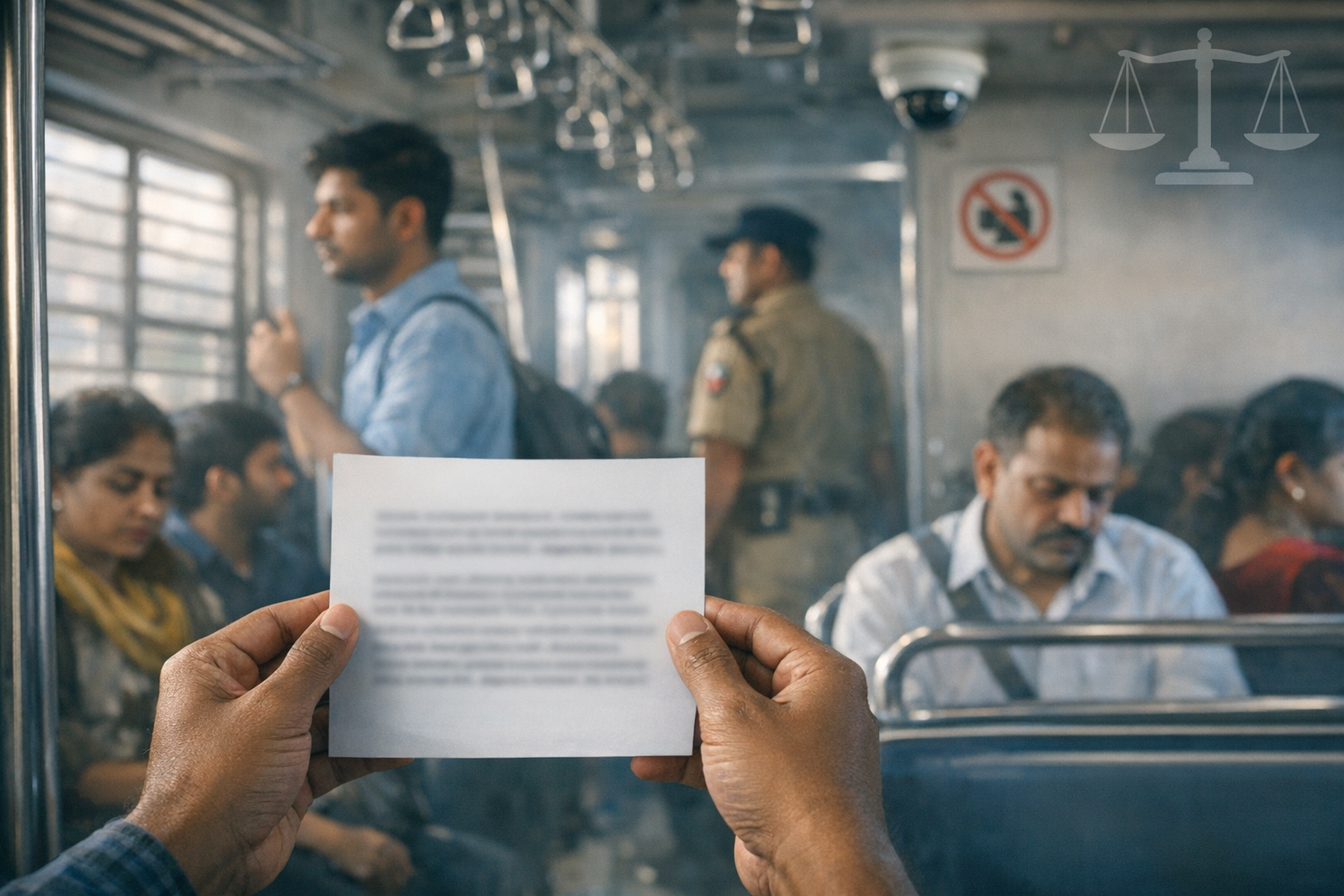
Reports have surfaced indicating an organised religious conversion effort operating within Mumbai’s suburban rail network. According to the Hindu Janajagruti Samiti (HJS), commuters in local train compartments are being approached through emotionally charged leaflets allegedly intended to influence vulnerable passengers. In response, HJS has sought swift action by competent authorities to examine the claims and, if substantiated, to halt any coercive or misleading practices in accordance with law.
The question sits at the intersection of commuter safety, constitutional liberties, and public order, calling for careful, evidence-led scrutiny. Allegations of coercion must be rigorously tested, while the right to profess, practice, and propagate religion under Article 25 of the Constitution must be preserved. The challenge for public institutions is to draw a principled line—protecting citizens from pressure, fraud, or inducement, and simultaneously safeguarding peaceful, voluntary expressions of belief in public spaces.
Indian constitutional jurisprudence provides guidance. In Rev. Stanislaus v. State of Madhya Pradesh (1977), the Supreme Court clarified that the freedom to propagate religion does not include converting another person by force, fraud, or allurement. Several states have adopted “Freedom of Religion” (anti-conversion) laws to deter such practices; in Maharashtra, analogous measures have periodically been proposed for deliberation. Even where dedicated statutes are absent or pending, general criminal and regulatory provisions prohibit deception, intimidation, public nuisance, and unauthorised solicitation.
Railway-specific norms are also salient. The suburban rail system is a regulated public environment in which unauthorised distribution of pamphlets, solicitation, or activities likely to inconvenience passengers can attract penalties under the Railways Act, 1989 and attendant rules. The Government Railway Police (GRP) is responsible for law and order on trains and stations, while the Railway Protection Force (RPF) focuses on railway property and passenger security support. Any structured pamphleteering or proselytisation claimed to be occurring inside crowded compartments should, therefore, be assessed against these norms and, where relevant, curtailed through proportionate, lawful measures.
The reports describe the use of “emotional leaflets” allegedly tailored to appeal to personal distress, fear, or hope. Ethical discourse recognises a categorical difference between open, good-faith dialogue among equals and tactics that leverage vulnerability to secure religious affiliation. Indicators of concern include inducements framed as material benefits, misrepresentation of other traditions, denigration of community identities, or the exploitation of minors and persons under distress. Such markers, if evidenced, call for intervention.
From a commuter-safety standpoint, unsolicited approaches in confined, high-density spaces can feel intrusive and unsettling. Crowded Mumbai local trains already stretch attention and bandwidth; unexpected advocacy—religious, commercial, or political—can amplify stress and impede free movement. That is why many transit systems emphasise “no solicitation without permission” expectations and rely on visible enforcement to preserve neutrality and comfort for all passengers.
The principle of unity among dharmic traditions—Hinduism, Buddhism, Jainism, and Sikhism—requires that civil society responses remain non-sectarian, rights-based, and focused on conduct rather than identity. Coercion is unacceptable regardless of who undertakes it; by the same token, peaceful expressions of faith, respectful dialogue, and service to fellow passengers deserve protection. The objective is social harmony: ensuring no commuter is targeted or pressured, while no community is stereotyped or vilified.
Given the sensitivity of the claims, an appropriate course of action is a time-bound, impartial inquiry. Authorities can review CCTV coverage where available, gather first-hand complaints, examine any seized leaflets, and determine whether permissions were sought for distribution. If evidence suggests organised activity that violates railway norms or general law, proportionate enforcement—warnings, fines, or prosecution—can be pursued. If, conversely, the activity is found to be sporadic, consensual, and compliant with regulations, public communication can clarify the boundaries to reduce speculation.
Commuters benefit from clear guidance. Passengers who feel uncomfortable with any unsolicited approach should disengage politely, relocate if feasible, and report the interaction to GRP or RPF personnel on the platform or via officially publicised helplines. Photographic evidence of leaflets, without recording persons surreptitiously or escalating confrontation, can assist investigators. As always, rumours should be avoided; verified reporting channels are preferable to social media amplification.
Civil society groups—including dharmic organisations—can contribute constructively by promoting commuter awareness campaigns that emphasise consent, critical media literacy, and interfaith respect. Positive, non-intrusive initiatives—such as volunteer assistance for elderly passengers, first-aid readiness, or crowd etiquette signage created in partnership with railway authorities—strengthen trust without contributing to polarisation. When concerns arise, joint representations to the authorities, coupled with a commitment to due process, model responsible citizenship.
Media and advocacy communications benefit from precision. Using language such as “alleged”, “reported”, and “subject to verification” preserves credibility and reduces the risk of inflaming tensions. Naming individuals or communities without corroboration, or imputing motives without evidence, undermines both legal outcomes and social cohesion. Where possible, publishing anonymised case summaries and official responses helps the public understand what has been proven and what remains under investigation.
From a rule-of-law perspective, the path forward is clear. Allegations of organised religious conversion activity inside Mumbai local trains should be examined promptly and impartially. All sides’ constitutional rights must be protected; coercion, fraud, or inducement must be addressed firmly if found; and the neutrality of public transport must be upheld. In doing so, institutions and communities alike affirm a shared commitment to dharmic unity, pluralism, and the everyday dignity and safety of commuters.
Inspired by this post on Hindu Jagruti Samiti.










Leave a Reply
You must be logged in to post a comment.