
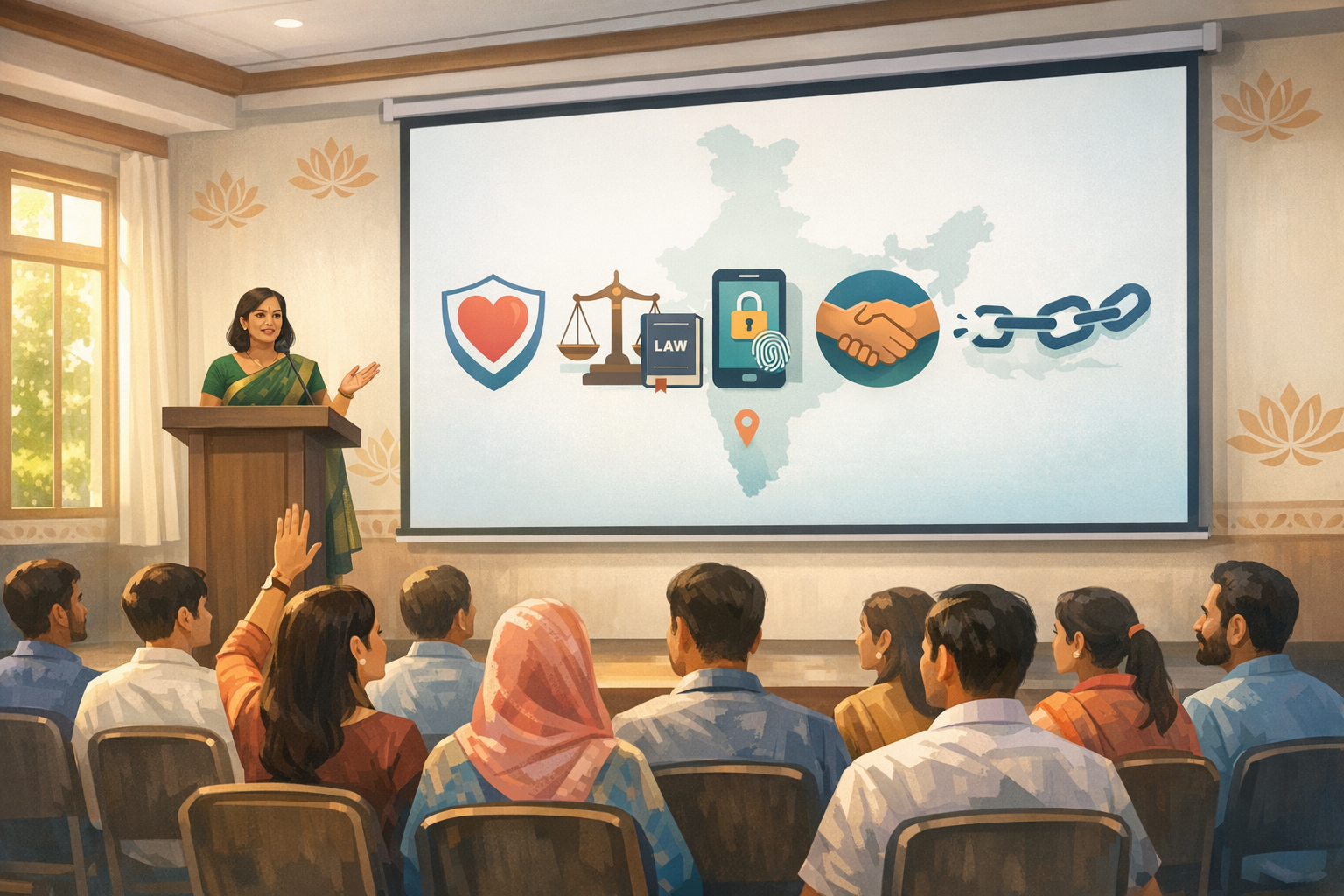
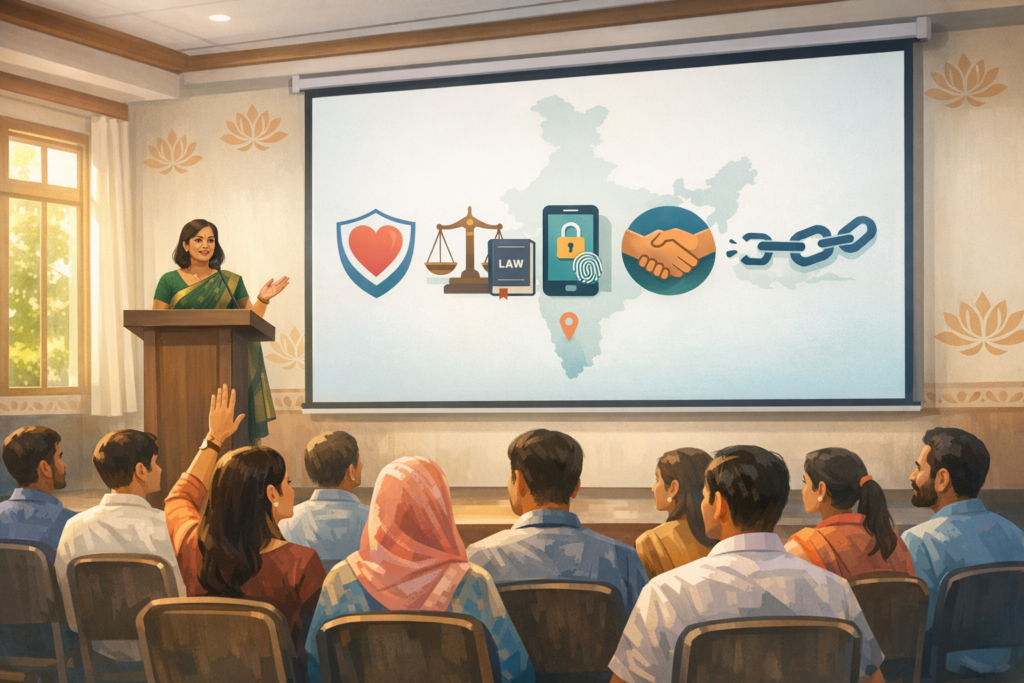
In Thane (Maharashtra, India), the Shri Seervi Samaj Youth Meet hosted a community awareness lecture led by Hindu Janajagruti Samiti (HJS) that examined risks and responsibilities in contemporary relationships—often discussed in public discourse under the label ‘love jihad’. The session focused on youth safety, vigilant decision-making, and the strengthening of family communication and sanskars, while affirming constitutional rights and social harmony.
Presented in an academic yet accessible manner, the programme framed the discussion around safeguarding against coercion, deception, or undue pressure in any relationship, irrespective of faith. It emphasized interfaith respect, pluralism, and unity across dharmic traditions, aligning vigilance with compassion rather than suspicion and encouraging evidence-based, non-stigmatizing practices.
Because the phrase ‘love jihad’ is contested in scholarship and policy discourse, the lecture adopted a behaviour-focused lens that prioritizes identifiable patterns—coercive control, grooming, identity fraud, and social isolation—over assumptions about community identity or intent. This rights-based approach supports interfaith harmony and is consistent with global prevention frameworks that target harmful behaviours rather than categories of people.
Legal literacy formed a core component. Facilitators outlined key frameworks in India: the Special Marriage Act, 1954 for interfaith marriage procedures; the Protection of Children from Sexual Offences (POCSO) Act, 2012 regarding minors; the Protection of Women from Domestic Violence Act, 2005; and penal provisions addressing cheating, criminal intimidation, wrongful confinement, and threats. Attention was also drawn to the Information Technology Act, 2000 for identity theft and personation online, and to state-level Freedom of Religion Acts in some jurisdictions that criminalize conversion by coercion, fraud, or allurement. Participants were encouraged to consult qualified legal counsel where necessary and to document concerns promptly.
Given the centrality of social media to courtship, the session devoted substantial time to digital safety: verifying identities, recognizing deepfakes and catfishing, protecting location and contact data, resisting social engineering, and preserving digital records when manipulation is suspected. Attendees were introduced to cybercrime reporting channels and reminded that timely, well-documented complaints can determine whether remedies are effective.
From a psychosocial perspective, the facilitators described patterns common to grooming and coercive control: rapid escalation of intimacy, pressure to cut ties with family, secrecy around identity or finances, induced guilt, and threats of self-harm or reputational damage. By focusing on behaviourally observable warning signs rather than religious identity, the lecture sought to reduce stereotyping and promote responsible, inclusive vigilance that protects everyone.
Consistent with the gathering’s theme, practical tools for strengthening family communication and sanskars were discussed. These included non-judgmental listening at home, shared digital boundaries, transparent introductions of partners, and seeking counsel from trusted elders where relational capital is strong. The presenters stressed that early, empathetic conversations typically prevent escalation, whereas punitive reactions often fuel secrecy and distress.
Interfaith competence was presented as a protective factor, not a threat. Learning about one another’s customs, legal obligations, and life-cycle rituals can reduce misunderstanding and help couples make informed, lawful choices. The lecture affirmed unity among dharmic traditions—Hinduism, Buddhism, Jainism, and Sikhism—highlighting shared values such as ahimsa, satya, and seva alongside constitutional guarantees of dignity, equality, and freedom of conscience.
For youth, guidance emphasized informed consent, financial prudence in relationships, clarity about marriage procedures (including notice and documentation under the Special Marriage Act where relevant), and the importance of maintaining accurate records. Young adults were encouraged to consult mentors and, where interfaith considerations arise, to engage in Interfaith Dialogue that foregrounds mutual respect, transparent expectations, and legal awareness.
For parents and guardians, the session translated vigilance into constructive practice: observe but do not surveil; set expectations without humiliation; differentiate normal individuation from red flags; and respond to disclosures with safety planning rather than blame. Families were advised to keep key contacts at hand—local women’s cells, legal aid clinics, counselling services, and emergency hotlines—so that assistance can be mobilized without delay.
At the community level, the lecture recommended periodic Community Events that blend Legal Awareness, digital literacy, and youth mentorship, co-facilitated by educators, counsellors, and law-enforcement representatives. Such multi-stakeholder efforts build social capital, reduce rumor cascades, strengthen trust, and protect all communities without stigmatization.
Methodologically, participants were encouraged to distinguish anecdote from data, consult peer-reviewed research where available, and avoid amplifying unverified claims on digital platforms. Ethical communication—fact-checked, precise, and free of communal targeting—was presented as both a civic duty and a practical necessity for safety in an interconnected society.
Attendees at Shri Seervi Samaj in Thane engaged with questions about legal procedures, privacy, and parental boundaries. Many youth reported that the balanced framing reduced anxiety and clarified their rights and responsibilities, while parents appreciated the emphasis on listening skills and stepwise safety planning. Feedback highlighted interest in follow-up workshops on documentation, basic digital forensics, and mediation.
In sum, the HJS awareness lecture at the Shri Seervi Samaj Youth Meet approached a sensitive topic with a rights-based, behaviour-focused, and unity-oriented framework. By coupling vigilance in relationships with stronger family communication and sanskars—and by centring interfaith harmony—it offered a constructive path that safeguards young people while upholding India’s plural, constitutional, and dharmic values.
Inspired by this post on Hindu Jagruti Samiti.










Leave a Reply
You must be logged in to post a comment.