
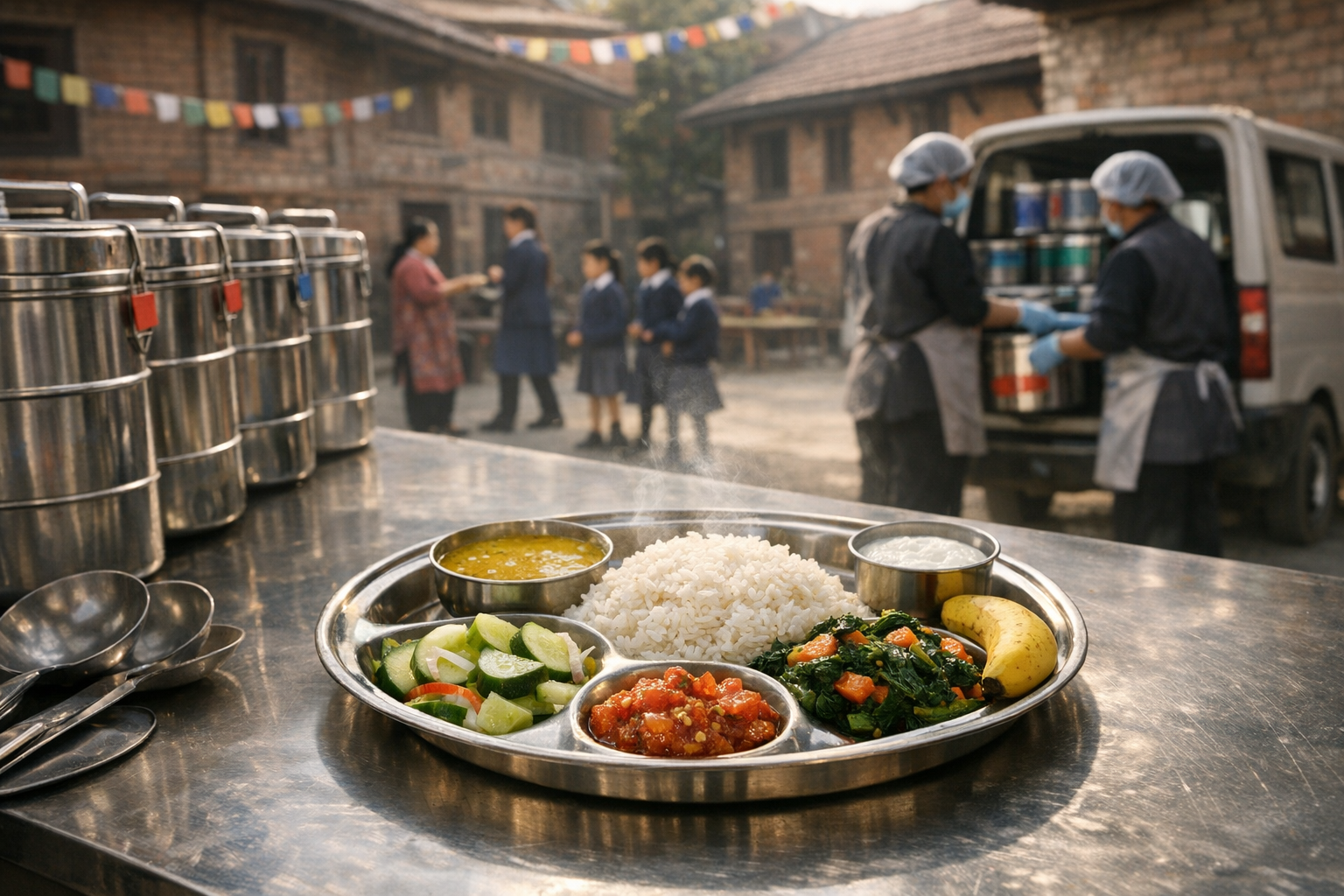
From 15 May 2026, Food For Life Nepal began serving daily midday meal Prasadam to more than 20,000 students enrolled in community schools across Kathmandu, Bhaktapur, and Dhangadhi. This expansion represents a major scale-up in school feeding capacity aimed at reducing classroom hunger, supporting attendance, and advancing equitable learning outcomes.
As a school feeding initiative, the program integrates a nutrition-sensitive education approach with culturally rooted vegetarian cuisine. By providing a consistent, balanced meal during the school day, the effort addresses short-term hunger while reinforcing the long-term cognitive development, concentration, and retention associated with effective school feeding programs documented globally.
Operationally, meals are prepared in community kitchens and dispatched through time-bound routes so each school receives Prasadam within safe temperature windows. The approach emphasizes four pillars of delivery quality: caloric adequacy, micronutrient diversity, rigorous hygiene, and on-time service.
Menus are tailored to local tastes and seasonal availability, typically combining cereals for energy, pulses for protein, vegetables for fiber and micronutrients, dairy or plant-based fats for satiety, and fortified staples where locally available. This vegetarian, sattvic profile aligns with widely shared South Asian dietary ethics and is inclusive for children from diverse backgrounds.
Food safety protocols adhere to nationally accepted guidelines covering clean water, sanitation, hand hygiene, surface disinfection, and temperature control from kitchen to classroom. Batch tracking and documented standard operating procedures reduce risk and enable rapid corrective action when needed.
To ensure inclusivity, menus remain strictly vegetarian and avoid ingredients commonly restricted by faith-based or allergy considerations in participating schools. Allergen awareness, clear labeling where required, and age-appropriate portioning support safety and equity.
The logistics model optimizes routes across Kathmandu and Bhaktapur’s dense urban fabric and serves schools in Dhangadhi through coordinated last-mile distribution. Reusable, insulated vessels minimize heat loss and food waste, and local procurement shortens supply chains while supporting regional farmers and vendors.
Teachers and administrators commonly report immediate benefits: calmer classrooms, improved focus after lunch, lower tardiness, and fewer early departures. Where household food insecurity is present, a dependable school meal reduces family pressure and promotes regular attendance, particularly among girls.
The cultural significance of serving sanctified vegetarian food as Prasadam is notable. Within the Hare Krishna tradition, food prepared and offered with devotion cultivates gratitude, service, and respect. These values resonate across dharmic traditions: Sikh langar models inclusivity and seva, Buddhist dana emphasizes generosity, and Jain ahimsa upholds non-violence in diet. The shared ethos strengthens communal harmony and unity in multi-faith classrooms.
A message introduced by the Honorary President opens with Hare Krishna! and conveys gratitude to teams, teachers, and community partners for their selfless contributions. This spirit of appreciation and collective responsibility underpins the program’s daily operations.
Monitoring and evaluation track key performance indicators such as meal counts versus enrollment, delivery timeliness, plate-waste ratios, and feedback from school management committees. Periodic kitchen audits, staff refresher trainings, and community consultations inform continuous improvement and transparent governance.
Environmental stewardship is embedded through seasonally adaptive menus, efficient transport planning, reusable serviceware, and waste segregation for composting where feasible. These measures reduce costs and the program’s footprint while reinforcing responsible habits among students.
The initiative contributes to multiple development priorities: reducing classroom hunger, improving academic time-on-task, advancing gender equity, and supporting public health through safe food and hygiene practices. It aligns with widely recognized goals for Zero Hunger and Quality Education while remaining grounded in local needs.
A scalable, modular kitchen design and route scheduling toolkit allow the model to extend to additional municipalities as capacity grows. Partnerships with local governments and school bodies further anchor transparency, accountability, and long-term sustainability.
Above all, the daily practice of sharing Prasadam in Kathmandu, Bhaktapur, and Dhangadhi demonstrates how nutrition, culture, and compassion reinforce one another. By nourishing young minds, the effort invests in a brighter, more cohesive future for Nepal’s communities and exemplifies unity across Hindu, Buddhist, Jain, and Sikh traditions.
Inspired by this post on Dandavats.









Leave a Reply
You must be logged in to post a comment.