
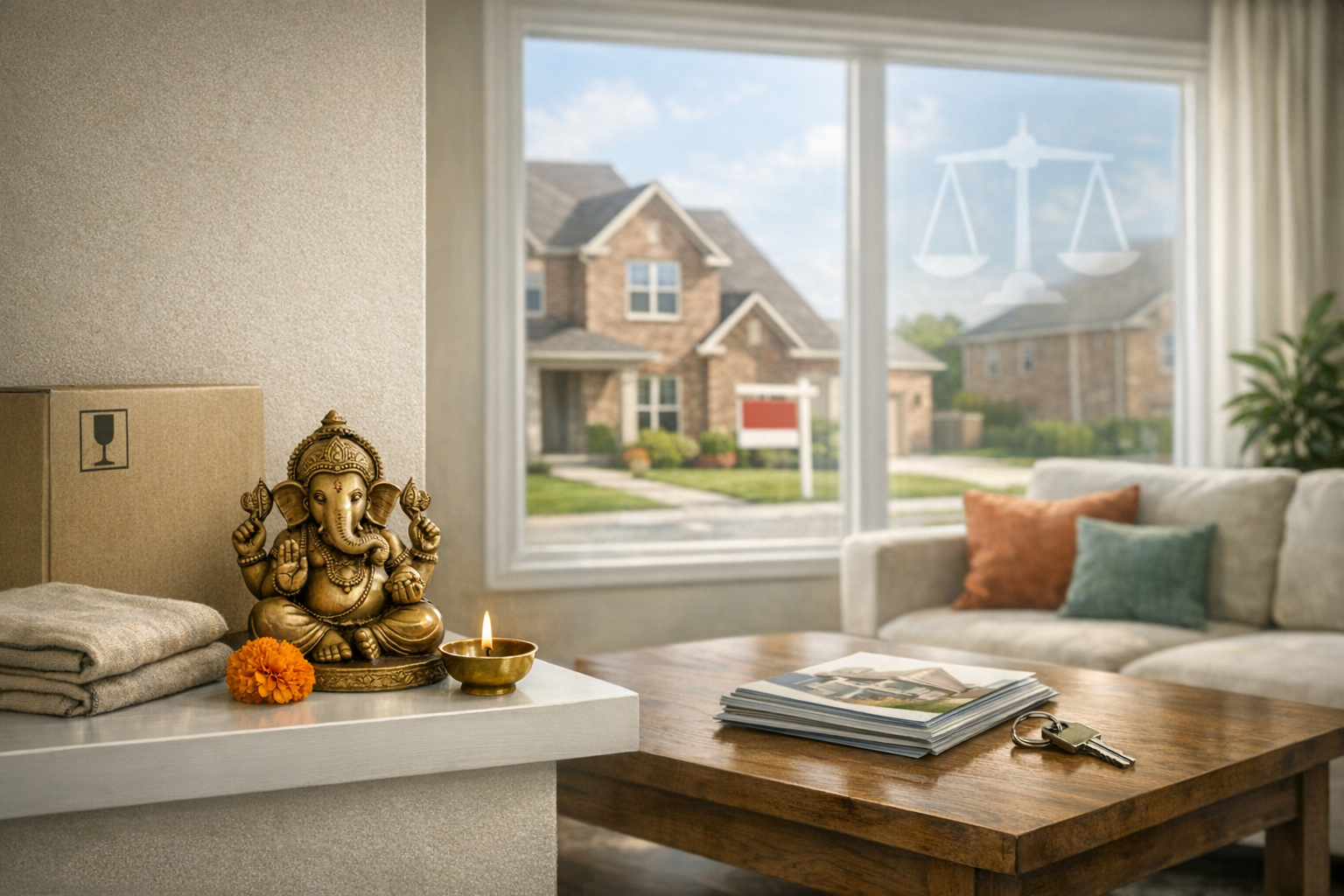
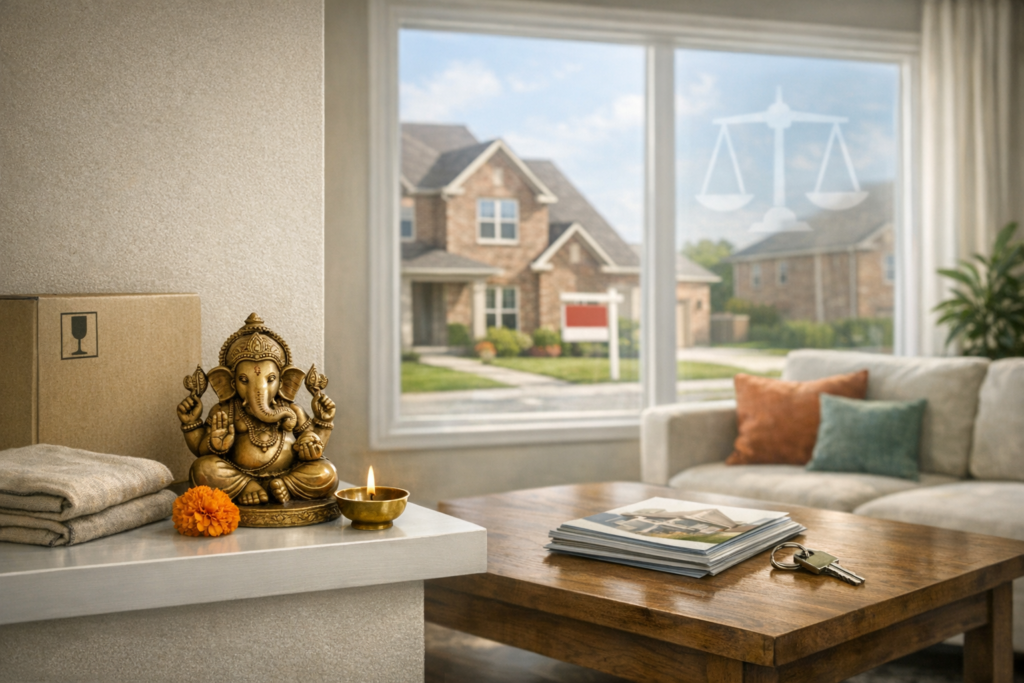
A recent case in Celina, Texas, brought national attention to the intersection of religious identity, housing-market pressures, and fair-housing obligations. As reported in a Bloomberg analysis of the Dallas–Fort Worth housing market, an Indian-origin homeowner, Ravi Vavilala, was advised by a realtor to remove a visible statue of Lord Ganesha so the property would appeal to a broader pool of prospective buyers. The episode unfolded amid shifting immigration trends and a cooling in segments of the Texas market historically buoyed by inflows of South Asian professionals on H-1B visas.
According to the report, Vavilala moved with family from Charlotte, North Carolina, to Celina in 2023, a period when the city emerged as a fast-growing hub for Indian families. Shortly after relocating, he faced severe personal challenges, including a stage-four cancer diagnosis and job loss. The family listed their home for sale, only to find the transaction more difficult than anticipated.
One prospective buyer reportedly left the viewing within minutes. When the homeowner later conferred with the realtor, he was told that some visitors found the visible religious décor and personal belongings off-putting. In response, the family implemented conventional staging changes intended to depersonalize interiors and broaden appeal. As Vavilala put it, “We realised we had to make the house look more neutral so that it would appeal to a wider range of buyers.”
As part of those changes, the family temporarily relocated the Ganesh murti to a nearby storage facility. Despite these adjustments, the listing still had not received offers after three months, and the family contemplated a sale at a loss. Bloomberg’s broader market take noted that tighter visa policies during the Trump administration slowed migration, contributing to Texas market conditions that were neither clearly buyer- nor seller-favorable at the time.
The situation crystallizes a nuanced tension: real estate staging commonly encourages sellers to remove highly personalized items—family photos, sports memorabilia, and any distinctive décor—so that buyers can imagine their own lives in the space. Yet, for many Hindu, Buddhist, Jain, and Sikh households in the diaspora, sacred murtis and prayer spaces are not merely decorative; they structure daily rhythms of devotion, resilience, and hope. Being asked to conceal them, even temporarily, can feel like being asked to mute a core part of one’s identity.
From a legal and professional-standards perspective, the line between neutral staging guidance and impermissible discrimination is critical. The U.S. Fair Housing Act (FHA) prohibits discrimination in housing on the basis of religion (among other protected classes). Best practice for real estate professionals is to frame staging recommendations in neutral, universal terms—apply them consistently across all visible religious and non-religious personal items, and never use such advice to deter particular groups from viewing, bidding, or buying.
Neutral guidance—such as recommending that all visibly personal artifacts be minimized for photos and showings—can be compatible with both market norms and religious freedom. Conversely, if advice is targeted to a specific community, or if religious expression becomes a basis for limiting access or steering prospective buyers, it risks encroaching upon fair-housing protections. In short, equal treatment, transparent intentions, and consistent application are paramount.
Context matters. Over the past decade, the Dallas–Fort Worth region attracted numerous corporate relocations from California and elsewhere, increasing demand for housing and drawing thousands of South Asian professionals, many on H-1B visas. Bloomberg’s reporting links a subsequent slowdown in migration—coinciding with stricter visa policies during the Trump administration—to a rebalancing in segments of the Texas housing market. In such transitional periods, sellers may experience longer listing times and greater pressure to conform to perceived buyer expectations, which can inadvertently heighten sensitivities around cultural and religious expression.
Community dynamics also require careful interpretation. Some residents reportedly expressed unease with rapid demographic change. Rather than amplify polarizing rhetoric, evidence-based dialogue can emphasize shared civic goals: safe neighborhoods, good schools, reliable infrastructure, and a flourishing economy. Dharmic traditions—Hinduism, Buddhism, Jainism, and Sikhism—share a civilizational ethos that values pluralism and mutual respect; that ethos can be a resource for constructive, bridge-building conversations across communities.
There are practical ways for dharmic families to honor sacred practice while navigating staging norms should they choose to do so. Homeowners can create a discreet, easily reassembled puja area for showings; use tasteful, reversible coverings for altars during open houses; relocate only fragile or high-value items for safety; and document the sanctity of a space privately so that re-establishing daily practice is seamless after each viewing. These approaches preserve devotion while meeting mainstream expectations of a neutral showing environment.
Real estate professionals can likewise operationalize cultural competence without compromising fiduciary duties. Recommended steps include consistently depersonalizing all listings regardless of religion; using inclusive, neutral language in staging conversations; proactively reviewing FHA standards and brokerage policies; and seeking continuing education on cultural literacy. When agents engage respectfully and uniformly, they not only mitigate legal risk but also expand market reach by making more buyers and sellers feel welcome.
It is also important to distinguish perception from data. Sellers sometimes infer causality—assuming a single décor element is pivotal—when outcomes stem from pricing strategy, seasonality, mortgage-rate volatility, neighborhood comparables, or listing exposure. A measured approach combines neutral staging with evidence-driven decisions on pricing, days-on-market expectations, and marketing channels.
Across the South Asian diaspora, the experience described here resonates beyond a single household. For many, a Ganesha murti symbolizes auspicious beginnings, wisdom, and the removal of obstacles. Asking to hide such a presence can feel emotionally weighty, especially during periods of hardship, as in Vavilala’s case. Balancing empathy with market pragmatism is therefore not only an ethical matter; it is also good practice that strengthens trust and improves outcomes.
The broader lesson is clear: religious freedom and market efficiency need not be at odds. With fair-housing literacy, cultural humility, and transparent, uniformly applied staging standards, the North Texas housing ecosystem can remain both competitive and inclusive. For dharmic families—Hindu, Buddhist, Jain, and Sikh—maintaining sacred continuity while engaging confidently with U.S. real estate norms is achievable and worthy of collective support.
In the end, a home sale should never require surrendering one’s dignity or spiritual center. Sellers can choose neutralization strategies that feel respectful; agents can uphold both the letter and the spirit of fair-housing law; and communities can recommit to pluralism. Doing so ensures that personal faith practices—and the symbols that embody them—are treated not as liabilities, but as elements of a rich, shared civic tapestry.
Inspired by this post on Hindu Human Rights Blog.









Leave a Reply
You must be logged in to post a comment.