In Hindu sacred iconography, hands speak a precise visual language that bridges aesthetics, philosophy, and lived devotion. Among these gestures, the Ahuya–Varada Mudra is frequently read as a promise made visible: an invitation to approach, followed by the grace of bestowal. In temples, museums, and manuscripts, this pairing functions as a subtle yet profound assurance that the divine welcomes and nourishes. For many who stand before a murti, the combined impression of invitation and generosity evokes calm, trust, and belongingan affect that has endured from the earliest stone carvings to the gleam of Chola bronzes.
Etymology clarifies function. Ahuya, often related to āhūya or āhvāna (to call, to invite), is interpreted in regional shilpa vocabularies as a beckoning or welcoming gesture. Varada (vara + da), literally boon-giving, is the canonical benedictory hand. Taken together, Ahuya–Varada conveys, “Come near; receive.” Terminology varies by period and region, so the invitational hand may be described differently across treatises and catalogues, and the pair is at times subsumed under the more familiar Abhaya–Varada (fearlessness and boon), especially when the welcoming hand visually approximates Abhaya.
Formally, Varada Mudra is typically shown with the palm facing outward and slightly downward at about navel or hip height, fingers relaxed and extended; in South Indian bronzes, the fingertips often point earthward, with visible palmar creases rendered carefully. Ahuya, where distinguished, is expressed by a soft, beckoning articulation of the fingersless vertical than Abhaya and less discursive than teaching or argumentative mudras such as Vitarka or Tarjani. Abhaya, by contrast, is an upright palm, shoulder or chest height, proclaiming fearlessness. In practice, sculptors sometimes merge the affect of welcome into the gentle open-hand carriage of Abhaya; hence the art-historical need to read context, stance, and accompanying attributes.
Shilpa Śāstra traditionsacross texts such as the Mānasāra and the iconographic chapters of the Viṣṇudharmottara Purāṇatreat mudras as integral to identification and rasa. Measurements (tāla), relative heights of hands, and angles of wrists are not arbitrary: they calibrate meaning and mood. Ritual manuals (paddhatis) and performative treatises (e.g., Abhinaya Darpana) provide complementary grammars, reinforcing that a deity’s hand vocabulary must align with the theological profile of that form and the emotional tenor intended for darśana.
Vaishnava sculptures frequently display Varada in the lower right hand while conch (śaṅkha) and discus (cakra) occupy the uppers; the lower left may either mirror welcome/assurance or rest in kaṭyavalambita (on the hip). In Vishnu’s avatāra imagessuch as Rāma and Kṛṣṇathe right lower hand in Varada aligns with divine generosity and protection of devotees (bhakta-vatsalya). In certain regional idioms, the left hand slightly cupped toward the devotee reads as Ahuya, amplifying the invitation to approach for refuge.
Shaiva imagery presents a classic study in the paired semantics of assurance and giving. Dakṣiṇāmūrti frequently exhibits Abhaya or Varada, harmonized with the pedagogical context of the seated teacher beneath the banyan. In Somāskanda panels, Śiva’s lower hand often confers boon while another assures fearlessness, a compositional equilibrium that radiates paternal welcome. Natarāja’s raised Abhaya counters the “terror” of the cosmic fire with fearless grace; where a companion hand is rendered in Varada, the choreography resolves energetic dissolution into benevolent renewal.
In Śākta traditions, both Lakṣmī and Durgā commonly present Varada. Mahīṣāsuramardinī panels, even amid dynamic battle, anchor the scene with a benedictory hand, signaling the boon of protection after the storm of adharma. Śrī Lakṣmī’s gentle Varada, especially in Gupta and post-Gupta idioms, visually encodes the theology of abundance (śrī) as compassionate generosity. In some Eastern Indian and Odishan renderings, a softly inclined left hand functions as Ahuya, synchronizing welcome with wealth.
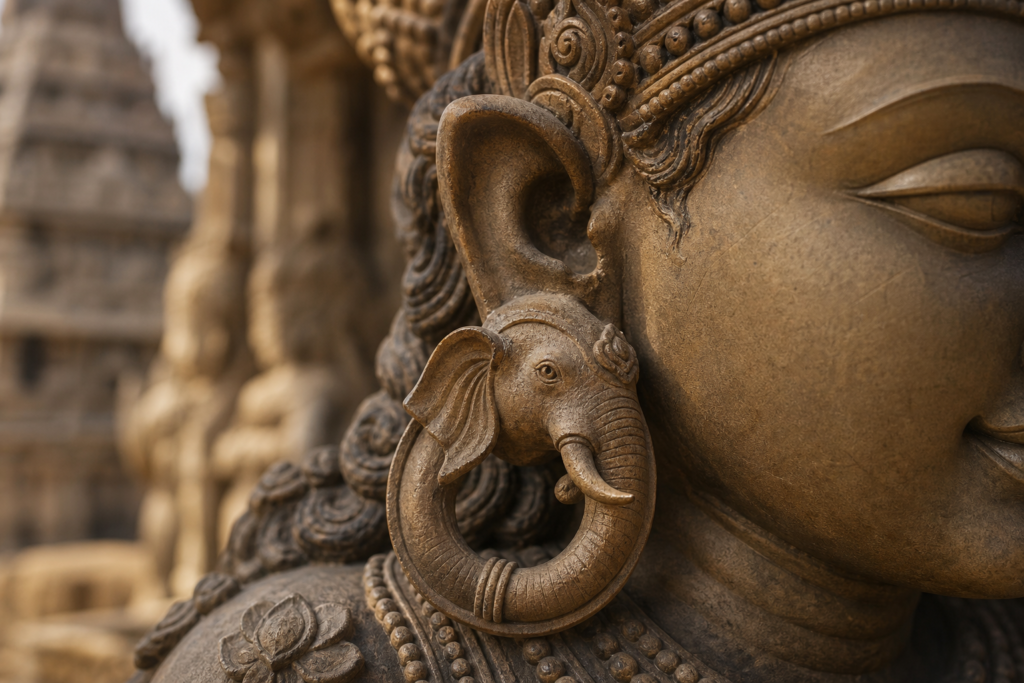
Gaṇeśa, archetype of auspicious beginnings, often carries Varada in the lower right hand while the modaka or pāśa anchors the other hands. The rhythmic curvature of the trunk and a relaxed palm produce a warm affect: the sense that obstacles are not only removed but that the path ahead is actively made inviting. Subrahmaṇya/Skanda iconography similarly incorporates Varada to emphasize guidance and blessing to those embarking on disciplined endeavor.
Parallels in the wider dharmic world underscore a shared semiotic heritage. In Buddhism, Varada (also called dāna or vara mudra) is widespread in Gandhāran, Gupta, and Pāla–Sena art; the downward-facing open hand signifies the Buddha’s charity of Dharma and fear-free gift of refuge. Bodhisattvas such as Avalokiteśvara and Maitreya frequently combine assurance and boon, welcoming beings across the thresholds of suffering.
Jain art, committed to the serene ideal of the Jina, most often emphasizes dhyāna (meditation) and kāyotsarga (standing abandonment). Yet the Abhaya-like open palm appears in many standing Jina images, and attendants (yakṣa–yakṣiṇī) frequently display Varada, externalizing the community’s ethic of dāna and ahiṁsā as social welcome. The visual language of welcome and generosity thus threads through Jain sculpture without compromising its ascetic core.
While Sikh dharma centers the Śabad Guru rather than image worship, later paintings and muralsespecially in Pahari and Janamsākhī traditionsoccasionally depict Gurus with a gentle benedictory open palm akin to Abhaya/Varada. The underlying messagedayā, seva, and fearless compassionresonates with the same civilizational ethos of welcome found across Hindu, Buddhist, and Jain arts, reinforcing shared ethical ground without erasing distinct theological commitments.
Regional style modulates the Ahuya–Varada vocabulary. Chola bronzes favor elegant wrist turns and supple finger articulation; the Varada fingertips point earthward with palpable softness. In Odishan (Kalinga) stone, palms are broader, with incised creases and a softly inclined beckoning hand that art historians connect to local āhvāna conventions. Pāla–Sena sculpture in Eastern India tends toward rounded volumes and generous palms, suiting the devotional aesthetic of tenderness. Hoysala carvings emphasize minute jewelry and muscular hands; even then, the benedictory gesture remains readable from a distance, ensuring legibility in dim mandapa light.
Reading Ahuya–Varada accurately benefits from an iconometric checklist. First, note palm orientation: Varada is outward and slightly downward; Abhaya is upright and outward; Ahuya, where distinguished, is subtly beckoning, with a gentle inward curl or invitational angle. Second, assess height: the further the hand settles toward the hip, the more likely boon-bestowal rather than fearless proclamation. Third, consider attributes and narrative: teaching scenes privilege didactic mudras; protective scenes often settle into Abhaya–Varada or Ahuya–Varada to complete a theological arc from invitation to grace.
The psychological effect of this pair is observable in real time. Devotees and visitorsirrespective of traditioncommonly report that an open, downward-facing palm quiets anxiety, while a welcoming hand softens distance, transforming the viewing experience from passive observation into relational darśana. That affective movementapproach, assurance, receptionmirrors ritual choreography: circumambulation, eye contact with the murti, and acceptance of prasāda.
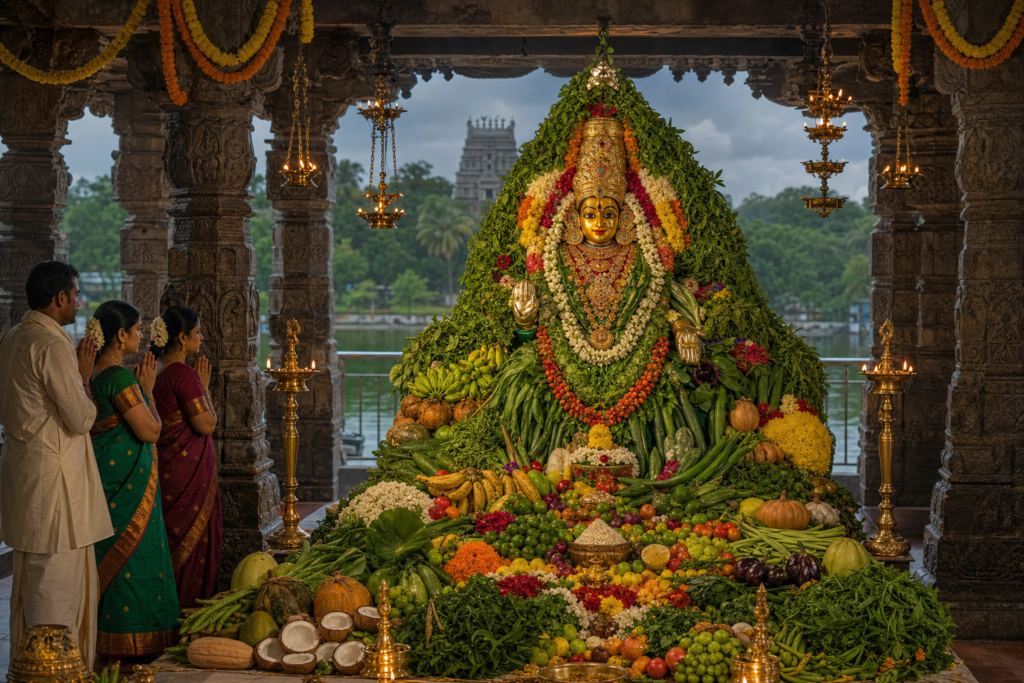
Ritual practice further clarifies meaning. During abhiṣeka and alankāra, priests ensure hands remain visible despite garlands and vastras so the mudra message is not occluded; in processional utsavas, the Varada hand faces the crowd, carrying the gift of presence outward into public space. In liturgical poetry and stotra, terms like anugraha (grace), śaraṇāgata-rakṣaṇa (protection of the surrendered), and dāna (giving) often accompany descriptions of these gestures, aligning visual sign with verbal praise.
Common confusions arise with Vitarka (teaching/discourse), where thumb and forefinger touch; with Tarjani (admonishing), where the index finger extends emphatically; and with Abhaya when the palm height drifts lower in later-period works. When in doubt, the rule of ensemble applies: the hand must be read alongside attributes, stance, and iconographic family. For example, Viṣṇu with śaṅkha–cakra and a lowered open hand strongly suggests Varada; a slightly inviting companion hand supports Ahuya–Varada rather than Abhaya–Varada when the overall affect is welcome rather than command.
Field encounters reinforce the utility of this grammar. Temple visitors new to iconography often find that identifying Varada becomes a gateway skill: once the benedictory hand is recognized, the “story” of the murti becomes legible. Museum educators increasingly introduce Ahuya–Varada through embodied learningasking participants to mirror the gestureso that perception becomes kinesthetic as well as visual. Such practices reveal why these hands have guided communities for centuries: they are at once doctrinal and deeply human.
Across the dharmic spectrum, then, Ahuya–Varada distills a shared civilizational promise: plurality without indifference, compassion without condescension, welcome without erasure. Hindu sculptures encode it with meticulous Shilpa Śāstra canons; Buddhist and Jain arts echo it through the ethics of refuge and generosity; Sikh narrative painting expresses it through the moral clarity of seva and courage. The result is a unifying symbolic language that honors difference while nurturing solidarity.
In sum, the Ahuya–Varada Mudra is more than an attractive hand pose. It is a precise semiotic device in Hindu iconographygrounded in text, refined by regional craft lineages, and animated by practicethat invites approach and confers grace. Recognizing its formal cues and theological valences equips viewers to read Hindu art with greater accuracy and empathy, and to appreciate how the same welcoming grammar resonates through Buddhism, Jainism, and Sikhism. In a world hungry for reassurance and connection, few images speak so quietlyand so convincinglyof both.
Inspired by this post on Hindu Blog.