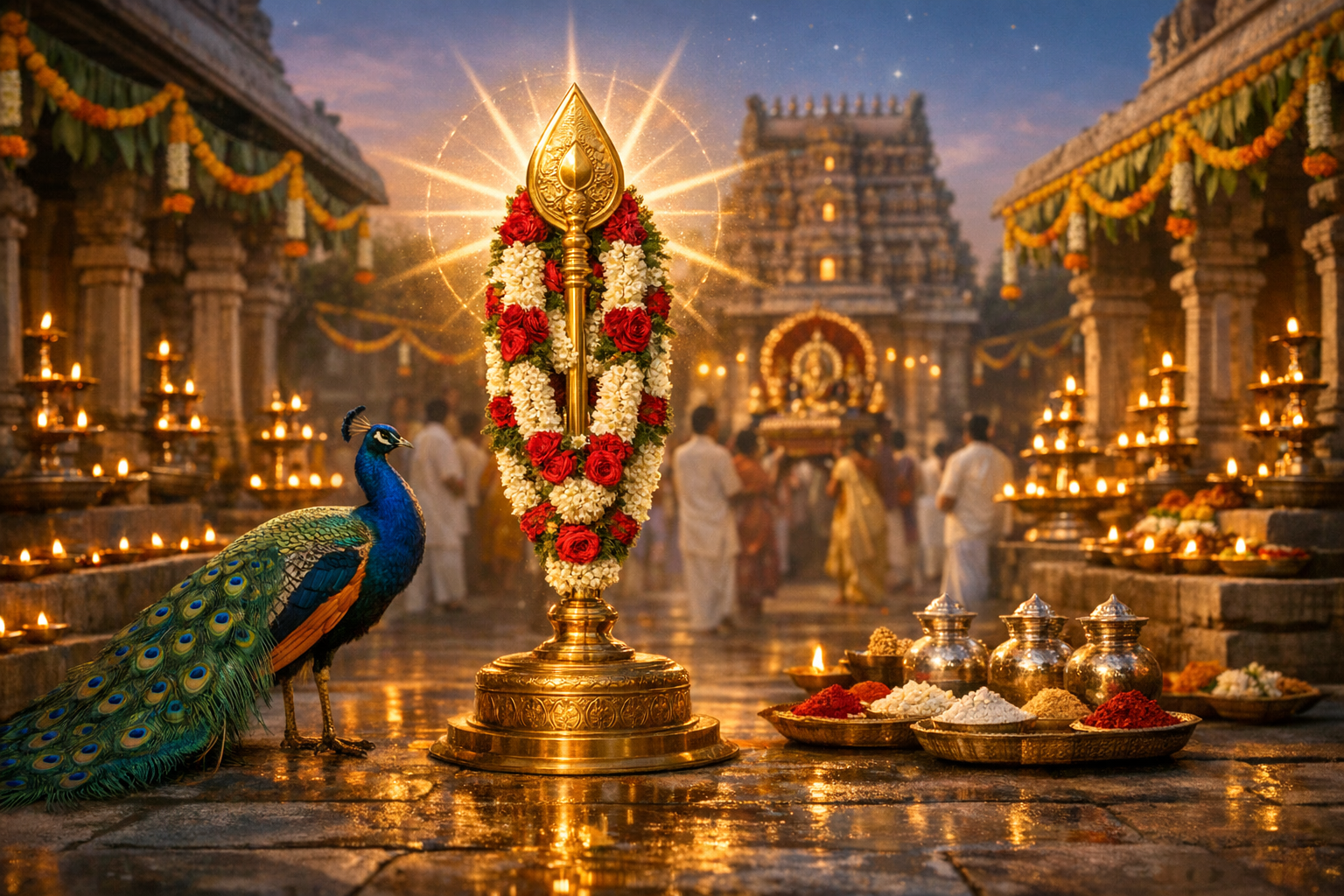
Vaikasi Visakam, also known as Vaigasi Vishakam, is the birth-star celebration (jayanti) of Lord Muruga, revered as Subramanya, Shanmuga, Skanda, and Kumara across the Tamil world. In 2026, Vaikasi Visakam falls on 30 May (Saturday), when Visakam Nakshatram coincides with the Tamil solar month of Vaikasi, as per Tamil Panchangam. The observance centers on Visakam Nakshatra rather than a lunar tithi, and thus aligns devotees around a precise star-based muhurta.
Within Tamil sacred tradition, Lord Muruga embodies jnana-shakti (the power of wisdom) and shaurya (valor), guiding seekers to transform courage into compassion. He is depicted with the Vel (spear of discriminative knowledge) and the mayil (peacock vahana), symbols that together signify mastery over egoic impulses and illumination of right understanding. The festival honors these ideals through elaborate abhishekam, veneration of the Vel, community service, and the recitation of devotional hymns.
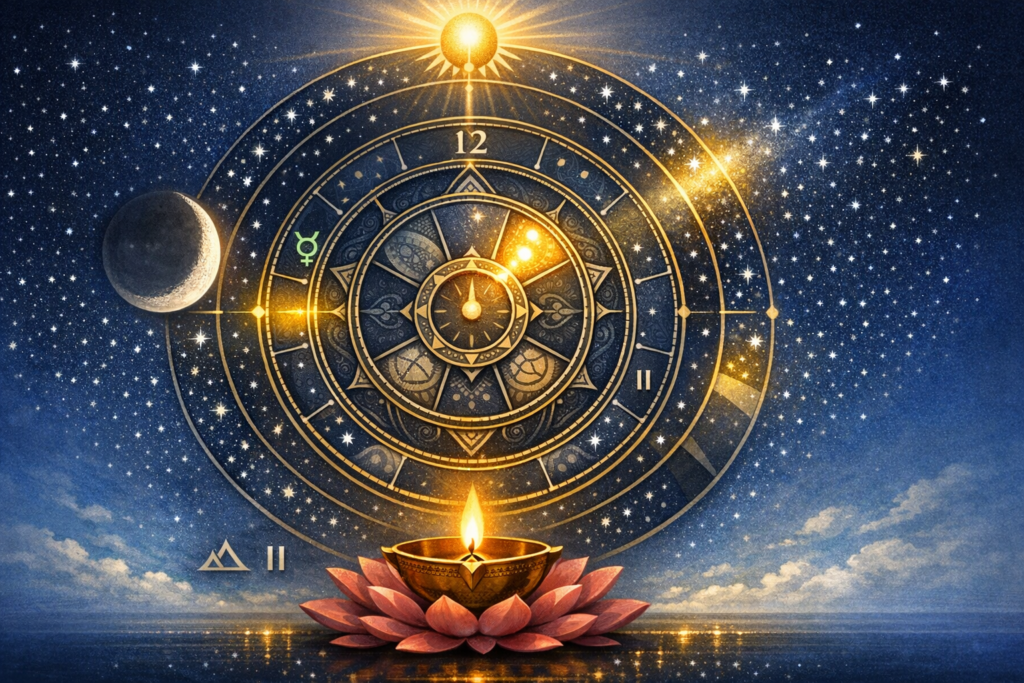
Technically, the festival date is determined by the occurrence of Visakam (Vishakha) Nakshatra during Vaikasi, the Tamil solar month corresponding broadly to mid-May through mid-June when the Sun transits Rishabha (Taurus). Temples generally select the day when Visakam prevails at sunrise or holds the dominant share of the day, but local sampradaya can differ. As 30 May 2026 is the published date in widely used Tamil Panchangam references, devotees typically confirm temple-specific muhurta details locally.
The resonance of Vaikasi Visakam extends well beyond calendrical exactitude. Devotees often describe the day as charged with a gentle radiance: the fragrance of vibhuti and jasmine garlands along temple corridors, the gleam of the Vel during alankaram, and the communal energy of volunteers offering annadhanam. Families speak of the festival as a spiritual midpoint in the year—an opportunity to renew sankalpa, reorient practice, and pass living traditions on to younger generations.
Classical sources inform much of the festival’s theological texture. The Skanda Purana and its Tamil retellings, including Kanda Puranam, present Muruga as the divine commander who subdues adharma while bestowing knowledge. Sangam-era works such as Thirumurugatrupadai celebrate the six abodes (Arupadai Veedu) and the many forms of Muruga’s grace. Medieval saint Arunagirinathar’s Thiruppugazh and Kandar Anubhuti suffuse the day’s liturgy with evocative meters that blend music, devotion, and precise spiritual instruction.
The iconography of Shanmuga (six-faced Muruga) itself holds layered meanings. The six faces are often read as the light of awareness looking in all directions, the unfragmented intelligence that can organize life’s complexity into dharmic action. The Vel is interpreted as viveka—cutting through confusion and aligning seekers with clarity—while the peacock vahana symbolizes sublimated pride, dynamism, and beauty placed in the service of righteousness. Such symbols speak to shared dharmic values across Hindu, Buddhist, Jain, and Sikh traditions: courage, non-harm, wisdom, restraint, and service.
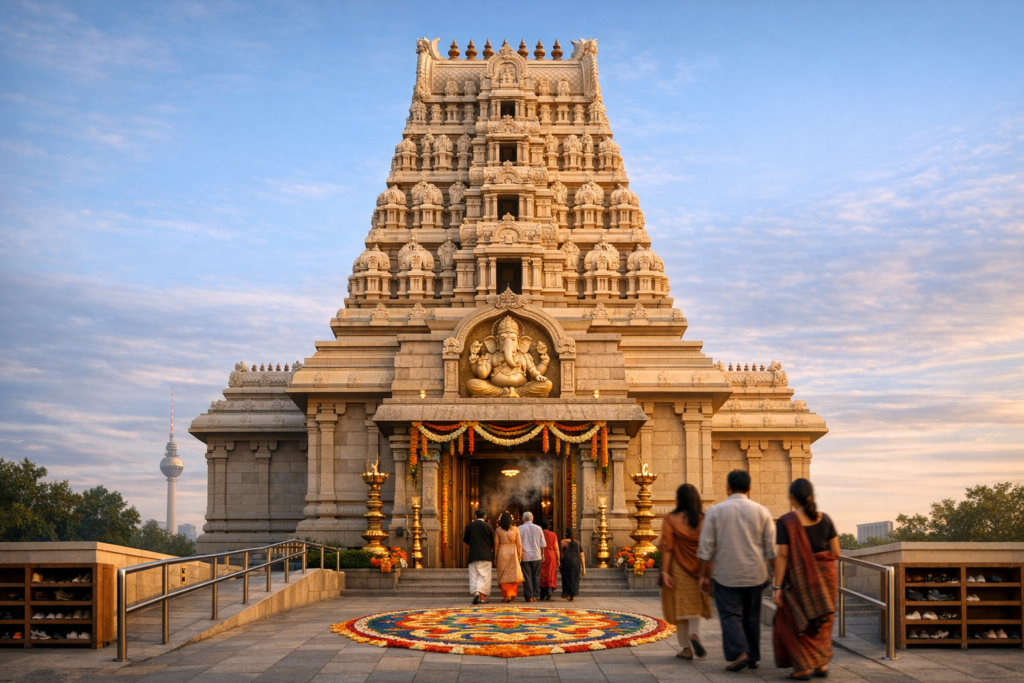
Core temple rituals on Vaikasi Visakam follow a recognizable, though locally varied, cadence. Mangal snanam and alangaram of the moola-vigraha and utsava-murti are followed by abhishekam with panchamrita, vibhuti, sandal, and fragrant waters. Archana with the Subrahmanya Ashtottara Shatanamavali, offering of vel puja, and recital of Thiruppugazh commonly feature. Many temples organize evening processions, allowing devotees darshan of the utsavar beneath the sky whose Visakam asterism frames the day.
While every Murugan kovil in Tamil Nadu marks the occasion, the Arupadai Veedu offer distinct highlights. At Palani (Dhandayuthapani Swamy), the famed Panchamirtham naivedyam and abhishekam draw large congregations. Thiruchendur Subramanya Swamy Temple on the seashore conducts elaborate pujas that echo Skanda’s lore of victory and cleansing. Swamimalai emphasizes Muruga’s upadesa of the pranava to Shiva, pointing to the primacy of knowledge transmission. At Tiruttani, Tiruparankundram, and Pazhamudircholai, each sthala enlivens a particular dimension of Muruga’s grace through its traditional liturgy.
Beyond Tamil Nadu, the festival is observed with great devotion across Sri Lanka, Malaysia, Singapore, Mauritius, and by the global Tamil diaspora. In Malaysia and Singapore, for instance, Sri Subramanya temples conduct extended abhishekam, kavadi offerings in some communities, and annadhanam, while Tamil bhakti literature and music knit the shared cultural memory. These observances reaffirm how Muruga-bhakti functions as a bridge across geographies while preserving distinct local flavors.
At the heart of Vaikasi Visakam lies seva. Free community kitchens, blood-donation drives, and volunteer-led cleanliness efforts convert devotion into social uplift. This is where ethical teachings become actionable—translating lofty verses into tangible care for people, animals, and the environment. Such service aligns with the broad dharmic commitment to compassion and mutual responsibility cherished across Hinduism, Buddhism, Jainism, and Sikhism.
At home, the festival can be observed with simplicity and depth. A clean altar may feature a Muruga murti, a symbolic Vel, or even a framed image. After sankalpa, devotees light a deepam, perform achamana, and offer gandha, pushpa, dhupa, and deepa in the panchopachara or shodashopachara sequence. Recitations may include Subramanya Bhujangam, selections from Thiruppugazh or Kandar Anubhuti, and the Subrahmanya Ashtottara. Naivedyam such as Panchamrita, payasam, sweet pongal, vadai, or sundal is placed reverentially before arati. The prasad is then shared with family and neighbors.
Fasting practices vary. Many observe a light, sattvic diet until the main puja, while some choose complete fasting if health permits. White, saffron, or yellow attire is preferred by many devotees to reflect purity and auspiciousness. Families often encourage children to learn a short Thiruppugazh verse, craft paper peacock feathers, or help arrange the altar—gentle, formative experiences that anchor memory and meaning.
Kavadi offerings, though most strongly associated with Thaipoosam, may appear in some communities on Vaikasi Visakam as vows of gratitude or supplication. Where undertaken, guidance from temple authorities ensures safety, modesty, and non-injury—principles consonant with the dharmic ethic of ahimsa (non-harm) and disciplined self-offering.
Offerings associated with Muruga carry regional distinctiveness. Palani’s Panchamirtham—traditionally prepared from banana, jaggery, honey, ghee, and cardamom—has become emblematic, while fruits such as pomegranate and banana, and flowers like rose and jasmine, are common. Vibhuti is distributed widely as prasad, with many families retaining a small portion at home as a reminder of purity and steadfastness.
Linguistically, both Vaikasi Visakam and Vaigasi Vishakam are used in common parlance. Vaikasi denotes the Tamil solar month aligned with the Sun’s transit through Rishabha (Taurus), and Visakam corresponds to Vishakha Nakshatra. Observances may be labeled differently by region and diaspora, but the unifying principle remains the same: honoring Muruga on the Visakam star day of Vaikasi.
Astrologically, Vishakha is associated in classical sources with the deities Indra-Agni and a symbol of triumphal arch or forked branches—images that suggest arrival, fruition, and purpose. In a devotional setting, these associations map gracefully to Muruga’s role as a bestower of courage, clarity, and fulfillment when effort is aligned with dharma.
Those traveling to major temples in 2026 may anticipate substantial gatherings. Early arrival, hydration, sun protection, and attention to local advisories help ensure a serene darshan. Adhering to eco-conscious practices—carrying reusable water bottles, limiting single-use plastics, and respecting wildlife—embodies devotion as environmental responsibility.
For muhurta precision, temples and local panchangam committees remain the best reference points. When Visakam spans two civil dates, some traditions prefer the day when the star prevails at sunrise; others select the day with a longer Visakam duration. Either approach is rooted in respected precedent, and festivals often follow the temple’s established custom.
In community narratives, Vaikasi Visakam feels both intimate and expansive: intimate in the quiet gravity of abhishekam and the resonant syllables of Thiruppugazh, expansive in the shared joy of processions and open kitchens. Devotees frequently speak of renewed resolve, clearer priorities, and a gentle return to daily sādhana. Such testimonies illustrate how carefully tended traditions enliven not only heritage but also personal well-being.
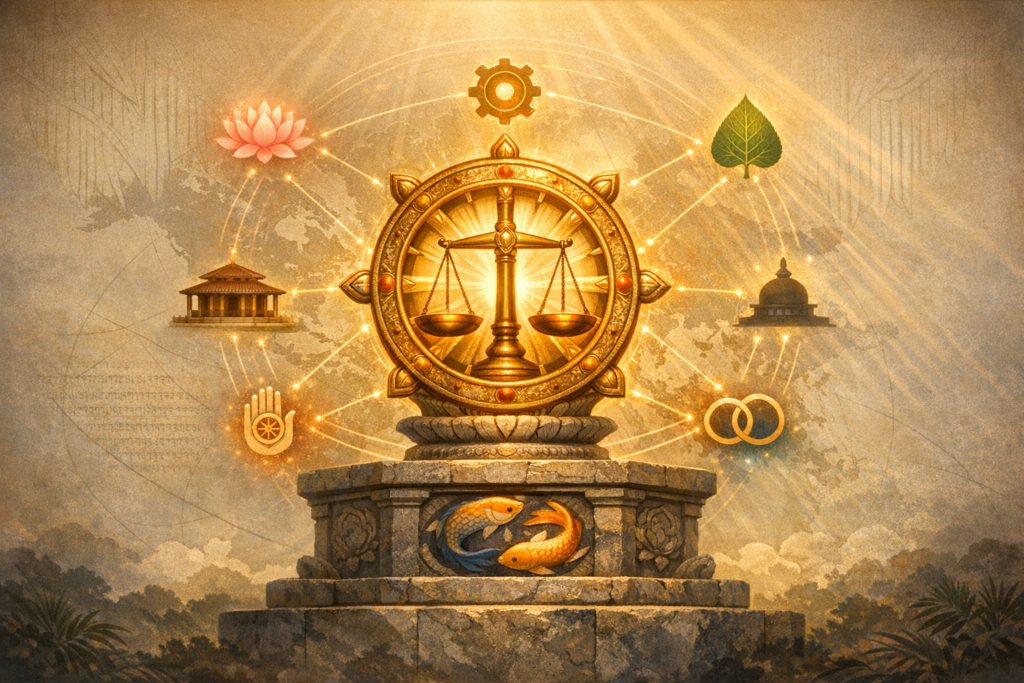
Across the wider dharmic landscape, the festival’s virtues are recognizably universal: disciplined energy, compassionate service, and unwavering pursuit of wisdom. These values echo in Buddhist, Jain, Sikh, and Hindu teachings alike, inviting communities to find common cause in protecting life, nurturing knowledge, and upholding dignity. Vaikasi Visakam thus becomes more than a date on the calendar; it is a living invitation to unity in diversity.
In 2026, as Visakam rises within Vaikasi on 30 May, temples and homes will kindle lamps, sing Muruga’s names, and share prasad that tastes of remembrance and resolve. Guided by time-tested ritual frameworks and amplified by service, the day offers a refined balance of devotion and discernment. Observed with care, it illuminates a path where courage and compassion walk together—year after year, star after star.
Inspired by this post on Hindu Pad.