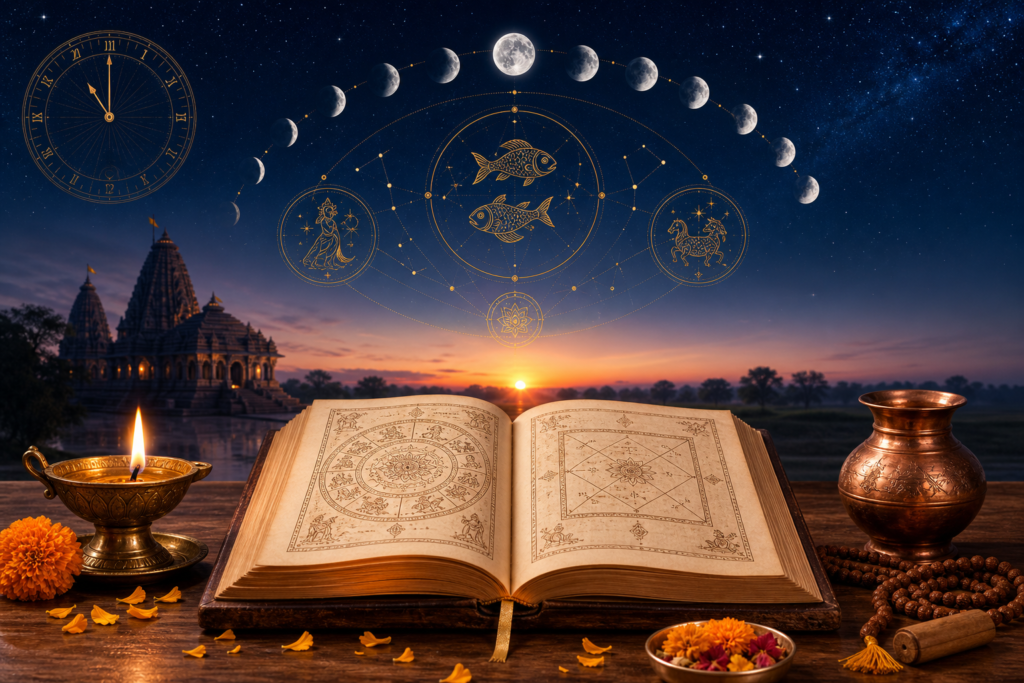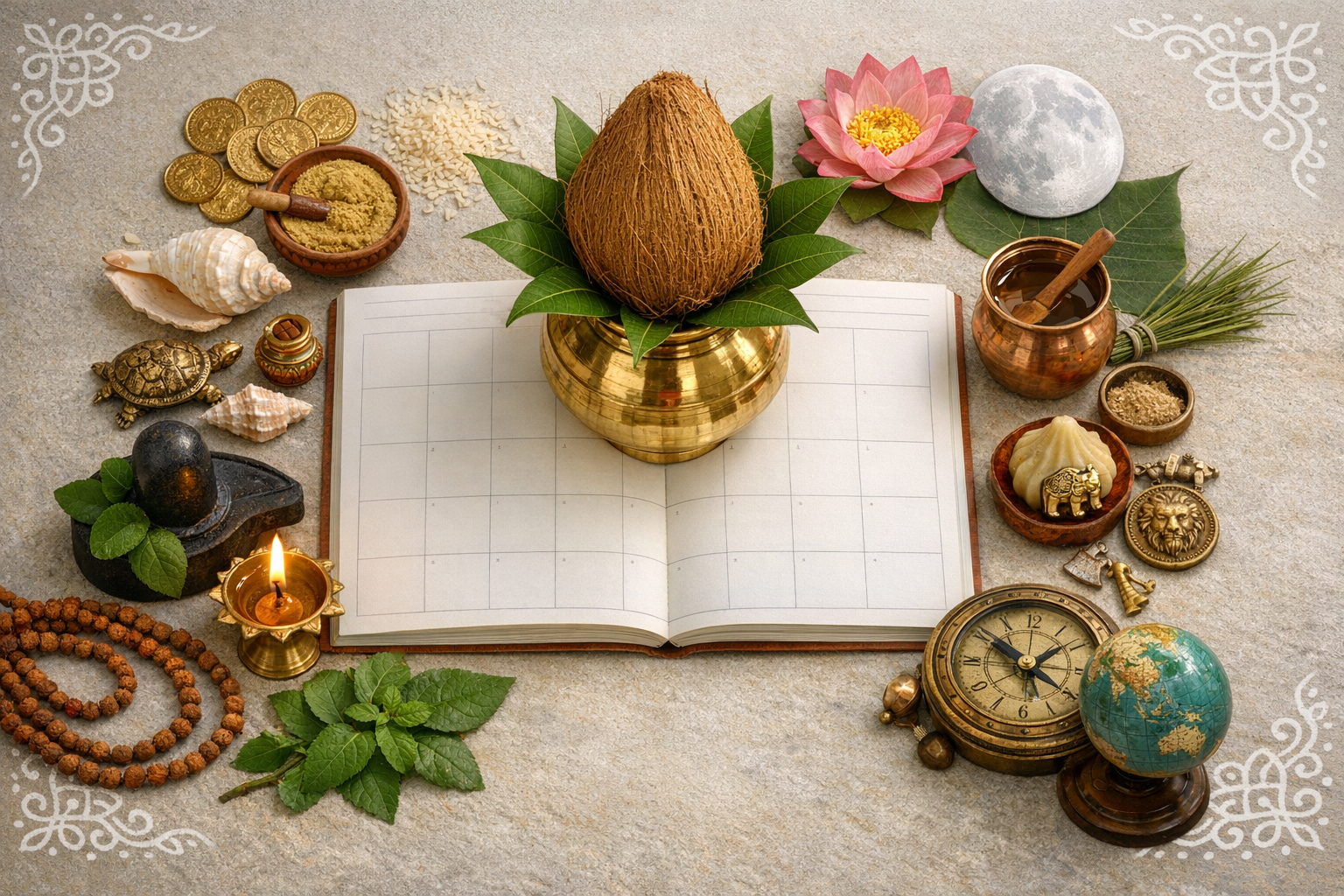
May 2026 brings a confluence of Hindu festivals and auspicious days anchored in the Vaishakha–Jyeshtha cycle of the lunisolar calendar. This research-based guide summarizes Hindu festivals in May 2026 and auspicious days as referenced in standard Hindu Panchangams of India, and it explains how to identify exact dates and tithis for each observance in local time. In many homes and temples, this month marks a seasonal transition when communities emphasize seva, dana, and shared celebrationvalues that also resonate across Buddhism, Jainism, and Sikhism, reinforcing the civilizational spirit of unity in diversity.
Across India’s regional systems, May 2026 overlaps different month names and computational conventions. In the Purnimanta reckoning used widely in North India, May straddles late Vaishakha and early Jyeshtha, while in the Amanta system common in the Deccan, Vaishakha concludes at Amavasya and Jyeshtha begins thereafter. Tamil almanacs map May to Chithirai and Vaikasi, Malayalam to Medam and Idavam, Bengali to Boishakh and Jyoistho, Odia to Baisakha and Jyestha, and the Punjabi/Nanakshahi calendar to Vaisakh and Jeth. This cross-mapping is normal in a lunisolar framework and explains why civil dates for the same tithi can vary by location.
The standard Panchang method determines tithi, nakshatra, yoga, and karana from the Sun–Moon longitude difference and assigns observances according to rules centered on sunrise (udaya) and sometimes sunset, midnight (mahanishita), or pradosha sandhi. For vrata linked to daytime worship, the tithi prevailing at local sunrise usually governs; for night-centric observances, the tithi present during the stipulated night span is decisive. Because the Moon moves quickly, a tithi can begin and end between two sunrises, making careful consultation of local timings essential for May 2026 scheduling.
Differences between Drik (observational/ephemeris) and Vakya (traditional mean-motion) Panchangams, along with varying ayanamsha values, can shift published dates by a civil day, especially near tithi transitions. Practitioners planning samskaras, weddings, Griha Pravesh, or temple events in May 2026 should cross-check at least two reputable almanacs, confirm muhurat with a local priest or astrologer, and ensure time-zone accuracy. Overseas communities should avoid applying India Standard Time directly; local sunrise, sunset, and Moonrise govern the observance wherever one resides.
Key observances that typically fall in May include Akshaya Tritiya and Parashurama Jayanti (Vaishakha Shukla Tritiya), Narasimha Jayanti (Vaishakha Shukla Chaturdashi), Vaishakha Purnima with Kurma Jayanti (and Vesak/Buddha Purnima), the month’s Ekadashi pair (Mohini and Apara), Pradosh Vrat, Sankashti Ganesh Chaturthi, Masik Shivaratri, and Amavasya with Pitru Tarpana. Region-specific rites often observed this month include Sita Navami (Vaishakha Shukla Navami), Ganga Saptami, and, in the Tamil calendar, Vaikasi Visakam. Exact civil dates vary by region; consulting a local Panchang is the most reliable way to map the May 2026 Gregorian calendar to tithis.
Akshaya Tritiya, a Sade-Teen Muhurat that needs no elaborate muhurat selection, is one of the most auspicious days for new beginnings. It aligns with Vaishakha Shukla Tritiya and is widely observed for anna-dana, jala-dana, daana of grains and clothing, and launching dharmic projects. Many Jains commemorate on this day Bhagwan Rishabhanatha’s first ahara after prolonged asceticism, underscoring the shared ethic of restraint, compassion, and sustenance. In several temple traditions, Puri’s Chandan Yatra commences around Akshaya Tritiya, blending devotion with seasonal coolness, as deities are anointed with sandalwood to symbolize comfort offered to all beings.
Parashurama Jayanti, observed on the same lunar day in many traditions, honors the sixth avatar’s vow to restore dharma through self-discipline and righteous action. Communities that observe this jayanti emphasize tapas, dana, and service to elders, echoing the ethical foundations common to the broader dharmic family. Together, Akshaya Tritiya and Parashurama Jayanti frame May as a period for ethical renewals as much as for ritual excellence.
Narasimha Jayanti typically falls on Vaishakha Shukla Chaturdashi with observance rules often tied to pradosha/ratri spans. Devotees fast and worship Vishnu’s man-lion manifestation who upheld dharma by protecting Prahlada. Ritual manuals advise aligning the jayanti puja with the Chaturdashi tithi present during the night, and, where specified by tradition, during pradoshakala; hence a local Panchang’s precise time window is indispensable. The vow and worship emphasize courage, protection of the innocent, and the transformative power of devotion.
Vaishakha Purnima is a multi-layered full moon: many Vaishnavas celebrate Kurma Jayanti, recalling the churning of the ocean and the virtues of patience and cooperation, while Buddhists observe Vesak (Buddha Purnima), commemorating the Buddha’s birth, enlightenment, and parinirvana. Families and sanghas mark the night with meditation, dana, and reflections on ahiṁsa and karuṇā, virtues revered across Hinduism, Buddhism, Jainism, and Sikhism. The Purnima’s calm luminosity, often associated with collective prayer and community service, exemplifies the harmonizing ethos that unites the dharmic traditions.
The month’s Ekadashi pair generally includes Mohini Ekadashi (Shukla Paksha) and Apara Ekadashi (Krishna Paksha). Ekadashi fasting is anchored to sunrise rules and the brief Hari Vasara threshold that precedes Parana (fast-breaking) the next day. Mohini Ekadashi stories extol discernment and inner clarity, while Apara Ekadashi emphasizes humility and expiation; together they orient householders toward ethical restraint, mindfulness, and seva. Accurate local timings are particularly important for Parana to preserve the vrata’s sanctity.
Pradosh Vrat occurs twice each lunar month on Trayodashi evenings, with worship centered on Shiva during the twilight transition. Many households note that the meditative quietude of pradosha helps reset attention and intention in the middle of busy weeks. In May 2026, Pradosh will align with the month’s Thursday–Friday cycles differently across regions; aligning the puja with local sunset enhances both adherence and contemplation.
Sankashti Ganesh Chaturthi follows Purnima each month and culminates in Moonrise sighting and puja. Devotees emphasize obstacle-clearing, study discipline, and gratitude for guidance. Because the Sankashti Parana depends on local Moonrise, communities outside India must use their own city timings; some Panchang apps default to IST, which can misalign Sankashti by a day abroad, so careful verification is prudent in May 2026.
Monthly Amavasya offers a solemn window for Pitru Tarpana and quiet introspection. If Amavasya falls on a Monday, many traditions observe it as Somvati Amavasya with enhanced punya; if May 2026 carries this alignment for a given region, families may combine charity, vrata, and remembrance. Masik Shivaratri, occurring on Krishna Chaturdashi, invites inward focus and mantra-japa leading into Amavasya dawn.
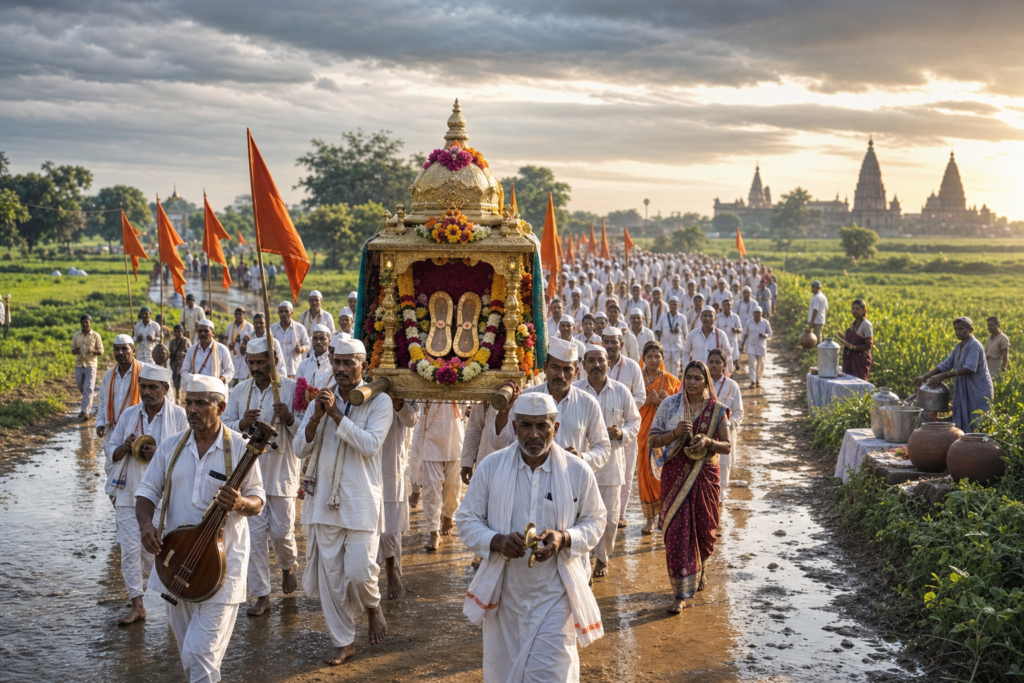
Several regional observances often appear in May. Sita Navami (Vaishakha Shukla Navami) venerates Devi Sita’s steadfastness and dharma; Ganga Saptami honors the sacred river’s descent and its purifying symbolism; and Puri’s Chandan Yatra, once begun, continues with processions that integrate the community through seva and song. By tying climatic carecooling sandalwood, water donation, shade tentsto ritual memory, these observances translate metaphysical virtues into daily compassion.
In the Tamil calendar, Vaikasi Visakam celebrates the birth star of Murugan (Subrahmanya) when Visakha nakshatra coincides with Vaikasi. This festival often falls in late May or June and is observed with abhisheka, alankara, and music, linking martial valor with wisdom and grace. For families tracing roots across states, Vaikasi Visakam showcases how regional idioms express shared dharmic principles without contradiction.
May can also include Vat Savitri Vrat and Shani Jayanti if Jyeshtha Amavasya (or region-specific variants) lands within the month for a locale. In many parts of India, married women observe Vat Savitri Vrat for family well-being under a peepal or banyan tree, while Shani Jayanti honors discipline, duty, and karmic accountability. Since these observances depend on the Amavasya that month, regional Panchang agreement is especially important for 2026 planning.
Auspicious muhurats in May 2026 are best viewed through layered criteria. Akshaya Tritiya itself qualifies as a Sade-Teen Muhurat, deemed inherently auspicious for starting new endeavors without elaborate muhurat search. Daily Abhijit Muhuratmidday when the Sun is near zenithprovides a short universal window for routine auspicious undertakings, while special yogas such as Ravi Pushya and Guru Pushya (when Pushya nakshatra coincides with Sunday or Thursday) or Sarvartha Siddhi and Amrita Siddhi Yogas may appear on select days. Because these yogas are highly time- and place-specific, local Panchang consultation is essential.
For high-stakes life events like Griha Pravesh, weddings, or starting a business, practitioners typically harmonize five limbs of Panchangtithi, vara (weekday), nakshatra, yoga, and karanaalongside practical filters such as avoiding Rahu Kalam, Gulika Kalam, and Yamaganda during the active ceremony window. Many also compute Tarabalam and Chandrabalam for the principal participants and ensure the ascendant (lagna) at the time of sankalpa is unafflicted. This disciplined approach balances astronomical indicators with on-the-ground feasibility and family convenience.
Those planning May 2026 observances abroad should watch out for three technical pitfalls: applying IST-based almanac entries without time-zone conversion, ignoring Daylight Saving adjustments in spring, and overlooking local sunrise/Moonrise shifts that can move vratas by a civil day. A reliable routine is to verify local sunrise, sunset, Moonrise, and tithi boundaries from a city-specific Panchang or astronomical ephemeris, then confirm with the nearest temple’s posted schedule.
May’s spiritual mood often turns toward seva that eases the heat of the seasonjal sewa, chabeel (sweet water sharing), tree shade, and food distribution. Such practices, centered on compassion, are shared across Hindu, Buddhist, Jain, and Sikh communities and frequently accompany Akshaya Tritiya, Vaishakha Purnima, and other late-spring observances. The month thus becomes a living classroom in dharma: ethical intention expressed as tangible care for others.
A simple verification pathway for May 2026 is effective: identify the target observance and its governing tithi rule (sunrise, pradosha, or night), pull local sunrise/sunset/Moonrise times, check tithi start–end in local time, and only then fix the civil date and puja window. When multiple almanacs disagree, prioritize the temple tradition or regional custom followed by the family or sangha. This preserves continuity of parampara while honoring the precision of the Panchang.
In summary, May 2026 is rich with Hindu festivals and auspicious days that reward thoughtful planning. By grounding observances in standard Hindu Panchangams of India, mapping local time correctly, and foregrounding seva and inclusivity, households and temples can celebrate Akshaya Tritiya, Narasimha Jayanti, Vaishakha Purnima (Kurma Jayanti and Vesak), Ekadashi, Pradosh, Sankashti, and Amavasya with clarity and confidence. The unifying thread remains timeless: devotion allied with compassion and wisdom, shared across the dharmic traditions.
Inspired by this post on Hindu Pad.