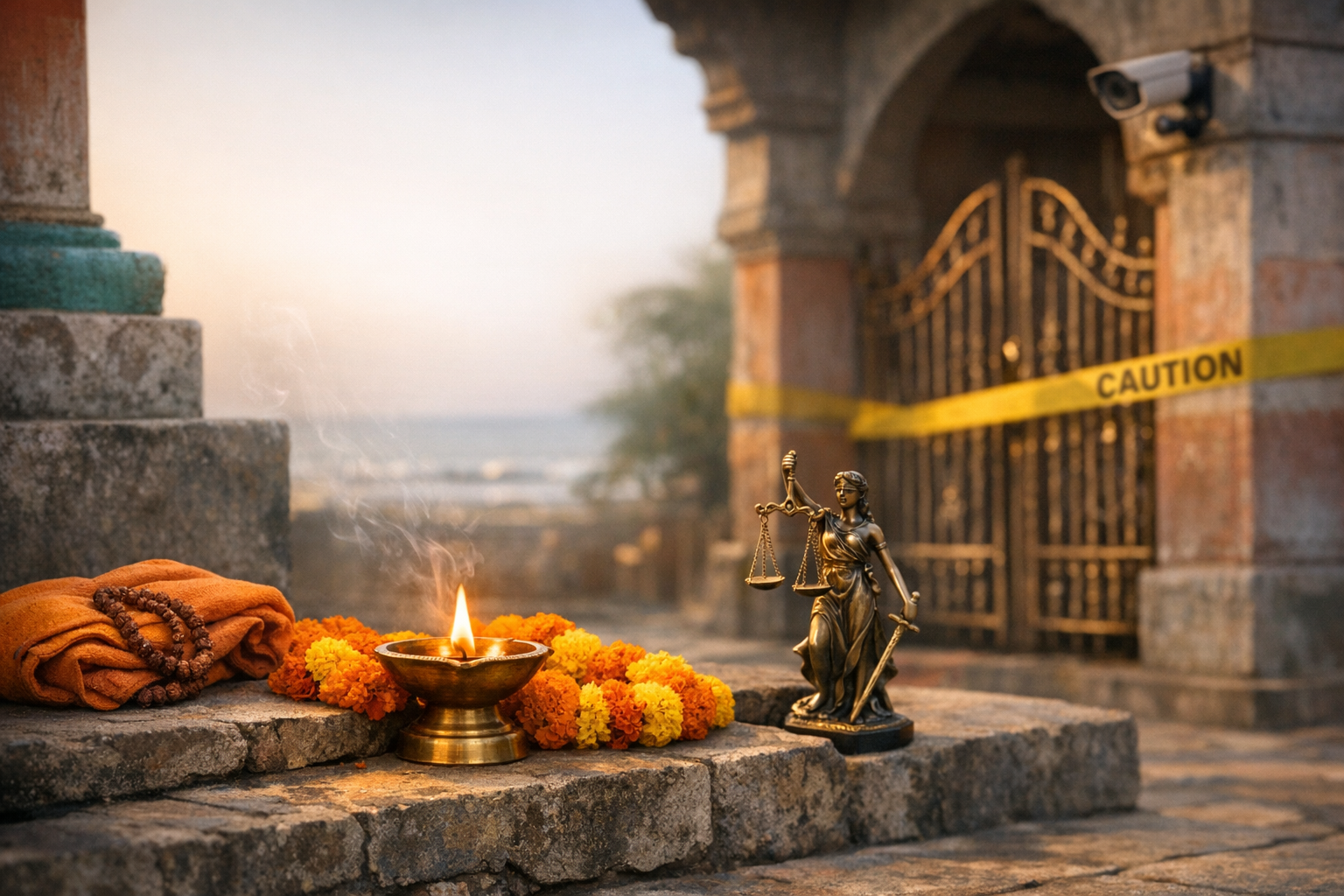
A 40-year-old Hindu priest serving as a temple caretaker in Cox’s Bazar, Bangladesh, was found dead after being reported missing, according to local reports dated April 27, 2026. The incident has galvanized minority-rights organizations and interfaith leaders to call for a transparent, time-bound investigation and credible accountability consistent with the rule of law.
Preliminary accounts indicate that the victim, known for routine seva and custodial care of a local Hindu temple, failed to return after daily duties and was subsequently discovered deceased in the Cox’s Bazar area. Police have opened a case, initiated an inquest, and commenced medico-legal procedures, with further facts pending official confirmation. At the time of writing, motive, manner, and possible perpetrators remain unconfirmed; authorities have urged restraint against speculation while evidence is collected.
Minority advocacy groups in Dhaka and Chattogram have emphasized that the matter raises core concerns about religious freedom, community safety, and the protection of caretakers working in and around Hindu temples. Their public statements frame the case as a test of institutional responsiveness and due process, underscoring Bangladesh’s constitutional commitments to equality before law and freedom of religion.
In a spirit aligned with dharmic unityembracing the shared civilizational values of Hinduism, Buddhism, Jainism, and Sikhismcommunity leaders have urged a response anchored in justice, compassion, and social harmony. Rather than framing the tragedy through a sectarian lens, they have called for solidarity across faiths and communities in Cox’s Bazar and beyond, affirming that communal harmony and public safety are indivisible public goods.
Bangladesh’s legal framework offers a clear pathway for redress. The Constitution guarantees non-discrimination and religious freedom; the Penal Code of 1860 provides for prosecution of homicide (Section 302) and crimes against places of worship (Sections 295–297), while the Code of Criminal Procedure of 1898 authorizes inquests (Sections 174–176) and judicial inquiries. Effective application of these provisionstogether with victim and witness protectionwill be decisive in demonstrating the primacy of the rule of law.
To meet international due-diligence standards under instruments such as the International Covenant on Civil and Political Rights (ICCPR), investigators should pursue a comprehensive strategy: preserve and process the crime scene, conduct a robust autopsy, reconstruct an evidence-based timeline, and perform targeted digital forensics. This includes immediate collection of CCTV footage along likely routes, call data records and handset geolocation analysis, recovery of relevant digital communications, and mapping of last-known movements of the victim.
Forensic best practices recommend early involvement of qualified medical examiners, proper chain-of-custody documentation for all exhibits, and systematic victimologyreviewing routine patterns, recent disputes, threats, property-related pressures, and any history of intimidation around the temple or adjoining land. Where appropriate, specialist units or a Special Investigation Team (SIT) can bring additional technical capacity and help safeguard the integrity of the inquiry.
Witness protection and community engagement are equally critical. Authorities can establish confidential reporting channels, guarantee anonymity where permitted by law, and involve respected local mediators to reduce fear and encourage testimony. Regular public briefingslimited to verified factshelp build trust while avoiding rumor proliferation or communal polarization.
Contextually, rights monitors have documented periodic surges of violence targeting religious minorities in Bangladesh, especially around major festivals and sensitive local disputes. While patterns deserve scrutiny, each case demands an evidence-led classification of motive; only rigorous investigation can determine whether a crime is personal, opportunistic, property-linked, or communal. Precision at this stage not only advances justice in the present case but also improves policy design for long-term prevention.
Temple committees and local administrators may consider immediate, practical safeguards for caretakers and priests: coordinated volunteer patrols during low-traffic hours, lighting and CCTV coverage of approach roads, verified access protocols, panic hotlines linked to police control rooms, and regular security audits in consultation with district authorities. Background checks for support staff, safe-commute planning after late-night rituals, and secure storage for temple assets can mitigate risk without disrupting religious life.
Media and civil society bear responsibility to maintain accuracy and de-escalate tension. Ethical journalism refrains from publishing unverified claims or graphic detail and prioritizes verified updates from law enforcement. Civil society organizations can complement state efforts by offering legal aid to affected families, facilitating community dialogues, and monitoring procedural fairness.
As a signatory to core human-rights conventions, Bangladesh can strengthen public confidence by ensuring prompt, impartial investigations; enabling oversight by national human-rights bodies where appropriate; and publishing time-bound progress summaries. Such measures affirm that justice is not only done but seen to be done, aligning domestic practice with international obligations.
In parallel, faith-based and community organizations across the dharmic spectrum can model unity in diversityVasudhaiva Kutumbakamby organizing joint peace appeals, providing dignified support to the bereaved family, and assisting authorities in community outreach. This constructive engagement signals that safety of religious minorities and the sanctity of worship spaces are common causes transcending denominational boundaries.
Policy recommendations emerging from comparable cases include: establishing dedicated liaison officers for minority institutions at the district level; maintaining a registry of worship spaces with risk profiles and emergency contacts; and running pre-festival preventive policing plans in coordination with local committees. Standardized protocols for incident reporting, scene preservation, and rapid evidence collection improve clearance rates and deter repeat offenses.
The current case also highlights the value of transparent grievance redressal for property disputes that sometimes intersect with intimidation around religious sites. Strengthening land-record digitization, expediting dispute resolution, and shielding temple property managers from coercion reduce flashpoints that can escalate into serious offenses.
Ultimately, a credible resolution requires three outcomes: truth established through professional investigation; accountability grounded in law; and community healing sustained by interfaith solidarity. Each depends on the other. A fact-driven process upholds justice for the victim and family, reassures minority communities, and affirms that Bangladesh’s constitutional promise applies to all citizens without fear or favor.
Until official findings are published, the responsible course is clear: avoid speculation, support investigators through lawful cooperation, and center the conversation on human dignity, communal harmony, and the impartial application of justice. In doing so, society honors the victim’s memory while strengthening the safety and cohesion of all communitiesHindu, Buddhist, Jain, Sikh, and Muslimwho together shape Bangladesh’s shared future.
Inspired by this post on Struggle for Hindu Existence.