On Wednesday, April 1, 2026, the Hindu calendar (Panchang) records a transition from Shukla Paksha Chaturdashi to Purnima tithi. In most regions, Shukla Paksha Chaturdashi continues until about 06:15 AM, after which Purnima tithi—the full moon day—prevails for the remainder of the civil day. This is the culminating moment of the bright fortnight when devotional observances and family rites commonly crest.
Minor variations in tithi boundaries occur with longitude and latitude, so location-specific Panchangs may place the Chaturdashi-to-Purnima switchover a few minutes earlier or later than 06:15 AM. Ritual decisions that depend on precise tithi limits (for example, starting or breaking a vrata near dawn) should therefore be aligned with a city-based almanac to ensure accuracy.
Calendrical context differs by tradition. In the Purnimanta system common across North India, this day marks Chaitra Purnima, the full moon concluding the month of Chaitra. In the Amanta system prevalent in much of western and southern India, the same full moon falls mid-month within Chaitra. Both conventions converge on the devotional prominence of the full moon, while labeling monthly boundaries differently.
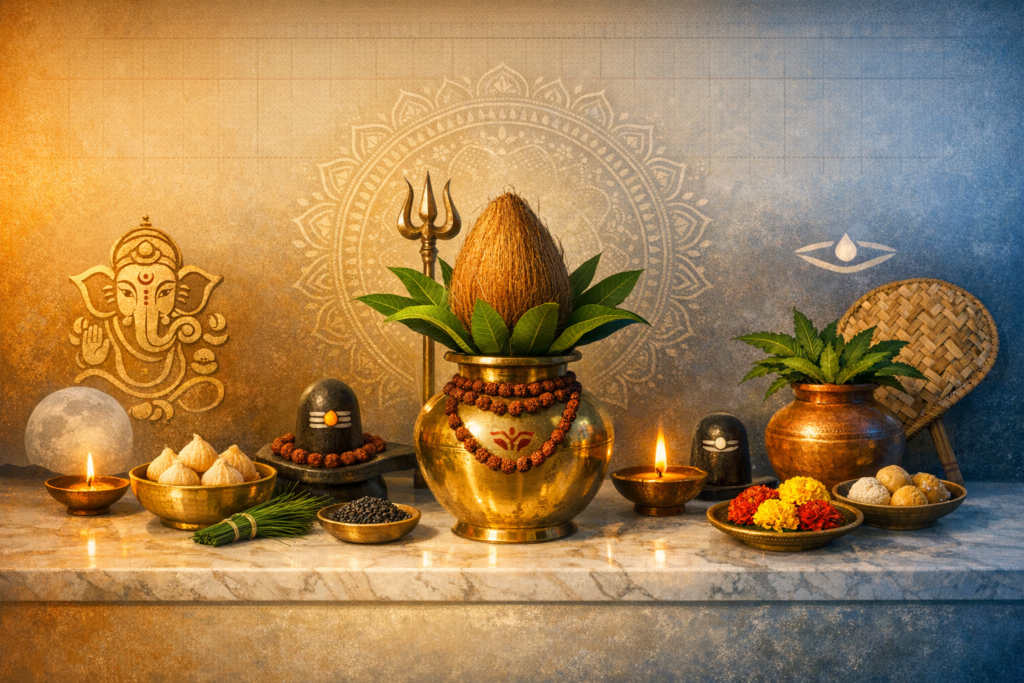
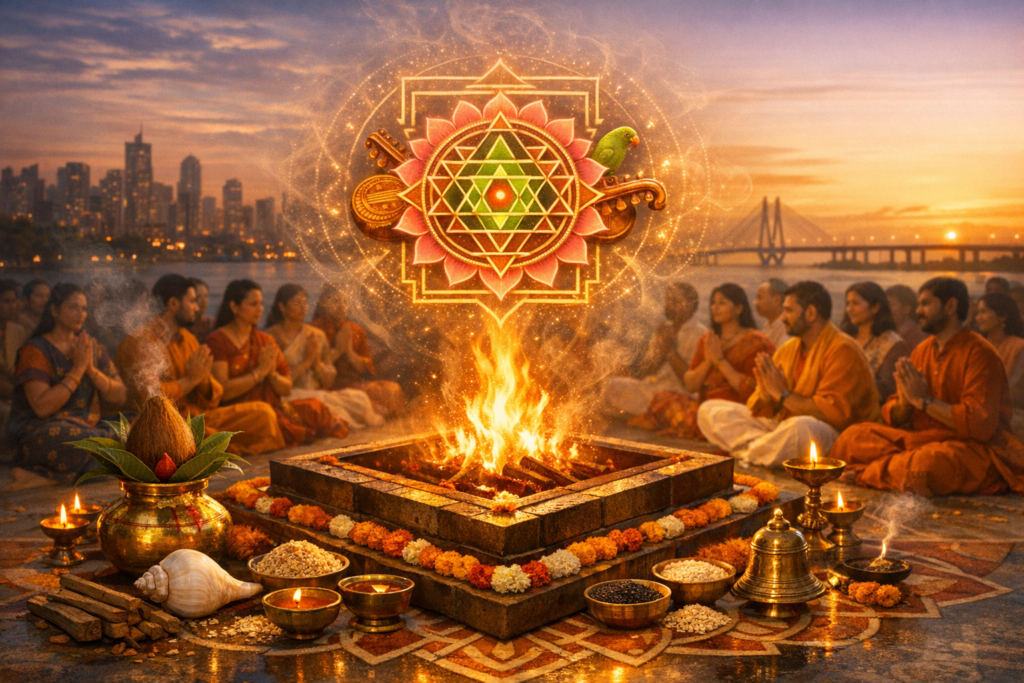
Chaitra Purnima is widely chosen for Satyanarayan Puja and community satsang, and in several regions it also aligns with Hanuman Jayanti. Families often undertake upavasa, perform japa of chosen mantras, and offer daan—grains, ghee, or clothing—to honor the fullness of the lunar cycle. Many households experience the evening’s soft moonlight as a calm, reflective setting for intergenerational storytelling and recitation from the Puranas, a shared rhythm that sustains continuity across generations.
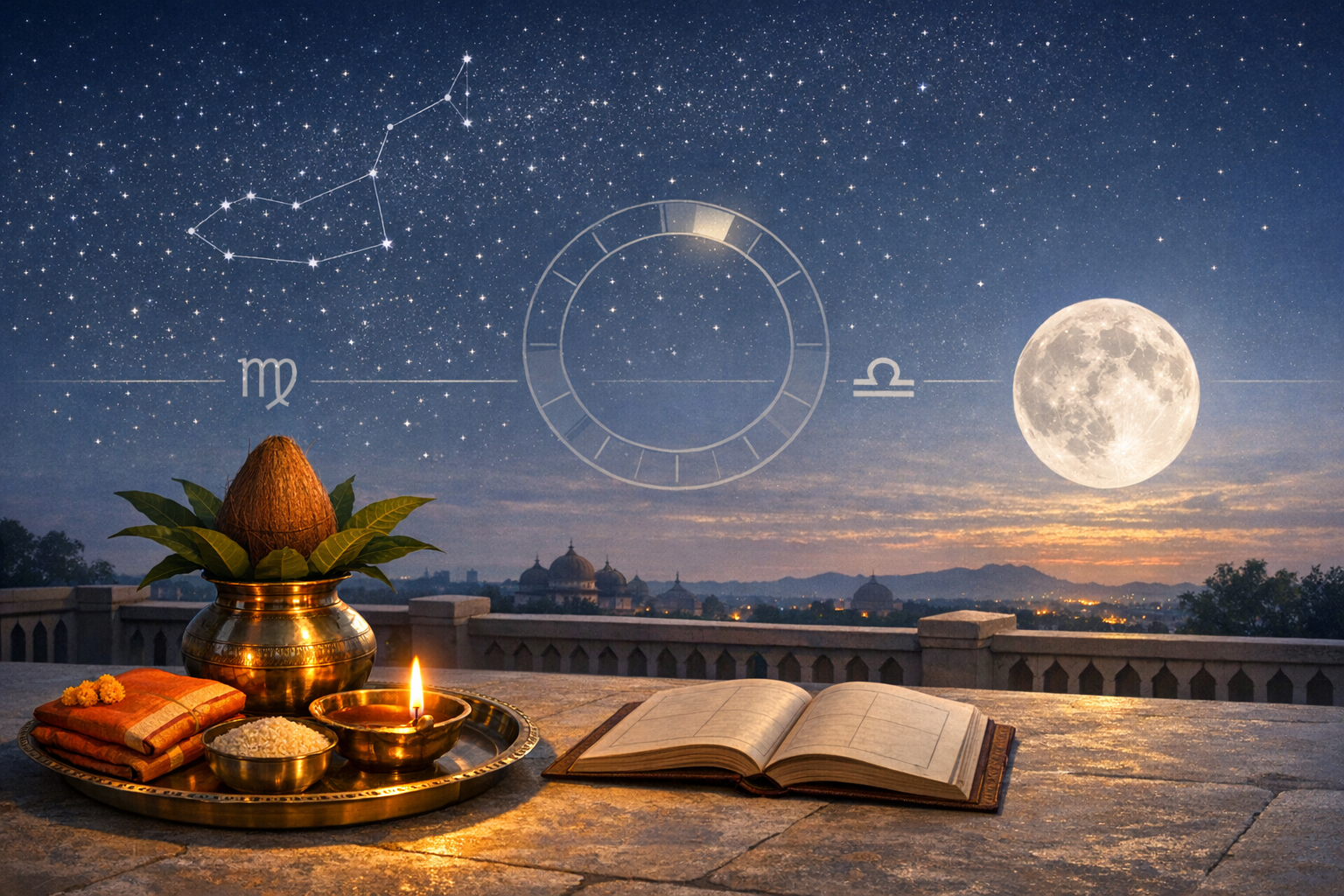
Nakshatra and Rashi context: Around Chaitra Purnima the Moon commonly traverses Chitra Nakshatra (Spica), whose presiding power, Tvashtar, is associated with refinement and auspicious craftsmanship; its planetary ruler is Mars (Mangala), favoring disciplined, constructive effort. Depending on local time, the Moon may be situated in late Kanya (Virgo) shifting into early Tula (Libra); regional Panchangs therefore may record either Rashi or both across the day. For sankalpa statements in puja or vrata, it is standard practice to cite the Nakshatra and the Moon’s Rashi exactly as given by the local almanac.
Good Time (Muhurat) guidance benefits from universal rules that travel across regions. Abhijit Muhurat, a beneficial window centered on local solar noon, spans approximately twenty-four minutes before and after true noon. It is traditionally employed when other auspicious muhurats are unavailable, though marriages and upanayanas usually avoid it. Because true noon drifts from clock noon with the equation of time and longitude, calculations should be based on the local sunrise and meridian passage.
Rahu Kalam on Wednesdays occupies the fifth eighth of daylight. To compute it precisely, divide the interval from sunrise to sunset into eight equal parts; the fifth segment is Rahu Kalam and is ordinarily avoided for first-time initiations such as travel, business openings, or major purchases. On a notional twelve-hour day beginning at 06:00 AM, this segment would fall roughly from 12:00 PM to 01:30 PM; actual boundaries should track local day length for April 1, 2026.
Dur Muhurat and Gulika Kalam are likewise derived from daylight segmentation and are best referenced from a city-specific Panchang. The general practice is to defer inaugural acts during these intervals and to prefer Shubha, Labha, or Amrita Choghadiya segments where that tradition is observed. When tasks are remedial, protective, scholastic, or contemplative, many households prioritize the tithi and Nakshatra quality over weekday doshas.
Yoga and Karana govern the qualitative tone of the day in classical Panchangam. Yoga—formed by the sum of the Sun–Moon longitudes—colors the day’s psychological texture, while Karana—half a tithi—modulates immediacy and practicality. Because both can change more frequently than the civil date, those scheduling samskaras or temple rites near threshold points should consult a local almanac to avoid straddling an inauspicious Yoga or Karana boundary.
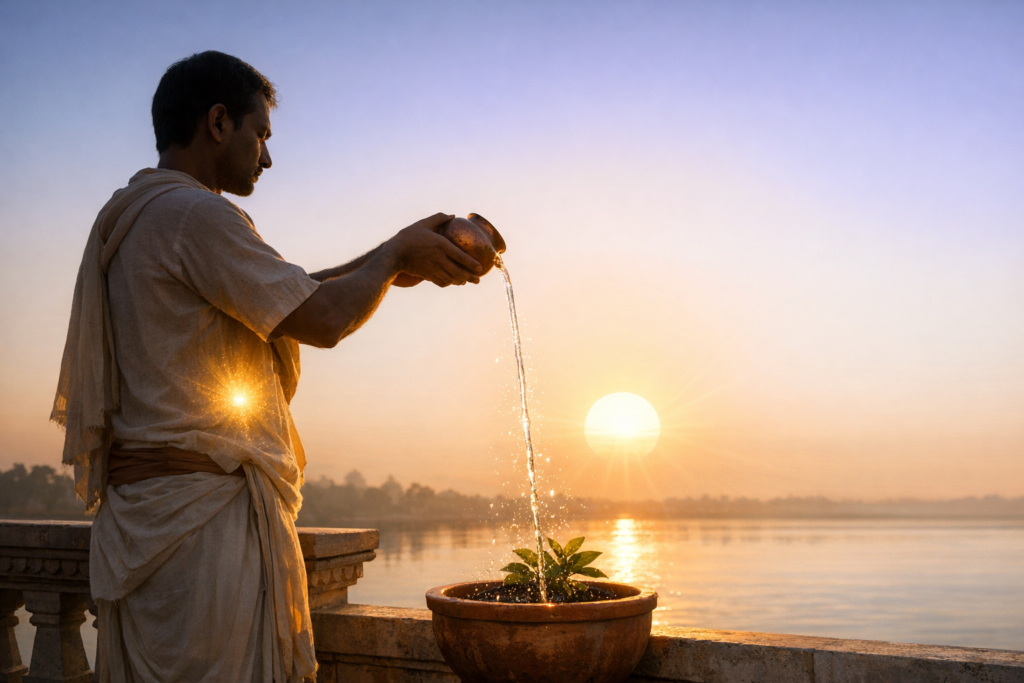
On Purnima, moonrise typically occurs near local sunset, enabling darshan of the full disk shortly after twilight. Many households light a small lamp, offer water to Chandra, and meditate on coolness and clarity—practices elders describe as settling the mind at month’s end. For those observing fasts, the evening often concludes with light satvik meals after completing vrata sankalpa and puja, a cadence that blends devotion with well-being.
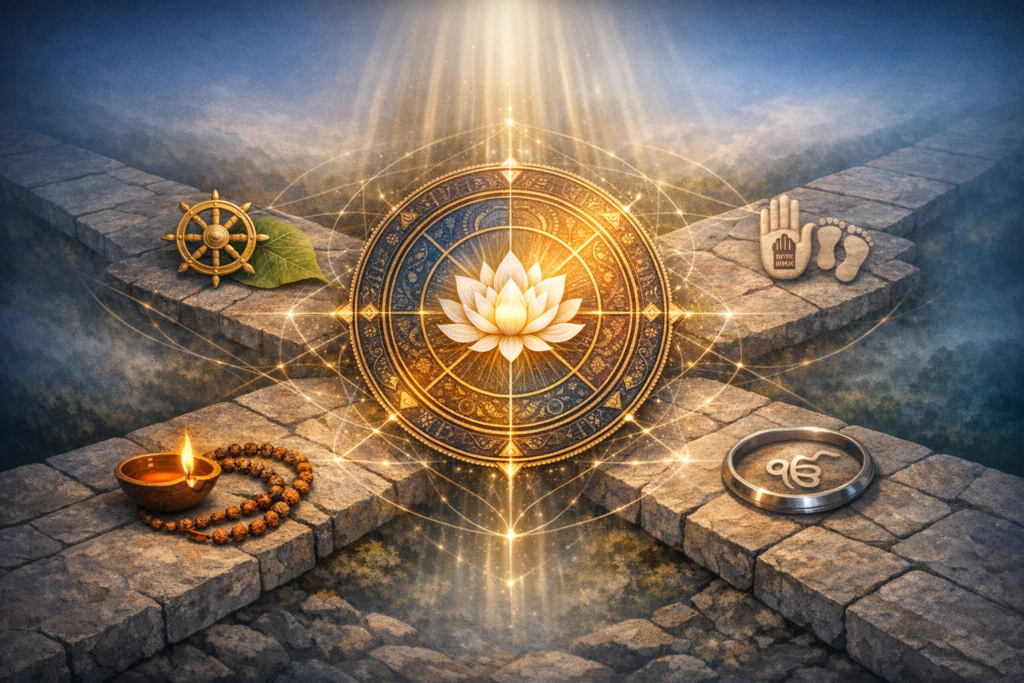
A dharmic-unity perspective highlights the shared lunar cadence across traditions. Buddhists observe Uposatha on full moons for intensified sila and meditation; Jains mark Purnima with vrata, pratikraman, and reflection; Sikhs, while not bound to tithis, often engage in seva, simran, and kirtan on community schedules that may coincide with lunar gatherings. The full moon thus serves as a gentle, recurring bridge among Hindu, Buddhist, Jain, and Sikh practices, honoring both diversity and convergence.
In summary, April 1, 2026 traces a clear tithi arc: Shukla Paksha Chaturdashi until about 06:15 AM, followed by Purnima tithi through the remainder of the day in most regions. With Chaitra Purnima’s devotional centrality, attention to Nakshatra and Rashi, and prudent use of Abhijit Muhurat while steering clear of Rahu Kalam for new undertakings, the day offers a balanced canvas for worship, study, and service. Exact timings vary by city; aligning rites with a location-specific Panchang ensures precision without losing sight of the full moon’s unifying spirit.
Inspired by this post on Hindu Blog.