This research-based guide consolidates major Hindu calendars and Panchang sources to present an accurate, Indian Standard Time (IST) aligned view of key Hindu festivals, vrats (fasts), and rituals in May 2026. Beyond listing dates, it situates each observance within its scriptural and cultural context, explains regional calendar nuances, and highlights shared dharmic values that resonate across Hinduism, Buddhism, Jainism, and Sikhism.
Key observances in May 2026 include two focal dates. May 1 marks Snan – Daan – Vrat Purnima (Vaishakh Purnima, the Full Moon Day), the conclusion of Vaishakh Snan, Gandheswari Puja In Bengal, and Annamacharya Jayanti. May 5 is dedicated to Sankashti Chaturthi Vrat, a moonrise-based fast venerating Sri Ganesha. All references here use IST; local observance should follow the regional Panchang and temple notifications.
Interpreting a Panchang requires attention to tithi rather than civil date. A tithi spans the period in which the longitudinal separation of the Moon from the Sun advances by 12 degrees; hence, tithis can begin or end at any time of day or night. Festivals and vrats are anchored to these tithi boundaries. Because most public calendars present dates in IST, devotees living outside India should adjust for local time zones and verify moonrise for Sankashti Chaturthi with a reliable Panchang.
Vaishakh Purnima (May 1, 2026) is one of the most auspicious Full Moon Days in the Hindu calendar. Classical sources such as the Skanda Purana’s Vaishakha Mahatmya extol this period as particularly meritorious for snāna (sacred bathing), dāna (charity), vrata (fasting), and japa (mantra recitation). In the Purnimanta reckoning (followed widely in North India), it marks the conclusion of the month of Vaishakh; in Amanta traditions (common in parts of South and Western India), it falls mid-month but retains the same devotional weight. Many Vaishnava communities also associate Vaishakh Purnima with Kurma Jayanti, commemorating Sri Vishnu’s Kurma (Tortoise) avatāra, as indicated in various regional Panchangs for 2026.
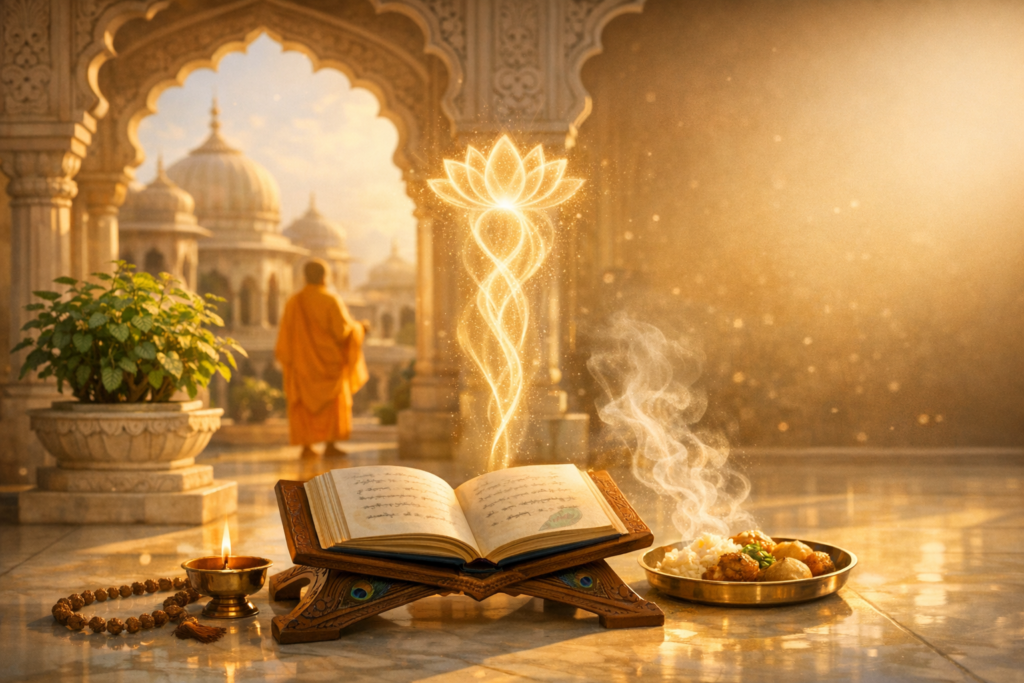
Snan – Daan – Vrat Purnima on May 1 emphasizes a three-fold observance long recommended in Dharmaśāstra literature. The morning often begins with snāna at a river, lake, sea, or at home with Ganga-jal, followed by sandhyā, tarpaṇa, and prayers for wellbeing. Dāna traditionally includes jaladāna (water-filled pots), vastra (clothing), anna (grains or cooked food), and financial charity directed to those in need and to spiritual institutions. The vrata typically comprises sattvic fasting, svādhyāya (scriptural reading), and katha recitation—many households perform Satyanarayana Puja on Purnima. The devotional intent—ahimsa, self-restraint, and compassionate giving—forms the ethical center of this observance.
Vaishakh Snan Ends on May 1. The Vaishakh morning bathing discipline (snāna-vrata), undertaken from the start of the Vaishakh period, culminates on this Purnima. The closing rites often include offering arghya to Surya and Vishnu, lighting a deepa at home or temple, and an udyāpana (completion) sankalpa that dedicates the accrued merit (puṇya) to universal wellbeing.
Gandheswari Puja In Bengal, observed by several communities on Vaishakh Purnima, venerates a local Shakti form known as Gandheswari. While practices vary by district, the ritual center is devotional upachāra with fragrant substances (gandha), flowers, and lamps, often accompanied by sankirtan and community offerings. Rooted in Bengal’s rich Shakta heritage, the puja foregrounds protection, fertility, and communal harmony. Families frequently coordinate with local temples and purohits for the mahurat; as a regional observance, exact timing customarily follows the local tithi-end and temple tradition.
Annamacharya Jayanti, also noted on May 1 in several 2026 Panchang listings, commemorates Sri Tallapaka Annamacharya, the seminal 15th-century saint-composer of over 30,000 sankeertanas dedicated to Sri Venkateswara. The day is marked by sankeertana parayana, collective kirtan, and seva at Tirumala and Vaishnava temples across Andhra Pradesh, Telangana, and beyond. Devotees often honor the Jayanti by meditative reading on bhakti-rasa, especially themes of śaraṇāgati (surrender) and daya (compassion), which animate Annamacharya’s poetry and align with the philanthropic spirit of Vaishakh Purnima’s dāna.
Sankashti Chaturthi Vrat (May 5, 2026) occurs on the Krishna Paksha Chaturthi following the Full Moon. Dedicated to Sri Ganesha as Vighna Vināyaka, the vrata is observed with day-long upavāsa, silence or reduced speech (as feasible), and recitation of Ganesha Atharvashirsha, Sankata Nashana Ganapati Stotra, and the Ganesha Ashtottara. The fast is traditionally broken after Chandra Darshan: devotees offer arghya to the Moon, worship Sri Ganesha with naivedya, and read or listen to that month’s Sankashti Vrat Katha. Because moonrise varies by location, exact Chandrodaya should be taken from a local Panchang or temple notice; IST-based almanacs serve as a reference for India-wide planning.
Technical note on calendrical variation: India’s Panchang ecology spans Purnimanta and Amanta month systems, different sunrise conventions, and local latitude–longitude adjustments. While this guide adopts IST for uniformity, devotees are encouraged to honor local tradition where they live. As a rule, vrata observance follows the tithi prevailing at the local sunrise (or moonrise for Chaturthi) unless a community tradition prescribes a specific alternative.
Shared dharmic resonance enhances these dates’ meaning. Vaishakh Purnima is also observed as Buddha Purnima (Vesak) across Buddhist communities, honoring the Buddha’s birth, enlightenment, and parinirvāṇa; the emphasis on dāna, karuṇā (compassion), and ahiṁsā (non-harm) harmonizes with the Snan – Daan – Vrat Purnima ethos. Jain communities often align Purnima with intensified svādhyāya, pratikraman, and tapas, reflecting the month’s call to ethical restraint and charity. Sikh communities, while following the Nanakshahi calendar, frequently mark Pooranmashi (Full Moon) with congregational kirtan and seva, reinforcing a shared civilizational thread of service and remembrance.
Practical preparation supports a fulfilling observance. Planning ahead for sattvic ingredients (fruits, nuts, milk, and easily digestible foods), arranging dāna responsibly through verified channels, and coordinating family participation (including children, elders, and those with medical needs) elevates the collective experience. Individuals who cannot fast fully may adopt a phalahara or partial fast with guidance; intention (sankalpa), not severity, remains the scriptural heart of vrata.
Summary of May 2026 observances (IST): May 1—Snan – Daan – Vrat Purnima (Full Moon Day), Vaishakh Snan Ends, Gandheswari Puja In Bengal, and Annamacharya Jayanti; many Vaishnava almanacs also note Kurma Jayanti on Vaishakh Purnima. May 5—Sankashti Chaturthi Vrat (fasting until local moonrise). Devotees outside India should convert timings to local time zones and consult their regional Panchang for final confirmation.
In spirit and practice, these May 2026 Hindu festivals invite reflection, restraint, charity, and song—virtues venerated across the dharmic family. Anchored in precise Panchang timing yet alive through local custom, they offer a pathway to inner clarity and communal harmony: bathing that purifies, charity that heals, and remembrance that unites.
Inspired by this post on Hindu Blog.