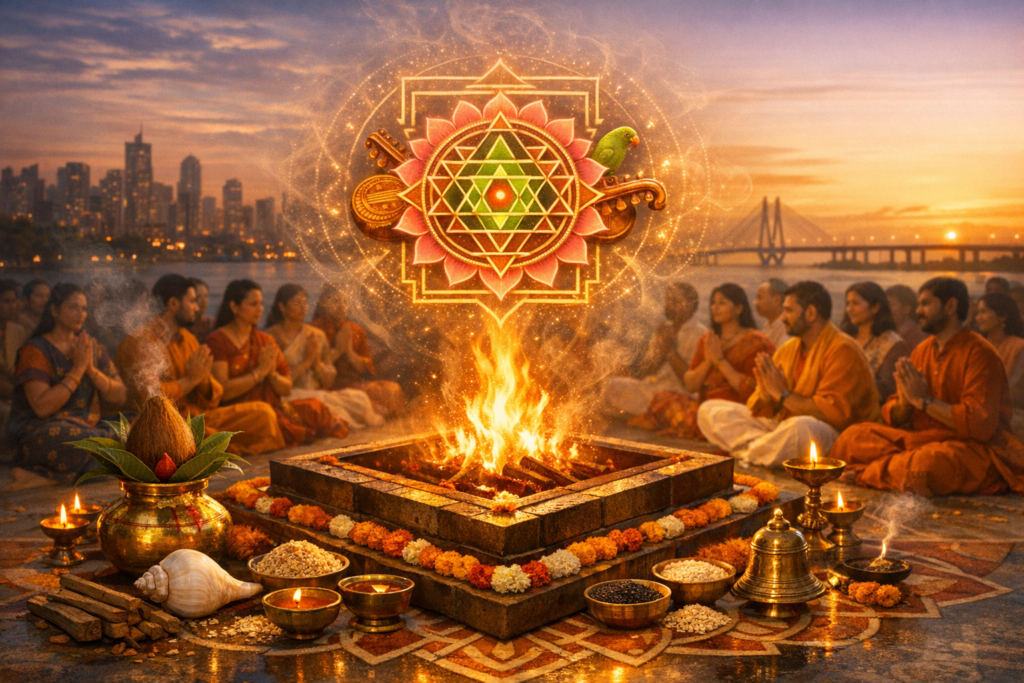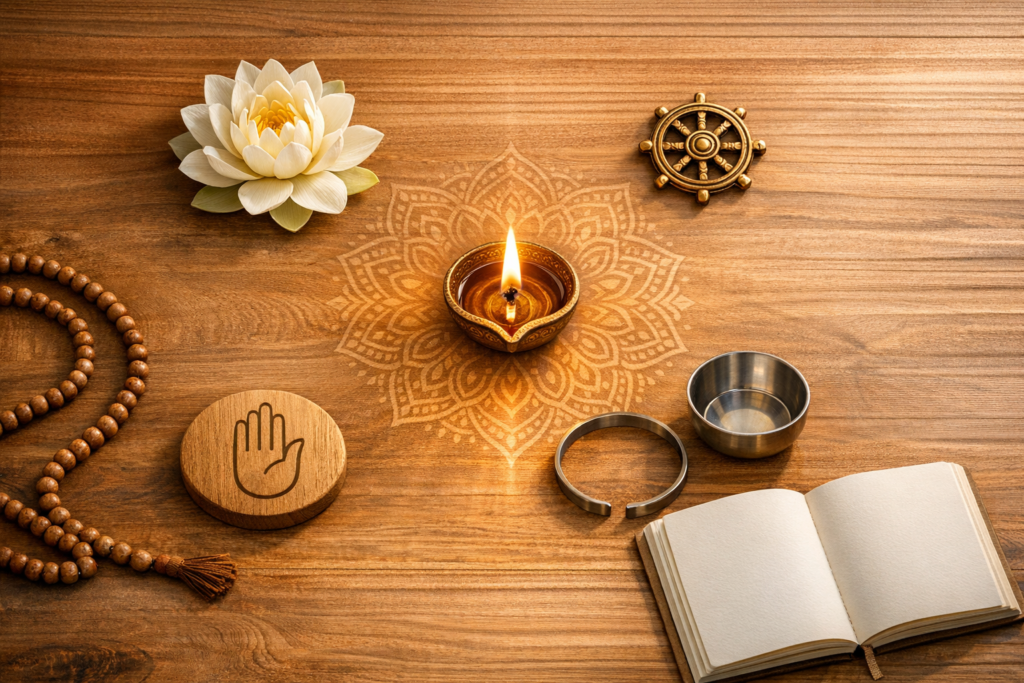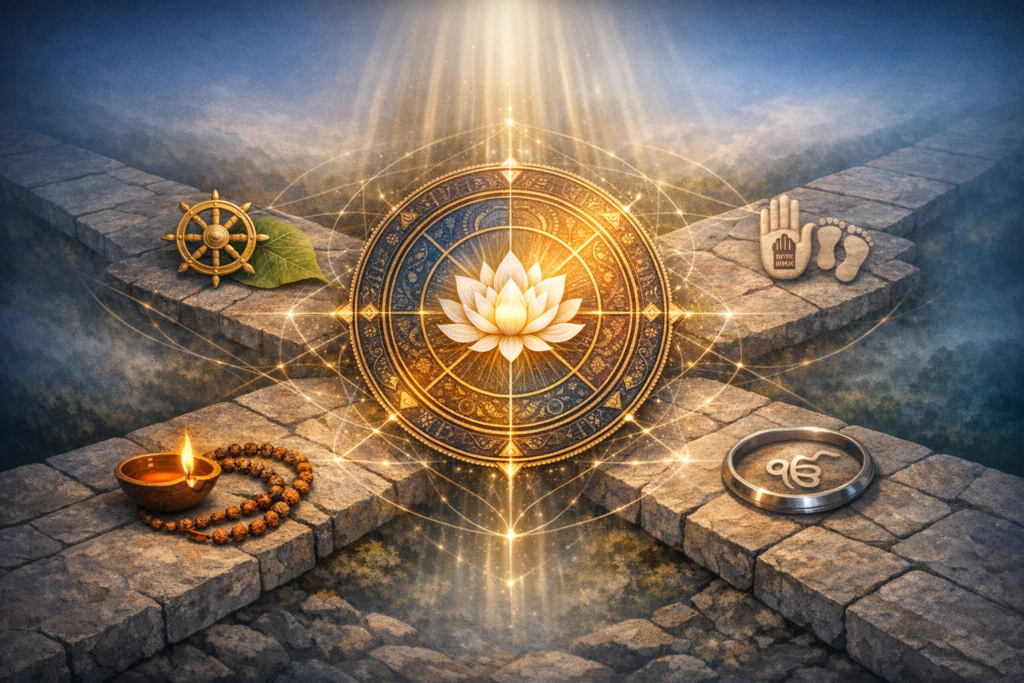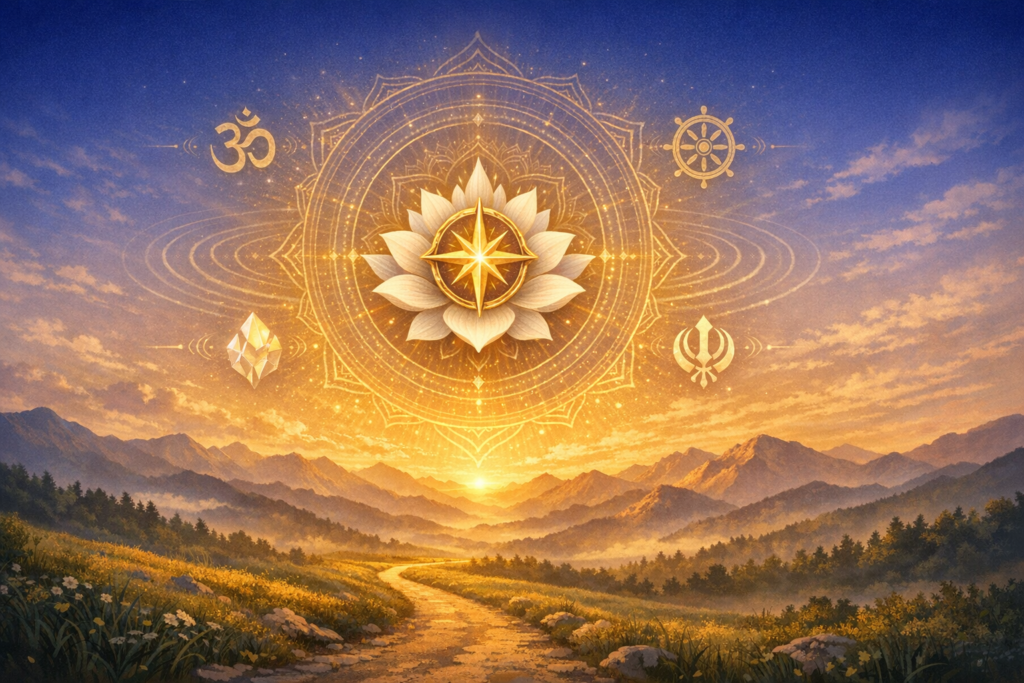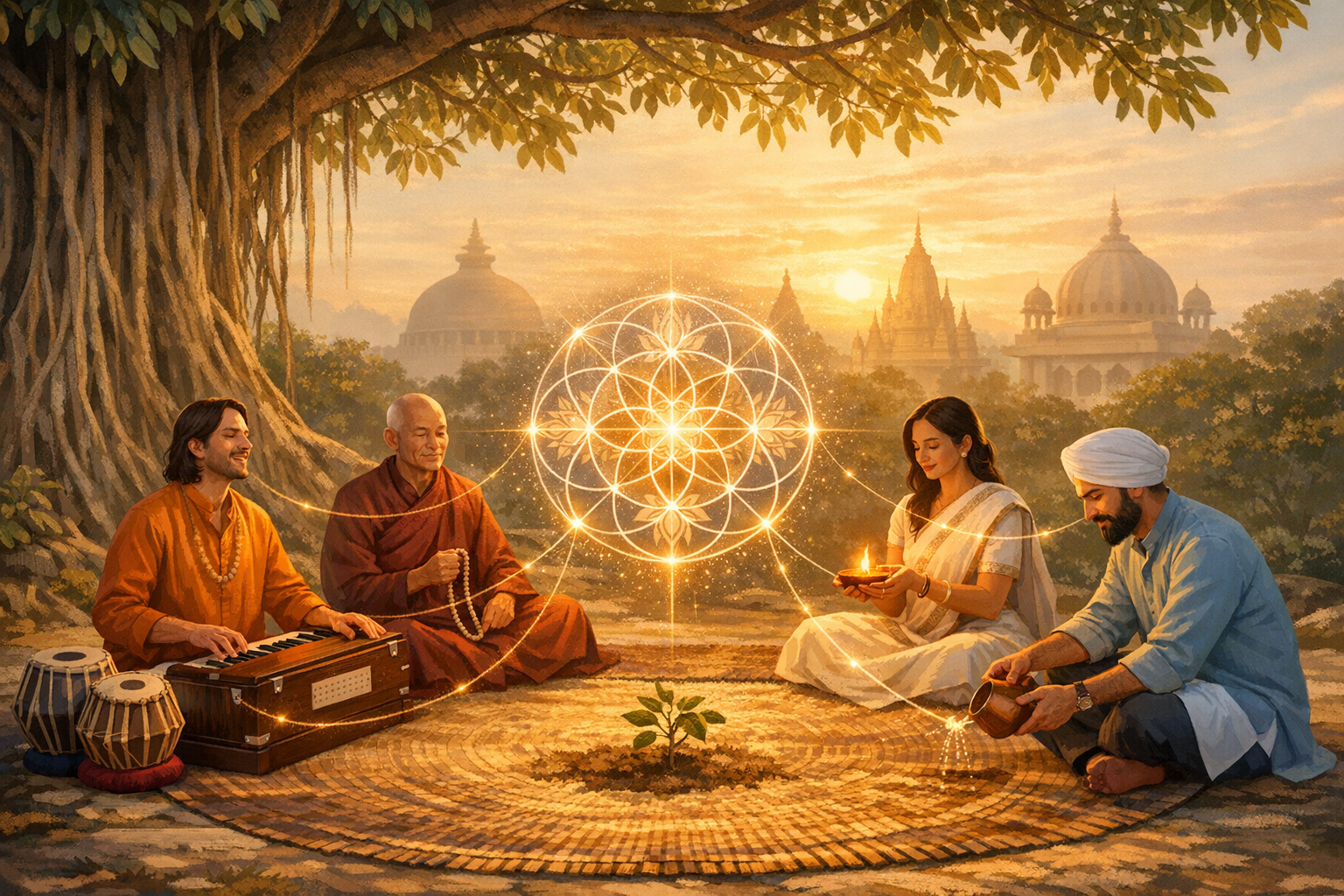
Unity in diversity denotes the harmonization of dissimilar individuals, practices, and ideas without erasing their distinctions. Rather than settling for mere tolerance, it recognizes that differences are natural, educative, and enriching, and that cultural diversity and spirituality can mutually amplify human flourishing. In a dharmic frame, this recognition nurtures humility, expands empathy, and strengthens shared purpose across Hinduism, Buddhism, Jainism, and Sikhism.
This unity is not uniformity, and this diversity is not fragmentation; it is an intentional alignment on truth-seeking and compassionate action while allowing multiple legitimate modes of worship, language, and lifestyle. When such alignment is understood, practitioners often report feeling both more grounded in their chosen path and more affectionate toward parallel paths, a pattern that consistently deepens social trust and personal sadhana.
In Srila Prabhupada’s words, “In the material world there are varieties, but there is no agreement. In the spiritual world there are varieties, but there is agreement. That is the difference.” This contrast captures the heart of religious pluralism in the dharmic context: variety becomes a catalyst for concord when it is oriented toward realization rather than rivalry.
A helpful philosophical lens here is Gaudiya Vaishnavism’s acintya-bheda-abheda, the insight of simultaneous oneness and difference. The Supreme Reality is both immanent and transcendent; souls are intimately related to the Divine yet retain distinct personhood. This framework illuminates Hinduism’s inclusiveness: unity at the level of telos (realization of the Divine) coexists with diversity at the level of upaya—mantra, kirtan, dhyana, yajna, and seva—adapted to varied temperaments.
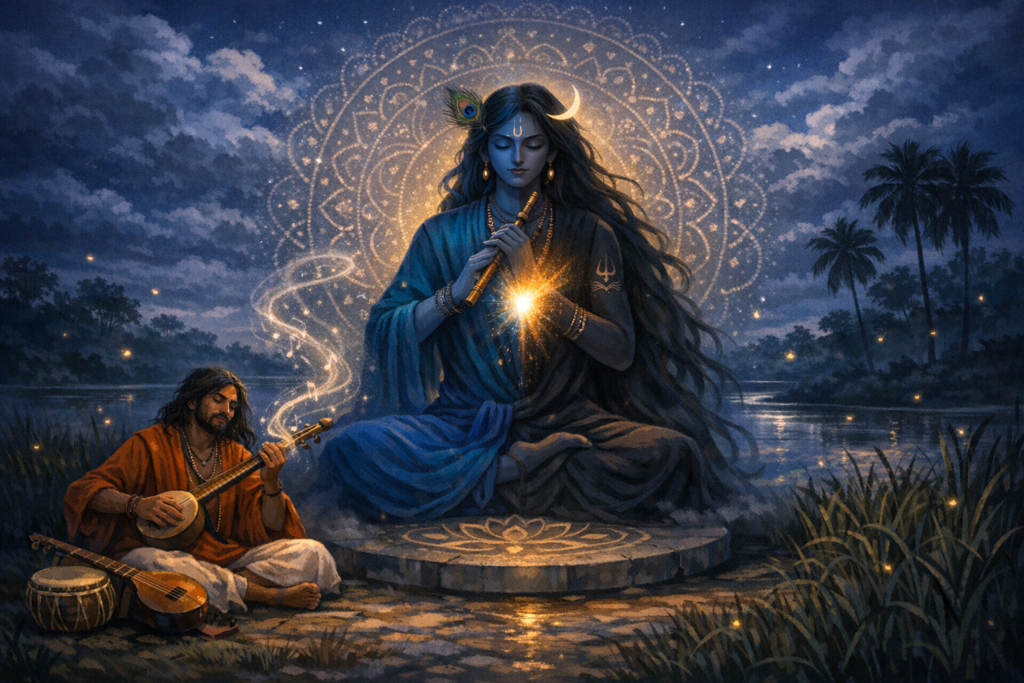
Ishta in Hinduism operationalizes this inclusivity. Individuals refine devotion through a chosen form—Krishna, Shiva, Devi, Rama, or a formless ideal—aligning practice with intrinsic nature (svabhava). Swami Vivekananda’s views on Ishta emphasized that sincere worship of one’s chosen form does not negate respect for others’ forms; rather, it cultivates mutual recognition within unity in spiritual plurality.
This acceptance stands in constructive contrast to any exclusivist claim that reduces spirituality to a single path for all. Dharmic traditions have long affirmed that diverse adhikaras (eligibilities) require diverse sadhanas (disciplines), and that respectful sharing, not imposition, sustains harmony.
Parallels across the dharmic family reinforce this architecture of agreement-in-variety. Buddhism teaches upaya-kaushalya (skillful means), adapting methods to capacities without compromising awakening. Jainism advances Anekantavada, the many-sidedness of truth that counsels intellectual humility and nonviolence in debate. Sikh tradition proclaims Ik Onkar, the One Reality, while honoring devotion through simran, kirtan, and seva for sarbat da bhala (the welfare of all). Together, these perspectives strengthen interfaith dialogue within a shared civilizational ethos.
Lived experience repeatedly validates the theory. In many communities, a kirtan enthusiast and a silent meditator sit side by side; each feels nourished, neither threatened. During festivals, one person offers tulasi to Krishna while another contemplates the Heart Sutra or recites Japji Sahib; gratitude rather than anxiety arises because motivation, not mere method, is the deepest measure of practice.
At the ethical level, convergence is striking. Ahimsa, satya, daya/karuna (compassion), dana/seva (service), tapas (self-discipline), and shraddha (integrity of intent) are recognized across traditions. This shared moral grammar enables collaboration in education, health, and environmental stewardship even when ritual vocabularies differ, advancing unity in diversity from ideal to institution.
Practically, unity matures when communities design for multiplicity. Temples and sanghas that host multi-lingual kirtan, facilitate quiet meditation spaces, welcome scriptural study from diverse schools, and collaborate on seva projects embody cultural diversity and spirituality in action. Such design communicates that inclusion is not an afterthought but a principle.
Certain pitfalls deserve attention. Uniformity pursued in the name of peace often suppresses creativity and produces brittle conformity. Conversely, unmoored relativism erodes conviction and blunts transformative practice. The dharmic median resists both extremes: it protects doctrinal integrity while encouraging generous hospitality toward other well-rooted paths.
From the standpoint of bhakti, this approach does not dilute devotion to Krishna; it refines it. Seeing the Lord’s hand in the sincere progress of others widens the heart, curbs envy, and transforms difference into inspiration. Many find that personal japa becomes steadier, seva more joyful, and community life less polarized when reverence is extended beyond the confines of one’s own lineage.
Historically, India’s intellectual culture has modeled rigorous debate coupled with social coexistence—shastrartha among schools, shared pilgrimage circuits, and parallel institutions flourishing without enforced sameness. Renewing that equilibrium today strengthens social cohesion and counters polarization without sacrificing philosophical clarity.
In sum, unity in diversity is a disciplined, dharmic pluralism: one goal, many gates. It aligns with Ishta as personal gateway, with Anekantavada as epistemic humility, and with Srila Prabhupada’s reminder that true spirituality converts variety into agreement. Where intention is pure and compassion active, varieties cease to compete and begin to collaborate—revealing the deeper agreement that the One can be honored through many.
Inspired by this post on Dandavats.