Central London’s West End is widely associated with spectacular stagecraft, and nowhere is that impression stronger than at Cambridge Circus, where the Palace Theatre draws crowds for Harry Potter and the Cursed Child. Yet alongside the glow of marquees and the flow of theatre-goers, a parallel current quietly animates the streets: the resonant pulse of devotional songbhakti kirtanrising from small processions and temple gatherings in and around Soho.
What initially reads as a straightforward entertainment district reveals, on closer listening, a layered religious soundscape. The sonic juxtapositionamplified dramaturgy inside the Palace Theatre and unamplified call-and-response outsidecaptures London’s distinctive capacity to hold commercial spectacle and contemplative practice within the same few city blocks. This coexistence exemplifies cultural diversity in practice rather than merely in policy.
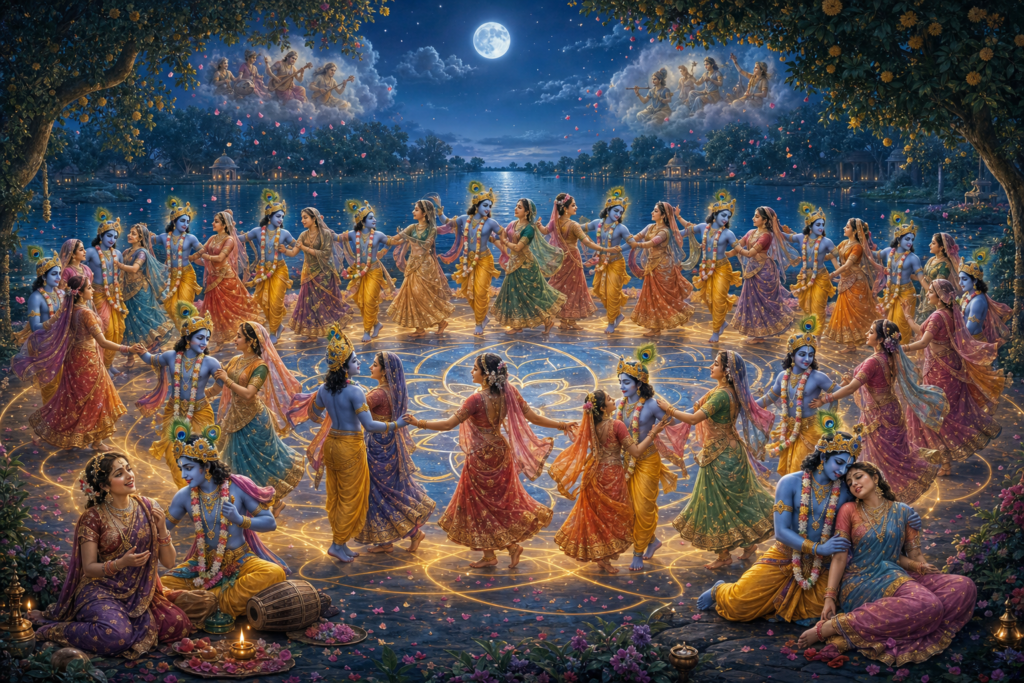
In sound studies, a city’s “soundscape” encompasses its soundmarks, everyday auditory cues, and ritual signals. Cambridge Circus, framed by Charing Cross Road and Shaftesbury Avenue, is one such soundmark: bus brakes, footsteps, distant applause, and intermittently, the bright timbre of kartals (hand cymbals), the round warmth of the harmonium, and the heartbeat cadence of the double-headed mridanga. These “Bhakti Beats” are both musical and social signalsaural invitations to pause, observe, and often to join.
Technically, kirtan operates through call-and-response structure, melodic simplicity, and cyclical rhythm (taal). Common grooves include kaharwa (8-beat) and dadra (6-beat), with tempos that gradually intensify to encourage group entrainment. Melodic phrasing borrows freely from Hindustani ragas while remaining accessible to untrained voices. The mridanga anchors the ensemble; kartals articulate off-beats; the harmonium provides a sustained tonal center. Repetition is not redundancy here; it is a design choice aimed at shared focus, breath synchronization, and emotional uplift.
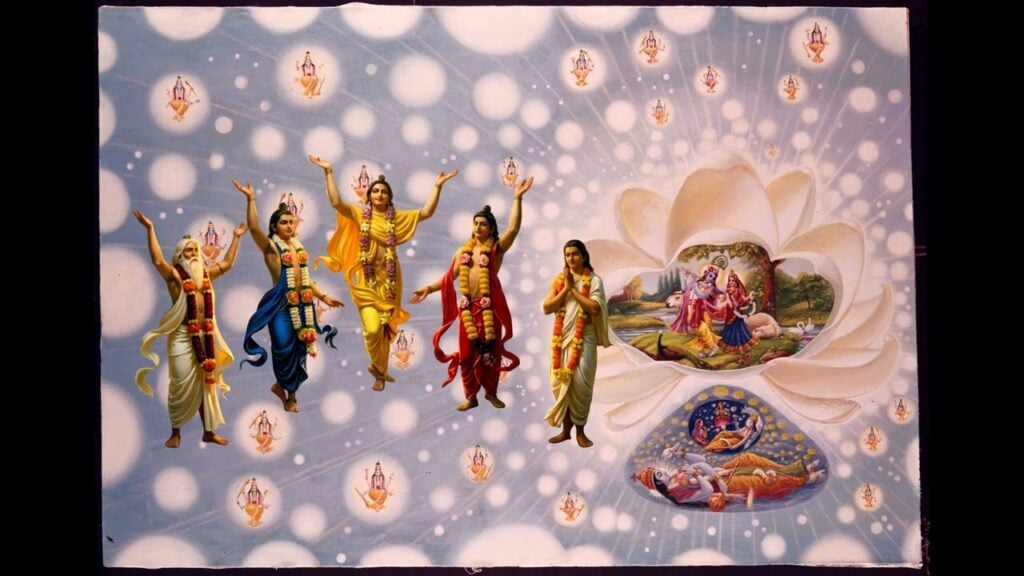
Historically, this practice descends from the sankirtana movement associated with Sri Chaitanya (16th century) within the Gaudiya Vaishnava tradition. In the late 1960s, ISKCON (International Society for Krishna Consciousness) helped transplant public kirtan to London’s streets, integrating it into the urban fabric much like busking and choral carolling. Today, the Soho area, Oxford Street, and Leicester Square often host Harinam sankirtansmall, mobile circles of singers who enact devotion by sharing sacred sound in public space.
Urban geography intensifies the effect. The “street canyon” architecture around Cambridge Circus shapes acoustic projection: facades reflect mid-range frequencies, allowing kartals and voices to carry without electronic amplification. The result is a pocket of contemplative audibility within a high-footfall environmentone that invites transient participation from passersby between curtain calls and dinner reservations.
Beyond Hindu kirtan, London’s dharmic communities express parallel aesthetics of sacred sound. Sikh sangat experience shabad kirtan grounded in the Guru Granth Sahib; Buddhist groups gather for mantra recitation and rhythmic chanting; Jain communities maintain bhajans and stavans centered on equanimity and non-violence. Despite theological distinctions, the shared commitment to nāma (sacred name), attentive listening, ethical living, and communal song underscores unity in spiritual diversity across Hinduism, Buddhism, Jainism, and Sikhism.
For many pedestrians, the first encounter is affective before it is analytical: the gentle swell of voices can slow walking pace, soften attention, and reframe a hurried commute as a moment of centering. Group singing is known to promote physiological coherence through breath synchronization and vagal tone stimulation, aligning inner rhythms with external meter. In that sense, bhakti kirtan functions as an urban well-being intervention hiding in plain sight.
This interaction between stage magic and street devotion lends itself to a useful comparison. Theatre orchestrates light, narrative, and music to produce catharsis; ritual integrates sound, gesture, and memory to produce darshan (a felt sense of presence) and bhava (devotional mood). Each creates a liminal zonedistinct from daily life yet embedded in itwhere meaning can be rehearsed, renewed, and shared.
From an ethnomusicological perspective, kirtan’s design optimizes accessibility. Short melodic cells minimize cognitive load; repetitive lyrics emphasize contemplation over verbal novelty; call-and-response enfranchises the untrained participant. These features transform sidewalks into inclusive choirs, where artistic excellence and spiritual intent are not opposites but collaborators.
From a cultural heritage viewpoint, such processional music represents living, migratory tradition rather than museum artifact. London’s diasporic communities adapt instrumentation (portable harmonium), timbre (street-friendly vocal projection), and repertoire (seasonal mantras and bhajans) to the constraints and opportunities of the city. The result is continuity-with-innovationa hallmark of resilient heritage.
Socially, these gatherings nurture conviviality. Short conversations at crosswalks evolve into invitations to community meals, meditation workshops, or festival programs. Interactions typically foreground shared human concernsbelonging, joy, and serviceover dogma. In practice, this cultivates interfaith understanding, where curious theatre-goers and devotional practitioners both leave with widened horizons.
Spatially, the West End amplifies visibility. Junctions like Cambridge Circus serve as nodal points where audiences, commuters, and visitors intermix. The choreography of kirtanstanding circles, slow walking arcs, respectful pauses at crossingsintegrates with pedestrian flow instead of interrupting it, demonstrating how spiritual practice can harmonize with civic rhythm.
Respectful participation requires minimal protocol. Listening quietly nearby, clapping along the off-beats when invited, and joining refrains after a few cycles align with the ethos of inclusion. When visiting nearby temples, removing shoes, keeping photography discreet, and maintaining a reflective demeanor preserve sanctity while welcoming discovery. These small courtesies open large doors to understanding.
From a policy angle, London accommodates freedom of religious expression in public spaces while balancing pedestrian safety and neighborhood amenity. Portable, unamplified music generally meshes well with these expectations; larger processions coordinate routes and timing to keep streets navigable. In this way, devotional life contributes to public culture with a light infrastructural footprint.
Musicologically, the “build” in kirtangradual tempo and dynamic intensificationmirrors dramatic arcs in West End scores. Where theatre deploys modulation and orchestration to drive narrative climax, kirtan uses incremental rhythmic density and congregational response to evoke shared elevation. The two forms differ in telos, yet both expertly harness sound’s capacity to organize collective feeling.
Educationally, this living classroom offers multiple lenses at once: urban studies (sound and space), religious studies (practice and meaning), music theory (rhythm and modality), and cultural history (diaspora and adaptation). Observing a single evening at Cambridge Circus can thus function as an interdisciplinary field study, accessible to any engaged listener.
Crucially, the dharmic emphasis on respect for diverse paths emerges organically here. Whether one resonates with Vaishnava kirtan, Sikh shabad, Buddhist chanting, or Jain bhajans, the common thread is ethical conduct, mindful repetition, and the pursuit of inner clarity. London’s West End, often framed solely as a marketplace of stories, also presents itself as a meeting ground of living wisdom traditions that prioritize harmony over hierarchy.
Seen through this lens, “West End wizardry” extends beyond stage illusions to the subtle transformations that sacred sound can catalyze on a busy corner. The spell is not cast by pyrotechnics but by rhythm, breath, and collective voicereminding a fast-moving city that quiet joy is compatible with bright lights.
For residents and visitors alike, the takeaway is simple and actionable: listen more closely. Theatres and temples, marquees and mantras, applause and amensall belong to the same civic chorus. In acknowledging that chorus, Londoners strengthen a shared cultural heritage and exemplify unity in diversity for a plural world.
Inspired by this post on Dandavats.