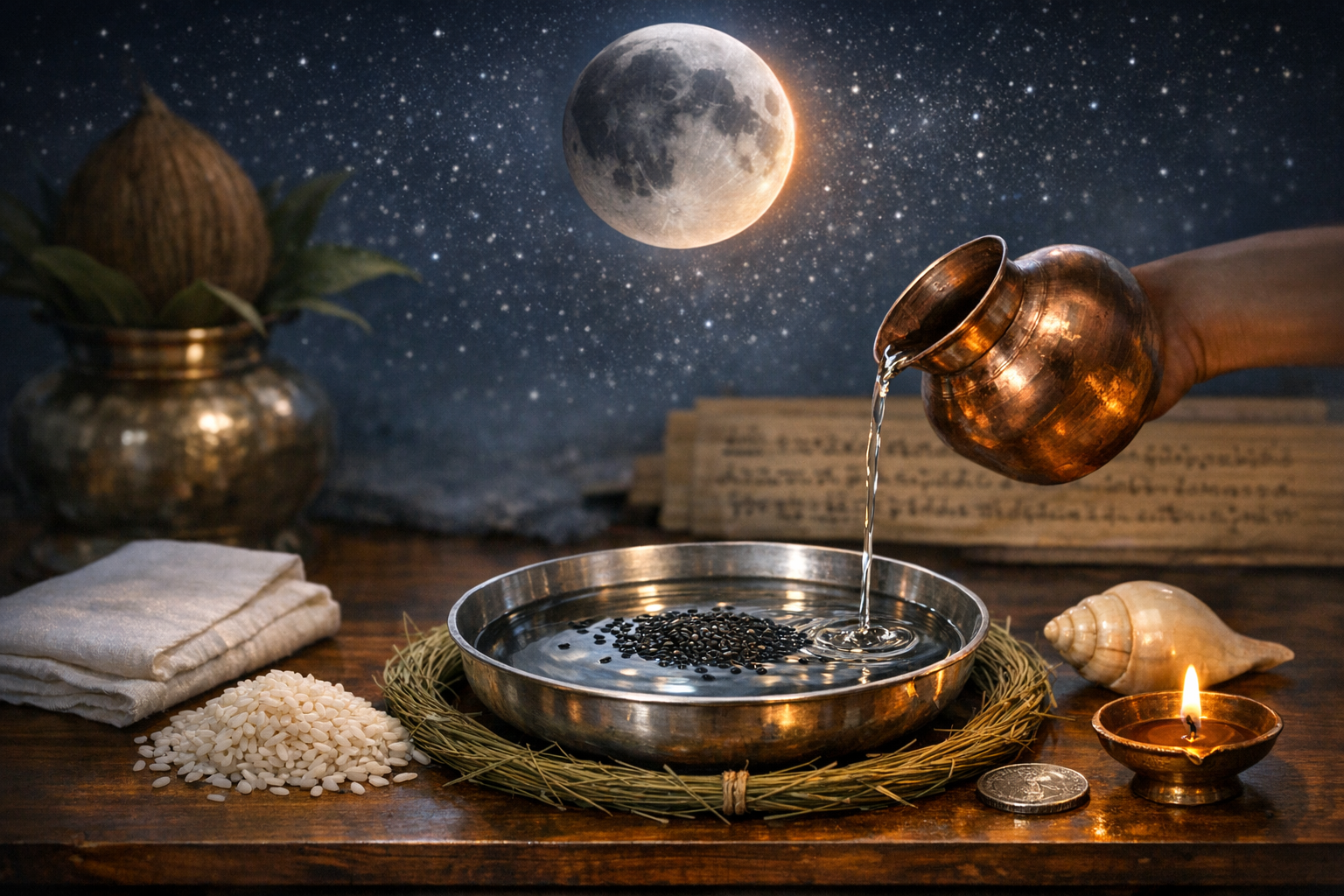
On 3 March 2026, a significant lunar eclipse (Chandra Grahana) will occur, a celestial alignment that the dharmic traditions regard as a catalytic moment for snāna (purificatory bathing), japa (mantra recitation), dāna (charitable giving), and pitṛ-tarpaṇa (offerings to ancestors). Rooted in Smṛti and ritual digests such as Dharma-sindhu and Nirṇaya-sindhu, observances during a grahana are understood to magnify the fruit of spiritual practices. This guide presents a scholarly, step-by-step framework—centered on accurate Sankalpa formulations, Chandra mantras, Pitru Tharpana ślokas, Thila Tarpana Anantara Vidhi (Samarpana), and post-eclipse rites—so practitioners can adapt the rites precisely to local panchānga details.
Astronomically, a lunar eclipse arises when Earth’s shadow falls on the Moon at Pūrṇimā (full moon). Visibility and exact contact timings (first contact, maximum, and mokṣa/end) vary by location; local panchānga or observatory notices should therefore be consulted and used in the Sankalpa. Calendrically, the date falls in the Viśvavasu (Vishwavasu) Nāma Saṁvatsara, during Uttarāyaṇa and Śiśira ṛtu. Across regions, the lunar month name on this Pūrṇimā may be recorded as Phālguna (commonly) with system-specific variations; the Sankalpa templates below are deliberately structured so that month, tithi, vāra, and nakṣatra may be inserted per one’s regional panchānga.
Dharmashāstric rationale consistently emphasizes three pillars during grahana: snāna, japa, and dāna, with tilodaka-tarpaṇa for pitr̥s accorded high merit during a lunar eclipse. Traditional authorities note that meritorious actions performed under eclipse conditions yield heightened results when accompanied by saṁkalpa, śauca (ritual cleanliness), and sincere intent. This practical guide maintains shāstric integrity while clarifying adaptations that householders, ascetics, and families can apply under the guidance of their guru and local temple tradition.
On sūtaka (ritual observance window): for lunar eclipses, many traditions observe sūtaka commencing approximately nine hours before first contact. Children, the elderly, the ill, and expectant mothers are often granted relaxations; households follow their paramparā. Customarily, freshly cooked food is avoided once sūtaka begins, prepared food is protected with darbha/tulasi where traditional, and focus is redirected to japa, svādhyāya, and inner silence.
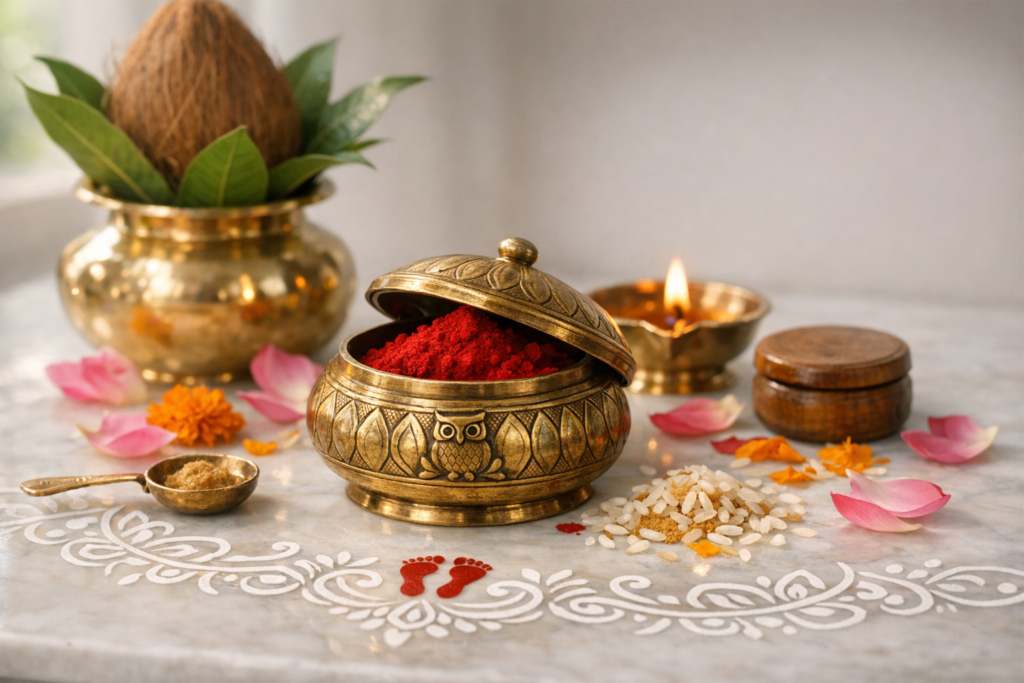
Preparation before eclipse includes arranging a clean puja space, kuśa/darbha, tilāḥ (black sesame), a low kuṇḍika or bowl with water for tilodaka, white items for dāna (e.g., rice, milk, sugar, ghee, white cloth, silver, śaṅkha where appropriate), and a change of fresh garments for post-eclipse. Keep the local panchānga close at hand to recite the calendrical identifiers within the Sankalpa.
Ritual flow at a glance: (1) Before first contact and/or at first contact, perform a brief ācamana and Sankalpa; (2) snāna with tīrtha-mantras; (3) during the eclipse, sustained japa, Chandra-gāyatrī, selected stotras, and pitṛ-tarpaṇa with tilodaka; (4) dāna during the grahana or immediately at mokṣa; (5) at mokṣa, snāna again, light food where permitted, and samarpana/prāyaścitta mantras.
Chandra Grahana Sankalpa (comprehensive template; insert local details):
śrī-govinda govinda govinda. mama upātta-samasta-durita-kṣaya-dvāra śrī-parameśvara-prīty-arthaṁ chandra-grahaṇa-kāle snāna–japa–dāna–tarpaṇa-rūpaṁ karma kariṣye. asmin viśvavasu nāma saṁvatsare, uttarāyaṇe, śiśira-ṛtau, [māse], śukla-pakṣe, pūrṇimāyāṁ tithau, [vāra-nāmni], [nakṣatra-yukte], [deśa-nāma-deśe], [nagara-nāma-nagare], [gotra], [nāma]. chandra-grahaṇasya [prathama-sparśa–madhya–mokṣa] kāle (yathā-yogyaṁ) kartavyaṁ anuṣṭhānaṁ kariṣye.
Concise Sankalpa (when brevity is needed):
mama upātta-samasta-durita-kṣaya-dvāra śrī-parameśvara-prīty-arthaṁ, asmin viśvavasu nāma saṁvatsare, [māsa–pūrṇimā–vāra–nakṣatra–deśa–nagara–gotra–nāma uccārya], chandra-grahaṇa-kāle snāna–japa–dāna–tilatarpaṇaṁ kariṣye.
Snāna and tīrtha-mantras for eclipse bathing (before and after mokṣa):
गङ्गे च यमुने चैव गोदावरि सरस्वति। नर्मदे सिन्धु कावेरी जलेस्मिन् सन्निधिं कुरु॥
apavitraḥ pavitro vā sarvāvasthāṁ gato ‘pi vā। yaḥ smaret puṇḍarīkākṣaṁ sa bāhyābhyantaraḥ śuciḥ॥
Arghya to Chandra (performed respectfully facing the Moon, where visible and where local tradition allows):
oṁ chandrāya namaḥ, arghyam samarpayāmi। dadhishaṅkha-tuṣārābhaṁ kṣīroda-arṇava-sambhavam। namāmi śaśinaṁ somaṁ śambhor-mukuṭa-bhūṣaṇam॥
Mantra-japa during the eclipse (choose per sampradāya; maintain steadiness and clarity):
Chandra bīja-mantra: ॐ श्राँ श्रीं श्रौं सः चन्द्राय नमः। (Om shrām shrīm shraum saḥ chandrāya namaḥ)
Chandra Gāyatrī (widely recited): ॐ चन्द्राय विद्महे लक्ष्मीवल्लभाय धीमहि तन्नो सोमः प्रचोदयात्। (Om chandrāya vidmahe, lakṣmī-vallabhāya dhīmahi, tanno somaḥ prachodayāt)
Mahāmr̥tyuñjaya (auspicious for all kālas): ॐ त्र्यम्बकं यजामहे सुगन्धिं पुष्टिवर्धनम्। उर्वारुकमिव बन्धनान् मृत्योर्मुक्षीय मामृतात्॥
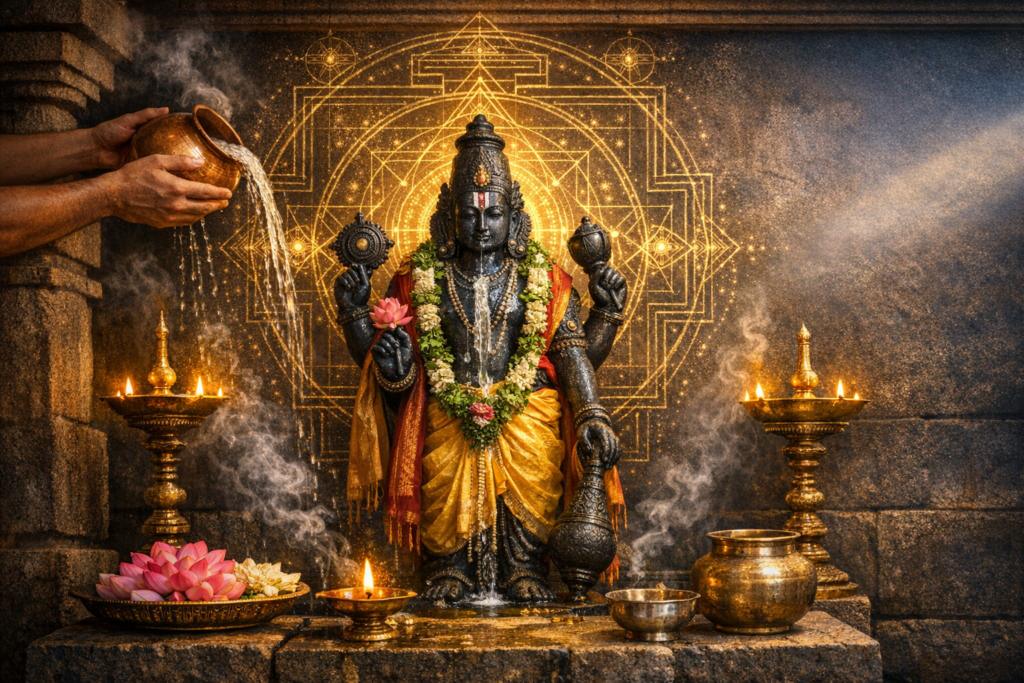
Pitru Tarpana during Chandra Grahana (procedure and ślokas): Traditional guidance esteems tilodaka-tarpaṇa (water sanctified with black sesame) during the lunar eclipse for the satisfaction of the pitr̥s. Face south if per tradition, be seated on darbha, perform ācamana, recite the tarpaṇa-sankalpa, and offer tilodaka with the right-hand tṛṇita mudrā (hand slightly cupped), repeating the formulas below. Those who customarily specify gotra and ancestral names should do so reverentially.
Tarpana Sankalpa (insert local identifiers where needed):
asmin chandra-grahaṇe pitr̥-tṛpti-siddhy-arthaṁ tilodakena tarpaṇaṁ kariṣye।
Core tarpaṇa formulae (each followed by tilodaka offerings):
ॐ पितृभ्यः स्वधा नमः। पितॄन् तर्पयामि।
ॐ प्रपितामहाभ्यः स्वधा नमः। प्रपितामहान् तर्पयामि।
ॐ प्रपितामहप्रपितामहाभ्यः स्वधा नमः। प्रपितामहप्रपितामहान् तर्पयामि।
Where maternal lineage is included by tradition, add:
ॐ मातामहाभ्यः स्वधा नमः। मातामहान् तर्पयामि।
ॐ प्रपितामह-मातामहाभ्यः स्वधा नमः। तर्पयामि।
Concluding samarpana for tarpaṇa:
etat-kṛtaṁ tilodaka-tarpaṇaṁ pitr̥-prīty-arthaṁ śrī-parameśvara-prīty-arthaṁ samarpayāmi। yad akṣaraṁ pari-bhraṣṭaṁ mātra-hīnaṁ ca yad bhavet, tat sarvaṁ kṣamyatāṁ deva prasādena parameśvara॥
Thila Tarpana Anantara Vidhi — Samarpana Mantras (after completing tilatarpaṇa):
yat kṛtaṁ tilatarpaṇaṁ, snāna–japa–dāna–tarpaṇa-sametaṁ, sarvaṁ śrīman-nārāyaṇāyeti samarpayāmi। sarveṣāṁ pitr̥̄ṇāṁ mātāmahānāṁ ca tṛptiḥ syāt, śāntiḥ syāt, anugrahaḥ syāt॥
Dāna during or immediately after the eclipse (white items are traditionally associated with Chandra): Where one’s sampradāya allows, donate anna (cooked/uncooked as permitted), śveta-vastu (white cloth, rice, sugar, ghee), silver, śaṅkha, milk, curd, or water to the worthy, accompanied by the mantra of intent. If food restrictions apply during sūtaka, offer at mokṣa after snāna.
Generic dāna-mantra template (insert item/recipient appropriately):
idaṁ [vastu-nāma] dānaṁ śrī-chandra-deva-prīty-arthaṁ [yogyāya] sampradadāmi। asyā dānasya phalaṁ sarvebhyo bhūtebhyaḥ hita-rūpaṁ bhavatu॥
Post-eclipse purification and closure: At mokṣa (end of eclipse), perform snāna again with the tīrtha-mantra, change into clean clothes, perform brief ācamana, and offer a short samarpana. Those who maintain nitya-agnihotra or sandhyā complete the pending segments per guru-nirdeśa. Where taken, light sāttvika food may be resumed after closure.
Regional and sampradāya variations: Dharmic diversity is a strength. Hindu paramparās articulate these observances with rich nuance; many Buddhist and Jain communities also align intensified practice with lunar phases (uposatha/posadha), while Sikh households may emphasize ardas, kīrtan, and sevā. This shared reverence for time (kāla) and virtue (dharma) underscores common civilizational wisdom: eclipse hours are best invested in inner clarity, compassion, and offerings for the welfare of all beings.
Practical checklist for 3 March 2026 (adapt locally): Prepare kuśa/darbha, tilāḥ, kalasha or bowl for tilodaka, white dāna items, and fresh garments; note local eclipse contacts and panchānga elements for Sankalpa; begin sūtaka per tradition; at first contact perform Sankalpa and snāna; sustain japa (Chandra Gāyatrī, bīja, or iṣṭa-mantras); perform pitṛ-tarpaṇa thoughtfully; at mokṣa, snāna, dāna, and samarpana; resume routine with gratitude and quiet reflection.
Frequently asked clarifications: (1) If visibility is obstructed by clouds, rituals proceed by astronomical timing; (2) Those unable to bathe due to health may perform mānasa-snāna (mental visualization) and offer limited tilodaka seated, with śānti-mantras; (3) If lineage names are not known, the generic tarpaṇa formulas remain fully valid; (4) Timings and exemptions differ across traditions; consult local temple/ācārya to honor paramparā.
May the Chandra Grahana of 3 March 2026 become an occasion for collective uplift—honoring ancestors with tilodaka, purifying mind and body through snāna and japa, and extending dāna as compassion in action—so that the blessings of soma, serenity, and shared dharma pervade all homes.
Inspired by this post on Hindu Pad.