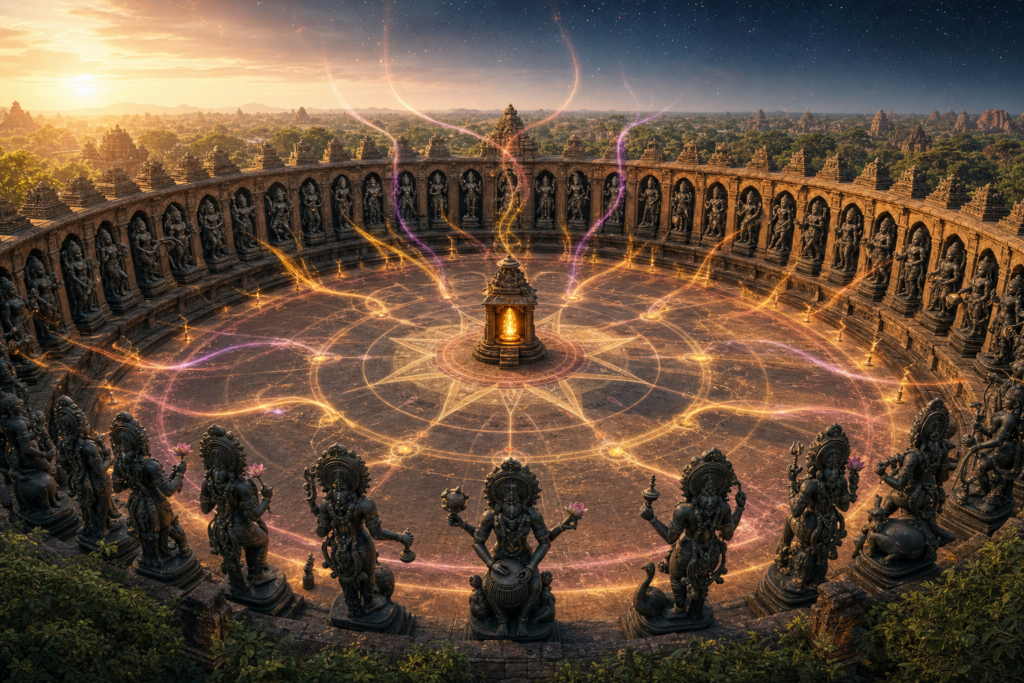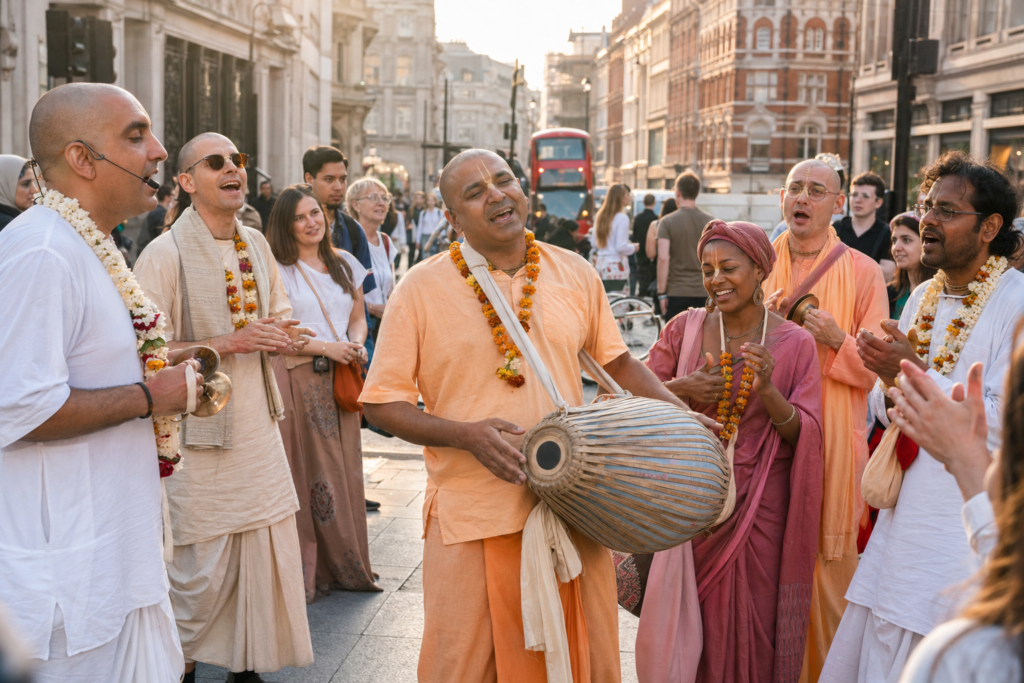
Within Hindu philosophy, the assertion that “our beliefs are a mirror reflecting the depths of human consciousness” carries enduring significance. Drawn from the Yoga Vasishta and echoed in the teachings of Sri Ramana Maharishi and Sri Nisargadatta Maharaj, this view holds that belief is not a superficial opinion but a crystallization of inner tendencies. In this perspective, belief both reflects and refines awareness, revealing how consciousness shapes, and is shaped by, lived experience.
Classical frameworks clarify this process with precision. Samskaras (impressions) and vasanas (latent tendencies) condition manas (the sensorium), buddhi (discriminative intellect), and ahamkara (the sense of “I”). As vrittis (mental fluctuations) arise, they cohere into beliefs that filter perception and behavior. The mirror metaphor thus becomes methodological: polishing the mirrorcultivating sattva, subtle discernment (viveka), and steadinessreduces distortion and brings consciousness into clearer alignment with truth.
Scriptural and modern sources converge on this insight. The Yoga Vasishta portrays the world as a projection of mind, urging disciplined inquiry into the knower. The Upanishads culminate in self-knowledge (Jnana) with declarations such as “tat tvam asi,” while Advaita Vedanta explicates non-duality as the ground of experience. In this lineage, Sri Ramana Maharishi centers atma-vichara (“Who am I?”) as a direct means to see beyond belief-structures into awareness itself, and Sri Nisargadatta Maharaj points consistently back to the substratum of being-consciousness, where beliefs appear and dissolve.
Dharmic traditions share complementary pathways toward the same clarity. Buddhism cultivates mindful observation of citta and its formations, showing that dependent origination conditions views and their cessation. Jainism’s Anekantavada and syadvada offer a disciplined humility about perspectives, demonstrating that partial truths gain coherence through many-sided understanding. Sikhism affirms Ik Onkar and addresses haumai (ego) through Naam Simran, aligning belief with remembrance of unity. Together, these insights model a principled pluralism: diverse methods, one ethical commitment to reduce delusion and suffering.
Practical implications follow naturally. When beliefs are seen as mirrors, spiritual practice becomes corrective optics. Jnana Yoga refines discernment through inquiry, Raja Yoga steadies attention by dhyana and pranayama, Karma Yoga purifies intention through seva, and Bhakti opens the heart with kirtan and japa. Each path polishes the same mirrorclarifying perception, softening rigid views, and enhancing compassion in community life.
Everyday situations illustrate the point. In a family debate or a tense social-media thread, pausing to ask, “Which belief is being protected, and what fear or hope sustains it?” can transform confrontation into curiosity. This shift from defense to discernment reduces reactivity and strengthens bonds. Such small acts, repeated, scale into social harmonyan applied “Unity in spiritual diversity.”
For those seeking a simple method, a three-step reflection is effective: first, observe the belief and the bodily feeling that accompanies it; second, trace its origin to a memory, assumption, or identity-need; third, rest attention in bare awareness for a few breaths before responding. When supported by satsang and studyBhagavad Gita, Upanishads, and Yoga Vasishtathis practice steadily aligns conviction with clarity.
Across Hinduism, Buddhism, Jainism, and Sikhism, the shared endeavor is unmistakable: to see clearly, live ethically, and realize unity amidst plurality. As beliefs become more transparent and less possessive, consciousness shines with equanimity and care. The polished mirror reflects not a fragmented world of competing certainties, but a field of interbeing where wisdom, compassion, and responsibility naturally cohere.
Inspired by this post on Hindu Blog.