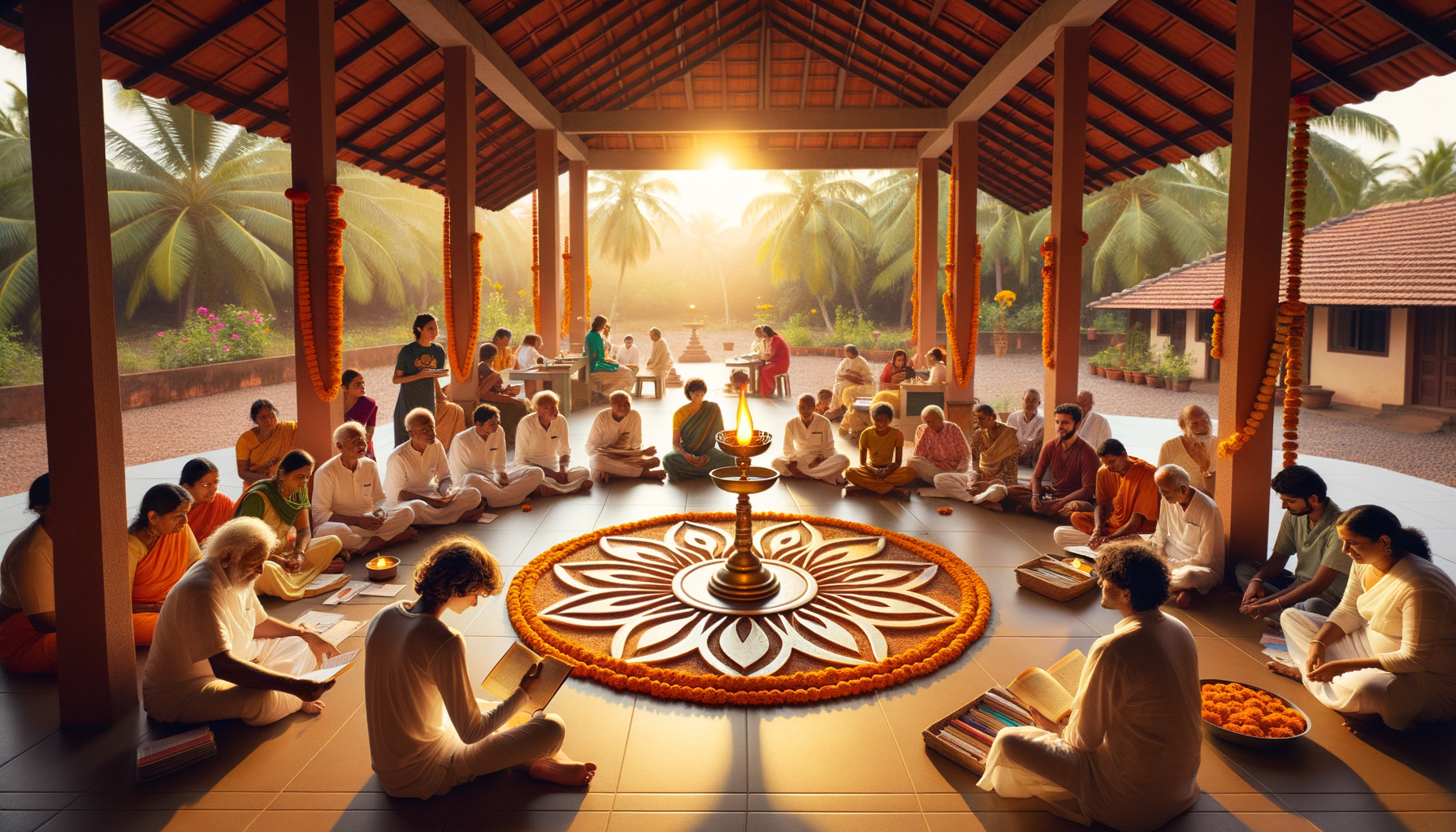
A Hindu Rashtra–Jagruti Sabha in Kudal, Maharashtra, underscored a clear and constructive message: strengthening Hindu Dharma through sustained awareness, community education, and shared cultural practice. The gathering framed Dharma as a lived, ethical framework that nurtures social harmony, civic responsibility, and intergenerational continuity, while affirming an inclusive vision aligned with the shared values of Hinduism, Buddhism, Jainism, and Sikhism.
The atmosphere combined sober reflection with quiet resolve. For many attendees, the event served as a reminder that Sanatan Dharma is strengthened not only by ritual observance, but also by informed understanding, daily conduct, and compassionate service. The emphasis on education—through study circles, youth engagement, and community dialogues—was presented as the most reliable path to preserve heritage while remaining responsive to contemporary societal needs.
Speakers highlighted that cultural preservation is inseparable from ethical practice: respecting elders, caring for the environment, and fostering unity in diversity within the broader dharmic family. This approach situated Hindu Dharma as a capacious, pluralistic tradition that welcomes multiple ways of worship and reflection, resonating with the principle of unity without uniformity. In this spirit, the Sabha presented Dharma awareness as a public good that benefits all.
Local participants pledged regular Dharma-related activities to safeguard cultural and spiritual values in practical, measurable ways—periodic workshops, textual study, seva initiatives, and collaborative programs across dharmic communities. The focus on Kudal’s youth signaled an investment in resilient identities rooted in knowledge, respect, and service, ensuring that heritage remains living, relevant, and future-facing in Maharashtra and beyond.
The event also acknowledged the importance of institutional support and community networks for continuity. By pairing cultural literacy with civic-minded engagement, the Sabha articulated a model in which Dharma education reinforces social cohesion, reduces polarization, and enriches everyday life. In doing so, it echoed wider efforts by community organizations to build capacity for dialogue, learning, and shared purpose.
Overall, the Kudal Hindu Rashtra–Jagruti Sabha affirmed that the strengthening of Hindu Dharma rests on accessible education, consistent community practice, and dharmic unity. Through these means, participants envisioned a stable foundation for cultural preservation and ethical action—one that advances harmony across India’s diverse spiritual landscape while remaining firmly anchored in Sanatan Dharma’s timeless values.
Inspired by this post on Hindu Jagruti Samiti.