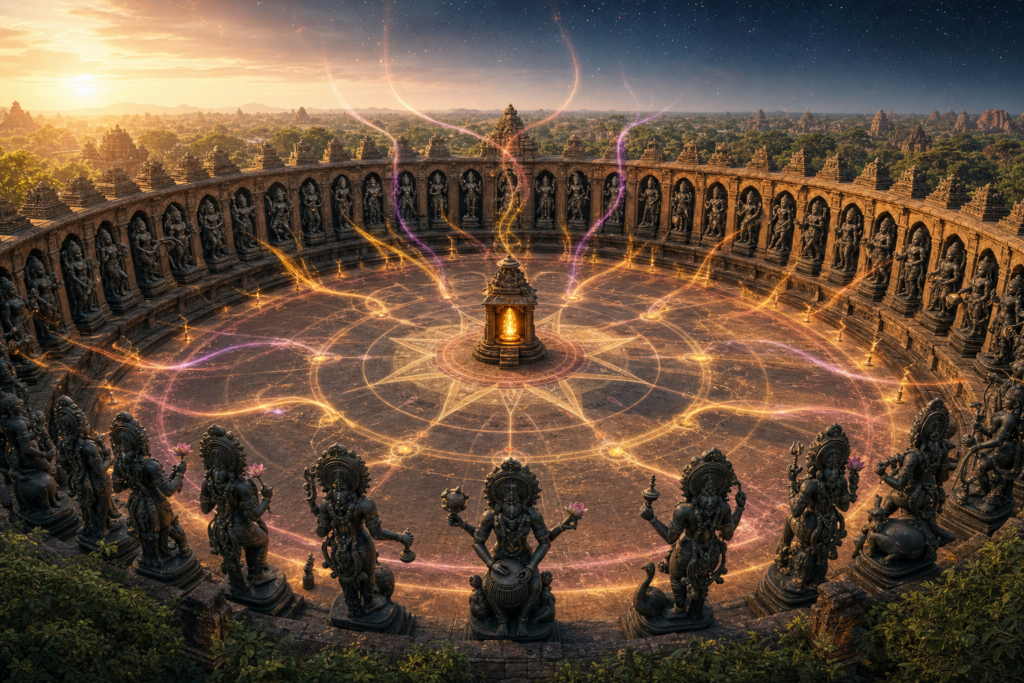
Sri Dharma Sastha Bhujangam is traditionally attributed to the great Advaita philosopher Sri Adisankara (Adi Sankara). Revered as a Sanskrit devotional hymn (stotra), it extols the compassionate, protective, and dharma-guiding qualities of Lord Dharma Sasthavenerated across South India as Ayyappa and understood within Hindu philosophy as a harmonious synthesis of Vishnu and Shiva (Harihara). The hymn stands at the intersection of Advaita insight and Bhakti Tradition, illustrating how non-dual knowledge and heartfelt devotion can reinforce each other.
Composed in the bhujangam meter, the stotra’s rhythmic cadence naturally aligns with steady breathing. Devotees often experience the recitation as a contemplative practice that encourages mindfulness, clarity, and inner steadinessbenefits that resonate with meditative disciplines found across dharmic traditions. In many households and temple settings, the flow of the verse guides attention inward, helping anchor the mind in devotion while cultivating serenity.
Thematically, Sri Dharma Sastha Bhujangam celebrates the deity’s role as a benevolent protector, a guardian of pilgrims, and a beacon of righteousness. By praising Dharma Sastha as embodying the unified energies of Shiva and Vishnu, the hymn underscores a profound message of spiritual integration rather than division. This portrayal offers a powerful reminder that the ultimate purpose of practiceethical living, compassion, and self-disciplinetranscends sectarian boundaries and invites a shared commitment to dharma.
For many practitioners, the lived experience of this stotra is both devotional and transformative. Recitation often deepens faith (shraddha), refines intention, and supports daily conduct aligned with dharma. These outcomes mirror virtues honored throughout Hinduism, Buddhism, Jainism, and Sikhismsuch as non-harm, self-restraint, truth, and servicereinforcing a spirit of unity within the broader family of dharmic traditions.
Practical engagement with the hymn is straightforward. Reciting it during the quietude of early morning or evening enhances concentration, while a simple altar with a lamp can help create a sacred ambience. Listeners and readers who are new to the text may use careful transliteration or trusted translations to honor pronunciation and meaning. The emphasis remains on sincerity, steadiness of breath, and reflective attentionqualities that allow the hymn’s wisdom to settle deeply into daily life.
Historically and culturally, the stotra reflects Sri Adisankara’s enduring influence: a sage who integrated philosophical precision with devotional expression. As a living tradition, it remains central to many communitiesespecially those connected to Sabarimalawhile also appealing to seekers across regions who value a balanced path of knowledge and devotion. In honoring Sri Dharma Sastha, the hymn invites a contemplative appreciation of unity, encouraging harmony among diverse paths that share a commitment to dharma and the welfare of all beings.
Ultimately, Sri Dharma Sastha Bhujangam offers a compelling way to cultivate devotion, ethical clarity, and inner composure. Its praise of Dharma Sastha as Hariharaan emblem of integrationserves as a bridge between traditions and temperaments, reminding practitioners that shared values and compassionate action can unite the many streams of dharmic spirituality into a single ocean of wisdom.
Inspired by this post on Hindu Pad.