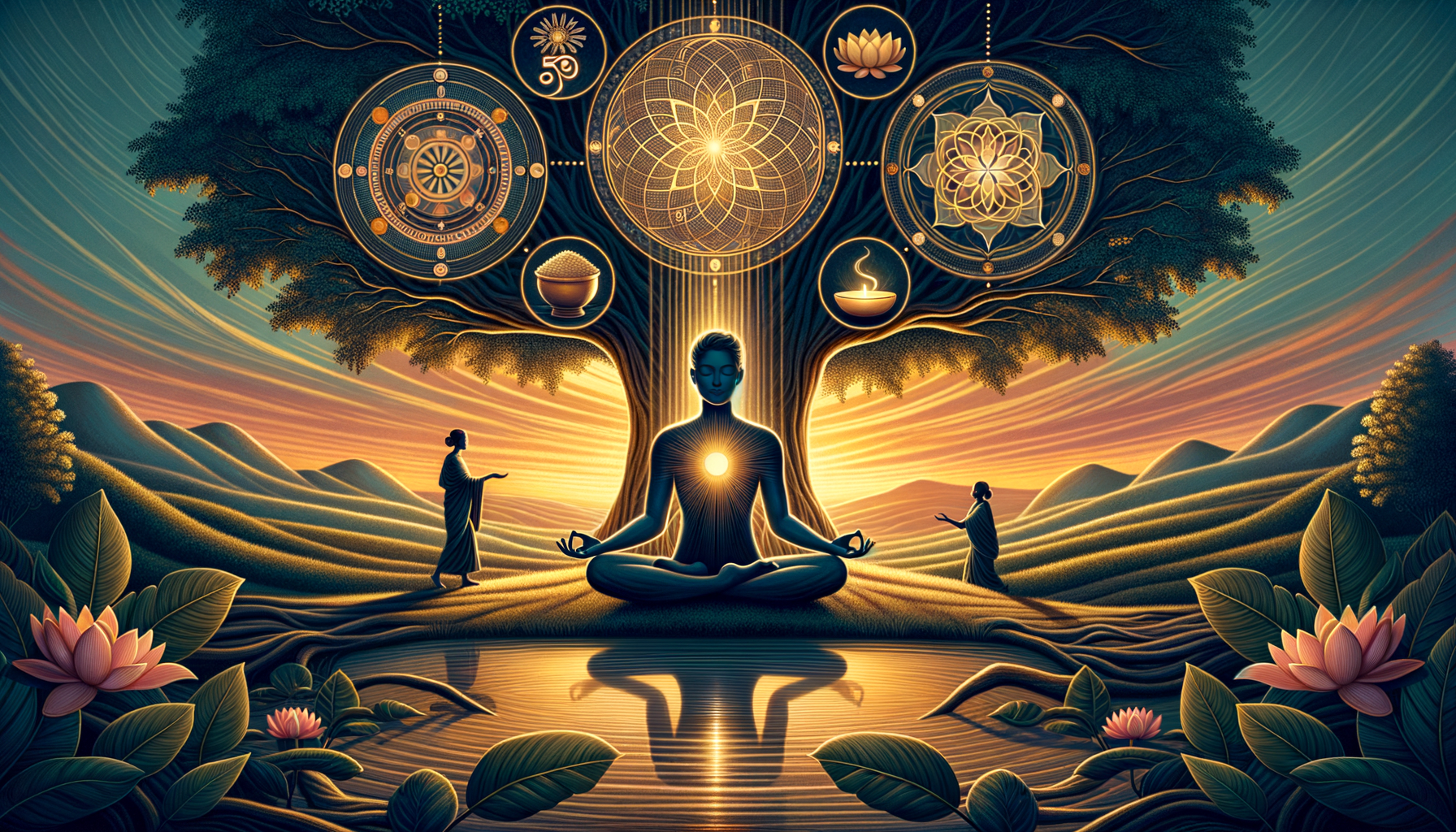
In Hindu thought, the word “spiritual” points to something profoundly human and universal: the intrinsic divinity (Atman) present in every being. Rather than limiting spirituality to belief or ritual alone, this perspective emphasizes inner realization that transcends social identity, labels, and circumstance. As a living tradition, Hinduism encourages the recognition of this inner light as the foundation for compassion, self-mastery, and harmony.
This vision aligns closely with the wider dharmic familyBuddhism, Jainism, and Sikhismwhich, while distinct in doctrine and practice, share commitments to ethical living, mindful awareness, self-discipline, and service. Across these traditions, spirituality is both intimate and inclusive: intimate because the journey unfolds within, and inclusive because many paths can nourish the same aspiration for awakening, freedom, and peace.
Philosophically, Hinduism grounds this understanding in the Upanishads and the Bhagavad Gita. Concepts such as Atman–Brahman, dharma, karma, and moksha frame the purpose of life as inner realization expressed through outer responsibility. Multiple yogic pathsjnana (wisdom), bhakti (devotion), karma (selfless action), and raja (meditation)acknowledge diverse temperaments and life stages. The spirit of Ishta affirms that individuals can approach the Divine in ways that suit their nature, supporting pluralism without diluting depth.
In practice, spirituality becomes tangible through disciplined habits that refine attention and character. Dhyana (meditation), pranayama (breath regulation), mantra japa, and seva (service) cultivate clarity, steadiness, and empathy. Ethical frameworksyama and niyama, with principles such as ahimsa (nonviolence), satya (truthfulness), and aparigraha (non-grasping)translate inner insight into daily conduct. Parallels resonate across dharmic traditions: mindfulness and metta in Buddhism, rigorous ahimsa and aparigraha in Jainism, and seva and simran in Sikhism. Together, they model unity in spiritual diversity.
For many practitioners, moments of stillness or compassion reveal this inner divinity most clearlyduring quiet meditation, reflective reading of sacred texts, or selfless action that eases another’s burden. One may notice greater emotional resilience, mental clarity, and a steadier moral compass as practice matures. These benefits do not replace the deeper quest for moksha; rather, they demonstrate how timeless wisdom enhances modern life, relationships, and community well-being.
Hindu spirituality’s inclusive ethos also nurtures interfaith respect and dialogue. By affirming that many sincere paths can foster wisdom and compassion, it invites collaboration across Hinduism, Buddhism, Jainism, and Sikhism. Shared initiativesservice projects, ethical education, and contemplative practiceoffer common ground where inner transformation naturally supports social harmony.
Ultimately, the spiritual journey in Hinduism moves from sthula (gross) to sukshma (subtle), from ego-centered striving to compassionate action anchored in awareness. It is a disciplined, hopeful path that honors personal experience while embracing pluralism. In recognizing the profound divine possibilities hidden in every being, the dharmic traditions together illuminate a practical way to cultivate peacewithin and between communities.
Inspired by this post on Hindu Blog.