
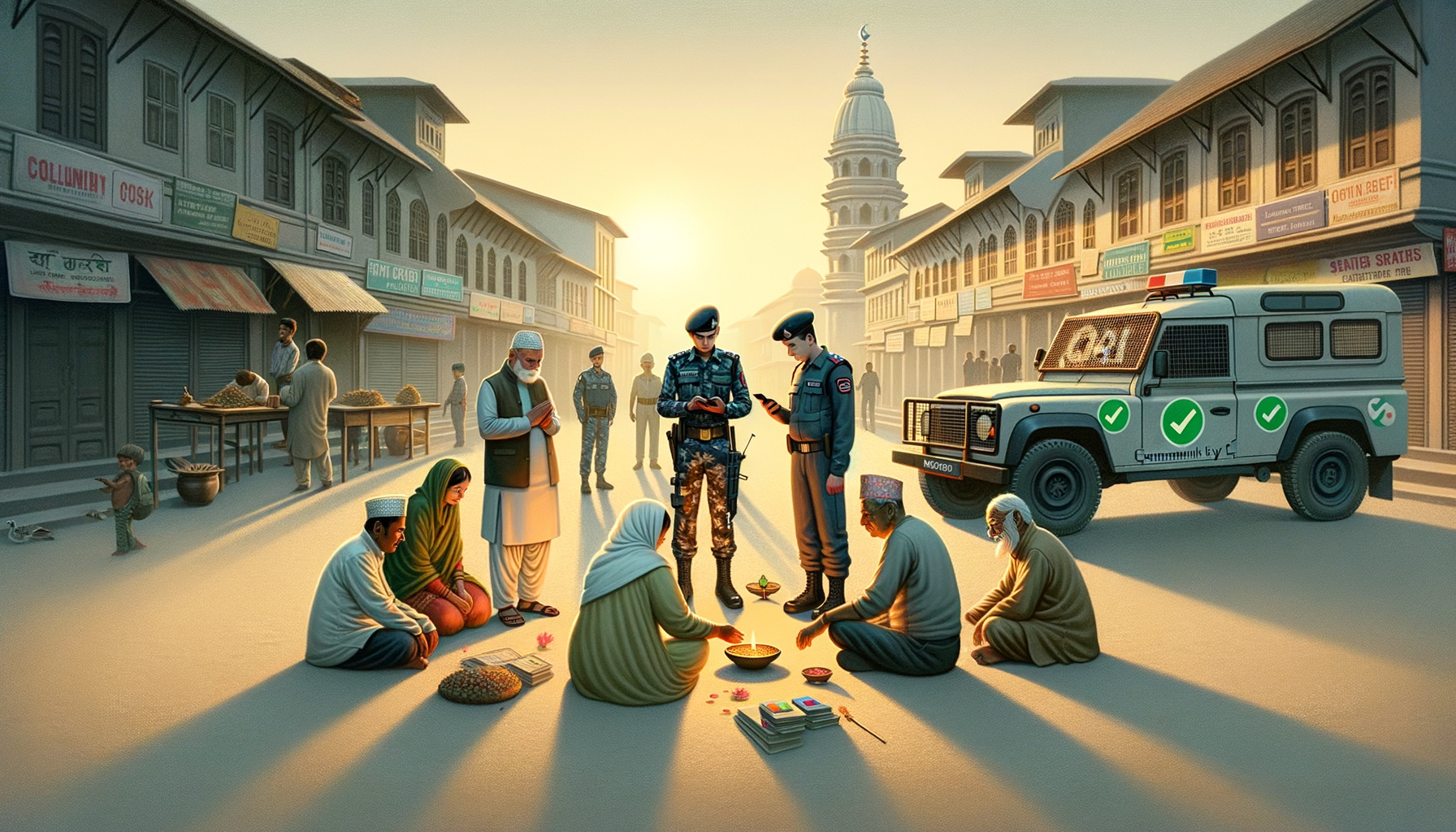
Reports from southern Nepal indicate a sudden escalation of Hindu–Muslim communal tensions in towns near the Nepal–India border following the circulation of a derogatory social media post targeting Hindu Dharma. The episode, traced by locals to a rapidly shared Tik Tok Video, was followed by an incident of vandalism at a mosque, prompting a swift police response and heightened security measures in and around Birgunj (Parsa district).
The sequence of events underscores how provocative online content can trigger real-world unrest, particularly in border economies where information flows are fast and often unvetted. In this case, security forces moved quickly to stabilize the situation, discourage retaliatory actions, and restore routine life, while local administrators appealed for restraint and legal redress rather than street-level confrontation.
The impact on daily life was immediate. Residents described shuttered marketplaces, anxious families, and community elders urging calm across neighborhoods. Many emphasized decades of shared civic spaces and interdependence in trade, transport, and schoolingreminders that communal harmony in Birgunj and the wider Parsa region has historically relied on cooperation rather than polarization.
From an analytical perspective, the incident illustrates three converging drivers of risk: the velocity of social media virality, the fragility of Hindu–Muslim relations amid incendiary speech, and the heightened sensitivities in cross-border hubs. These dynamics can convert a single offensive post into a cascade of rumor, outrage, and opportunistic mobilization, thereby placing both places of worship and public order at risk.
Condemning all forms of vandalism and intimidation is fundamental to rule of law and consistent with the dharmic ethos of ahimsa, daya, and maitri. In moments like this, unity among the dharmic traditionsHinduism, Buddhism, Jainism, and Sikhismcan offer a principled anchor for non-violence, dialogue, and restorative conduct, reinforcing the idea that sacred spaces of any community must be protected without exception.
Meaningful de-escalation benefits from practical steps: rapid fact-checking of viral claims; clearly communicated police response protocols; community hotlines for rumor verification; and youth-led counterspeech that rejects sectarian narratives. Local interfaith and intercommunity platforms, grounded in shared civic priorities, can help transform reactive anger into structured dialogue and legal accountability for both online incitement and physical damage.
In the Birgunj–Parsa corridor, sustained peace will depend on a balanced approach that upholds freedoms while penalizing hate speech that violates the law, ensures impartial security enforcement, and supports trauma-informed community outreach. Schools, market associations, and religious councils can jointly model restraint and reconciliation, demonstrating that collective prosperity is inseparable from communal harmony.
Ultimately, the episode is a cautionary tale about the costs of unverified digital content and the necessity of resilient, cross-community norms. By centering dharmic unity and a shared commitment to lawful, compassionate conduct, southern Nepal’s towns can move beyond momentary provocation toward a durable peace rooted in dignity, dialogue, and mutual respect.
Inspired by this post on Struggle for Hindu Existence.










