Kanuma is observed as the third day of the four-day Sankranthi (Makara Sankranti) celebrations in Andhra Pradesh and Telangana. In 2026, Kanuma falls on January 15. The day centers on gratitude for nature, cattle, and the agrarian cycle, bringing families and communities together across rural and urban spaces.
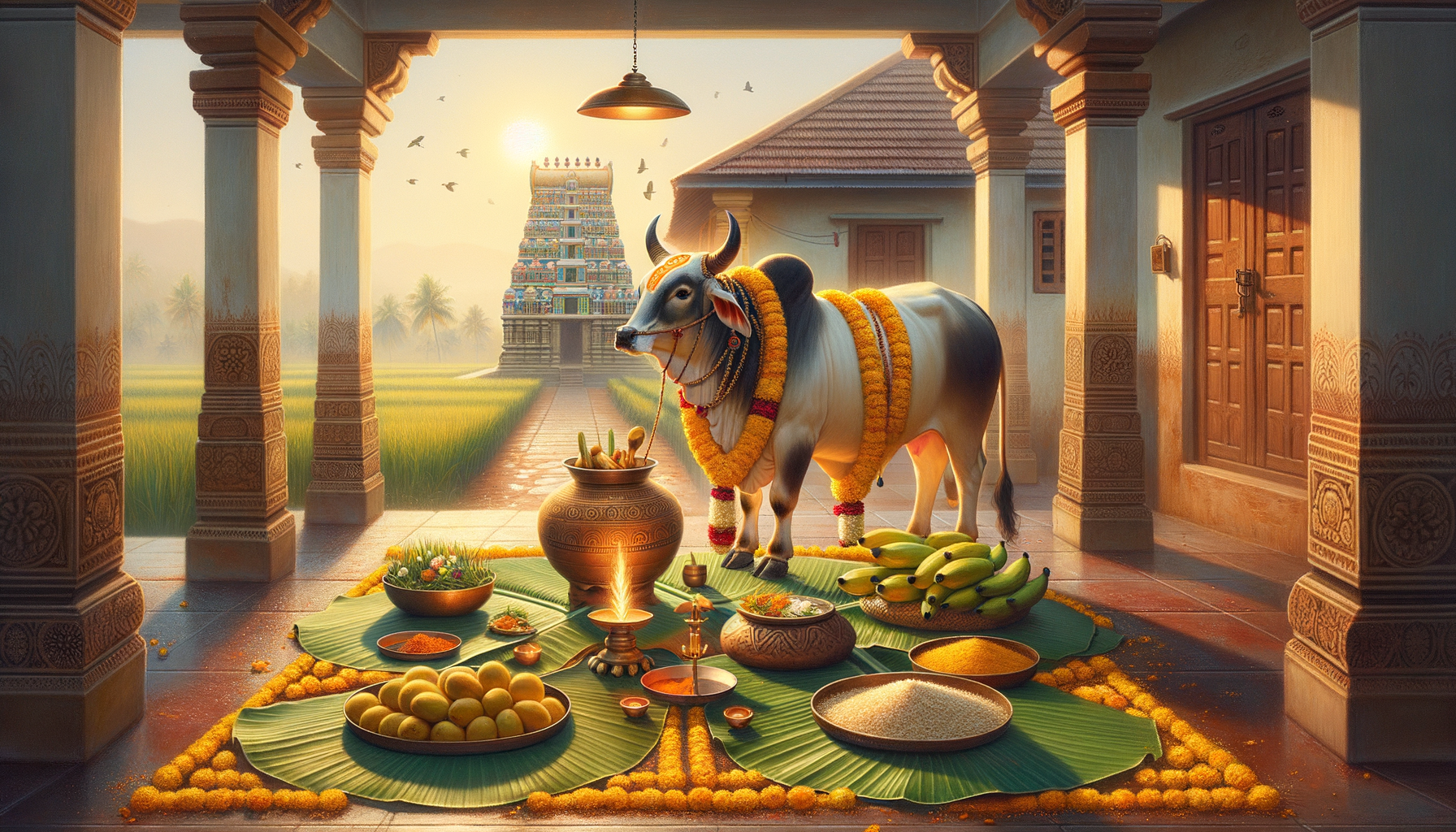
The core observance of Kanuma is Govardhana Puja, also known locally as Go puja (worship of cows). Households and farmers honor cows and bullsdecorating them with turmeric, kumkum, and flower garlands, offering freshly cooked naivedyam, and performing pradakshina (circumambulation). This worship recalls the belief that Lord Sri Krishna lifted Govardhana Parvatham (Mount Govardhan) to protect farming communities, symbolizing divine care for livelihoods and the environment.
For many families, the morning begins with cleaning the courtyard, drawing festive muggulu (rangoli), and preparing dishes from the new harvest. Children often accompany elders to feed and gently pat cattle, learning reverence for animals that sustain agrarian life. Community gatherings, temple visits, and distribution of prasadam reinforce Kanuma’s spirit of gratitude, cooperation, and well-being.
Across the wider Indian cultural landscape, Kanuma resonates with parallel traditions that honor cattle and the harvest. In Tamil Nadu, for instance, Mattu Pongal expresses a similar ethos of respect for bovines. This shared sensibilitygrounded in ahimsa, seva, and ecological harmonyechoes values cherished across dharmic traditions, including Hinduism, Buddhism, Jainism, and Sikhism, reinforcing unity in cultural practice and spiritual outlook.
While local customs vary, Kanuma rituals are generally performed after sunrise, with Go puja conducted during the forenoon and family offerings continuing through the day. As with all festival observances tied to tithis and regional conventions, consulting a local panchang ensures alignment with community timings and temple schedules.
Beyond ritual, Kanuma underscores ethical care for animals, mindful use of resources, and gratitude for the land. Families commonly emphasize gentle handling and proper feeding of cattle, reflecting a broader commitment to compassionate living and sustainable agricultureprinciples central to the Sankranthi season.
With Kanuma 2026 set for January 15, communities in Andhra Pradesh and Telangana will once again celebrate Govardhana Puja and Go puja, honoring Sri Krishna’s protection and the enduring bond between people, animals, and nature. The day’s observances offer a thoughtful reminder that cultural tradition and ecological stewardship go hand in hand.
Inspired by this post on Hindu Pad.