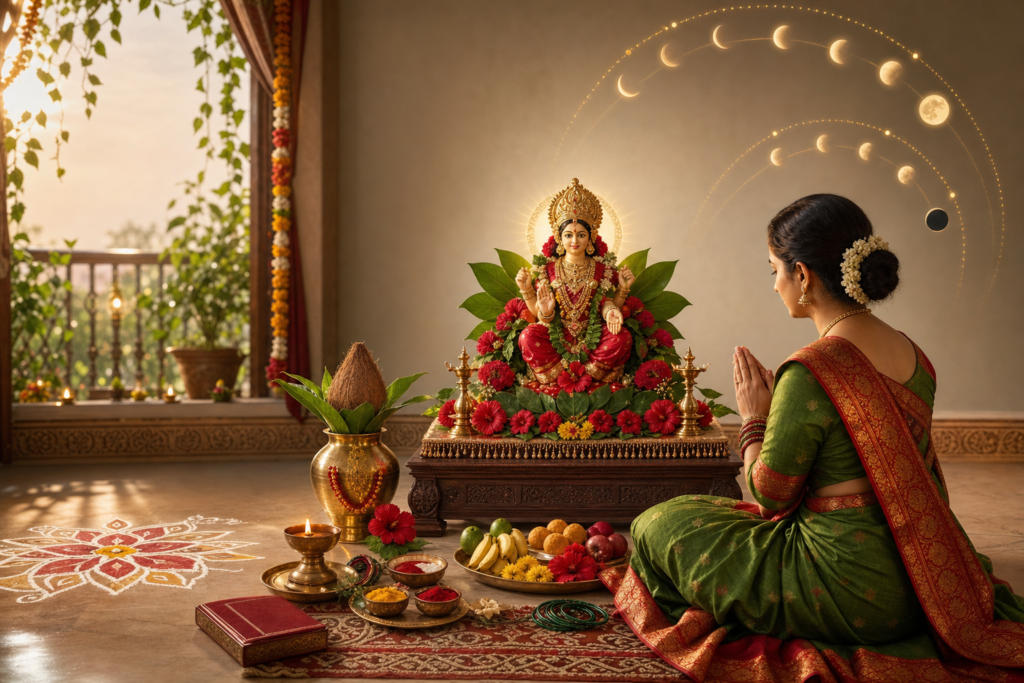
Jagadakhila and the Cosmic Triangle: Unveiling Shakti’s Universal Play in Tantra
Jagadakhila, often translated as “the entire plane of the universe,” designates a sweeping vision in Tantric philosophy where the Divine Mother, Shakti, reveals the cosmos as her living field of lila (play). In this perspective, the universe is not a static backdrop but a dynamic, sacred expansean unfolding continuum in which consciousness and energy are inseparable. The idea is both metaphysical and experiential: Jagadakhila frames reality as the all-encompassing ground upon which the Goddess expresses presence, power, and compassion.
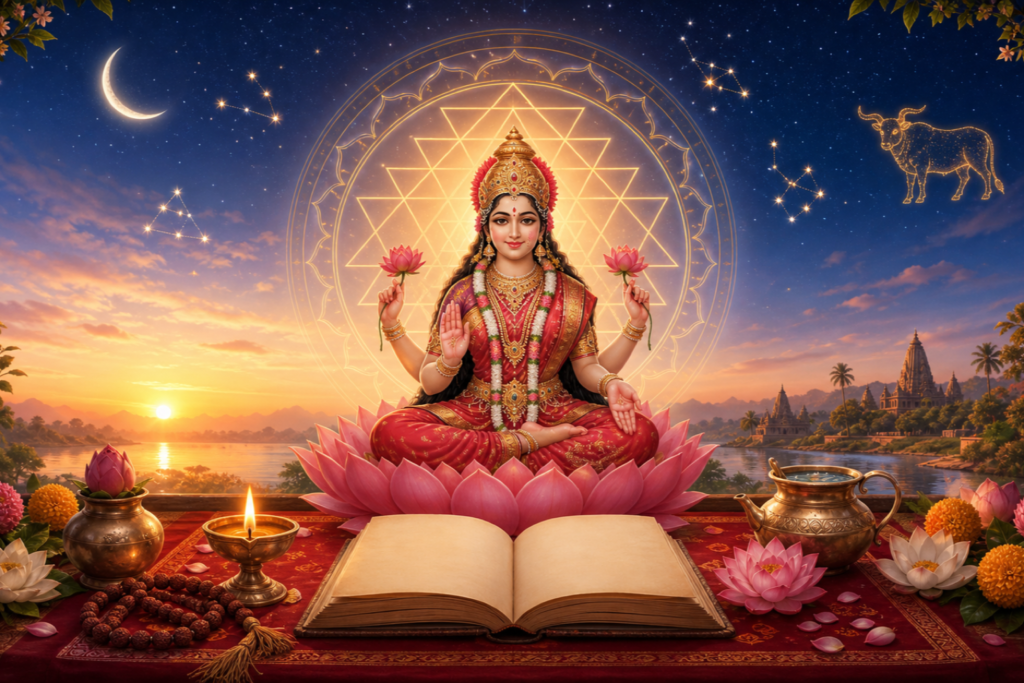
The image of the “Cosmic Triangle” clarifies this vision through a canonical Tantric motif: the trikona of Shakti. Traditionally understood as the triadic powers of iccha-shakti (will), jnana-shakti (knowledge), and kriya-shakti (action), the triangle symbolizes how intention, understanding, and manifestation interlock to shape the universal plane. In many Tantric mappings, including the symbolism of the Sri Yantra, this triangle functions as a focal geometry through which practitioners contemplate the unity of energy and consciousness within Jagadakhila.
Philosophically, Jagadakhila affirms Shakti as both immanent and transcendent: immanent as the vitality coursing through all forms, and transcendent as the boundless awareness that exceeds any single form. Such a view reframes the cosmos as a sacred ecology of relationships rather than a collection of isolated entities. Within this sacred ecology, the triangle is not merely a shape but a contemplative key, inviting inquiry into how will, wisdom, and work cohere in every experience.
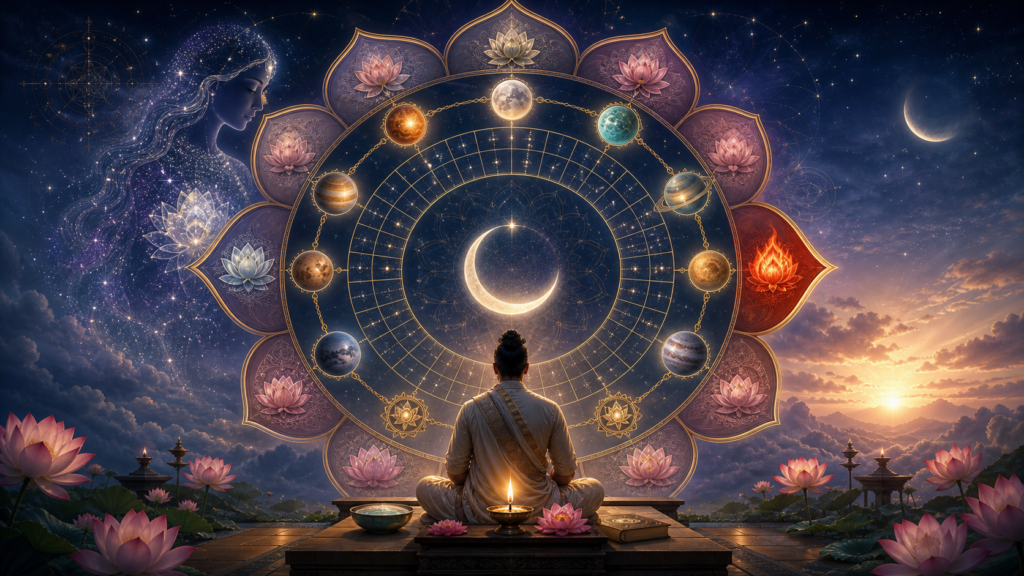
In contemplative practice, many find that reflecting on the trikona stabilizes attention and refines discernment. Practitioners often visualize a luminous triangle at the heart center, attuning breath to a steady rhythm while invoking the Devi through mantra. This steadying of breath and meaning aligns with the three powers of Shakti: intention clarifies, insight illumines, and action integrates. Over time, the symbol becomes an inner compass, guiding ethical choices and compassionate presence within the wider Jagadakhila.
Read relationally, Jagadakhila resonates across dharmic traditions. The interdependent field of experience echoes Buddhism’s insight into interbeing, Jainism’s anekantavada (the many-sidedness of truth), and Sikhism’s affirmation of Ik OnkarOne reality pervading all. While each tradition speaks in its own language, the shared intuition is clear: unity does not erase diversity; it sanctifies it. Jagadakhila thus becomes a bridge-concept, encouraging mutual respect and deep dialogue among Hinduism, Buddhism, Jainism, and Sikhism.
Ethically, the vision of a universal plane animated by Shakti encourages reverence for life, ecological responsibility, and social harmony. If all beings appear within the Devi’s field, care becomes a natural expression of wisdom. The Cosmic Triangle, in this light, is not only metaphysical; it is also practicalsummoning the balance of will, knowledge, and action in service of justice, empathy, and shared flourishing.
Historically and textually, Jagadakhila is articulated within Tantric streams that emphasize the Goddess as the source and substance of manifestation. While terminology varies across lineages, the core insight remains stable: the universe is a sanctified expanse where consciousness and power meet. References to triangular symbolism recur in ritual, mandala design, and philosophical exegesis, affirming the triangle’s role as a concise emblem of Shakti’s triune potency.
For readers engaging this knowledge today, Jagadakhila offers both clarity and consolation. Clarity, because it provides a conceptual map linking everyday activity to a larger spiritual architecture; consolation, because it portrays existence as meaningful, dynamic, and held within a compassionate field. Approached with steadiness and humility, the Cosmic Triangle becomes a luminous threadconnecting intention to insight, insight to action, and action back to the boundless play of Shakti.
Jagadakhila is described as the entire plane of the universe, a vision in which Shakti reveals the cosmos as her living field of lila or play. The article presents it as a sacred expanse where consciousness and energy are inseparable.
What is the Cosmic Triangle or trikona of Shakti?
The Cosmic Triangle is the trikona of Shakti, symbolizing iccha-shakti, jnana-shakti, and kriya-shakti. These powers represent will, knowledge, and action working together to shape experience and manifestation.
How is the Cosmic Triangle used in contemplative practice?
The article says practitioners often visualize a luminous triangle at the heart center while steadying the breath and invoking the Devi through mantra. This practice is presented as a way to stabilize attention, refine discernment, and guide ethical action.
How does Jagadakhila relate to other dharmic traditions?
The article connects Jagadakhila with Buddhism’s insight into interbeing, Jainism’s anekantavada, and Sikhism’s affirmation of Ik Onkar. It frames the concept as a bridge for mutual respect and dialogue among Hinduism, Buddhism, Jainism, and Sikhism.
What ethical message does Jagadakhila offer?
Jagadakhila encourages reverence for life, ecological responsibility, and social harmony by seeing all beings within the Devi’s field. The Cosmic Triangle adds a practical call to balance will, knowledge, and action in service of justice, empathy, and shared flourishing.