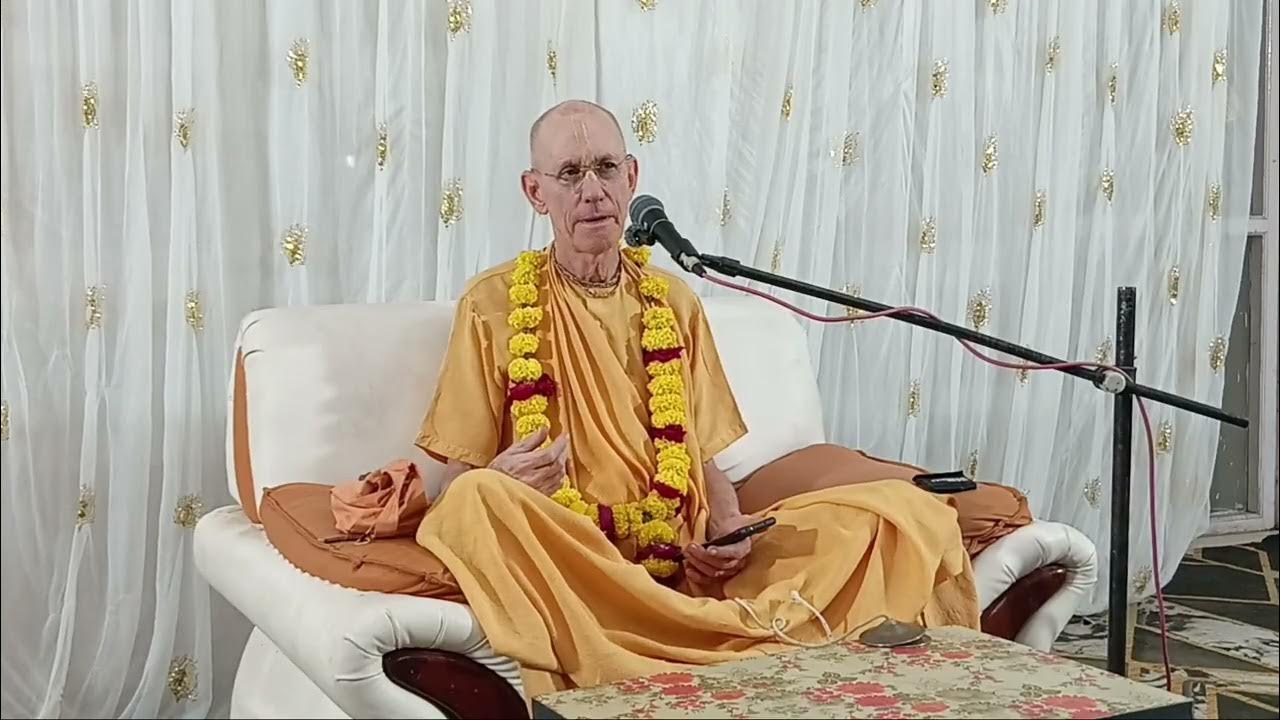
At ISKCON Dwarka Temple, H.H. Guru Prasad Swami delivered a focused and contemplative class centered on a pivotal verse from Sri Caitanya-caritamrita that cautions against offenses toward the Lord and the Vaishnavas. The teaching underscored that freedom from aparādha is not merely a theological nuance but a foundational condition for steady progress in bhakti and spiritual advancement within Hinduism’s Bhakti Tradition.
Before entering into detailed exegesis, the discourse wove together thematically related scriptural passages, at times presented melodically, to demonstrate how sacred literature forms a coherent and lived tradition. Particular emphasis was placed on reverence for sacred textsboth printed granthas and digital editionsaffirming that intentional respect for śāstra shapes inner disposition and outer conduct.
The core instruction highlighted a practical ethic: cultivate humility, guard speech, honor devotees, and approach the Lord with gratitude and care. This ethic aligns with shared dharmic values across Hinduism, Buddhism, Jainism, and Sikhismechoing ahiṁsā, right speech, disciplined mindfulness, seva, and profound respect for the Guru and scripture. In this way, the class presented offense-free devotion as a unifying principle that deepens personal sādhanā while strengthening harmony among dharmic traditions.
In addressing contemporary life, the session offered relatable guidance for the digital age: treat devices used for reading or chanting as extensions of one’s sacred space, avoid placing them carelessly, and approach online engagements with the same mindfulness reserved for temple settings. By integrating these practices, daily routinesjapa, kirtan, and textual studybecome deliberate acts of devotion rather than distracted habits.
Attendees noted how the atmosphere of reverence transformed ordinary moments into contemplative presence, making the sacred feel immediate and accessible. Many recognized everyday scenariosscrolling verses on a phone amid multitaskingand found renewed resolve to create quiet, respectful contexts for engaging with scripture and devotional sound.
Through this measured and compassionate teaching, the class demonstrated that reverence is not formality but a method for clarifying intention, softening the heart, and building community. By foregrounding offense-free devotion, it encouraged practitioners to embody the inclusive spirit of Sanatana Dharma, affirming unity in spiritual diversity and inviting seekers across dharmic paths to progress together with dignity and mutual respect.
Inspired by this post on Dandavats.