-
UN warns of rampant forced conversions in Pakistan: 14–18-year-old girls targeted, 75% Hindu
United Nations human rights experts have repeatedly warned about coerced religious conversions and child marriages targeting minority girls in Pakistan, especially those aged 14–18. Documented patterns show rapid abduction, conversion affidavits, and marriage certificates used to override families’ pleas, amid disputed age claims. Rights monitors report that Hindu girls in Sindh constitute a large share…
-
Seva That Transforms: Govardhan Eco Village Kirtan Unites Hearts, Lifts Rural Futures

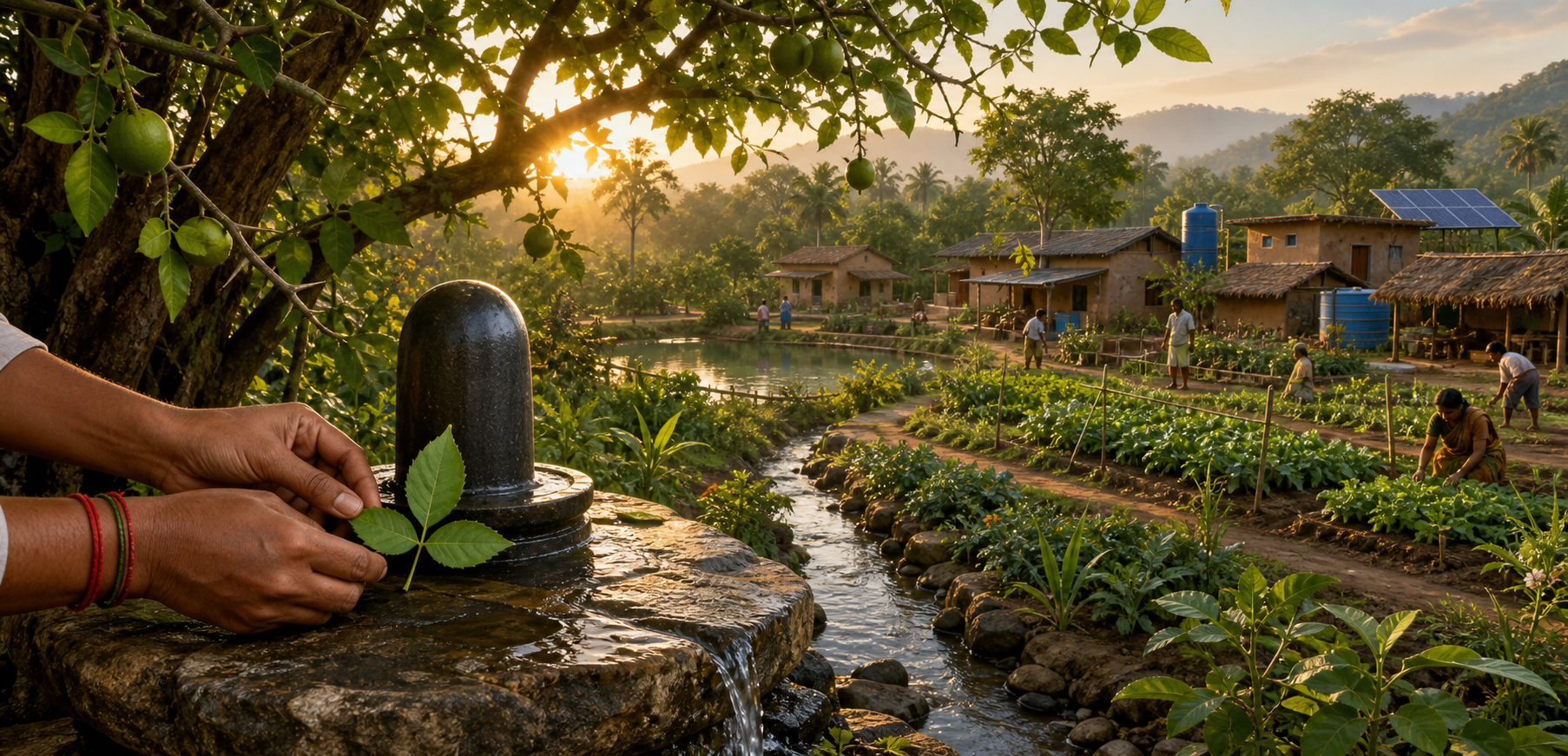
A village’s day begins before sunrise, yet the social fabric shifts when brahmacharis from Govardhan Eco Village arrive with kirtan that converts routine into shared purpose. Rooted in the dharmic ethic of seva—honored across Hinduism, Buddhism, Jainism, and Sikhism—the approach builds trust first, then layers practical, eco-conscious habits that endure. Stickers and calendars work as…
-
Beyond Starships: Vedic and Dharmic Pathways for Safe, Effortless Journeys to Other Worlds

Modern fascination with interplanetary travel reflects a timeless philosophical impulse to understand creation and its inhabitants. Vedic literature, supported by Srimad-Bhagavatam, Sri Isopanisad, and the Bhagavad-gita, offers a complementary research program to empirical science via testimony and disciplined practice. Rather than relying on fragile material instruments, the Vedic model proposes bhakti-yoga as a safe, replicable…
-
Facing Cancer as Krishna’s Embrace: Evidence‑Based Care, Dharmic Resilience, and Hope

A recent diagnosis of secondary cancer in a cervical lymph node is reframed as “Krishna’s Embrace,” integrating evidence‑based oncology with steadiness drawn from Dharma, Meditation, Yoga, and Bhakti. The narrative explains what “secondary cancer” means, outlines why PET‑CT, endoscopy, and pathology are pivotal, and clarifies how biomarkers like p16 and EBV guide therapy. It emphasizes…
-
Punya and Paap Unveiled: The Moral Physics of Karma in Hindu Dharma and Dharmic Unity

Punya and Paap are presented here as the moral physics of Hindu Dharma, explaining how intention, means, and consequence shape character, community, and future conditions. Readers gain a clear, text-grounded understanding of karma, including sañcita, prārabdha, and āgāmi, with practical guidance on cultivating Punya and attenuating Paap through yamas, niyamas, dāna, prāyaścitta, and daily mindfulness.…
-
Khandoba’s Idol Decoded: Valor, Protection, and Sacred Kingship in Maharashtra’s Jejuri

Khandoba—revered as Martanda Bhairava, Malhari, and Mallari—unites Shiva’s protective grace, martial valor, and divine kingship in a compelling idol form central to Maharashtra’s sacred geography. The anthropomorphic equestrian murti and the aniconic linga together encode a complete theology of guardianship, justice, and prosperity. Weapons such as the khanda and spear symbolize Kshatra Dharma and Dharma-Yuddha,…
-
Unveiling Yajur Veda’s Goat-Faced Icon: Sacred Symbolism in Hindu Temple Art

Hindu temple art often personifies the Vedas as living, intentional presences called veda-purushas, and the Yajur Veda is sometimes shown with a goat-faced form. This article explains why: it links ritual practice (yajna), philology (aja as both “goat” and “unborn”), and the Adhvaryu’s tools to a coherent iconographic language. It also clarifies common confusions with…
-
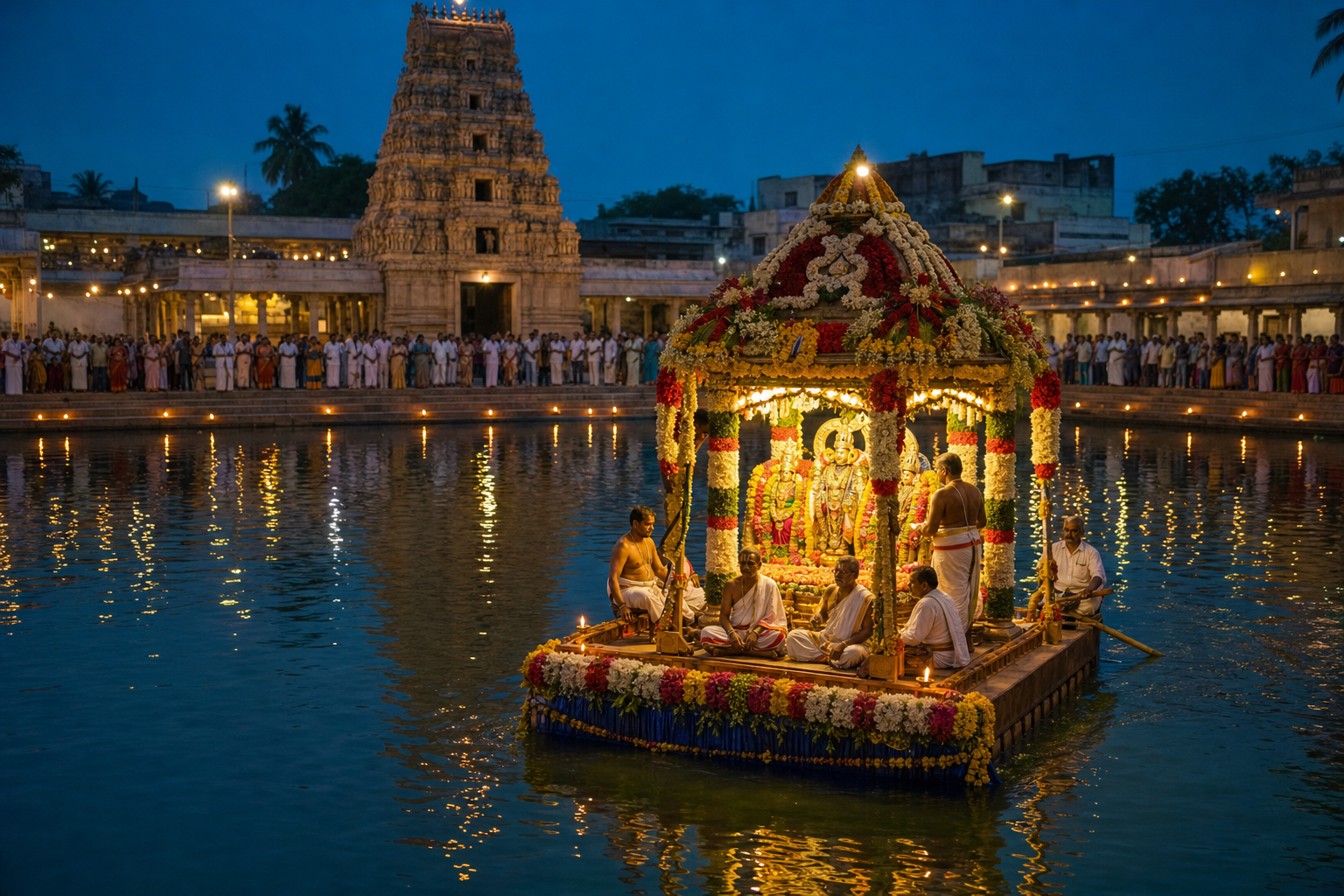
Keelapatla Konetiraya Swamy Brahmotsavam 2026: Devotional Guide to Dates, Rituals & Travel

Keelapatla Konetiraya Swamy Temple will celebrate Brahmotsavam from April 24 to May 3, 2026, with Koil Alwar Tirumanjanam on April 21 preparing the precincts. This guide explains the festival’s Agamic structure—from ankurarpanam and dwajarohanam to vahana sevas, rathotsavam, and chakrasnanam—while noting that the day-wise schedule is announced locally. Readers learn how the event unites theology,…
-
Modern Love, Ancient Bhakti: How Krishna’s Wisdom Transforms Youthful Desire into Dharma

This article reframes the turbulence of modern romance through Krishna-centered bhakti, showing how desire (kāma) matures into expansive love (prema) when guided by dharma. Drawing on the Bhagavad Gita and Srimad Bhagavata Purana, it explains the cognitive arc of attachment and offers a practical sequence—śravaṇa, kīrtana, smaraṇa, and sevā—to steady attention, study, and relationships. Yoga’s…
-
The Two Wolves Within: A Science-Backed Dharmic Guide to Mastering Inner Conflict

{ “title”: “The Two Wolves Within: A Science-Backed Dharmic Guide to Mastering Inner Conflict”, “content”: “ The widely circulated moral story often titled “Two Wolves” distills an enduring human reality: the inner contest between destructive impulses and ennobling virtues. Frequently framed as a Cherokee elder’s counsel to a child, the narrative’s force lies in its…
-
Tarigonda Vengamamba Jayanthi 2026: Grand 296th Jayanti across Tirumala–Tarigonda

Tarigonda Vengamamba Jayanthi 2026 marks the 296th birth anniversary of the revered Telugu poet-saint with two days of celebrations across Tirupati–Tirumala and Tarigonda. The principal rites at Tarigonda feature Snapana Tirumanjanam at 7:00 am on 30 April at Sri Lakshmi Narasimha Swamy Temple, followed by Pushpanjali at Vengamamba’s statue. The observance highlights her enduring legacy…
-
Transfer the Burden: Gita–Bhagavatam Principles for Dharma-Led, Resilient Infrastructure

India’s rapid infrastructure expansion brings both promise and pressure, especially across urban corridors in the National Capital Region. Drawing on the Bhagavad Gita and Srimad-Bhagavatam, this analysis frames “transfer the burden” as a dual principle: allocate project risks to the parties best equipped to manage them, and relieve paralyzing outcome-anxiety through disciplined action and spiritual…
-
Ananya Sharan Bhaava: Mastering Unshakeable Devotion and Inner Surrender in Dharmic Life

Ananya Sharan Bhaava, or single-minded devotion, is best understood as something uncovered rather than acquired. Dharmic traditions—Hinduism, Buddhism, Jainism, and Sikhism—converge on a shared architecture: ethical grounding, attentional training, and devotion that matures into surrender. Practical methods include clarifying a chosen refuge (Ishta or central ideal), adopting regular sadhana (japa, Naam Simran, dhyana), and aligning…
-
Krishna as the Highest Pleasure: Evidence-Based Insights and Dharmic Practices for Joy

The name Krishna is traditionally associated with paramānanda—the highest pleasure—linking sacred sound to a complete philosophy of enduring happiness. Drawing on the Upaniṣads, the Bhagavad Gita, and the Bhagavata Purana, this analysis explains how fleeting, sense-based sukha differs from stable spiritual joy, and why cultivating a “higher taste” transforms desire rather than suppresses it. Navadha-bhakti,…
-
Beyond the Frame: Why Hindu Deity Images Seem Incomplete—Revealing Infinity and Dharmic Unity

Many observers assume Hindu deity images are incomplete because they appear stylized, aniconic, or schematic. In classical Hindu thought, however, every sacred image is complete in essence (tattva) and intentionally incomplete in form (rupa), a design that honors the Upanishadic insight that the infinite cannot be fully pictured. Shilpa Shastras, temple architecture, and ritual consecration…
-
Eighteen Parvas of the Mahabharata: Sacred Architecture, Dharma, and Timeless Symbolism

The Mahabharata’s division into eighteen Parvas is a sacred architecture that encodes as much meaning as the verses themselves. Eighteen recurs across the tradition—Parvas, war days, akshauhinis, and the Gita’s chapters—signaling a deliberate design that integrates nature and human faculties under dharma. Organized in arcs from origins and diplomacy (Udyoga Parva) to war (Bhishma to…
-
May 2, 2026 Panchang: Accurate Tithi Change, Shubh Muhurats, Nakshatra & Rashi Insights

Saturday, May 2, 2026, features Krishna Paksha Pratipada tithi until 11:03 PM in most regions, after which Krishna Paksha Dwitiya begins. This guide explains the exact tithi change and the astronomy behind tithi calculation, clarifying why transitions occur at specific times. It outlines how to compute and use Shubh Muhurats (including Abhijit) and how to…
-
Matak Hulāre Unveiled: The Swaying Rhythms of Punjabi Grace and Sacred Dharmic Unity

Matak Hulāre distills the Punjabi ideal of graceful sway and jubilant lift into a recognizable movement-music dialect spoken across Giddha, Bhangra, and festival gatherings. The piece unpacks its biomechanics, showing how pelvic sway, spinal curves, and shoulder release create the matak, while rhythmic accents and chest lift generate the hulāre. It maps the form’s rhythmic…
-
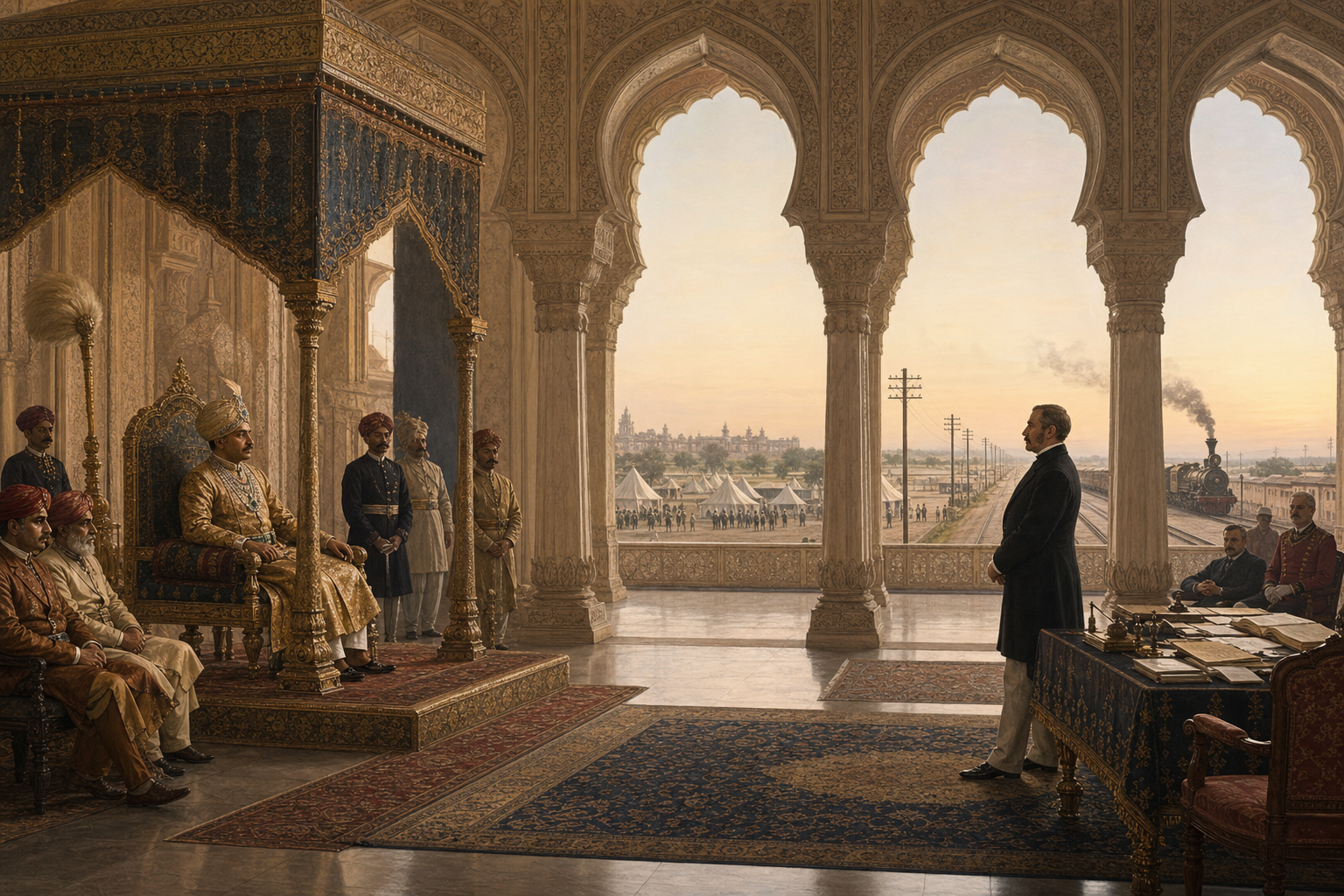
From Vidya Kashi to a Graveyard of Knowledge: Politics and Ideology at Mysore University

This essay examines the University of Mysore’s founding ideal—Na hi jñānena sadṛśam—and contrasts it with the institutional decay chronicled in B.G.L. Swamy’s Mysore Diary (1979–80). Drawing on primary testimony and corroboration from S.L. Bhyrappa’s autobiography, it maps how caste-based mobilizations, ideological capture (including Communist-aligned activism), and party patronage (notably tied to the Congress party’s local…
-
Veera Shasta of Ayyappa: Heroic Power, Sacred Symbolism, and Dharma-Yuddha Ethics

Veera Shasta, the heroic aspect of Dharma Śāstā (Ayyappa), embodies Veerya and Shaurya as an ethic of disciplined protection rather than aggression. This long-form analysis situates Veera Shasta within the Ashta Sastha framework, unpacks iconography (weapons, mounts, mudras), and reads each symbol as a practical teaching on foresight, discernment, and restraint. It links Veera Shasta…