

If you have an Ekadashi fast to conclude, a puja to schedule, or an important task to begin on April 28, the day’s turning point is 7:22 PM IST. Until then, Dwadashi governs the lunar day; afterward, Trayodashi begins.
That does not give every location one identical ritual timetable. Sunrise, sunset, solar noon, Pradosha twilight, and the daylight-based inauspicious periods must still be calculated locally. Use the fixed tithi transition as your starting point, then build the rest of the day around your city’s Panchang.
Key takeaways for April 28, 2026
- April 28 is a Tuesday, or Mangalavara.
- Shukla Paksha Dwadashi continues until 7:22 PM IST; Shukla Paksha Trayodashi begins immediately afterward.
- If you observed Ekadashi, complete Parana after sunrise during the valid Dwadashi window, following the rules of your sampradaya.
- Abhijit Muhurat is approximately 48 minutes around local true solar noon, not automatically a fixed 12:00 PM slot.
- Tuesday’s Rahu Kalam is commonly approximated as 3:00 PM-4:30 PM only when sunrise is close to 6:00 AM. Yamagandam and Gulika must also be adjusted to the actual daylight period.
- Do not declare Bhauma Pradosha from the civil date alone. First confirm whether Trayodashi overlaps your location’s Pradosha Kaal.
- Nakshatra, Chandra Rashi, yoga, karana, Chandrabala, and Tarabala require a reliable local Panchang; the tithi alone cannot supply them.
Why the 7:22 PM tithi change is the day’s hinge
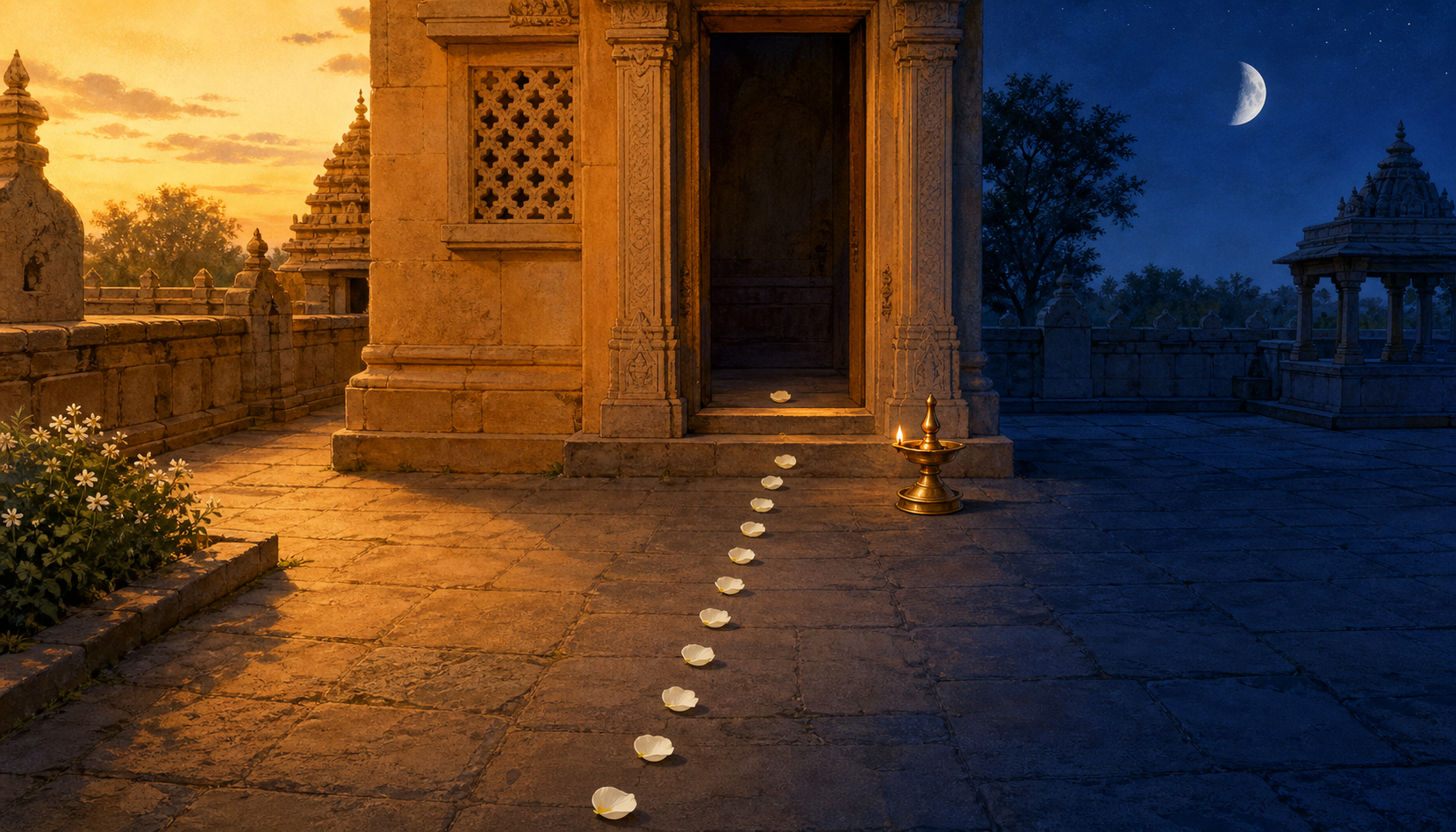
A civil date changes at midnight, but a tithi changes when the angular relationship between the Moon and Sun reaches its next threshold. Each tithi occupies 12 degrees of lunar-solar separation. Dwadashi covers the interval from 132 degrees to 144 degrees; once the separation passes 144 degrees, Trayodashi begins. That is why the change can occur in the middle of an ordinary clock day.
For a daily sankalpa, the tithi present at local sunrise usually supplies the day’s Panchang designation. On April 28, that is Shukla Paksha Dwadashi in most regional reckonings. This sunrise convention is useful, but it does not override the timing rule for a particular vrata. A rite connected with Dwadashi must be performed while Dwadashi is valid; a Pradosha observance depends on Trayodashi touching the relevant evening twilight.
During Dwadashi, Vishnu worship, dana, and a measured return to the normal household routine after Ekadashi are appropriate. If you fasted, do not choose a Parana time simply because a generic calendar labels the whole date Dwadashi. Confirm that your tradition’s required post-sunrise conditions are satisfied and that the fast is concluded before Dwadashi ends.
After 7:22 PM IST, the devotional emphasis can turn toward Trayodashi, restraint, reflection, and Shiva worship. Because April 28 is a Tuesday, a valid Pradosha observance would be Bhauma Pradosha. The weekday-tithi combination is not sufficient by itself, however: Trayodashi must overlap the local Pradosha Kaal. If it does not, the observance moves to the following evening under the applicable vrata rule.
This distinction matters most near sunset. Do not assume that 7:22 PM IST falls inside your city’s evening worship window. Compare the transition with local sunset and the Pradosha interval printed in the Panchang you actually follow.
Build your April 28 schedule in this order
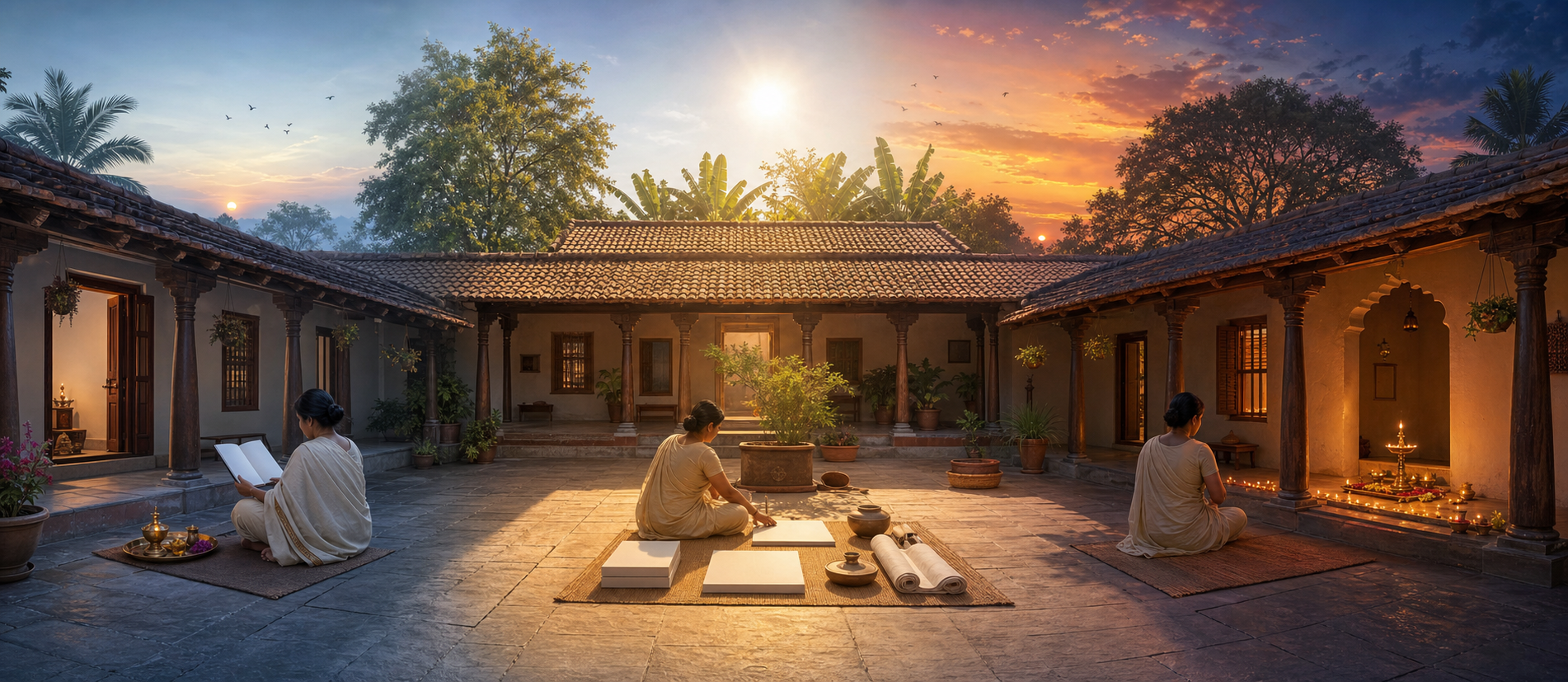
A Panchang becomes useful when you apply its rules in the right sequence. Begin with the observance you intend to perform, because Parana, routine work, and Pradosha do not use the same deciding window.
- Set your location first. Record local sunrise, sunset, and true solar noon from one dependable Panchang. If you are outside India, do not reuse an IST clock time as though it were local time.
- Confirm the computational convention. A drik Panchang using modern astronomical calculations may differ slightly from a traditional vakya almanac. Ayanamsa and temple custom can also affect the displayed details. For ritual consistency, use the convention followed by your family, sampradaya, or temple rather than switching calculators midway.
- Identify the rule-bearing period. For Ekadashi Parana, examine the valid post-sunrise Dwadashi window. For Pradosha, compare the beginning of Trayodashi with local evening twilight. For an ordinary undertaking, examine the day’s auspicious and avoidable periods.
- Mark Rahu Kalam, Yamagandam, and Gulika before selecting a start time. These are calculated from local daylight and should not be copied blindly from a generic 6:00 AM-to-6:00 PM chart.
- Check Abhijit Muhurat around true solar noon. If your local listing shows a conflict with another restricted period, or if the undertaking is personally consequential, do not invent a rule of precedence. Follow your established Panchang or seek qualified jyotisha guidance.
- For a wedding, griha-pravesha, or another major samskara, stop at the general guidance. A suitable civil date and a favorable daily interval do not replace matching of lagna, nakshatra, personal factors, and relevant dosha-clearing rules.
For a household plan, this usually means placing Parana and Vishnu-oriented worship in the valid Dwadashi period, using an accurately calculated favorable window for routine beginnings, and reserving the later evening for Trayodashi-oriented reflection only after checking the local twilight rule.
Use Abhijit and the avoidable periods correctly
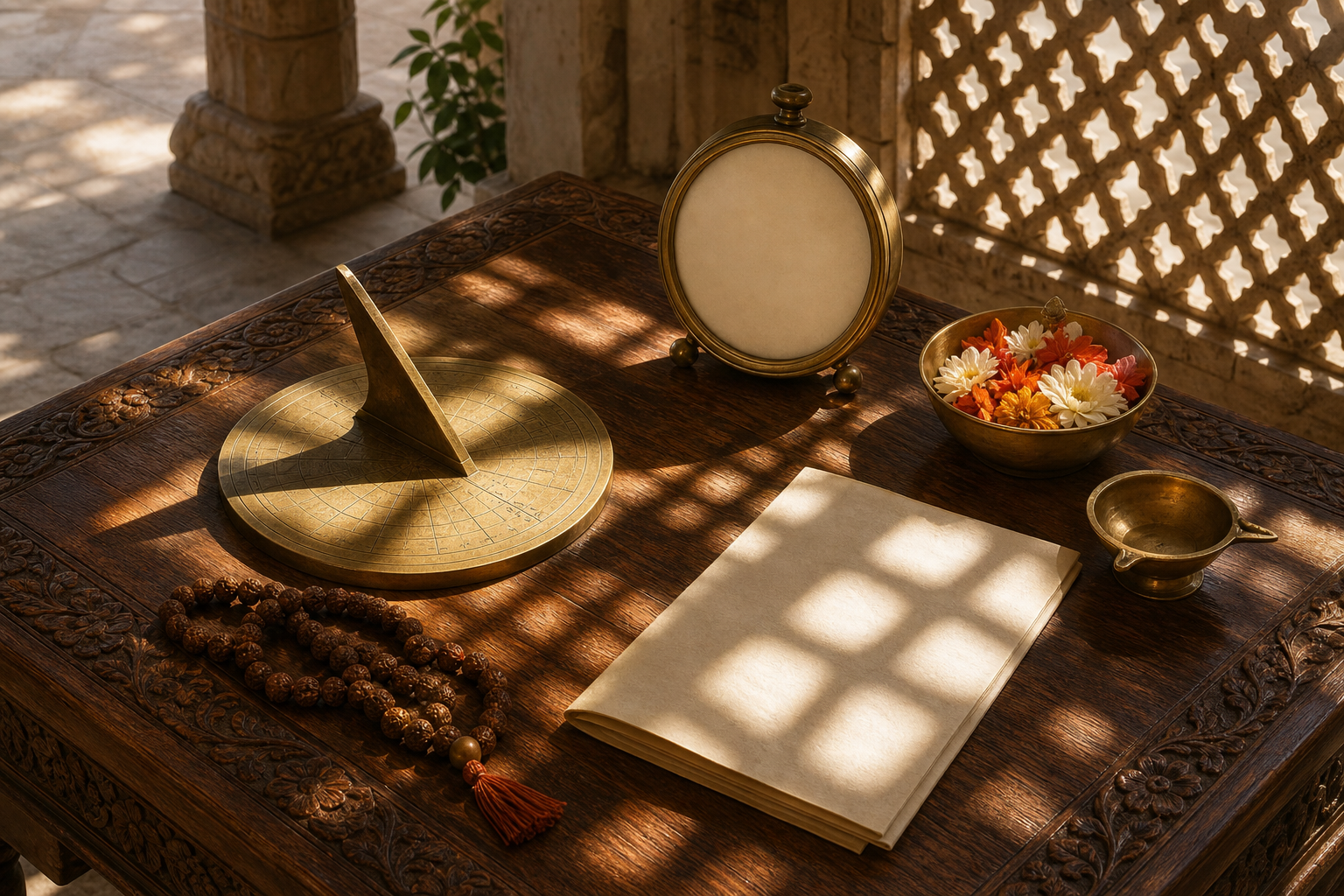
Abhijit Muhurat is the most practical general-purpose favorable period available on many days. It is centered on local true solar noon and lasts approximately 48 minutes, extending about 24 minutes to either side. True solar noon is determined by the Sun’s local position; it is not guaranteed to occur at 12:00 on the civil clock.
Use Abhijit for a routine undertaking that benefits from a clean, deliberate start: an important communication, a study commitment, a planning session, or constructive household work. Do not elevate it into a universal substitute for a specialized muhurta. Marriage, house entry, and comparable rites need more than a broadly favorable noon period.
Rahu Kalam, Yamagandam, and Gulika are produced by dividing the span from local sunrise to local sunset into eight equal parts and assigning particular segments by weekday. On a Tuesday with sunrise near 6:00 AM, the familiar approximations are:
- Yamagandam: about 9:00 AM-10:30 AM.
- Gulika: about 12:00 PM-1:30 PM.
- Rahu Kalam: about 3:00 PM-4:30 PM.
These are orientation points, not location-independent appointments. Seasonal daylight and latitude change both the length and placement of each segment. If sunrise is not near 6:00 AM, all three clock ranges move. This is especially important when Abhijit appears close to Gulika: calculate both locally instead of assuming that one printed approximation settles the matter.
The safest practical rule is simple. Use a location-specific daylight calculation, choose a clean starting instant rather than trying to fit an entire long activity inside one muhurta, and apply stricter personal matching when the decision has lasting ritual significance.
Nakshatra and Chandra Rashi need local verification
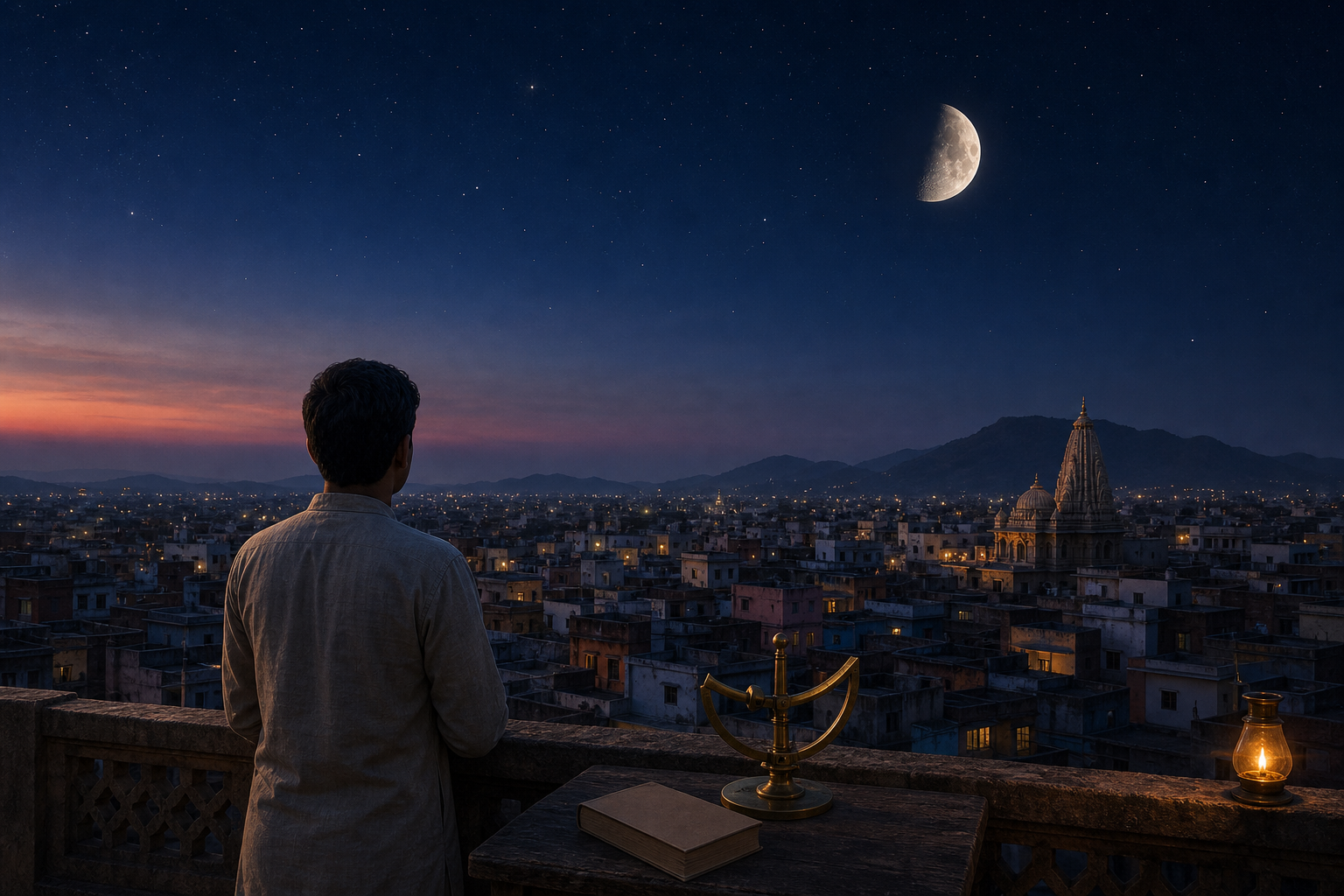
You may encounter calendars that provide a tithi correctly but omit the Moon’s nakshatra, pada, or sign. Do not fill those fields by guessing from Dwadashi. Tithi measures the angular separation of the Moon and Sun; nakshatra and Chandra Rashi depend on the Moon’s sidereal longitude. They answer different questions.
A local astronomy-based Panchang using the Lahiri ayanamsa, which is widely used in India, can supply the Moon’s precise placement. Check the time of any nakshatra or rashi transition as well as the name shown at sunrise. If your intended action occurs after a transition, the sunrise label may no longer describe the operative lunar position.
Pada boundaries matter because a single nakshatra can cross from one rashi into another. Ashwini and Bharani fall in Mesha; the first pada of Krittika also belongs to Mesha. Krittika’s remaining padas, Rohini, and the first two padas of Mrigashira fall in Vrishabha. This quarter-wise structure continues through the zodiac. When you check Chandrabala or Tarabala, use the actual pada and Moon sign rather than relying on the nakshatra name alone.
Yoga and karana add another layer. Yoga is derived from the combined sidereal longitudes of the Sun and Moon, while karana is half a tithi. Together with tithi, vara, and nakshatra, they complete the five limbs of the Panchang. For ordinary worship, the broad Dwadashi-to-Trayodashi plan may be enough. For a carefully elected muhurta, all five limbs and the person’s relevant lunar factors deserve attention.
Before April 28 begins, save one local Panchang page and write down four items: sunrise, the three avoidable periods, true solar noon, and local Pradosha Kaal. Then place the 7:22 PM IST tithi change beside them. That one-page plan will prevent the two common errors of treating an approximate clock range as exact and treating the sunrise tithi as though it lasted all night.
References
