-
From Ultra‑Independence to Interdependence: Evidence-Based Steps to Receive Love and Support

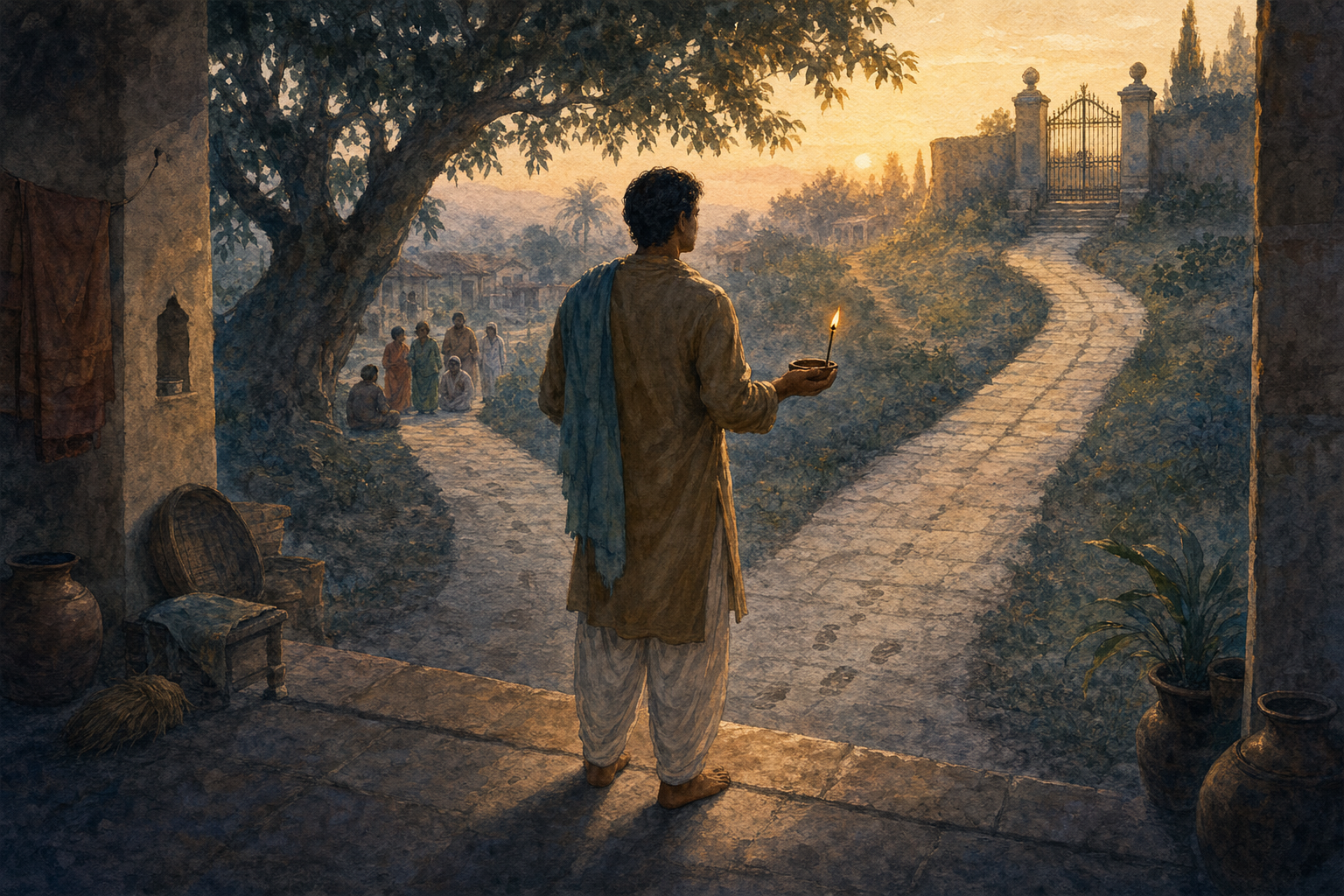
Ultra-independence is not a fixed trait but a protective response shaped by past criticism, rejection, or conditional love. This article explains the psychology and neurobiology behind hyper-independence, differentiates interdependence from codependency, and offers clear, evidence-aligned steps to receive support without losing autonomy. A representative life journey illustrates how early wounds can create vows against receiving—and…
-
Shoola vs Trishul: Decoding Sacred Weapons, Iconography, and the Timeless Power of Dharma

Shoola (single-pointed spear) and Trishul (three-pronged trident) are often confused, yet they carry distinct forms and meanings in Hindu iconography. This article clarifies how a spear encodes one-pointed discernment while a trident integrates triadic powers—iccha, jnana, kriya; the gunas; and the three dimensions of time. Readers learn to identify each implement swiftly at temples and…
-
Goa’s St. Francis Xavier Controversy: Why Madhav Khattar Was Held—and How Law Can Safeguard Harmony

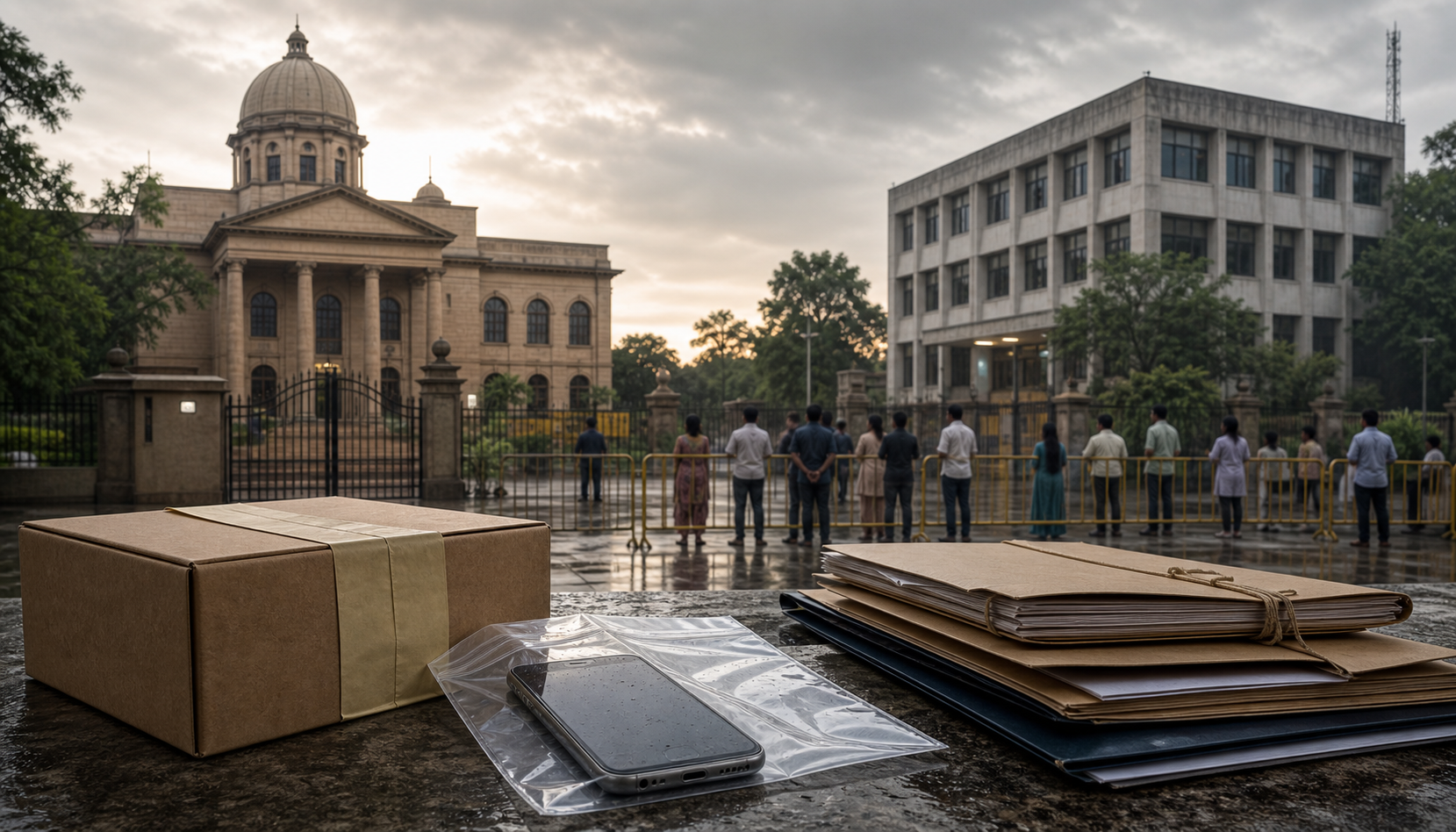
Goa Police detained Madhav Khattar over alleged involvement in a controversial speech concerning St. Francis Xavier, drawing an objection from Sanatan Sanstha and sparking a fresh debate on law, faith, and public order. This analysis explains the constitutional framework on speech, the narrow thresholds under IPC Sections 295A, 153A, and 505(2), and the Supreme Court’s…
-
Hindu Janajagruti Samiti honors CM Vishnu Deo Sai for decisive anti-Naxal push in Chhattisgarh

Hindu Janajagruti Samiti (HJS) felicitated Chhattisgarh Chief Minister Vishnu Deo Sai in Raipur, recognizing a security-and-development approach aimed at curbing Naxalism. The gesture signals civil society support for constitutional governance, population-centric counterinsurgency, and rights-respecting operations. In regions long affected by Left-Wing Extremism, durable peace hinges on protecting civilians, building infrastructure, and delivering predictable public services.…
-
Nyaya Darshana Unveiled: How Indian Logic and Epistemology Power Clear Thinking

Nyaya Darshana presents a powerful, time-tested framework for clear thinking through its four pramanas—perception, inference, comparison, and testimony—and a celebrated ethics of debate. By detailing the five-part syllogism, fallacies (hetvabhasa), and rigorous tests for reliable evidence (vyapti and upadhi), it equips readers to evaluate claims and avoid common reasoning errors. Its dialogical history with Buddhism,…
-
Unraveling Proto‑Indo‑European: A Rigorous, Inclusive Journey through Sanskrit’s Ancestral Web

This article explains why scholars reconstruct a Proto‑Indo‑European (PIE) ancestor to Sanskrit, Greek, and Latin, and how the comparative method, sound laws, and morphology support that model. It clarifies that Indo‑European is a large language family—counted at roughly 439 varieties in some 2009 classifications—within which Sanskrit, Greek, and Latin are sister languages. Readers learn how…
-
Yuga Dharma of Unity: How Collective Chanting Heals Divisions Across Dharmic Paths

This article examines Yuga Dharma as a unifying principle for the present age and explores why collective chanting and shared service provide an academically credible, historically grounded path to dharmic unity. Drawing on Gaudiya Vaishnavism’s emphasis on sankirtana and parallel practices in Sikhism, Jainism, and Buddhism, it shows how sacred sound strengthens cohesion without erasing…
-
From Vows to Realization: The Transformative Power of Japa in Krishna Consciousness

A recent Lithuania lecture examines why vows in Krishna consciousness do far more than enforce rules: they stabilize attention, purify intention, and cultivate the qualities that make devotion spontaneous and joyful. It explains, in technical terms, how chanting 16 rounds of the maha-mantra and the four regulative principles function as ethical and contemplative scaffolding in…
-
Atharva Veda Unveiled: The Fourth Veda That Bridges Ritual, Healing, and Daily Life

The Atharva Veda distinguishes itself from the Rig, Sama, and Yajur Vedas by extending Vedic wisdom into healing, household life, and public welfare while sustaining rigorous ritual and philosophical depth. It preserves two major recensions (Śaunaka and Paippalāda), the Gopatha Brāhmaṇa, and Atharvanic Upanishads like Muṇḍaka, Māṇḍūkya, and Praśna. Signature hymns—such as the Bhūmi Sūkta,…
-
Nyāyakusumāñjali: Udayana’s Timeless Fusion of Logic and Bhakti for Dharmic Harmony

Nyāyakusumāñjali, composed by Udayana in the tenth century CE, revitalizes the Nyāya–Vaiśeṣika tradition by integrating uncompromising logic with the devotional power of bhakti. Framed as a poetic offering of proofs, the work advances multiple, mutually reinforcing arguments for Īśvara drawn from causation, atomic combination, linguistic convention, trustworthy testimony, and the moral order of karma. Its…
-
Decoding the Donkey-Faced Rig Veda: Esoteric Agamic Iconography, Sound, and Sacred Memory

This article decodes a rare Agamic iconographic motif that personifies the Rig Veda as a donkey-faced sage, showing how Hindu sculptures render living śruti in pedagogical form. It explains why the donkey-face signifies raw sound, ascetic endurance, and hermeneutic humility—all central to Vedic study and temple practice. Readers learn how mūrti-lakṣaṇa principles translate doctrine into…
-
Why Hinduism Has No Commandments: Dharma’s Liberating, Context-Sensitive Ethics

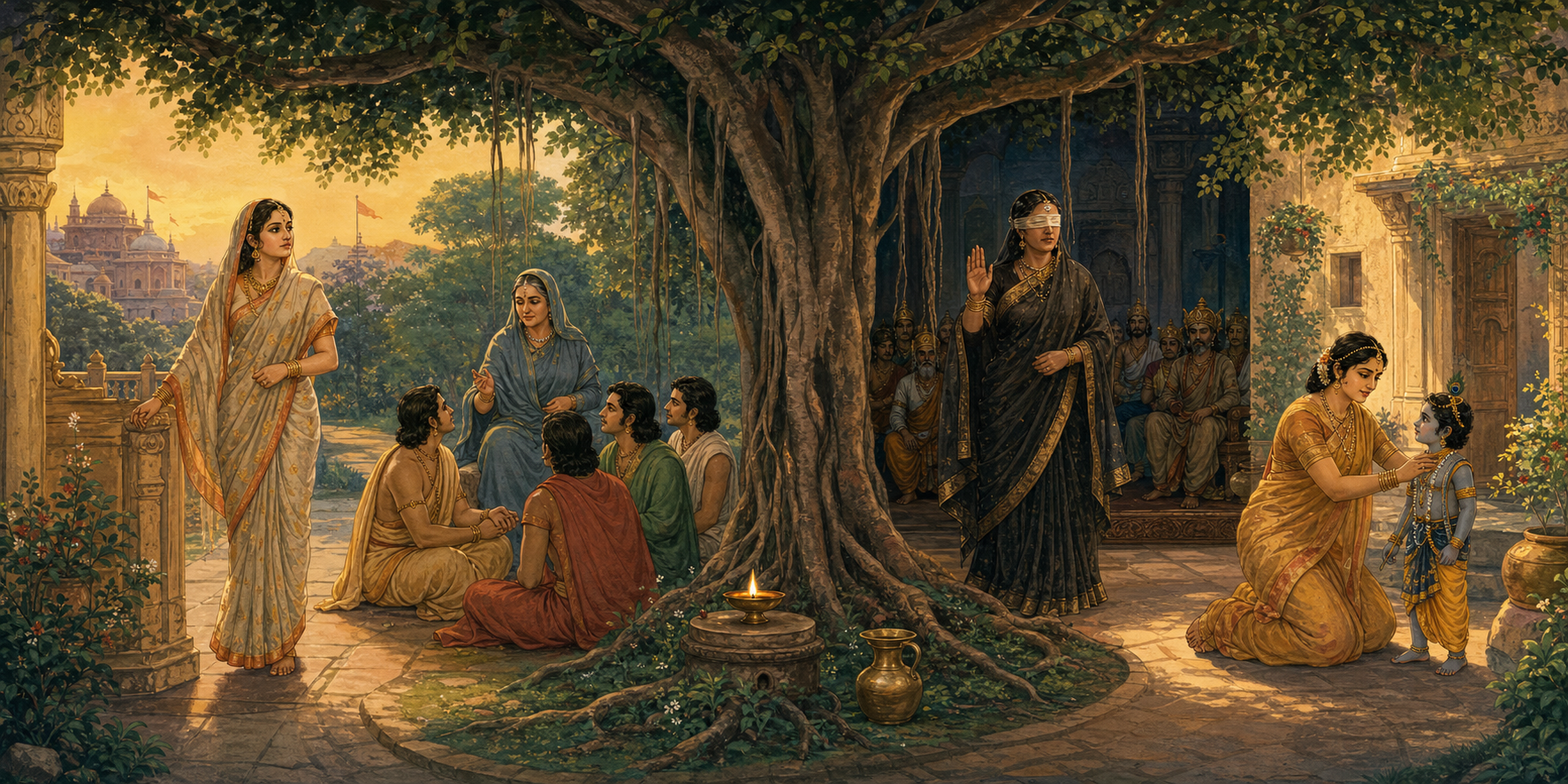
Hinduism’s ethical core is not a fixed list of commandments but the dynamic, context‑sensitive framework of dharma. Drawing on the Vedas, Upanishads, the Bhagavad Gita, and the Dharmashastra tradition, it integrates personal virtue, social responsibility, and a vision of the highest good. This article explains sadharana and vishesha dharma, Mimamsa hermeneutics, and yogic disciplines such…
-
May 1, 2026 Panchang Master Guide: Purnima Tithi, Auspicious Times, Nakshatra & Rashi

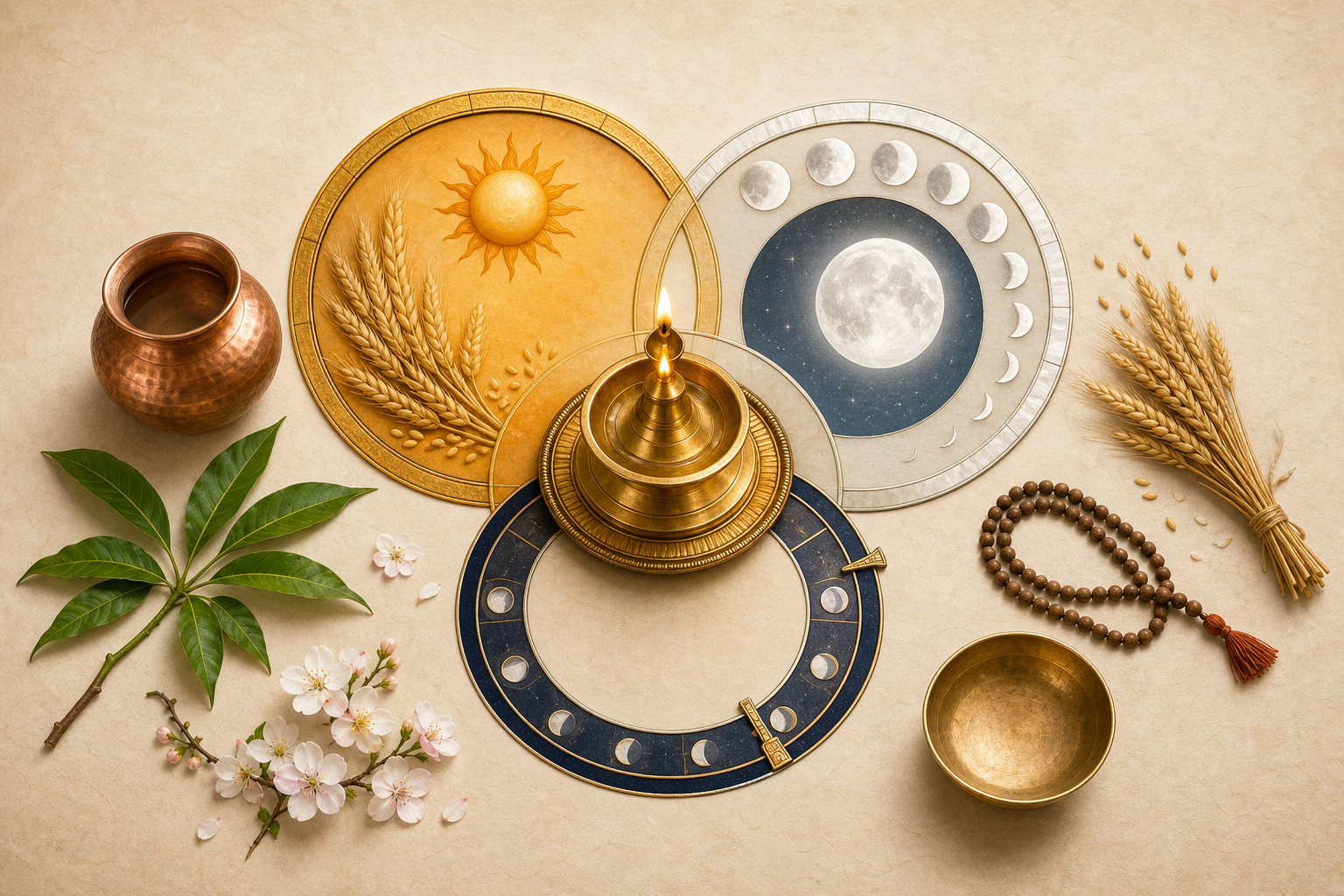
May 1, 2026 is a full-moon day (Purnima) in the Hindu Panchang, lasting until 9:27 PM IST and followed by Krishna Paksha Pratipada through May 2, 11:03 PM. The guide clarifies how tithis are angle-based, why precise local Panchang verification matters, and how to align vrata and puja when Purnima prevails at sunrise. It explains…
-
Mohini Ekadashi Vrat Katha: Purana Story, Ritual Rules, and Deep Spiritual Benefits

Mohini Ekadashi, observed on Vaishakh Shukla Ekadashi, unites practitioners through a precise lunar observance, disciplined fasting, and devotion to Vishnu. This comprehensive guide explains calendar determination, Smarta–Vaishnava nuances, and the Dwadashi parana window with Hari Vasara considerations. It presents the Purana-based Mohini Ekadashi Vrat Katha—Dhrishtabuddhi’s transformation through the sage Kaundinya’s instruction—as the narrative key to…
-
Choosing a Mahavidya for Navratri: Scholarly, Horoscope‑Aligned, Ethical, Transformative Guide

This research‑informed guide shows how to choose a Mahavidya for Navratri using three converging lenses: present life needs, Jyotisha (Vedic astrology) indications, and spiritual readiness. It summarizes the core strengths, indications, and household‑friendly practices for all ten Mahavidyas, with clear ethical safeguards. Readers learn how to align sadhana with dasha cycles and graha conditions, how…
-
Dasavatara Jayanti 2026–2027: Authoritative Guide to Dates, Rituals, and the Ten Avatars of Vishnu

This authoritative guide to Dasavatara Jayanti 2026–2027 explains the ten incarnations of Lord Vishnu, the classical tithi framework for each Jayanti, and how to align observances with regional Panchang traditions. It clarifies Amanta vs Purnimanta month systems, sunrise-based tithi boundaries, and sampradaya-specific rules (e.g., Janmashtami midnight and Rama Navami midday). Each avatara’s theological meaning and…
-
Why Temples Have Doors: Sacred Thresholds that Protect, Purify, and Deepen Darshan

Temple doors are sacred thresholds, not mere barriers. In Hindu temple architecture grounded in Vastu-shastra and Agama-shastra, doors regulate ritual cycles, pace darshan, and uphold sanctity in the garbhagriha. They serve conservation needs by stabilizing microclimates, managing acoustics, and protecting murtis, textiles, and paintings from dust, humidity, and light. Doors also secure community-held heritage such…
-
Narasimha Chaturdashi (Narasimha Jayanti) 2026: Date, Puja Timings, Rituals, and Deep Significance

Narasimha Chaturdashi (Narasimha Jayanti) in 2026 falls on April 30, aligned with Vaishakha Shukla Chaturdashi in the Hindu calendar. This comprehensive guide clarifies how to choose the correct observance day using the Madhyahna window, why parāṇa is taken after sunrise the next morning, and how regional panchang differences affect timing. It details a practical home…
-
Kalki Jayanti 2026: Date, Significance, Puja Vidhi and Panchang Guide for Shravana Shukla Shashti

Kalki Jayanti (Kalki Avatara Jayanti) in 2026 falls on Monday, 17 August, observed on Shravana Shukla Shashthi. The festival honors Lord Kalki, the tenth incarnation of Sri Maha Vishnu, and emphasizes ethical renewal over speculation about eschatological timing. This practical guide outlines calendar nuances across Purnimanta and Amanta systems, along with Tamil and Malayalam almanacs,…
-
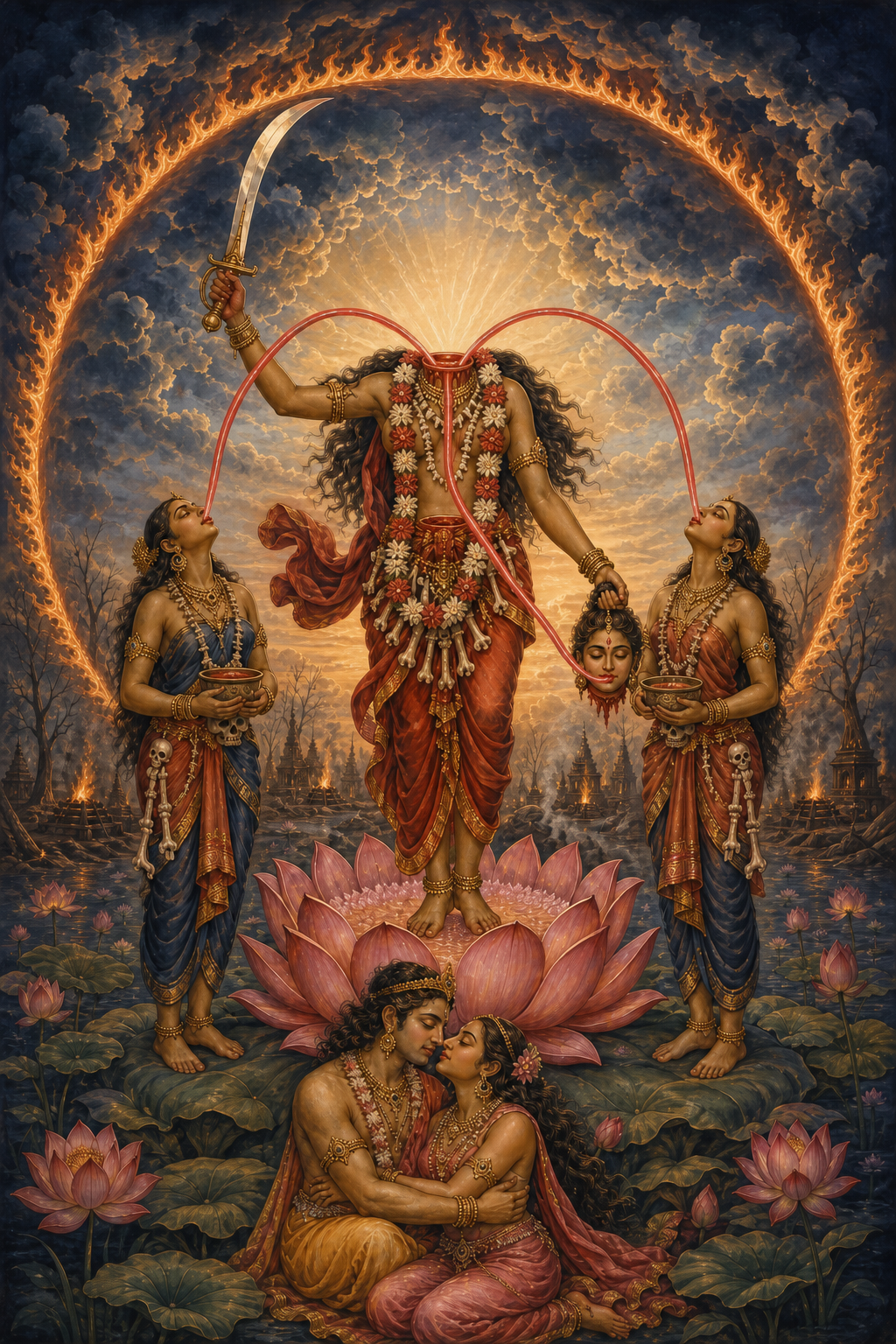
Dashamahavidya Jayanti 2026–2027: Accurate Tithi Guide, Deep Meanings, and Home Puja Methods

This comprehensive guide to Dashamahavidya Jayanti 2026–2027 explains how the ten Jayantis of Mahatara, Matangi, Bagalamukhi, Chinnamastika, Dhumavati, Mahakali, Bhuvaneshwari, Kamala, Tripurabhairavi & Lalita are determined by tithi, with clear notes on regional calendar differences. It summarises widely observed tithis for each Mahavidya, indicates likely 2026–2027 Gregorian windows, and offers practical home-puja methods aligned to…