-
Campus Bhakti Outreach: How a Little Extra Effort Turns Sankirtan into Lasting Dialogue

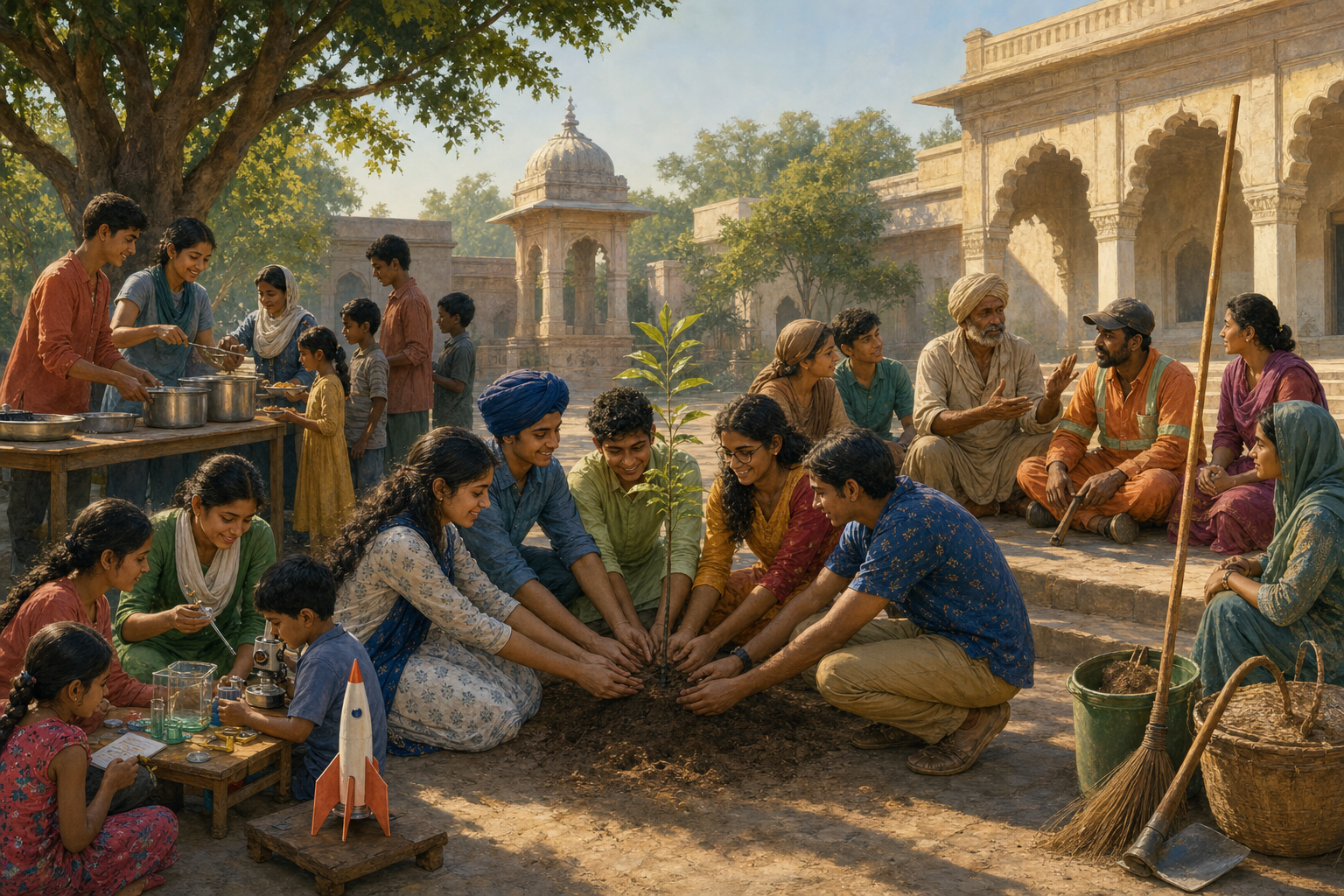
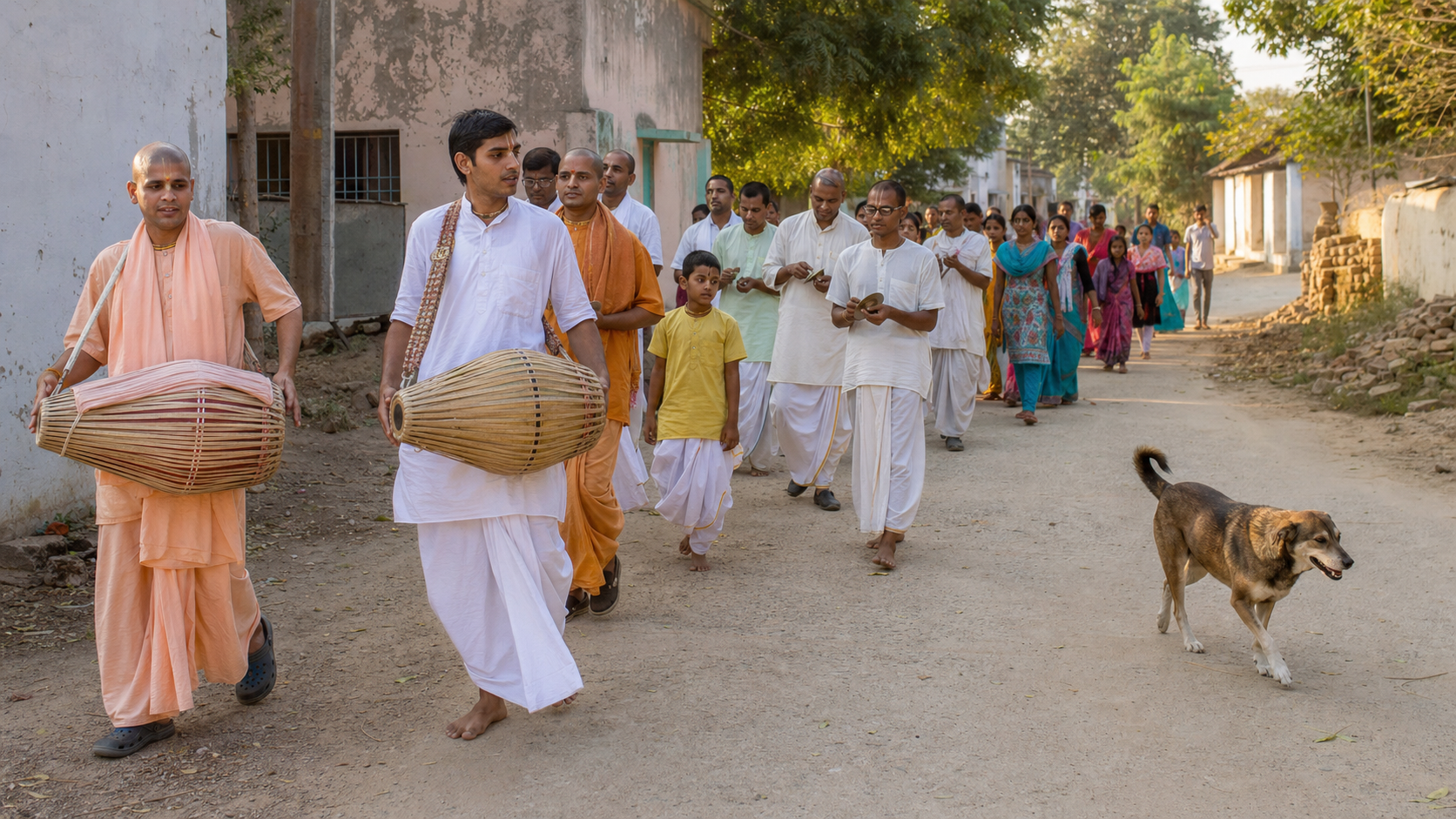
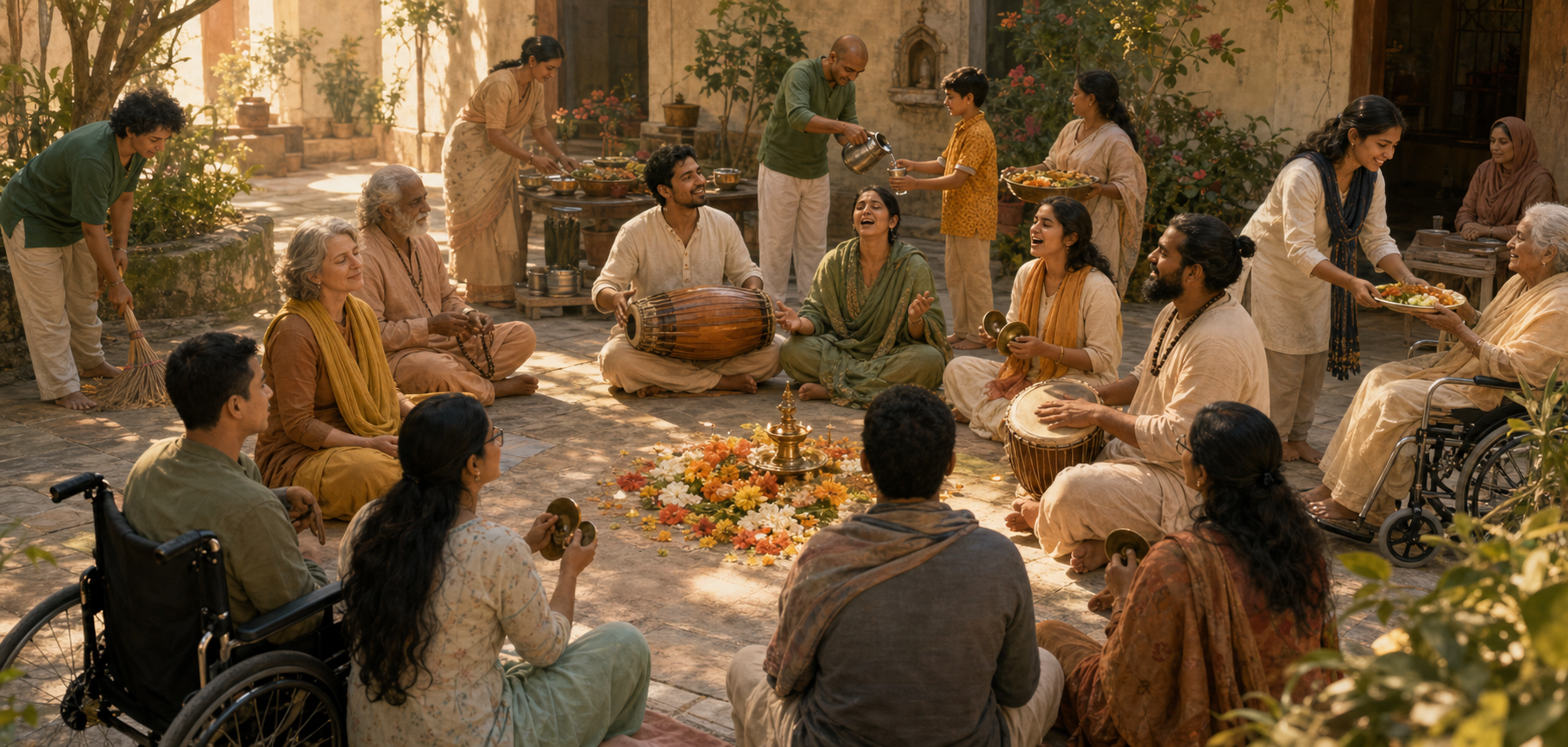
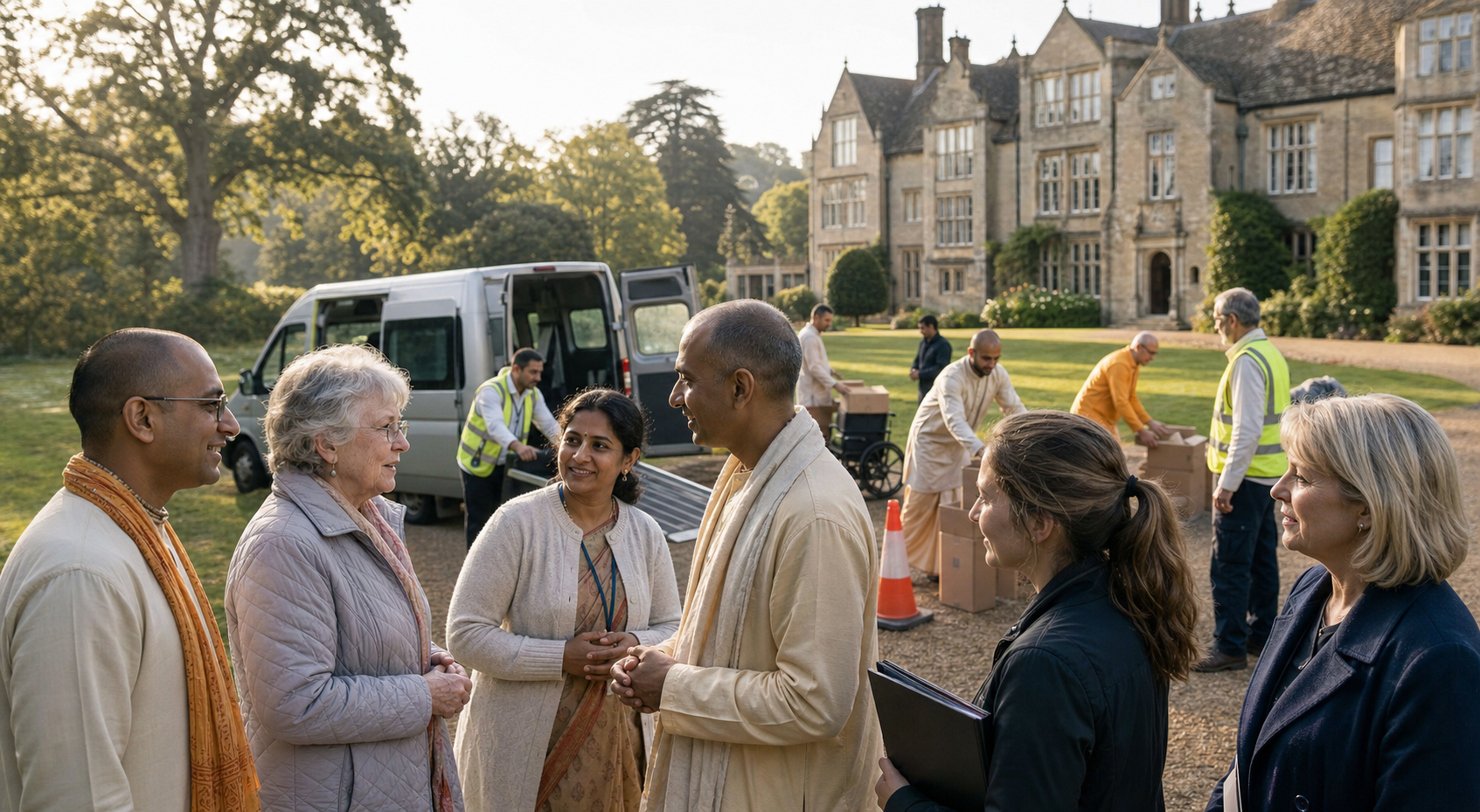
A week of campus outreach led by Madhavendra Puri Prabhu and a colleague demonstrated how Sri Caitanya Mahaprabhu’s sankirtan movement can be presented academically, ethically, and inclusively. The team paired conversation-led book distribution with an experiential Bhakti Yoga class that combined breath, kirtan, and open dialogue. Small, deliberate efforts—clear summaries, QR-linked reading plans, and respectful…
-
Harnessing Austerity as a Stepping Stone: Build Sattva, Fortify Bhakti, Realize Transcendence

Dharmic scriptures praise austerity (tapas), yet Gaudiya Vaishnava theology clarifies that it is not itself a limb of bhakti. Instead, austerity serves as a preparatory discipline that cultivates sattva and strengthens determination for the sixty-four devotional practices that directly generate love of the Divine. Drawing on Srimad Bhagavatam 5.5.1 and the Bhagavad Gita, this analysis…
-
Transform Craving into Ruci: Mastering Taste, Seva-Anxiety, and Detachment in Krsna Bhakti

Is it wrong to desire a taste (ruci) in Krsna consciousness? Not at all. This analysis distinguishes spiritual taste from sense gratification by clarifying motive: serving Krsna versus serving the senses. It explains why “anxiety for Krsna” is a healthy, service-centered concern and how taste develops after purification (anartha-nivrtti) to become the engine of steady…
-
Earth-born Sita Devi: A Scholarly, Soul-Stirring Portrait of Dharma in the Valmiki Ramayana

Sita Devi’s Earth-born manifestation, celebrated in Valmiki’s “Sita-ayah Charitam Mahat,” anchors the Ramayana’s ethical vision around truth, compassion, and the Sacred Feminine. Drawing on King Janaka’s testimony, the narrative affirms Sita as āyonijā—discovered in a furrow while preparing a yajna—thereby linking her to Bhumi Devi and an ecological ethic of reverence for the Earth. Her…
-
Timeless Union: The Transformative Power of Jnana and Yoga for Moksha in Hindu Philosophy

This long-form exploration shows how Jnana and Yoga converge in Hindu philosophy to deliver both liberating knowledge and lived stability. It clarifies Vedantic epistemology alongside Patanjali’s practical method, demonstrating why insight requires disciplined cultivation. It maps ethical foundations shared across Hinduism, Buddhism, Jainism, and Sikhism, highlighting a profound unity among dharmic traditions. It offers a…
-
Decoding the Horse-Faced Sama Veda: Iconography, Sacred Sound, and Hayagriva

In Hindu iconography, the Vedas appear as living Veda Purushas; in select programs the Sama Veda is rendered horse-faced, signaling a fusion of sacred sound and Hayagriva theology. The article explains how this equine imagery coheres with the Sama Veda’s musicological core—udgītha, svara, and sāman structures—while linking it to Hayagriva, Viṣṇu’s horse-headed form who rescues…
-
Unlocking Moksha with Mantra: The Transformative Science of Sound Across Dharmic Paths

This essay examines mantra within Hindu wisdom as a disciplined contemplative technology aimed at moksha, clarifying the classical sense of mananat trayate mantrah—“that which liberates through contemplation.” It situates mantra in the metaphysics of sound (vak, shabda-brahman), explains Vedic precision in phonetics and meter, and contrasts Vedic, Tantric, and devotional forms, including bija, nama-japa, and…
-
Tirupati Kodandarama Swamy Temple May 2026: Auspicious Purnima Abhishekam, Timings & Processions

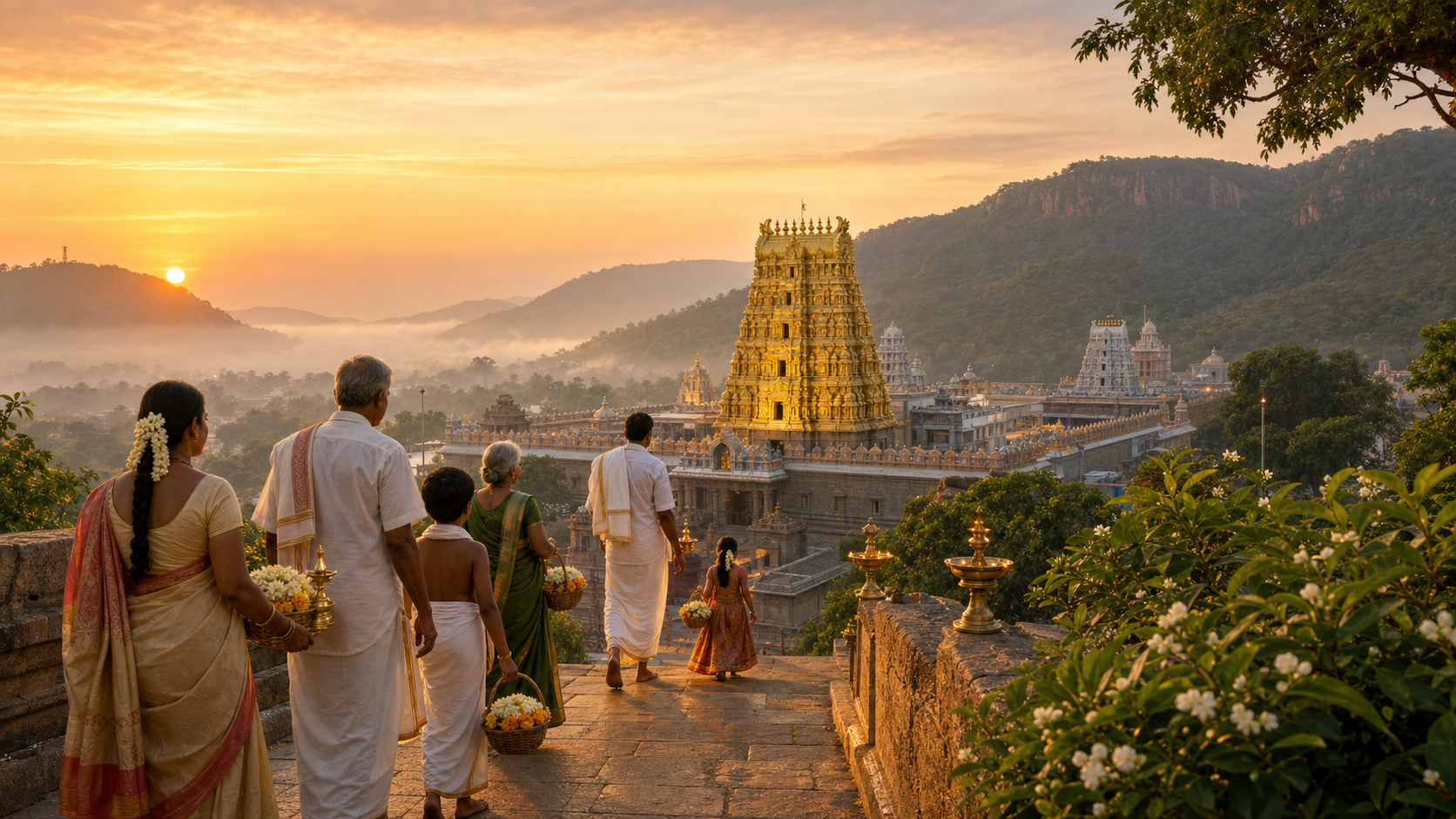
Sri Kodandarama Swamy Temple in Tirupati will observe two major festival days in May 2026, featuring Ashtottara Shatakalasabhishekam at 9:30 AM on May 1 and on May 31 (Poornima), and evening processions at 5:30 PM along the four Mada streets. The 108-kalasha abhishekam highlights Vaishnava liturgical precision and communal well-being, while the public procession extends…
-
Panchamrita Abhisheka Explained: The Sacred Science of Milk, Curd, Honey, Jaggery, and Ghee

Panchamrita Abhisheka—using milk, curd, ghee, honey, and jaggery/sugar—stands on a foundation of scriptural sanction, symbolic depth, and practical wisdom. Puranas and Agamas prescribe these edible, sattvika substances because they nourish, purify, and sweeten both the murti and the devotee’s inner state. Ayurveda further clarifies their properties: milk soothes, curd transforms, ghee illumines, honey harmonizes, and…
-
Narada Jayanti 2026: Auspicious Date, Rituals, and the Timeless Legacy of Devarshi Narada

Narada Jayanti 2026 (Devarshi Narad Jayanti) falls on May 2, corresponding to Vaishakha bahula Pratipada in South Indian calendars and Krishna Paksha Pratipada of Jyeshta in North Indian reckonings. The festival honors Sage Narada—Brahma Manasa Putra and Devarshi—whose legacy in the Srimad Bhagavatham, Mahabharata, Narada Bhakti Sutra, and Nāradasmṛti spans devotion, ethics, and jurisprudence. Observances…
-
Om krato smara kritam smara: Ishavasya Upanishad’s urgent call to remember, reckon, and transcend

The Ishavasya Upanishad’s injunction, “Om krato smara kritam smara,” is a precise ethical and contemplative tool that unites Vedic ritual language with Upanishadic interiority. Addressing kratu (will, intention), the mantra urges a lucid remembrance of deeds (kritam), not for guilt but for clarity and freedom. Placed in cremation rites and used in daily reflection, it…
-
Parashurama Dwadashi 2026: Date, Puja Vidhi, Fasting Rules, and Deep Significance

Parashurama Dwadashi 2026 falls on 28 April (Vaishakh Shukla Paksha Dwadashi), the day after Mohini Ekadashi. This comprehensive guide explains the festival’s calendar context, theological meaning, and how to observe the vrata with clarity and confidence. Readers will find practical puja vidhi, fasting options in harmony with Mohini Ekadashi parana, and suggestions for mantra, stotra,…
-
18 Research-Backed Insights on Ganesha: Timeless Symbols, Mantras, and Global Legacy

Ganesha (Vinayaka, Vighneshwara, Ganapati) is first invoked in Hindu ritual as the remover of obstacles and guardian of auspicious beginnings. This long-form, research-informed overview presents 18 key facts that cover scripture (Ganapati Atharvashirsha, Mudgala Purana), iconography (elephant head, Ekadanta, Mushika vahana), ritual elements (durva grass, modaka), festivals (Ganesh Chaturthi, Masik Sankashti), and mantras such as…
-
Veerabrahmendra Swami Jayanti 2026: Sacred Date, Powerful Rituals, and Kalagnanam Legacy

Sri Veerabrahmendra Swami Jayanti 2026 will be observed on 26 April, honoring Pothuluri Veerabrahmendra Swami, known as Brahmamgaru and revered as Kalagnani. The main celebrations unfold at Sri Veerabrahmendra Swami Matham in Kandimallayapalle, YSR Kadapa district, with rituals such as abhishekam, alankaram, Veda parayana, and annadanam. Rooted in the Kalagnanam tradition, the observance emphasizes ethical…
-
Basava Purana Unveiled: Palkuriki Somanatha’s Epic of Basavanna, Ishtalinga, and Equality

Basava Purana is a 13th-century Telugu epic by Palkuriki Somanatha that celebrates Basavanna (Basaveshwara) and codifies Lingayat principles through the Ishtalinga, Kayaka (work as worship), and Dasoha (sharing and service). Set against the vibrant bhakti milieu of medieval Deccan, it blends hagiography with social ethics and community dialogue through the Anubhava Mantapa. The poem’s dvipada…
-
May 3, 2026 Panchang: Auspicious Guide to Krishna Paksha Dwitiya, Good Times, Nakshatra, Rashi

On Sunday, May 3, 2026, most regional Hindu Panchangs mark Krishna Paksha Dwitiya tithi for the entire day, ending at 12:57 AM on May 4, when Krishna Paksha Tritiya begins. The guide explains how to read the day through Tithi, Nakshatra, and the Moon’s Rashi, and how to select Good Time (Shubh Muhurat) using Choghadiya.…
-
Mumbai Harassment Arrest: Practical POSH Compliance and Cyber Evidence Guide for Safer Workplaces

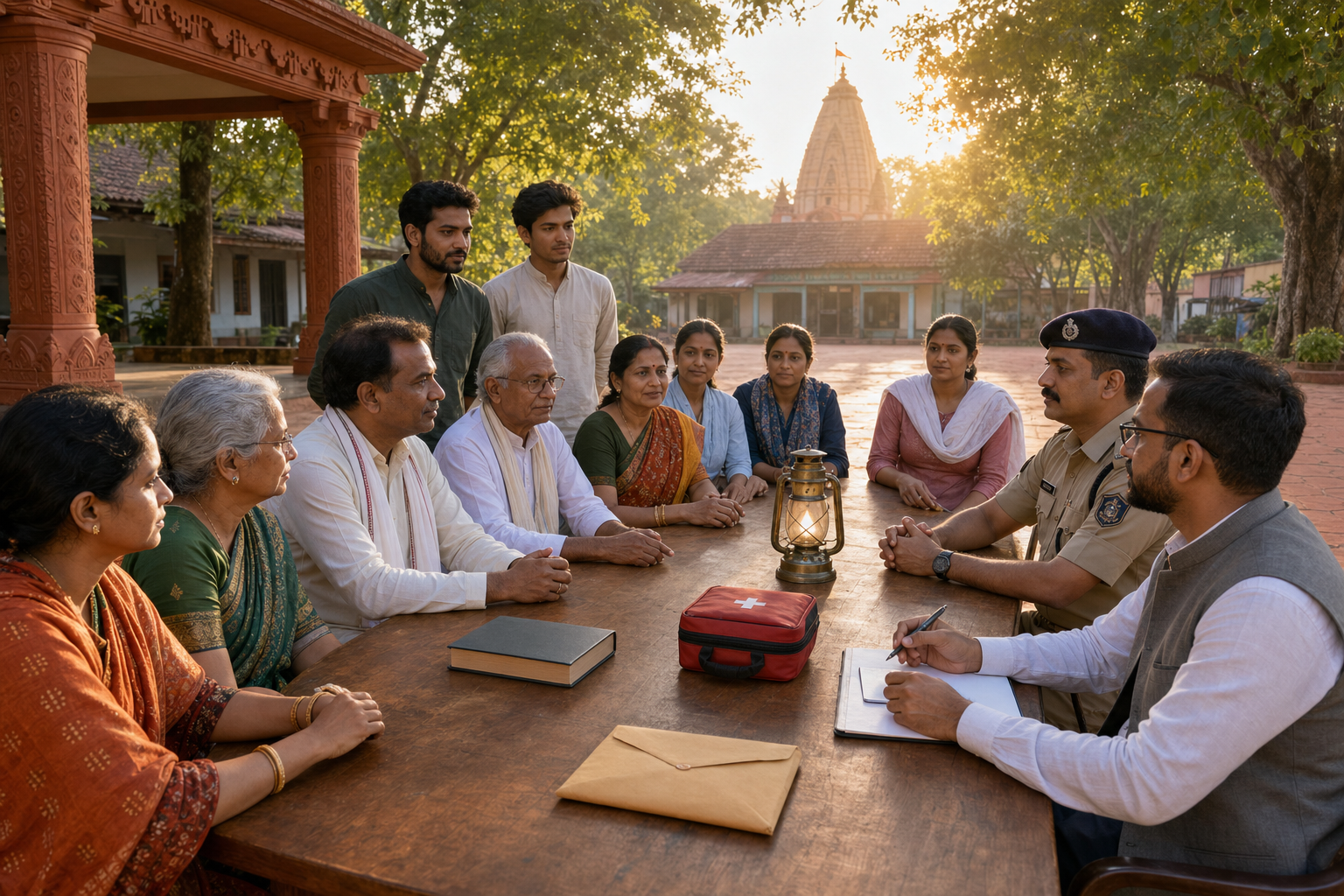
A recent Mumbai workplace harassment arrest has spotlighted what truly keeps offices safe: credible POSH compliance, careful digital evidence preservation, and a culture that upholds dignity over divisive narratives. This analysis explains how the POSH Act interfaces with the IPC and IT Act, what the Internal Committee must do, and why confidentiality and due process…
-
When Demons Wore Divine Faces: Ravana–Maricha as Rama–Lakshmana in Regional Ramayanas

Several regional Ramayana traditions dramatize deception by allowing Ravana and Maricha to mimic or even appear as Rama and Lakshmana, sharpening the ethical and emotional stakes of Sita’s abduction. While Valmiki anchors the episode in voice-impersonation and the mendicant disguise, later vernaculars and performances escalate to phantoms and lookalikes. Bengali, Odia, Tamil, and North Indian…
-
Majestic Kala Sastha of Ayyappa: Elephant-Mounted Guardian of Dharma and Living Tradition

Kala Sastha—also known as Gajaruda Sastha or Maha Sastha—reveals Ayyappa’s regal, protective dimension as the Elephant-Mounted Guardian of Dharma. The icon harmonizes Shaiva–Vaishnava theology (Hariharaputra) with the elephant’s symbolism of strength, memory, and auspicious sovereignty. Drawing on Agamic templates and Kerala Tantra (Tantrasamuchaya), temples install and celebrate this form through daily puja and festival processions,…