-
Vamana Jayanti 2026: Celebrate Humility and Dharma on Shukla Dwadashi—Date, Rituals, Meaning

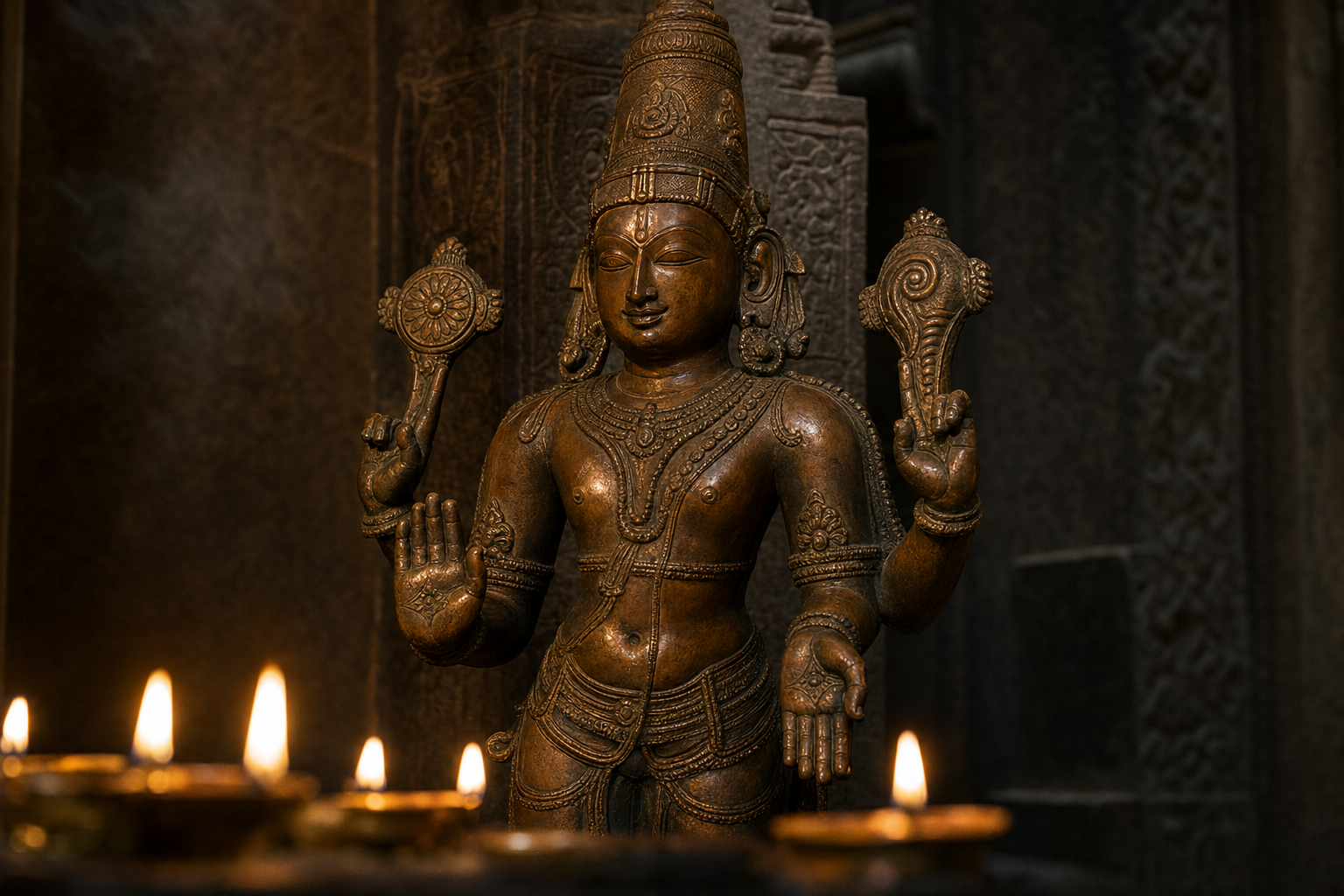
Vamana Jayanti 2026 falls on September 23 (Bhadrapada Shukla Dwadashi) and honors Lord Vamana, the fifth avatara of Lord Vishnu, celebrated through puja, stotra recitation, and charity. The observance follows the tithi-at-sunrise rule, so devotees should confirm local Panchang data for accuracy. The Vamana–Mahabali narrative highlights humility, truthfulness, rightful sovereignty, and generosity, values shared across…
-
Surrendering Control: Mindfulness, Nervous System Regulation, and Restorative Sleep in Perimenopause

A midlife journey through perimenopausal insomnia reveals how control fuels hyperarousal, while mindfulness, compassion, and dharmic wisdom restore safety and sleep. The narrative integrates science—HPA-axis activation, sympathetic overdrive, and hormone-driven sleep fragmentation—with practical, evidence-informed strategies. It explains how self-compassion lowers cortisol and increases vagal tone, why clock-checking and catastrophic thinking perpetuate insomnia, and how cognitive…
-
Kumbhakarna’s Counsel to Ravana: Timeless Dharma, Restraint, and Leadership Beyond Passion

Kumbhakarna’s counsel to Ravana in the Ramayana distills a core dharmic principle: restraint must govern power. The episode situates kāma (unchecked passion) as the chief contaminant of judgment and urges restitution—returning Sita—as both moral necessity and strategic prudence. Read through niti and rajadharma, the advice anticipates classical statecraft: choose conciliation before force and align policy…
-
Bengaluru Protest Demands Statewide Probe into Nashik TCS, Hubballi—Blueprint for Fair Workplaces

Hindu Rashtra Samanvaya Samiti’s Bengaluru protest and memorandum urge a statewide probe into alleged workplace religious coercion, citing the Nashik TCS incident and the Hubballi case as catalysts. This analysis frames the demand within constitutional guarantees, emphasizing due process, neutrality, and evidence-based inquiry. It outlines how a Special Investigation Team (SIT) could be constituted, governed,…
-
Sacred Shields of Dharma: 7 Hindu Protection Symbols to Conquer Bhaya and Adversity

Anxiety, understood in Hindu thought as bhaya, can be transformed through symbols that encode ethics, cosmology, and contemplative method. This long-form guide examines seven Hindu protection symbols—Abhaya Mudra, Trishula, Sudarshana Chakra, Narasimha, Hanuman’s Gada, the Svastika, and Tilaka/Tripundra/Urdhvapundra—tracing their scriptural grounding, iconographic form, and practical application. Each symbol functions as a performative technology of calm,…
-
Nyayamrita of Vyasatirtha: A Dvaita Masterpiece of Logic, Metaphysics, and Pluralist Dialogue

Nyayamrita by Vyasatirtha is a landmark of Dvaita Vedanta that combines rigorous logic, careful scriptural exegesis, and a living devotional ethos. Composed in the Vijayanagara milieu, it clarifies Madhvacharya’s realism—affirming the fivefold difference and the integrity of bhakti—while engaging Advaita Vedanta with analytical precision. The work challenges the anirvachaniya status of the world, probes the…
-
The Power of One Book: How a Bhagavad-gita Sparked Lifelong Devotion and Dharmic Unity

A single sacred text can catalyze lifelong practice and broad social uplift. Kadamba Kanana Swami’s testimony — that a Bhagavad-gita passed from a friend reshaped his life and then vanished from view — illustrates how books “find people,” a process he linked to grace: “Krsna is also part of it.” Social-science models of diffusion explain…
-
Harinama Sankirtana in Public Spaces: 11 Evidence-Based Actions for Peaceful, United Communities

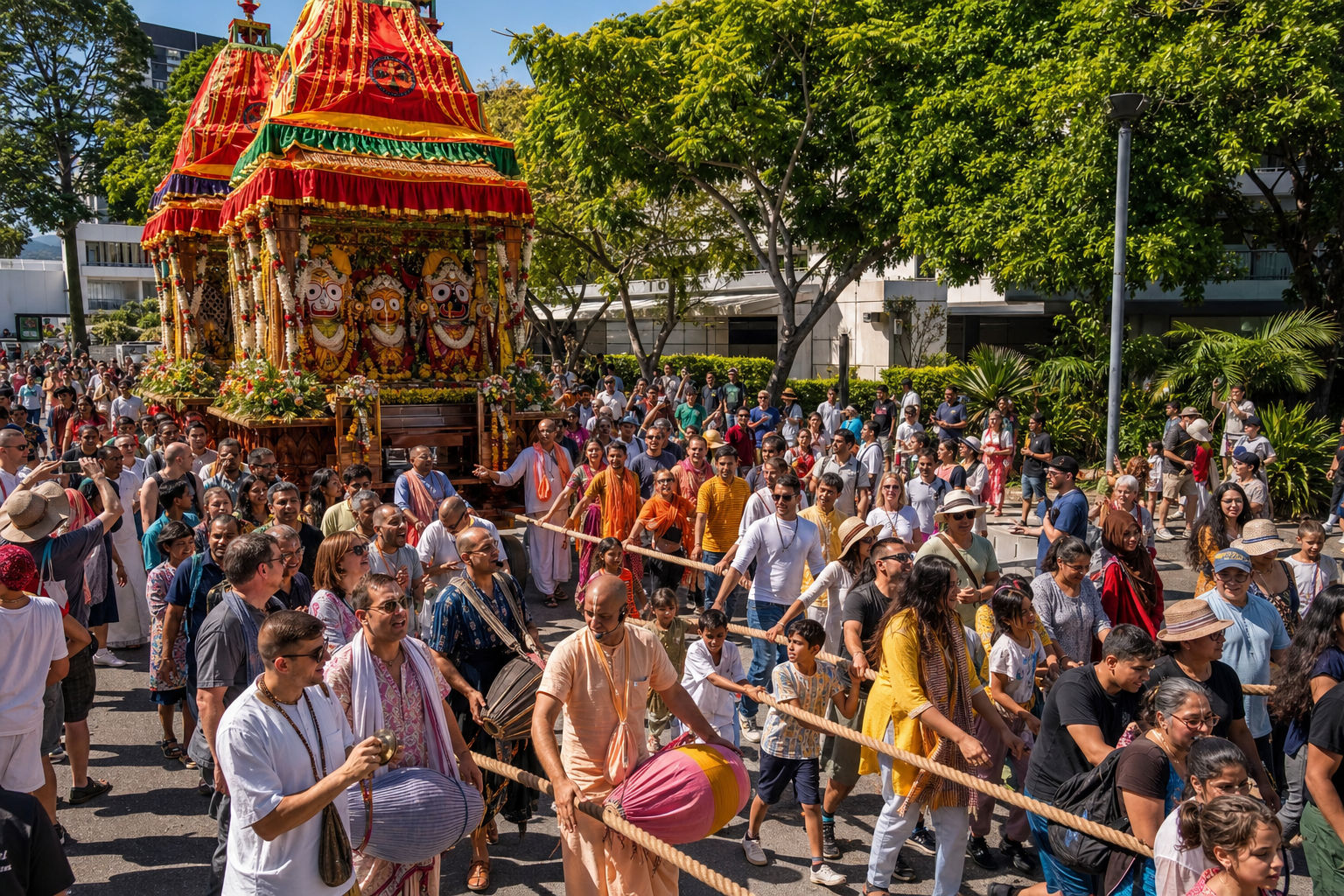
Public Harinama Sankirtana often raises a simple question: why chant on the streets? This article provides a clear, academically grounded answer rooted in Gaudiya Vaishnava theology, shared Dharmic principles across Hinduism, Buddhism, Jainism, and Sikhism, and emerging scientific research on chanting and group singing. It presents 11 evidence-based actions for making public kirtan welcoming, lawful,…
-
Prasadam’s Transformative Grace: Gaudiya Insights on CC Madhya 14.36 for Daily Life and Unity

This in-depth exploration of prasadam situates sanctified food within Gaudiya Vaishnava theology, anchored in CC Madhya 14.36 and the example of King Prataparudra. Readers gain a clear understanding of how offering transforms nourishment into a daily practice of grace, supported by Bhagavad Gita principles and Gaudiya ritual steps. The piece outlines a practical five-step home…
-
Inside Vraja Eco Village Philippines: Sustainable Temple Design, Akshaya Tritiya Milestone

Vraja Eco Village Philippines, just outside Manila, showcases how a temple-centered campus can integrate sacred worship with ecological stewardship. Marked by a yajna on Akshaya Tritiya, the final stages of a new reception and conference building signal expanded capacity for education, dialogue, and community service. Designed with tropical, passive strategies—cross-ventilation, deep overhangs, and shaded courtyards—the…
-
Cradled by Prakriti: A Dharmic and Science-Backed Guide to Caring for Mother Nature

This article reframes the classic insight—God as supreme source and nature as nurturing mother—through a unified dharmic and scientific lens. Drawing on Hindu concepts of Prakriti, the pañca-mahābhūta, and guṇa theory, it aligns Vedic philosophy with modern ecology’s ecosystem services. It integrates Ayurveda’s seasonal and daily regimens to translate ecological literacy into embodied health. Ethical…
-
Mastering Discipline: Dharmic Practices for Spiritual Bliss and Devotional Growth

Discipline in the dharmic traditions is not mere suppression but the intelligent redirection of desire toward higher aims. Drawing on Hindu, Buddhist, Jain, and Sikh sources, this article explains how ethical restraint, attentional training, and ritual regularity form a unified system that sustains devotional service and spiritual bliss. It translates Patanjali’s abhyasa–vairagya, the Bhagavad Gita’s…
-
Tarpan in Hinduism: Comprehensive Guide to Ancestral Gratitude, Types and Mantras

Tarpan in Hinduism is a precise Vedic water offering that honors Devas, Ṛṣis, and Pitṛs with sesame, barley, darbha, and mantras. This comprehensive guide explains core principles, palm-tīrthas, sacred-thread positions, timing, and directional rules for accurate practice. It clarifies how Tarpan differs from Śrāddha while detailing major types: Nitya, Naimittika, Kamya, Deva, Ṛṣi, Pitṛ, Tilatarpaṇa,…
-
Vihangama Nyaya Explained: The Bird’s-Eye Method for Clarity and Mastery in Hindu Philosophy

Vihangama Nyaya, the Maxim of the Bird, teaches how a panoramic, bird’s-eye orientation complements careful, stepwise effort and agile adaptation in both study and practice. By contrasting the bird with the ant and the monkey, it highlights that efficiency depends on capacity, context, and method—not on a single superior path. Framed within Hindu philosophy, it…
-
Kada Dham’s Kaleshwar Mahadev: The Sacred Power and Symbolism of a Broken Shivling

Kaleshwar Mahadev Temple at Kada Dham, Kaushambi (Uttar Pradesh) is renowned for the rare practice of venerating a broken Shivling, a tradition that blends local memory with śaiva ritual norms. The site’s sthala-purāṇa links the linga to Dharmaraja Yudhisthira during the Mahabharata’s Agyatavasa and to consecration with the Holy Ganga’s waters. While oral histories associate…
-
Unattached Like the Sun: Dharmic Wisdom on the Divine Light That Impartially Illumines All

This article examines the Hindu aphorism that the Divine is like the sun—illuminating all without attachment—and shows how this insight unifies the Dharmic traditions of Hinduism, Buddhism, Jainism, and Sikhism. Drawing on scriptural anchors such as the Bhagavad Gita (13.33; 5.10; 9.9; 15.6; 15.12) and the Upanishads, it explains why Brahman/Īśvara is described as nirlepa…
-
Mahāpātakas in Hinduism: Decoding Heinous Sins, Dharma, and Their Urgent Modern Relevance

Mahāpātakas, the “heinous sins” in Hindu ethics, delineate acts that rupture the very fabric of dharma by attacking life, trust, truth, and sound judgment. Grounded in the Dharmashastras, these categories are interpreted here through a principle-first lens that fits modern life—workplaces, digital spaces, and public institutions. The analysis explains how intention, participation, and reparability shape…
-
April 30, 2026 Panchang Guide: Shukla Chaturdashi to Purnima, Essential Auspicious Timings & Rashi

Thursday, April 30, 2026 transitions from Shukla Paksha Chaturdashi to Purnima after 8:17 PM, offering a powerful arc from culmination to fullness in the Hindu calendar (Panchang). The day’s structure supports clarity for planning worship, study, and ethical decision-making. Abhijit Muhurat around local noon and Brahma Muhurta before sunrise are recommended for auspicious undertakings and…
-
Shani Sade Sati for Simha Rashi: Master the Final 2.5 Years (Paada Shani) with Wisdom

Shani Sade Sati’s final 2.5 years (Paada Shani) for Simha Rashi unfold when Saturn transits Kanya (Virgo), spotlighting the 2nd, 4th, 8th, and 11th houses from the Moon through transit and aspect. This period refines speech, finances, home routines, and networks, exchanging speed for structure and visibility for stewardship. The analysis clarifies timing (with 2009–2011…