Decorating deities, or murti alankaram, is a time-honored practice in Hindu Dharma that expresses reverence, devotion, and gratitude through beauty. Across regions and traditions, adorning sacred images with garments, jewelry, sandalwood paste, and flower garlands transforms the act of worship into a holistic offering of the heart and the senses. This practice is not a display of opulence; rather, it is a disciplined ritual that honors the divine presence with dignity and care.
In temples, daily worship integrates alankara within a structured sequence of upacharas, often aligned with śodasha upacharas (sixteen services). After cleansing and anointing, the sacred image is dressed and ornamented, and then honored with pushpanjali and deepa. Such decoration amplifies the experience of darshan, allowing devotees to connect with the divine through sight, fragrance, texture, and formeach element cultivating bhakti and inner stillness.
Decoration is inherently inclusive and mindful of circumstance. Whether a simple tulsi leaf offered at a home shrine or an elaborate festival adornment in a temple, the intent of seva remains central. Devotees participate according to their means, echoing the spirit of “patram puṣpam phalam toyaṁ”the understanding that even the simplest offering, when made with sincerity, is complete.
Temple adornment also sustains cultural heritage and livelihoods. Weavers, florists, metalworkers, and artisans contribute to the fabrics, garlands, lamps, and ornaments that beautify sanctums. Through festivals and daily worship, communities collaborate in garland-making, cleaning, and decoration, reinforcing social bonds and passing on ritual knowledge to younger generations.
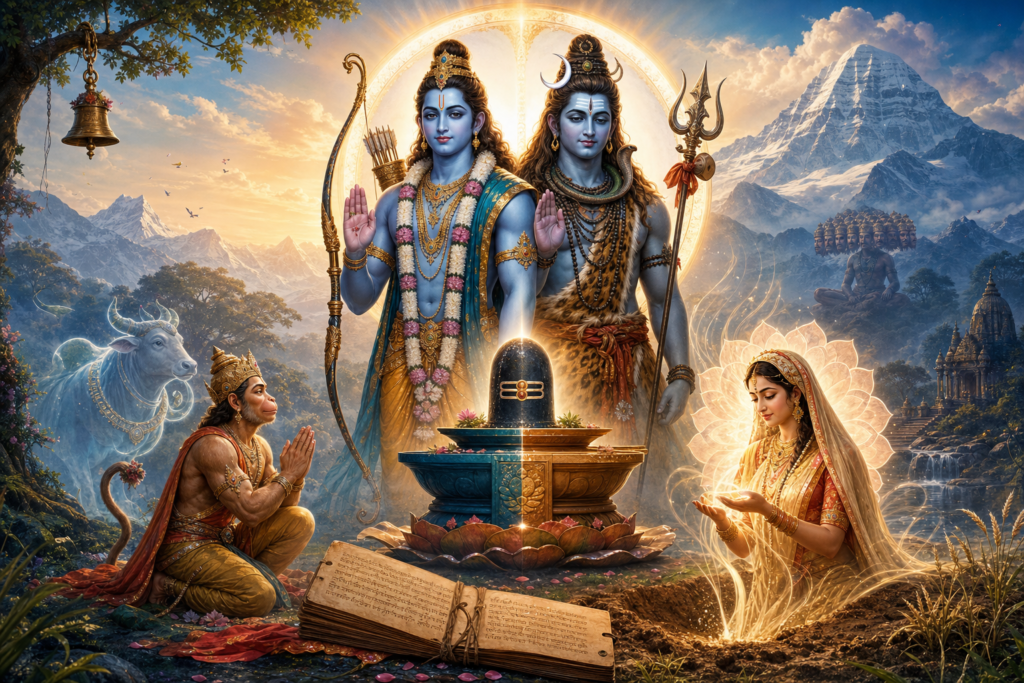
Theologically, idol decoration symbolizes receiving the divine as an honored guestwelcoming with fragrance, color, and care. Ornamentation makes the invisible qualities of divinity tangible, inviting contemplation on purity (lotus), protection (bilva), compassion (sandalwood), and auspiciousness (turmeric and kumkum). These symbols work in unison to elevate the mind from the outward form to the inner essence.
Seasonal and festival cycles further shape the aesthetics of alankara. During Navaratri, deities are adorned to reflect distinct forms of Shakti; on Krishna Janmashtami, floral and peacock motifs underscore playfulness and grace; in Deepavali, rich lights and garlands emphasize inner illumination and prosperity. These visual languages deepen understanding of scripture and tradition through lived, embodied practice.
This value of honoring the sacred is shared across Dharmic traditions, even as forms vary. Jains adorn Tirthankara images with flowers and sandalwood, Buddhists respectfully drape Buddha images and viharas with robes and lamps, and Sikhs honor the Guru Granth Sahib with rumala sahib, floral decor, and chaur seva. The common thread is reverence, seva, and the preservation of sanctityaffirming unity in spiritual values across Hinduism, Buddhism, Jainism, and Sikhism.
Mindful decoration also aligns with dharmic ethics of responsibility toward nature. Choosing local flowers, reusable fabrics, natural dyes, and biodegradable materials preserves ecological balance while upholding ritual purity. Communities increasingly adopt eco-conscious practices, ensuring that devotion harmonizes with environmental stewardship.
For home worship, effective alankara is simple and disciplined: maintain cleanliness, use fresh flowers, align colors and motifs with the deity’s attributes, and rotate decorations with seasons and festivals. Involving children in garland-making or lamp-lighting nurtures continuity of tradition and fosters a personal connection to Hindu rituals and values.
Ultimately, decorating deities is not merely aesthetic. It is a contemplative practice that refines attention, cultivates gratitude, and anchors daily life in sacred rhythm. By honoring the divine with beauty and care, communities preserve cultural heritage, reinforce social cohesion, and embody the living spirit of Hindu Dharmawhile celebrating shared values that connect all Dharmic traditions.
Inspired by this post on Hindu Pad.