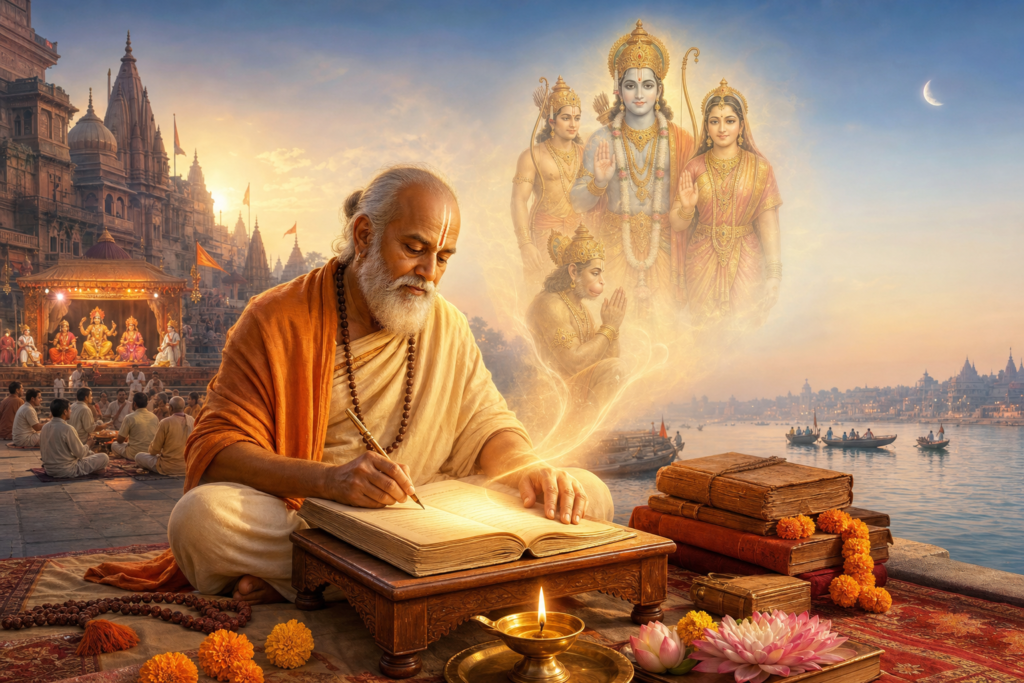
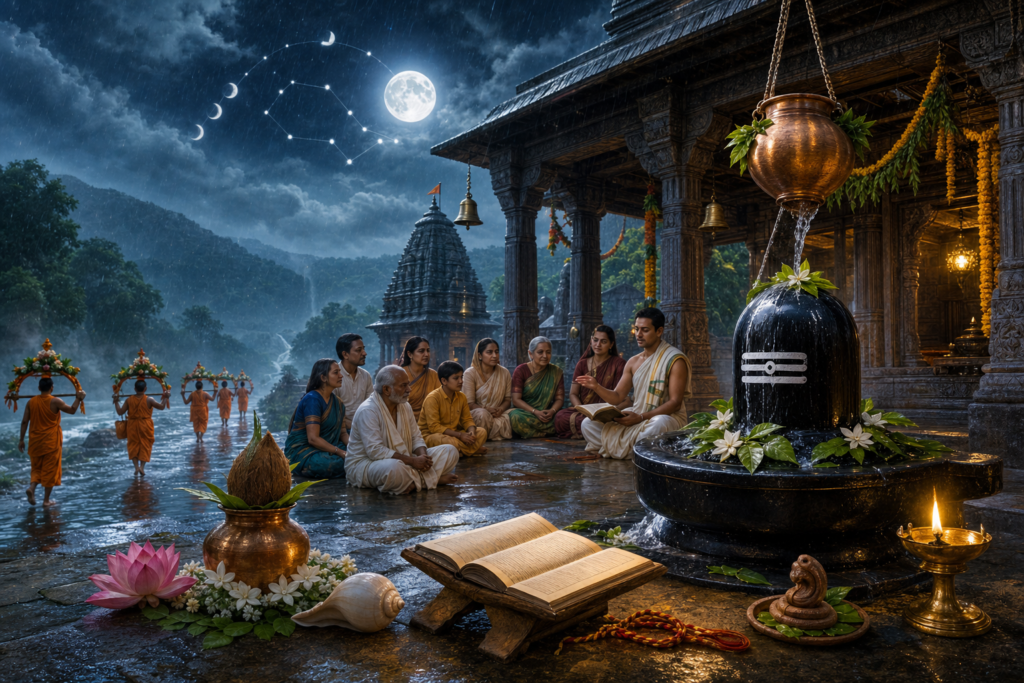
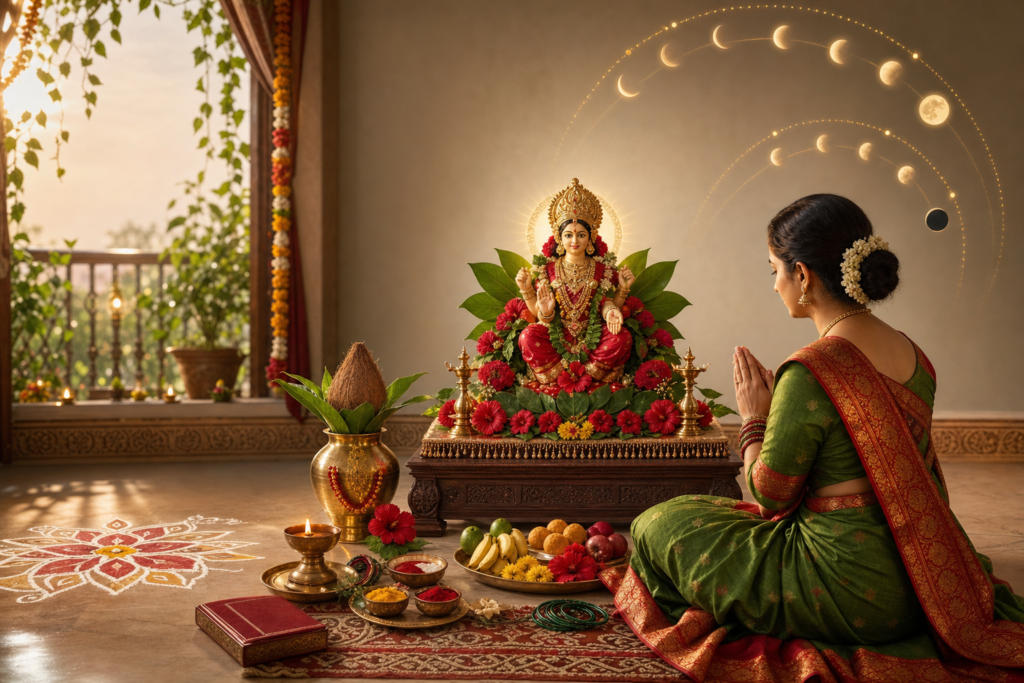
Vaishnava ThiruNakshatrams are the observances that honor the janma-nakshatra, or birth star, of celebrated Vishnu bhaktas, notably the Alwars and revered Acharyas. In Sri Vaishnava practice, the Thirunakshatram of a saint or deity is the calendrical moment each year when the Moon returns to the same nakshatra under which that exalted life manifested. For 2026–2027 (corresponding, in several regional Panchangams, to Parabhava Nama Samvatsaram), these sacred days structure the ritual calendar for temples and households, shaping parayanam, alankaram, utsavams, and deep communal devotion.
The concept is technically simple yet spiritually profound: each Alwar or Acharya has a fixed star-month identity drawn from the sidereal lunar framework; the annual return of that star becomes a living remembrance. While the devotional heart of the observance rests on bhakti and the recitation of the Divya Prabandham, the timing itself is rigorously astronomical, grounded in the movement of the Moon through the 27 nakshatras and formalized by rules followed in the Sri Vaishnava sampradaya.
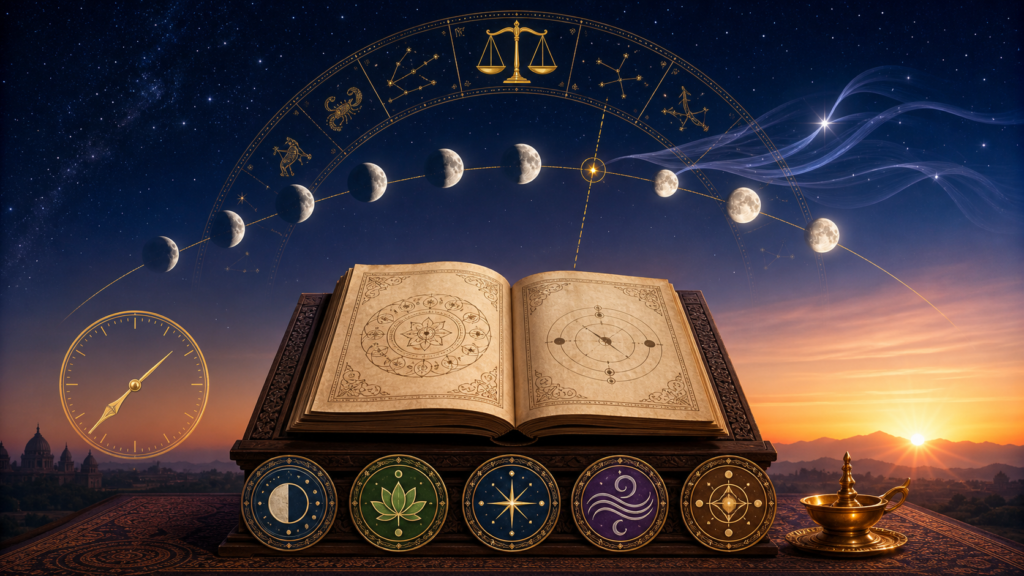
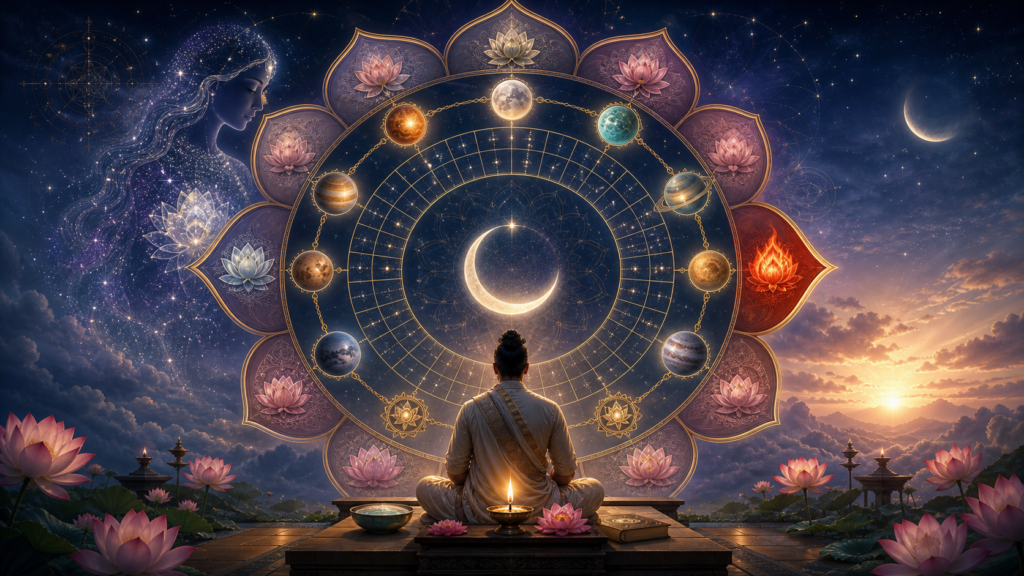
From an astronomical standpoint, nakshatras are 27 equal divisions of the sidereal ecliptic, each spanning 13°20′. A nakshatra date is determined by the interval during which the Moon’s sidereal longitude lies within that division. Practical almanacs (Panchangams) compute these intervals using a chosen ayanamsha, most commonly Lahiri, and a siddhantic model; two widely used traditions in South India are Drik (computational/observational) and Vakya (traditional rule-based) Panchangams. Minor differences in the underlying constants and day-reckoning produce small, but sometimes liturgically significant, shifts in the civil date attached to a given nakshatra.
Liturgical application follows established rules. The most common rule for Thirunakshatram is the sunrise criterion: the observance is kept on the civil day on which the nakshatra prevails at local sunrise. Some temples adopt the broader rule that if the nakshatra touches any part of the day, celebrations are held then; a few follow threshold durations (nazhigai-based) or prioritize temple tradition over general rules when pastoral or crowd considerations arise. In all cases, temple-koshtha inscriptions, acharya sishyaparampara, and recent sannadhi notifications guide practice when a boundary condition appears.
Regional calendars name months differently while pointing to the same sky. In the Tamil solar reckoning used by Sri Vaishnava temples, months run from Chithirai through Panguni, approximately mid-April to mid-April of the following Gregorian year; elsewhere, lunar month names may be used, and New Year baselines vary (Ugadi, Puthandu, Vishu). Consequently, a single Thirunakshatram can be described either by lunar month and tithi-lagna context or by Tamil solar month and nakshatra; both are correct within their respective systems.
A key 2026–2027 highlight is Meena Masam (Panguni Masam) under Revati on 7 April 2027 (IST), when many temples, including Srirangam, mark Periya Perumal Thirunakshatram with vishesha aradhana. As always, temples publish their annual utsava-patrika closer to the date; devotees may confirm final timings locally, especially when the nakshatra changes near sunrise or midnight.
The star-month identities of the Alwars anchor the annual cycle. Widely attested Sri Vaishnava tradition preserves, among others, Vaikasi Visakam for Nammalvar; Aani Swathi for Periyalvar; Aadi Pooram for Andal (Kodhai); Karthigai Krittika for Thirumangai Alvar; Karthigai Rohini for Thiruppaan Alvar; Thai Magam for Thirumazhisai Alvar; Aippasi Thiruvonam for Poigai Alvar; Aippasi Avittam for Bhoothath Alvar; Aippasi Sadayam for Pey Alvar; Masi Punarvasu for Kulasekhara Alvar; and Chithirai Chitra for Madhurakavi Alvar. These identifiers, expressed in Tamil month names with the specific nakshatra, are the primary keys a devotee needs to compute the corresponding civil dates in any given year.
Similarly, Acharya Thirunakshatrams shape the Sri Vaishnava liturgical year beyond the Alwars. Among the best known are Chithirai Thiruvadirai for Sri Ramanuja, Purattasi Thiruvonam for Vedanta Desika, and Aippasi Moolam for Manavala Mamunigal. Nathamuni is commonly remembered under Aani Anusham, and Alavandar (Yamunacharya) under Aadi Thiruvonam. Specific mathams may preserve additional, lineage-specific observances; when in doubt, the annual calendar of the matham or temple prevails.
Because 2026–2027 spans multiple regional reckonings, a practical approach helps. First, identify the Alwar or Acharya and note the canonical nakshatra with the Tamil month, as listed above. Second, consult a reliable Panchang for 2026–2027 configured to the local time zone; verify the exact start and end times of the nakshatra on each possible civil date. Third, apply the sunrise rule (or a temple’s stated practice) to pick the observance day. Fourth, cross-check with the temple’s utsava-patrika or notice board in the weeks prior; large temples sometimes adjust procession timings while retaining the same nakshatra-day anchor.
Differences between Drik and Vakya Panchangam outputs are normal and historically recognized. Drik models use contemporary astronomical constants and often align across global Panchang software when the same ayanamsha is selected, whereas Vakya traditions preserve parampara-based canonical values. A Sri Vaishnava temple typically standardizes on one Panchang family for consistency; domestic observance should follow the same local standard for seamless participation in sampradaya practice.
Ritually, a Thirunakshatram day carries a recognizable arc. At home, devotees often begin with snanam, tulasi-archana, and parayanam of relevant Divya Prabandham; for example, Thiruppavai for Andal’s Aadi Pooram or Tiruvaymoli pasurams on Vaikasi Visakam. In temples, the day may feature suprabhatam, vishesha thirumanjanam (abhishekam), alankaram reflecting the Alwar’s iconography, Veda and Prabandha parayanam, satrumurai, naivedyam, and evening purappadu where customary. The affective contour is distinctly communal: many devotees describe a quiet joy as the nakshatra deepens toward satrumurai, a shared rasa that binds generations.
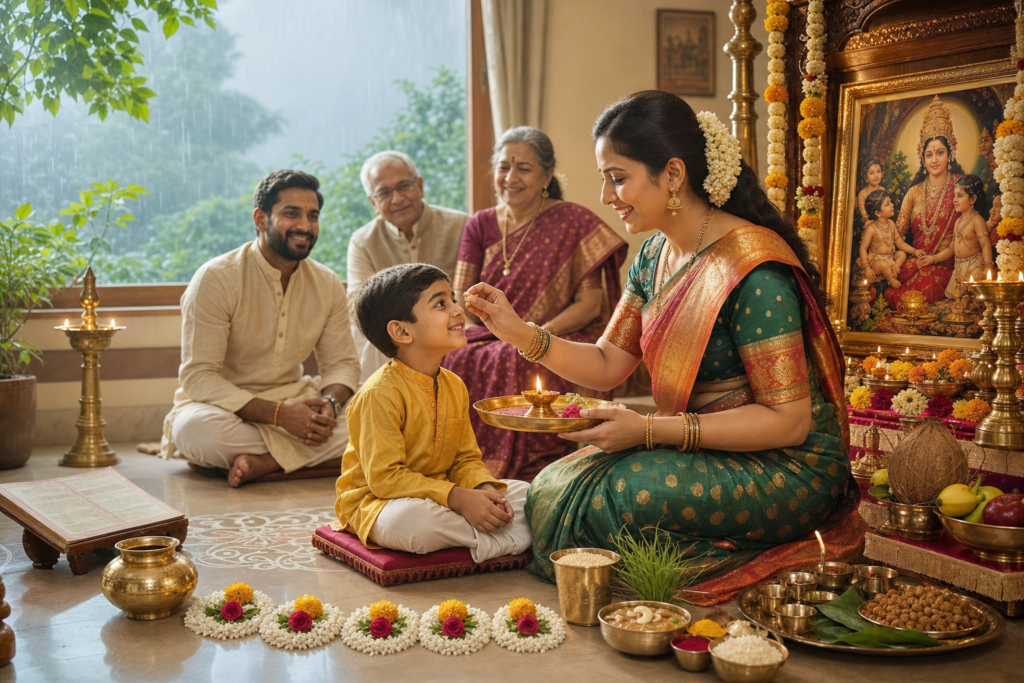
Householders observing at home in 2026–2027 can prepare a simple, scripturally consonant routine: keep the day sattvic; light a deepam at sunrise during the nakshatra; recite at least a patham of the Divya Prabandham associated with the Alwar; offer a modest naivedyam such as pongal, akkara adisil, or fruits; and, if possible, support temple gosamrakshana and annadanam initiatives. Where elderly or children participate, short, repeated parayanam segments can sustain attention without fatigue, preserving both shraddha and family harmony.
Temples in the Divya Desam network sometimes nuance observance according to local history. Srirangam will give primacy to Periya Perumal-related milestones; Srivilliputhur naturally amplifies Andal’s Aadi Pooram; Kanchipuram foregrounds Vedanta Desika under Purattasi Thiruvonam; Melukote observes Ramanuja and Nammalvar traditions with characteristic dignity. Such place-based textures do not fragment practice; rather, they enrich a shared Sri Vaishnava identity through local memory and seva.
These nakshatra-based observances also resonate with the wider dharmic world. Star and lunar-cycle veneration is central not only to Vaishnavism but to Shaiva observances such as Arudra Darshan, to Jain calendrical practice keyed to lunar fortnights and auspicious stars, and to Buddhist lunar uposatha rhythms in several Asian traditions. Sikh families, though following the Nanakshahi and Punjabi month system, often join broader community calendars for regional gatherings. In this way, Thirunakshatram practice affirms a civilizational unity across Hinduism, Buddhism, Jainism, and Sikhism, honoring diversity of methods while celebrating a shared cosmic timekeeping.
For devotees living outside India in 2026–2027, local time zone conversion is essential. A nakshatra that prevails at sunrise in India may fall on a different civil date overseas; observance should use local sunrise with the nakshatra in force, applying the same sampradaya rule. Daylight saving transitions add an extra layer; Panchang tools that display nakshatra spans in local time prevent inadvertent date shifts.
When a nakshatra changes close to sunrise, two-day practices occasionally arise: a temple may hold abhishekam on the nakshatra-touch day and the public purappadu on the day with longer nakshatra coverage or vice versa, guided by sthala-shastra and acharya directives. Far from being a contradiction, such choices embody the compassionate pragmatism of the tradition, prioritizing both shastra and devotee participation.
In summary, Vaishnava ThiruNakshatrams in 2026–2027 can be followed with clarity by combining three elements: the canonical star-month for each Alwar or Acharya, a reliable Panchang configured to local time, and the sunrise rule used by the local temple. With these, household and temple rhythms align, devotion is scaffolded by astronomical precision, and the timeless voices of the Alwars continue to guide contemporary life.
Date note and example for 2026–2027: Meena Masam (Panguni Masam) Revati on 7 April 2027 (IST) is observed as Periya Perumal Thirunakshatram in temples that follow this alignment; final schedules should be confirmed with the respective temple utsava-patrika as the date approaches.
Inspired by this post on Hindu Pad.