Mayapur, seen through the disciplined gaze of a renunciate (sadhu), emerges as a living, breathing dhaman inhabited sacred geography rather than a pin on a map. In this view, the settlement is not only a Hindu pilgrimage center but a locus of continuous devotional practice (bhakti), scriptural memory, and compassionate service. The emotional core of that vision rests in quiet, repeatable disciplinespre-dawn mantra recitation, kirtan, seva, and studythrough which Mayapur becomes both destination and method, both place and practice.
Situated in the Nadia district of West Bengal, India, Mayapur occupies a fluvial landscape shaped by the Bhagirathi-Ganga and the Jalangi rivers, across from the historic town of Nabadwip. The deltaic terraincharacterized by shifting channels, alluvial deposits, and seasonal inundationhas, for centuries, nourished agrarian life and ritual movement alike. This hydrology also underwrites the region’s sacred geography, where islands (dvīpas) and banks evolve yet remain symbolically mapped in devotional cartographies sustained through parikrama (circumambulation) and oral tradition.
Historically, Nabadwip was the eminent seat of Navya-Nyāya, producing scholars such as Raghunātha Śiromaṇi, even as Mayapur became hallowed as Antardvīpa, associated with the appearance of Śrī Caitanya Mahāprabhu (1486–1533). Gaudiya Vaishnavism identifies his life and teachingsespecially the saṅkīrtana-yajña (collective chanting of the divine names)as the yuga-dharma for the Kali age. In this theological frame, Mayapur is not simply a memorial place but an active field where bhakti is cultivated through hearing, chanting, remembering, and service.
Gaudiya tradition maps the Navadvīpa region into nine symbolic islands, each corresponding to one limb of navadhā-bhakti (ninefold devotion). While local enumerations vary, an established schema aligns the islands with specific practices. This cartographic theology transforms physical movement into sādhanā (disciplined practice), where traversing riverbanks and ghats becomes a pedagogy of remembrance, surrender, and service.
The associations commonly articulated are: Antardvīpaātma-nivedanam (complete self-offering, linked with present-day Mayapur); Simantadvīpaśravaṇam (hearing sacred narratives and teachings); Godrumadvīpakīrtanam (devotional chanting); and Madhyadvīpasmaraṇam (contemplative remembrance of the divine). Each island, in this reading, anchors a virtue of practice while remaining integrally part of a unified sacred ecology.
Continuing the sequence, Koladvīpapāda-sevanam (reverential service), Ṛtudvīpaarcana (deity worship), Jahnudvīpavandana (offering of obeisance), Modadrumadvīpasakhya (friendship with the divine), and Rudradvīpadāsya (servitorship) together complete the ninefold arc. A sadhu’s perception binds these loci not as isolated sites but as interdependent modes of inner transformation enacted across a shared landscape.
Daily life along the Ganga reflects this synthesis of geography and devotion. Before sunrise (brahma-muhūrta), lamps are offered in maṅgala-ārati, followed by meditative japa of the Hare Krishna mahā-mantraa practice affirmed in the Kali-santaraṇa Upaniṣadand group kīrtan. Through these rhythms, the place becomes pedagogy; time, an ally; and the body, an instrument of attentive presence. The quiet focus of early hours frequently matures into communal service, study of śāstra, and evening congregational singing.
Worship at Mayapur’s principal shrines centers on the Pañca-tattvaŚrī Caitanya, Nityānanda, Advaita, Gadādhara, and Śrīvāsawhich the tradition understands as a complete manifestation of divine energies in the service of nāma-saṅkīrtana. Deity worship (arcana) follows Gaudiya paddhati informed by the Bhāgavata Purāṇa and the broader Pañcarātra framework, integrating precise ritual sequences with the experiential depth of kīrtan and study. In this liturgy, precise action and heartfelt intention are not opposed; they reinforce one another.
As a contemporary institutional heart, ISKCON Mayapur has become a global hub for kīrtan, bhakti-śāstra education, prasāda distribution, and community life within Gaudiya Vaishnavism. The campus hosts devotional academies, goshalas, and service initiatives that extend the ethos of seva to guests and locals alike. Pilgrims frequently attest that the convergence of study, song, and service renders the dham palpably alive, a perception consistent with the sadhu’s sustained practice orientation.
Dominating the skyline, the Temple of the Vedic Planetarium (TOVP) frames a bold dialogue between śāstra and modern exhibition design. Its immersive displays are being developed to present cosmological models from the Bhāgavata Purāṇa, while the temple’s massive domeamong the largest of its kindcombines devotional symbolism with contemporary engineering for structural resilience in a riverine, high-humidity environment. In the sadhu’s gaze, such architecture is less triumphal edifice than instrument: a didactic space guiding attention from spectacle to contemplation.
Seasonal and lunar cycles structure the devotional year. Gaura Pūrṇimā (the appearance day of Śrī Caitanya) draws tens of thousands for the Navadvīpa parikrama, weaving paths through villages, ghats, and groves in remembrance of the ninefold bhakti. The Kartik month intensifies lamp offerings and kīrtan, while nearby Rajapur’s traditional Jagannath worship resonates with the region’s broader Vaishnava fabric. These processions and gatherings fold individuals into a shared cadence of remembrance, service, and gratitude.
Sound serves as both medium and message. The timbre of mṛdaṅga and the cadence of karatāla accompany rāga-informed kīrtan, where melody, rhythm, and mantra coalesce as nāda-brahman (divine sound). Musical practice here is not entertainment; it is sādhanā. Many sadhus approach voice training and percussion with the same seriousness given to textual study, recognizing that attention to pitch, tempo, and diction refines attention itself.
Scriptural anchoring remains decisive. The Bhagavad-gītā’s affirmation, patraṁ puṣpaṁ phalaṁ toyaṁ yo me bhaktyā prayacchati (9.26), frames offerings as acts of devotion rather than of opulence. Gaudiya exegesis often cites Bhāgavata Purāṇa 11.5.32 to highlight saṅkīrtana as the age’s principal sacrifice, while works like Bhakti-rasāmṛta-sindhu, Caitanya-bhāgavata, and Caitanya-caritāmṛta provide theological, historical, and aesthetic scaffolding for practice. The resultant praxis is at once textually rooted and experientially verifiable.
Crucially, the ethos that animates Mayapur harmonizes with the wider dharmic family. The compassion (karuṇā) central to Buddhism, the non-violence (ahiṁsā) and non-possessiveness (aparigraha) taught in Jainism, and the seva and nām-simran emphasized in Sikhism resonate with the bhakti commitment to service, restraint, and remembrance. This consonance underscores a unifying principle: diverse paths within the dharmic traditions can converge in shared values of humility, care for all beings, and reverence for truth. Mayapur’s practice culture, thus, becomes a lived testimony to unity-in-diversity.
Environmental stewardship follows naturally from this integrated vision. Riverbank erosion, siltation, and monsoon variability shape livelihoods and pilgrimage alike, prompting initiatives that couple tīrtha-sevā (service to sacred places) with practical conservationtree planting, waste reduction, and respectful use of ghats. For many sadhus, caring for the Ganga is non-negotiable spiritual work: protecting the river protects the practices and communities she sustains.
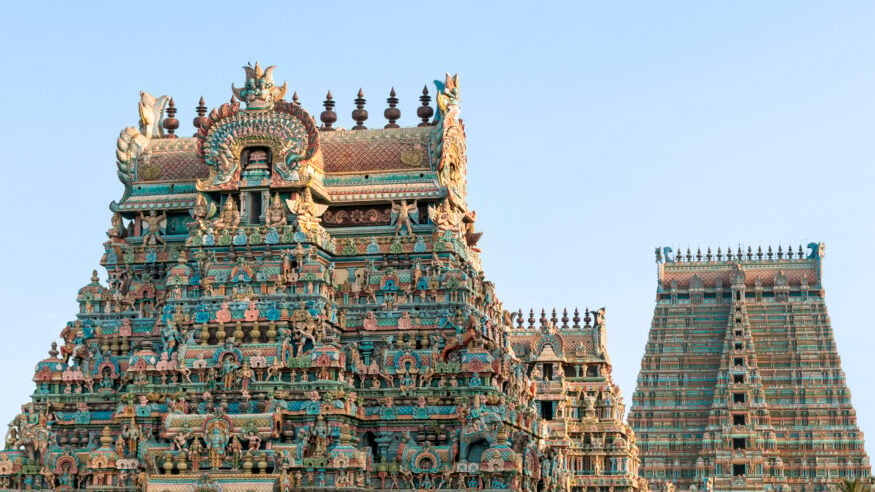
Material culture bridges past and present. Regional terracotta artistryvisible in older Vaishnava temples across Nabadwip’s orbitinforms contemporary aesthetics even as newer structures adopt reinforced concrete and composite materials for durability. The result is a layered architectural language: narrative reliefs, rhythmic colonnades, and domes that index both Bengal’s artisanal heritage and the global aspirations of a modern pilgrimage complex.
Pilgrimage etiquette preserves this sanctity. Modest attire, mindful conduct during ārati and kīrtan, and deference to temple protocols (including photography norms) allow devotion to take precedence over distraction. River-facing practices require particular care: avoiding pollutants, honoring bathing queues, and keeping the ghats clear for ritual use. Such courtesies are not formality; they are instruments of collective concentration.
Orientation for first-time visitors is straightforward: cultivate inner quiet before arrival, observe simple sāttvika dietary habits where possible, and prepare to walkparikrama routes are best experienced at a contemplative pace. Carry water responsibly, greet residents respectfully, and allow the region’s soundscapebells, conches, and mantrato set the day’s tempo. Many discover that Mayapur’s gifts scale with patience; the slower the stride, the clearer the insight.
A social dimension completes the picture. Educational programs in Sanskrit, kīrtan, and bhakti-śāstra, along with prasāda kitchens, craft livelihoods and cultural literacy across local and international communities. Women’s devotional leadership, youth kīrtan ensembles, and scriptural study circles together testify to a participatory culture where learning and service stand open to all who seek them with sincerity.
Across all of this, the sadhu’s lens remains consistent: outward movements are inward disciplines, and sacred geography is an invitation to interiority. Mayapur, in this reading, is both cartography and compassmapping nine islands of practice while pointing toward a center of surrender and service. The dham’s enduring promise is simple and exacting: where remembrance deepens, community coheres; where service is shared, unity across dharmic traditions can flourish.
Inspired by this post on Dandavats.