
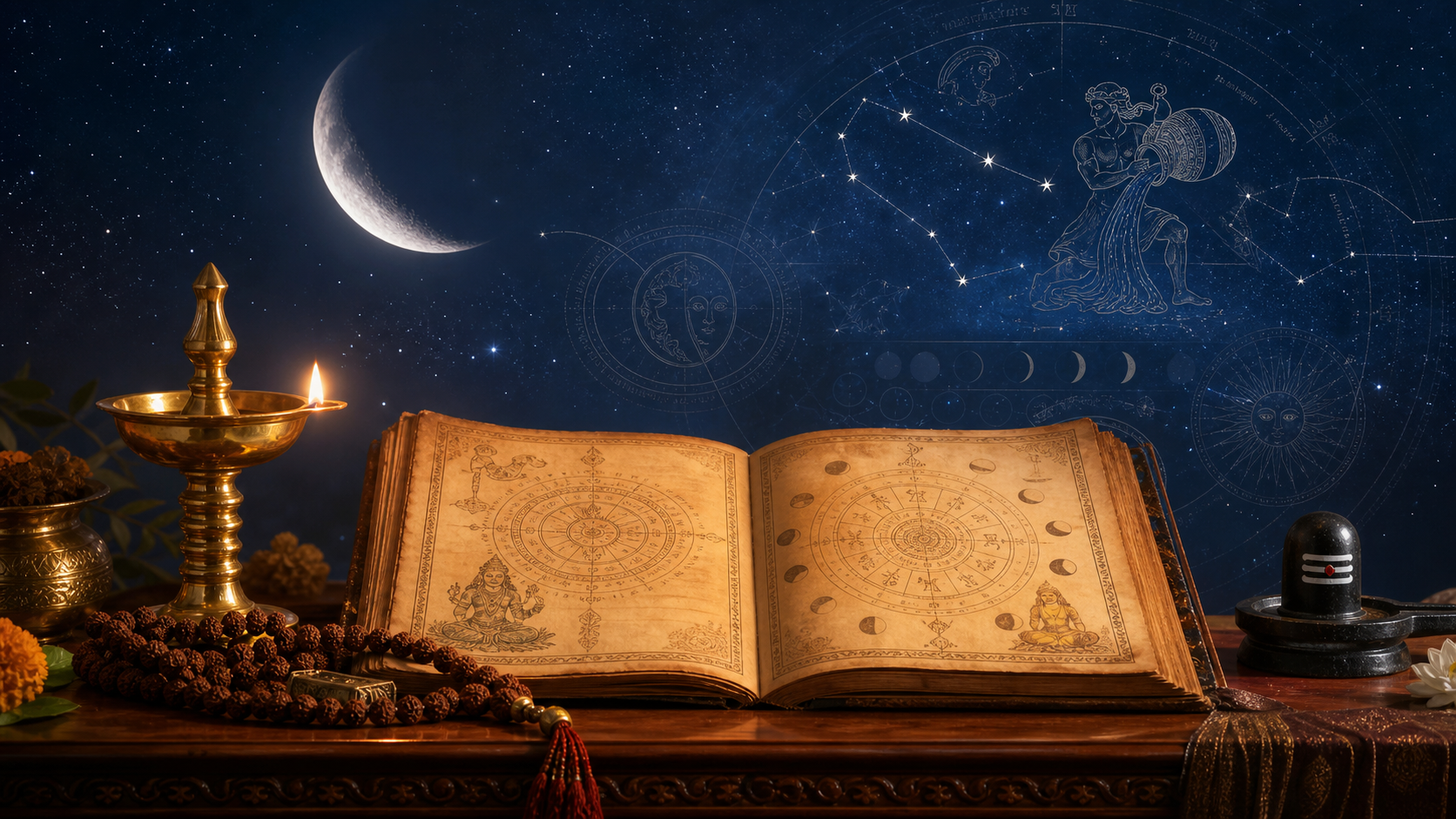
Tuesday, March 17, 2026, is marked in the Hindu Panchang as a spiritually significant day in the waning lunar fortnight. According to the supplied Panchang detail, the day begins with Krishna Paksha Trayodashi tithi, the thirteenth lunar day of the dark half of the month, and this tithi continues until 7:51 AM. After that, Krishna Paksha Chaturdashi begins. This transition gives the day a distinctive character: it begins with the reflective, concluding quality of Trayodashi and then moves into the deeper austerity and inwardness of Chaturdashi.
In Hindu calendar practice, a tithi is not the same as a civil date. A civil date runs from midnight to midnight, while a tithi is determined by the angular distance between the Sun and the Moon. Each tithi represents approximately twelve degrees of separation between the two luminaries. This is why tithi timings can begin or end at any hour of the day and why different regions may note slightly different local timings based on sunrise, longitude, and the Panchang tradition followed.
Krishna Paksha refers to the waning or dark phase of the Moon, the fortnight between Purnima and Amavasya. Symbolically, this phase is associated with withdrawal, completion, introspection, and purification. It is not merely a period of decline; in Dharmic timekeeping it is also a disciplined interval for reducing excess, closing unfinished duties, reviewing conduct, and turning attention toward inner steadiness. For households that follow the Panchang closely, such days often bring a quieter rhythm to worship, food habits, charity, and personal discipline.
Trayodashi, the thirteenth tithi, is especially important because it is traditionally connected with Pradosh observance when it coincides with the evening worship period. Pradosh is associated with Lord Shiva and is observed by many devotees through fasting, lamp lighting, mantra japa, and temple worship. Since March 17, 2026, begins with Krishna Paksha Trayodashi and later moves into Chaturdashi, the day carries a strong Shaiva devotional tone, especially for those who observe monthly Pradosh and related vrata traditions according to local Panchang rules.
After 7:51 AM, Krishna Paksha Chaturdashi becomes the operative tithi according to the given Panchang. Chaturdashi is the fourteenth lunar day and immediately precedes Amavasya in the waning fortnight. It is often understood as a period of intensified inwardness, restraint, and preparation for renewal. In many Hindu traditions, Krishna Paksha Chaturdashi has a close association with Shiva worship, silence, austerity, and removal of negative tendencies. The transition from Trayodashi to Chaturdashi therefore makes the day suitable for concluding worldly tasks early and reserving later hours for spiritual reflection.
The nakshatra factor adds another layer to the Panchang reading. Public Panchang calculations for this date indicate the Moon moving through the Aquarius region of the zodiac, with Dhanishta active in the very early part of the day in some calculations and Shatabhisha becoming the dominant nakshatra afterward. Shatabhisha, located in Kumbha Rashi, is traditionally associated with Varuna, truth, healing, secrecy, diagnosis, research, and disciplined introspection. Its symbolism supports investigation, mental clarity, solitude, and corrective action rather than impulsive display.
The rashi of the Moon is understood as Kumbha Rashi, or Aquarius, for the main part of the day in several Panchang references. Kumbha is associated with systems, communities, reform, knowledge networks, and a certain emotional distance that can help with fair judgment. In practical terms, this supports activities that require analysis, planning, technical review, social responsibility, and objective conversation. It is less suited to emotionally reactive decisions, especially when the day is also shaped by the waning Moon.
Good time, or shubh muhurat, must always be read locally because sunrise and sunset differ from city to city. Still, the broader structure of March 17, 2026, is clear. The early morning is favorable for prayer, japa, meditation, scriptural reading, and simple discipline. Brahma Muhurta and morning Sandhya remain among the most valued times for spiritual practice because the mind is comparatively quiet and the day has not yet become crowded with obligations. Even a short period of focused mantra or silent reflection during this interval aligns well with the Krishna Paksha mood.
Abhijit Muhurta around midday is generally treated as a strong and flexible auspicious window when no other specific muhurta is available. On March 17, 2026, many Panchang listings place Abhijit Muhurta close to the middle of the day, roughly between 12:06 PM and 12:54 PM in some North Indian calculations, while other city-based listings vary slightly. This period may be used for important communication, study, administrative work, planning, or beginning a modest task that does not require a specialized ceremony.
Evening worship also has significance on this date because of the Trayodashi-Chaturdashi transition and the Shaiva devotional associations of the period. Lighting a lamp at sunset, reciting Shiva mantras, visiting a temple where possible, or offering a quiet prayer at home all fit the character of the day. In many families, such observances are not treated as superstition but as a way of giving structure to attention, gratitude, self-control, and intergenerational continuity.
Rahu Kaal on a Tuesday usually falls in the later afternoon segment of the daylight period, and city-specific Panchangs for March 17, 2026, place it around 3:30 PM to 5:00 PM in some regions. This interval is traditionally avoided for starting auspicious new undertakings, signing major agreements, beginning travel for a sacred purpose, or launching important work. Routine duties, already-started tasks, cleaning, review, and quiet administrative work may continue. The practical value of Rahu Kaal observance lies in cultivating caution during a time culturally marked for restraint.
Gulika Kalam and Yamaganda are also considered when selecting a good time. For this date, some Panchang references place Gulika Kalam around midday to early afternoon and Yamaganda in the morning after sunrise, though exact timings vary by location. These periods are generally avoided for fresh beginnings, especially rituals, major purchases, marriage-related steps, and important travel. The emphasis is not fear but timing discipline: the Panchang encourages people to distinguish between routine action and consecrated beginnings.
The yoga and karana of the day further refine interpretation. March 17, 2026, is associated in several Panchang calculations with Siddha Yoga followed by Sadhya Yoga, along with Vanija Karana before the tithi change and Vishti Karana afterward. Siddha Yoga is traditionally supportive for completion and effectiveness, while Sadhya suggests effort directed toward attainable goals. Vanija Karana can support exchange, trade, negotiation, and practical dealings. Vishti Karana, however, is generally treated cautiously for auspicious beginnings, which reinforces the need for careful timing after the morning tithi transition.
From a ritual perspective, the day is suitable for Shiva worship, Pradosh-related observance where applicable, mantra japa, fasting according to capacity, charity, and self-examination. Since Krishna Paksha is a waning phase, it is also appropriate for letting go of habits that create agitation. Anger, wasteful speech, excessive consumption, and avoidable conflict are all themes that can be consciously reduced. Such practices connect the astronomical calendar to ethical life, which is one of the deeper functions of Panchang tradition.
For students and professionals, the day can be used productively if its rhythm is understood properly. The morning is best for essential work before the mind becomes scattered. Midday offers a useful window for communication and decision-making. The afternoon caution period should be handled with patience, especially in finance, travel, negotiation, and emotional conversation. The evening is better suited to closure, worship, family calm, and preparation for the approaching Amavasya phase.
The Panchang also has cultural value beyond astrology. It preserves a refined Indian system of time awareness in which astronomy, ritual, ethics, ecology, and community life are interwoven. Hindu, Buddhist, Jain, and Sikh traditions differ in calendars, festivals, theological frameworks, and ritual emphasis, yet all preserve a deep respect for disciplined time, sacred remembrance, self-restraint, and community continuity. Reading the Hindu Panchang in this broader Dharmic spirit encourages unity rather than division.
Because Panchang details are location-sensitive, the times listed for tithi, nakshatra, Rahu Kaal, sunrise, sunset, and muhurta should be confirmed with a local Panchang for the place of observance. This is especially important for vrata, temple rituals, sankalpa, shraddha, and major samskara-related decisions. A general national Panchang gives orientation, but local calculation gives ritual precision.
In summary, March 17, 2026, is a Krishna Paksha day that begins with Trayodashi until 7:51 AM and then proceeds into Chaturdashi. Its lunar mood favors completion, purification, Shiva worship, restraint, and thoughtful planning. With the Moon connected to Kumbha Rashi and the Shatabhisha influence becoming important during the day, the date supports healing, research, truthfulness, and disciplined introspection. Used wisely, this Panchang day becomes more than a calendar entry; it becomes a framework for living with clarity, humility, and sacred attention.
Inspired by this post on Hindu Blog.



Leave a Reply
You must be logged in to post a comment.