
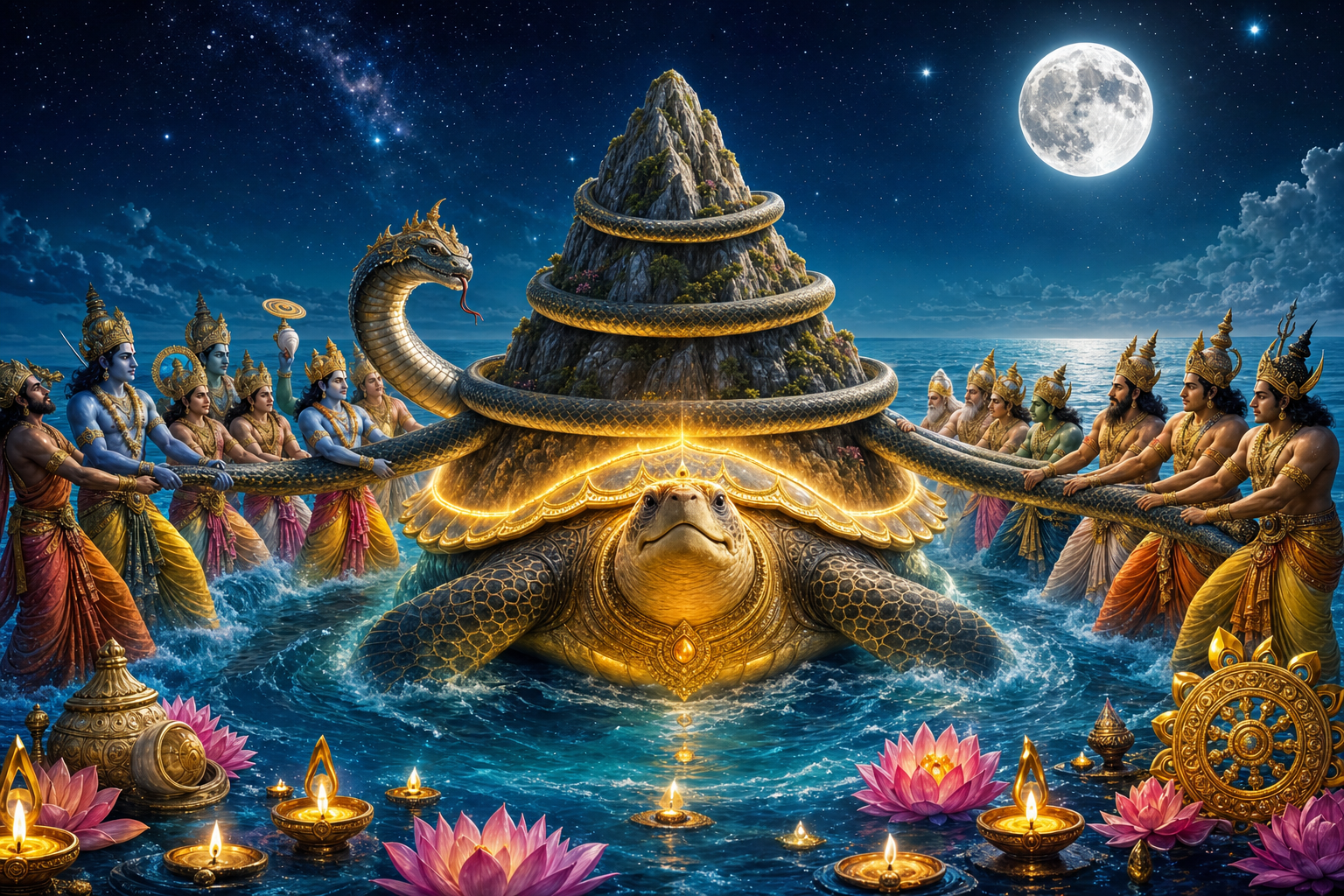
Kurma Jayanti 2026 marks the sacred appearance day of Lord Kurma, the tortoise incarnation of Lord Vishnu and one of the most symbolically rich forms in Vaishnava tradition. The observance is generally associated with Vaishakh Purnima, the full moon day of the Vaishakh month in the Hindu calendar. In 2026, Kurma Jayanti falls on May 1, while some regional traditions observe Kurma Jayanthi on Nirjala Ekadashi, which falls on June 25, 2026. This difference is not necessarily a contradiction; it reflects the diversity of Hindu calendrical practice, where local sampradayas, temple customs, and panchang traditions may preserve distinct but meaningful observance dates.
The theological importance of Kurma Jayanti rests on the understanding that Lord Vishnu manifests whenever cosmic order requires restoration, protection, or stabilization. In the Kurma Avatara, Vishnu does not appear primarily as a warrior or royal teacher, but as a foundation. This is why the image of the tortoise carries profound philosophical weight. The tortoise supports, steadies, and endures; it represents the quiet strength beneath visible action. In devotional practice, this form reminds devotees that dharma is not sustained only by dramatic intervention, but also by patience, balance, restraint, and unwavering support.
The central Purana narrative connected with Kurma Avatara is the Samudra Manthan, the churning of the cosmic ocean. According to the traditional account, the devas and asuras sought amrita, the nectar of immortality. Mandara mountain was chosen as the churning rod, and Vasuki, the serpent king, served as the churning rope. Yet the mountain began to sink into the ocean, making the task impossible. Lord Vishnu then assumed the form of Kurma and supported Mandara on his back, allowing the churning to continue. This act made the avatara indispensable to the cosmic process: without a stable base, even the most ambitious spiritual and cosmic effort collapses.
From a symbolic standpoint, Samudra Manthan is more than a mythological episode. It can be read as a disciplined model of transformation. The ocean represents the vast depth of existence and consciousness. Mandara mountain represents the axis of effort. Vasuki represents force, tension, and movement. The devas and asuras represent conflicting tendencies within the cosmos and within human nature. Kurma represents the stable ground that makes inner churning possible. In this interpretation, Kurma Jayanti becomes a reminder that spiritual growth requires both effort and steadiness. Without a firm ethical and devotional foundation, energy can become restless rather than transformative.
Vaishakh Purnima adds another layer of significance to the observance. Purnima, the full moon day, is traditionally associated with fullness, clarity, worship, charity, and reflective spiritual practice. The Vaishakh month itself holds a respected place in Hindu religious life, and many observances during this period emphasize purification, vrata, dana, and devotion. When Kurma Jayanti is observed on Vaishakh Purnima, the festival naturally combines the contemplative power of the full moon with the stabilizing symbolism of Lord Vishnu’s Kurma form.
The regional observance of Kurma Jayanthi on Nirjala Ekadashi also has a meaningful devotional context. Nirjala Ekadashi is among the most rigorous Ekadashi vratas, traditionally associated with fasting, discipline, and deep remembrance of Lord Vishnu. Where Kurma Jayanti is linked with this date, the emphasis shifts toward austerity, self-control, and complete dependence on divine grace. This regional variation demonstrates an important feature of Hindu tradition: sacred meaning is often preserved through multiple calendrical pathways, not through rigid uniformity alone.
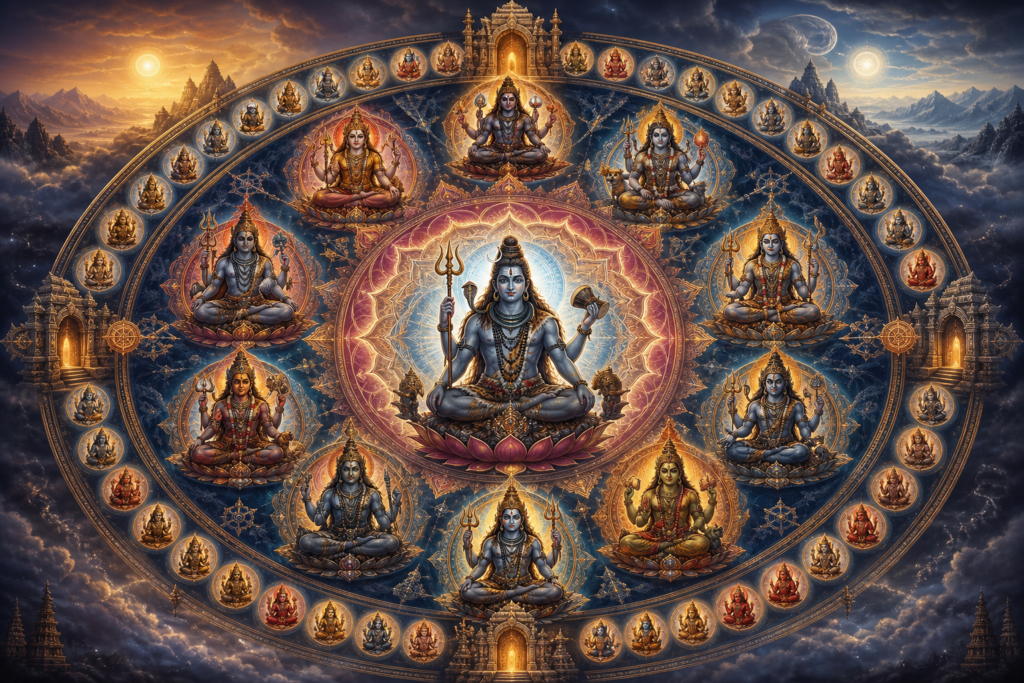
Kurma Jayanti is especially significant for devotees of Lord Vishnu and for those who study the Dashavatara framework. Kurma is commonly understood as the second avatara of Vishnu, following Matsya and preceding Varaha. In this sequence, the avatara tradition has often been interpreted as a theological map of divine intervention through different forms suited to different cosmic needs. Matsya preserves knowledge through the waters, Kurma provides the base for cosmic churning, and Varaha raises the earth. Each form reveals a distinct aspect of protection, restoration, and continuity.
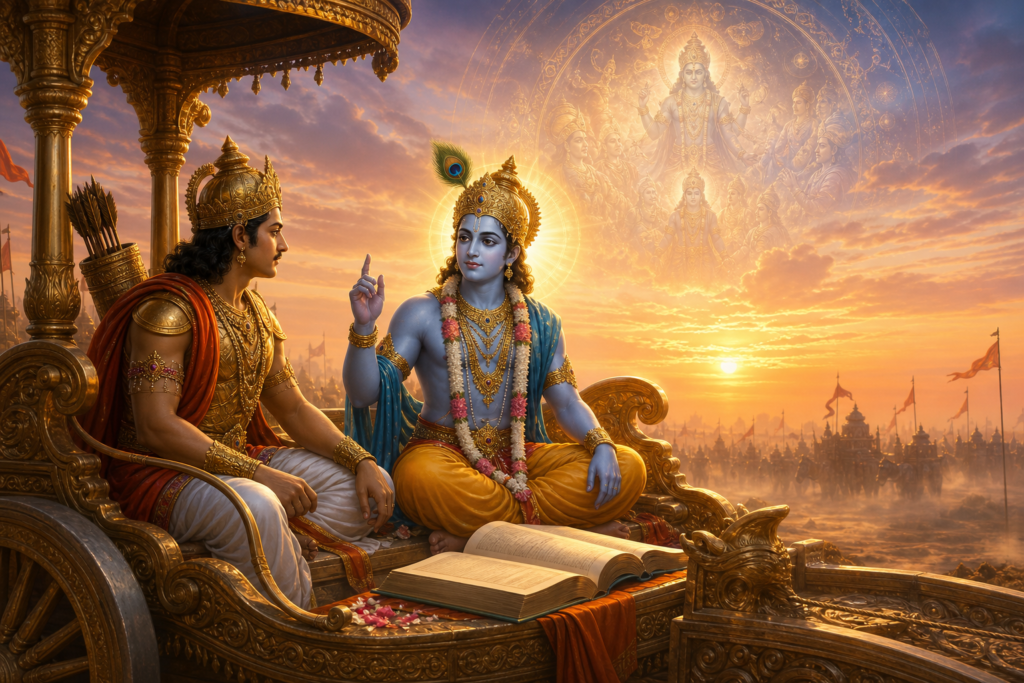
The tortoise form also has a broader philosophical resonance in Hindu thought. The Bhagavad Gita uses the image of a tortoise withdrawing its limbs to describe mastery over the senses. Although this verse is not specifically about Kurma Jayanti, the symbolism is closely related. A tortoise is not weak because it withdraws; it is protected because it knows when to act and when to remain inward. In this sense, Kurma Jayanti encourages a disciplined understanding of strength. Stability, restraint, and inwardness are not passive qualities; they are active supports for dharmic life.
Temple traditions give Kurma Jayanti a living devotional form. The festival is celebrated with special significance at Sri Kurmam Sri Kurmanatha Swamy Temple in Srikakulam district of Andhra Pradesh, one of the most important temples associated with Lord Kurma. The temple’s identity is deeply tied to the Kurma form of Vishnu, making the festival not only a calendar observance but also a regional expression of sacred geography. Such temples preserve the relationship between Purana, ritual, architecture, and community memory.
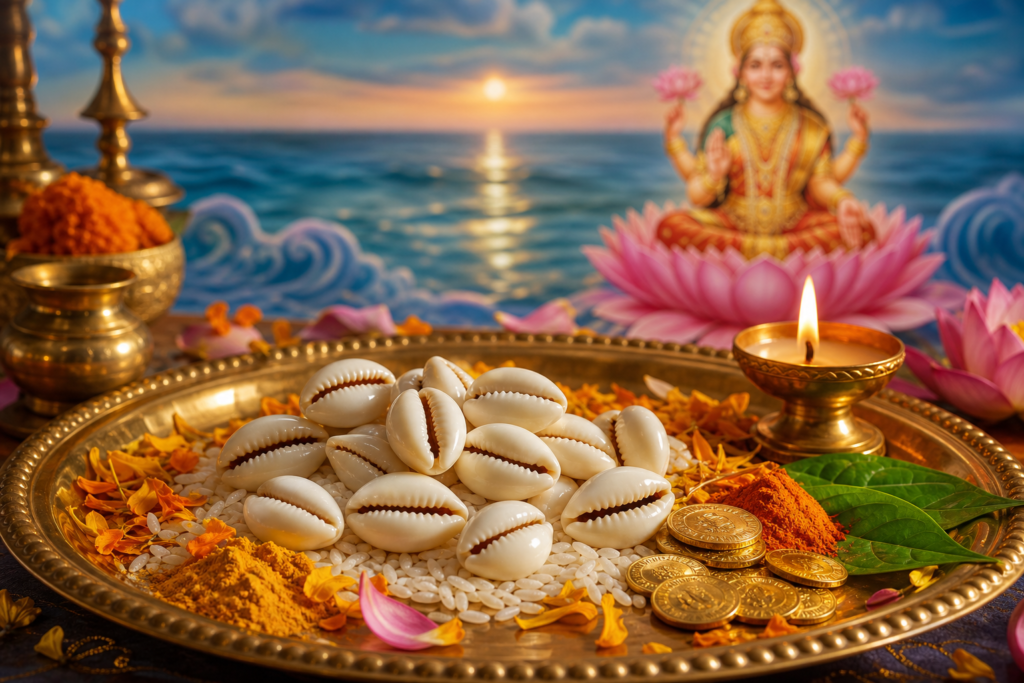
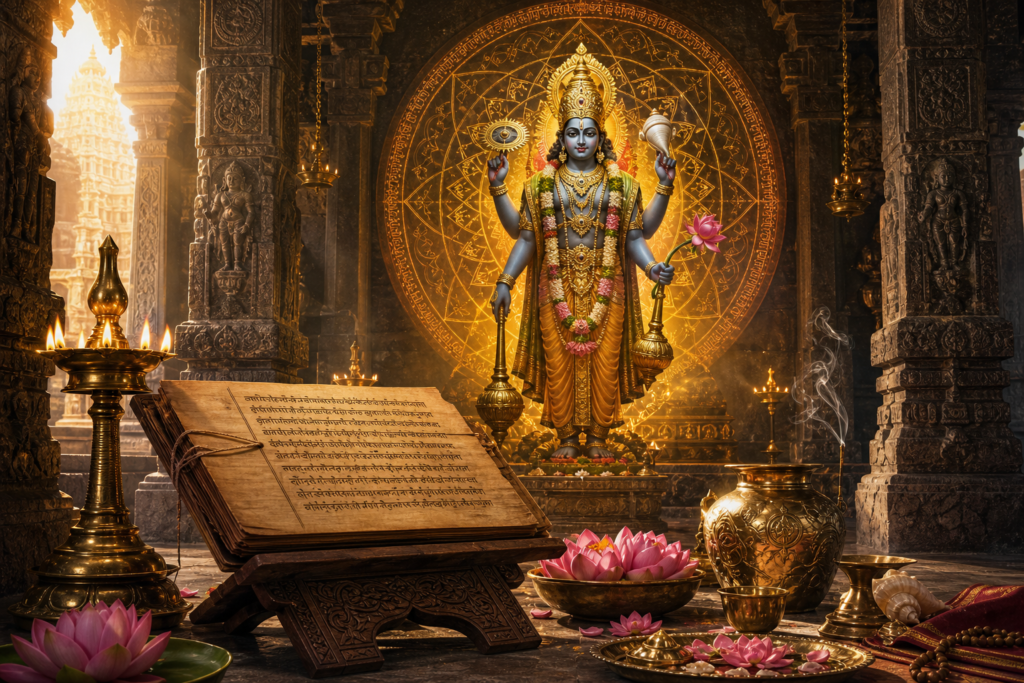
Ritual observances for Kurma Jayanti generally center on worship of Lord Vishnu, remembrance of Kurma Avatara, recitation of Vishnu-related stotras, vrata, charity, and temple visits where possible. Devotees may perform puja with flowers, tulasi leaves, lamps, incense, naivedya, and prayers for stability, protection, and spiritual clarity. In many homes, the day is approached with a mood of gratitude: the divine is honored not only as a rescuer in crisis, but as the unseen support beneath daily life.
The emotional appeal of Kurma Jayanti lies in its quiet realism. Human life often involves churning: responsibilities, conflicts, ambitions, doubts, and the search for meaning. The Samudra Manthan narrative does not deny tension; it shows that tension can produce wisdom and nectar when supported by divine steadiness and dharmic discipline. For devotees, Lord Kurma becomes a reminder that one need not abandon effort when life feels unstable. Instead, the first requirement is to recover the foundation: faith, patience, ethical conduct, and clarity of purpose.
Kurma Jayanti also supports the broader unity of dharmic traditions by emphasizing values shared across Hinduism, Buddhism, Jainism, and Sikhism: discipline, restraint, compassion, endurance, humility, and spiritual responsibility. While the festival is specifically Vaishnava in its theological focus, its deeper lessons are widely intelligible across dharmic thought. A stable mind, a disciplined life, and a commitment to truth are not sectarian values; they are civilizational values that sustain spiritual culture across traditions.
For 2026, the key date to remember is May 1 for Kurma Jayanti on Vaishakh Purnima. Devotees who follow regional traditions connected with Nirjala Ekadashi may observe it on June 25, 2026. The most practical approach is to follow one’s family tradition, temple calendar, or local panchang. This preserves both accuracy and continuity, especially in communities where lunar observances vary by region, sunrise rules, tithi timing, and inherited practice.
In its most refined meaning, Kurma Jayanti is not merely the commemoration of a divine incarnation; it is a meditation on what sustains the world. The Kurma Avatara teaches that the foundation may remain hidden, but it is never insignificant. The mountain can turn, the ocean can churn, and treasures can emerge only when there is something steady beneath them. That is the enduring lesson of Lord Kurma: dharma survives through strength that is patient, grounded, and quietly present.
Inspired by this post on Hindu Pad.



Leave a Reply
You must be logged in to post a comment.