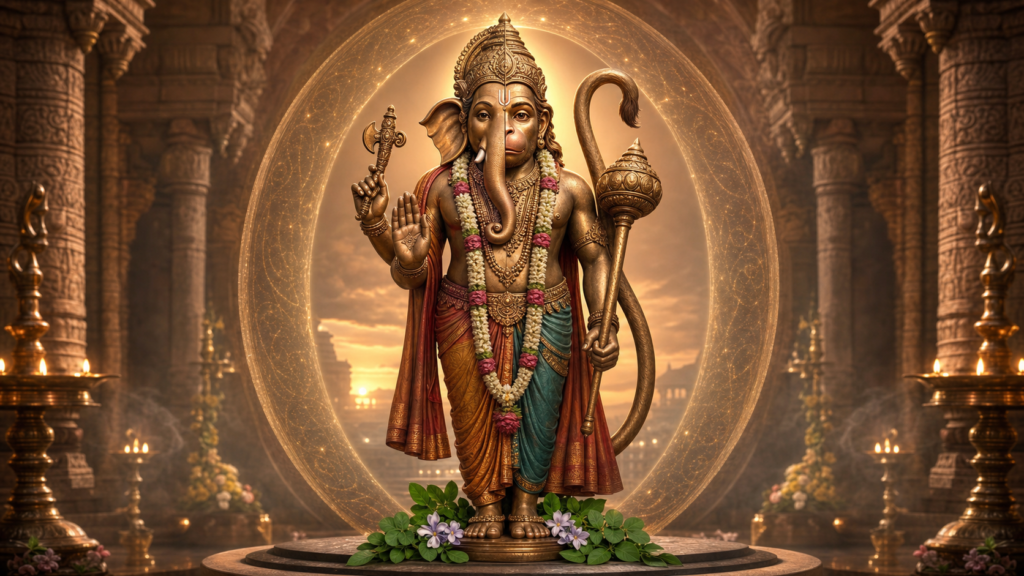
Matangi Devi, revered among the Mahavidyas, embodies the harmonizing qualities of Pārvatī while reflecting the luminous wisdom of Goddess Saraswati. In the Tantric tradition, she is often understood as the “Tantric Saraswati,” presiding over education, music, eloquence, and refined knowledge. The study of Matangi Mahatmyam highlights how devotion to this form of Devi cultivates learning, artistic excellence, and inner courage.
Within the Mahavidya framework, Matangi symbolizes the transformative force of śakti that refines speech (vak), clarifies intellect (buddhi), and channels creativity. Iconography often associates her with the veena and the parrot, signifying mastery over sound, rhythm, and articulate expression. As an aspect resonant with Saraswati, Matangi guides seekers toward disciplined study, clarity of thought, and ethical use of knowledge, while her linkage with Pārvatī underscores compassion and protective grace.
Devotional engagement with Matangi Devi is traditionally believed to foster vak-siddhi (the power of effective speech), steady concentration, and an intuitive grasp of the arts and sciences. Practitioners describe an increase in mental clarity, confidence in scholarship, and resilience in the face of adversity. In this way, Matangi’s grace is said to safeguard devoteesboth by tempering external challenges and by dissolving internal obstacles such as doubt, distraction, and fear.
Aligned with a dharmic ethos, Matangi sādhanā emphasizes a balanced path: regular study, sincere japa, respectful conduct toward teachers and elders, and cultivation of aesthetic sensitivity through music and literature. Offerings symbolically linked to learningsuch as recitation, scriptural reflection, and the practice of the artsbecome means to internalize her blessings. Such practices are approached as disciplined, compassionate, and inclusive, ensuring knowledge serves truth and societal harmony.
Across the broad tapestry of dharmic traditionsHinduism, Buddhism, Jainism, and Sikhismthere is a shared reverence for vidyā (sacred knowledge) and the ethical refinement it inspires. Matangi’s significance naturally resonates with this unity: the pursuit of wisdom, respectful dialogue, and the responsible use of speech. In contemporary contexts, this unity encourages learners, artists, and professionals to see knowledge not merely as a tool for success but as a pathway to collective well-being.
In protective aspects, Matangi Devi is invoked for courage, steadiness, and discernment in confronting challenges. Traditional narratives interpret “enemies” not only as external difficulties but also as inner tendenciesanger, arrogance, and confusionthat undermine progress. Through devotion and disciplined practice, seekers cultivate the strength to transform these tendencies into clarity, compassion, and moral resilience.
For students, educators, researchers, and creative practitioners, Matangi Mahatmyam offers a practical spiritual grammar: sharpen the mind, refine expression, and align knowledge with responsibility. Her worship becomes a gentle discipline for excelling in education and the arts while maintaining humility and ethical purpose. This vision dovetails with a broader cultural aspiration to harmonize learning with service.
Viewed holistically, the Significance of Matangi Mahavidya lies in a threefold promise: illumination of intellect, refinement of expression, and fortification of courage. By integrating focused study, contemplative practice, and compassionate action, devotees honor Matangi Devi as a living source of wisdom and musicone that protects, ennobles, and unites diverse seekers on a shared path of dharma.
Inspired by this post on Hindu Pad.