Why is Goddess Kushmanda known as Ashtabhuja? The title Ashtabhuja, literally “eight-armed” (ashta = eight, bhuja = arms), refers to the iconography in which this revered Navadurga form of Shakti manifests with eight hands, each bearing a distinct emblem of cosmic function and spiritual guidance. Within Hindu philosophy and devotional practice, this form offers a comprehensive visual theology of creation, protection, and inner awakening.
The very name Kushmanda encodes her cosmological role. Traditional etymology reads it as Ku (minute), Ushma (heat/energy), and Anda (cosmic egg), pointing to the subtle spark that catalyzes the universe from the primordial egg. Textual and ritual memory situate her radiance in relation to Surya; she is celebrated as the sustainer of vitality who illumines life through warmth, nourishment, and order.
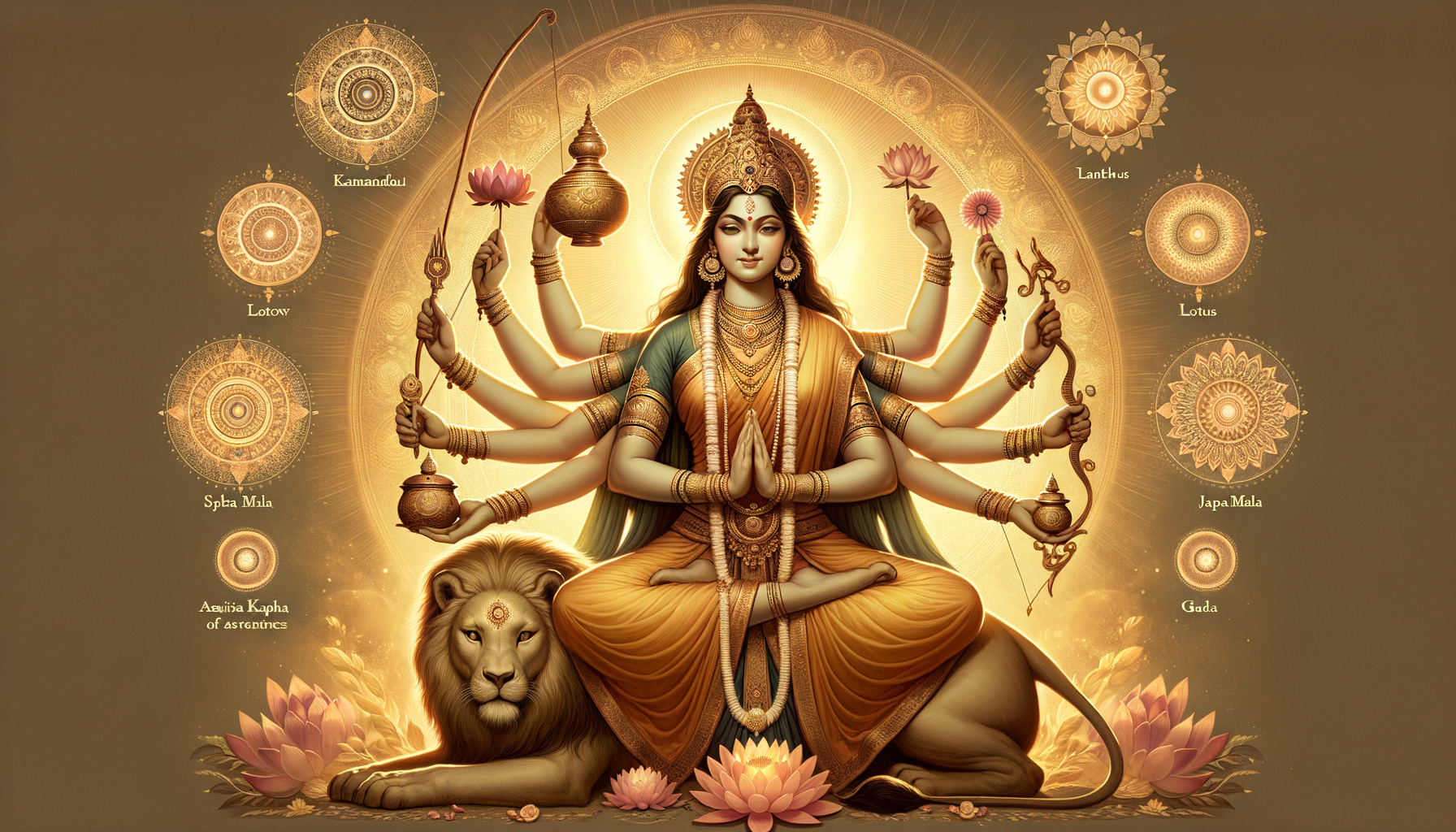
Ashtabhuja depiction shows Goddess Kushmanda seated or riding a lion, signaling courage and dharmic sovereignty. The eight arms do not merely multiply power; they articulate a complete map of spiritual and worldly stewardshipholding together creation (srishti), preservation (sthiti), and transformative dissolution (samhara) under the aegis of Devi’s compassion and wisdom.
Traditions commonly describe the eight implements as follows: the kamandalu evokes purity and the genesis of life; the dhanush (bow) and baan (arrow) together symbolize disciplined intent and protective action; the lotus signifies purity unfolding amidst change; the amrit kalash represents healing, nourishment, and renewal; the jap mala conveys sustained practice, mantra, and the measured rhythm of time; the chakra stands for cosmic order and the safeguarding of dharma; and the gada (or in some variants, the trishula) communicates fortitude and the power to remove obstacles. Collectively, these attributes present a holistic grammar of spiritual life.
The eight arms also resonate with the eight directions (ashta dik), affirming Devi’s presence as an all-encompassing guardianship. In contemplative reading, the form suggests that clarity, discipline, compassion, resilience, balance, devotion, protection, and wisdom must radiate in every direction of one’s life to sustain harmony within the larger cosmos.
Another classical lens views Ashtabhuja through the framework of the ashta-siddhis (anima, mahima, garima, laghima, prapti, prakamya, ishitva, vashitva). While often described as extraordinary attainments, their deeper import for practitioners is ethical and interior: the eight arms become reminders of mastery over impulses, alignment with dharma, and the cultivation of steady awareness rather than a pursuit of occult powers.
In the Navaratri cycle, Kushmanda is venerated on the fourth day. Devotees often meditate on the sun-like effulgence of Shakti, offer light (deepa), and reflect on the eight virtues implied by her arms. This contemplative focus supports emotional balance, fortifies resolve, and anchors daily action in compassionate claritykey aims outlined across Hindu sadhana.
Accounts from practitioners frequently attest that visualizing Ashtabhuja during prayer creates a grounded sense of protection and purpose. The symbolism provides a relatable framework: intention (bow and arrow), purity (lotus, kamandalu), disciplined remembrance (jap mala), healing and sustenance (amrit kalash), and the guardianship of order (chakra, gada). In lived devotion, these symbols translate into steady conduct, resilient hope, and service to the common good.
Read in a broader dharmic light, Ashtabhuja speaks to shared values across Hinduism, Buddhism, Jainism, and Sikhism. Its emphasis on ethical discipline, compassion, self-mastery, and luminous awareness converges with the wider Indic commitment to non-violence, service, and the cultivation of wisdom. Rather than asserting a singular path, the form of Kushmanda honors plurality, encouraging seekers in diverse traditions to realize common virtues while maintaining their distinct practices.
Thus, Goddess Kushmanda is known as Ashtabhuja because the eight-armed icon becomes a concise, profound teaching: creation is sustained by virtue; protection is anchored in dharma; and inner transformation requires disciplined practice. For devotees observing Navaratri and for students of Hindu philosophy, this form offers a complete, integrative guide to living with clarity, courage, and compassion under the radiant grace of Shakti.
Inspired by this post on Hindu Blog.