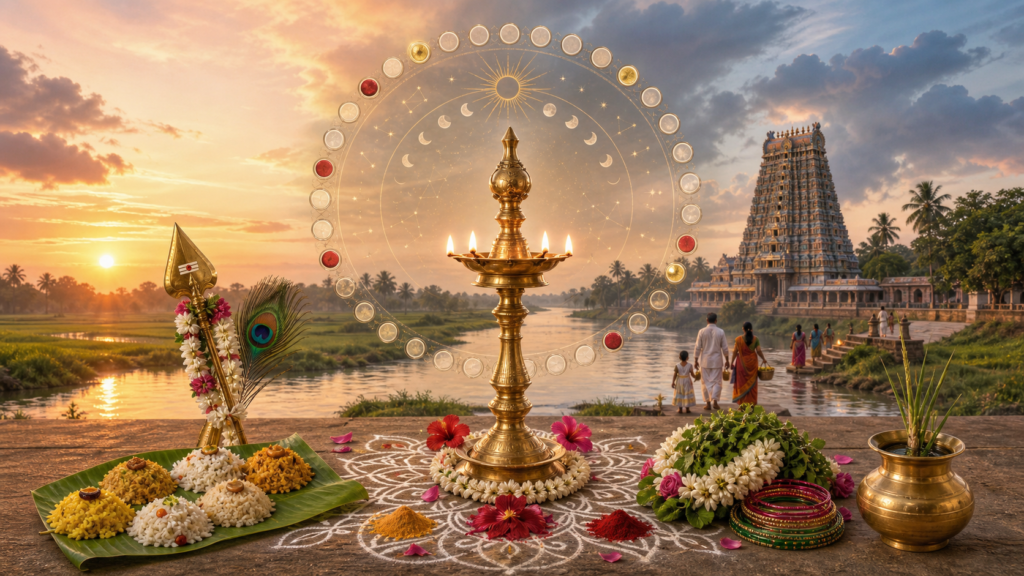
Friday, December 26, 2025, in the Hindu calendar (Panchang) marks Shukla Paksha Sashtithe sixth lunar day during the waxing phase of the moonin most regions. The tithi remains Shukla Paksha Sashti until 10:00 AM on December 26, after which it transitions to Shukla Paksha Saptami, the seventh lunar day of the bright fortnight.
This tithi sequenceSashti followed by Saptamiguides daily observances, vrata planning, and temple visits for many households. Those who wish to align puja or sankalpa with Sashti typically complete core rituals before 10:00 AM, while activities associated with Saptami are favored thereafter. Such mindful timing is a longstanding feature of the Daily Hindu Calendar and supports intentional scheduling for spiritual practices.
Within the broader Panchang framework, auspicious windows (often referred to as Shubh Muhurat) on a day like this are interpreted with attention to the ongoing tithi and the waxing (Shukla Paksha) momentum, which traditionally supports initiatives related to growth, learning, and renewal. Exact Shubh Muhurat segments, as well as Nakshatra and Rashi details, vary by region and almanac, and are best verified with a local Panchang or trusted astrologer.
The movement from Shukla Paksha Sashti to Saptami also carries gentle thematic cues. Sashti is widely associated with steady effort and disciplined progress, while Saptami in the bright fortnight is often considered propitious for initiating undertakings that benefit from clarity and sustained energy. Many practitioners find that structuring the day around this transition fosters calm focus in the morning and purposeful action through the afternoon.
As with all Panchang-guided observances, context matters. Local sunrise, regional calculations, and family traditions inform how communities interpret and apply the tithi change. Engaging with these nuances strengthens a living relationship with the Hindu calendar and honors intergenerational wisdom around timekeeping and sacred rhythm.
Importantly, lunar observances such as these hold resonances across dharmic traditionsHinduism, Buddhism, Jainism, and Sikhismwhere reverence for cyclical time encourages reflection, compassion, and unity in spiritual diversity. Recognizing common threads in these practices can deepen mutual respect and nurture a shared commitment to harmony.
Summary for December 26, 2025 (most regions): Shukla Paksha Sashti tithi until 10:00 AM; thereafter Shukla Paksha Saptami. For precise Shubh Muhurat, Nakshatra, and Rashi, consult a regional Panchang to align rituals and plans with local timings.
Inspired by this post on Hindu Blog.