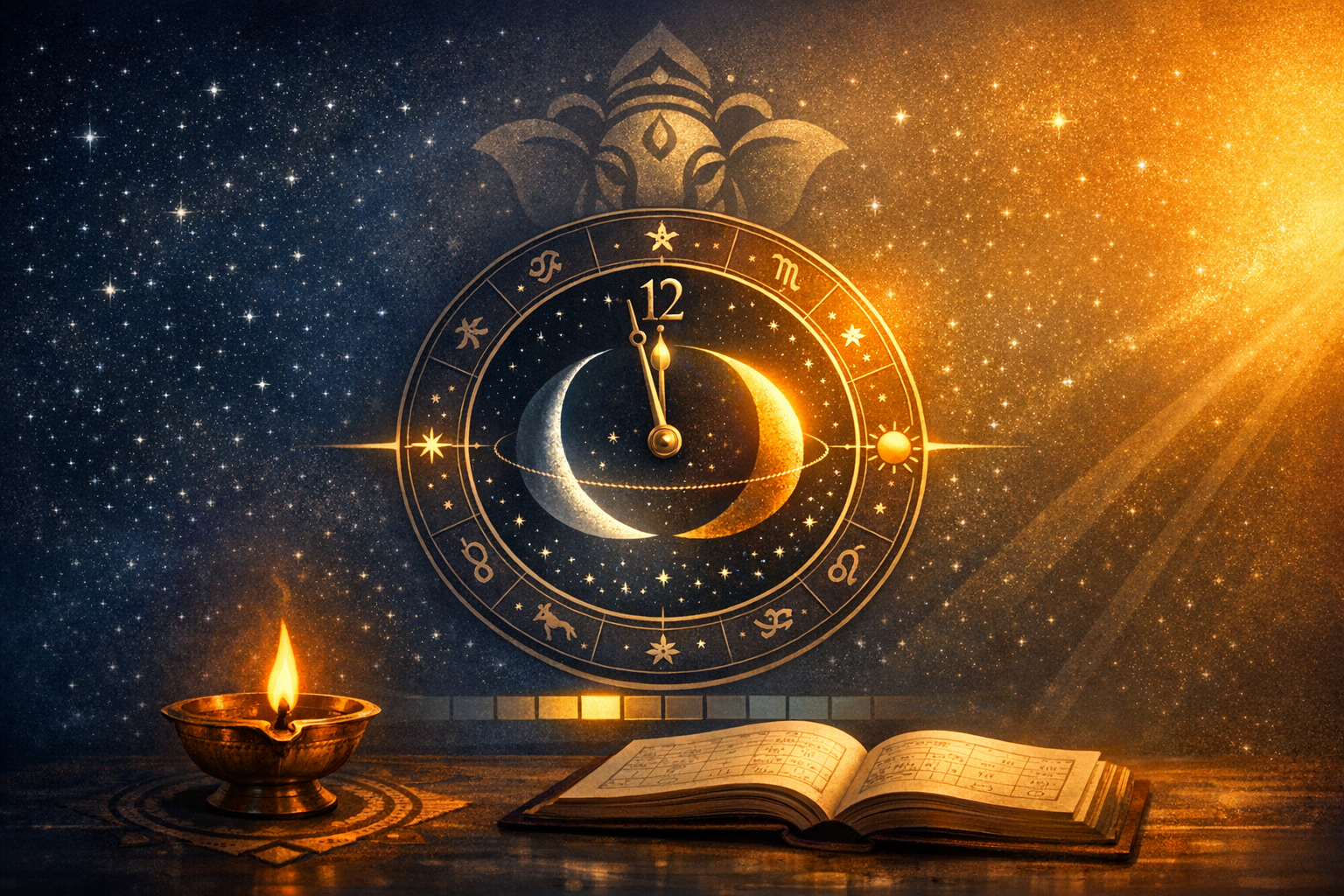
On Monday, April 6, 2026, most regional Panchangs record Krishna Paksha Chaturthi tithi—the fourth lunar day of the waning phase—until 11:59 AM on April 6. From that moment onward, the day transitions to Krishna Paksha Panchami tithi, the fifth lunar day of the dark fortnight. This tithi shift is central to how observances are planned and is a prime example of why precise, time-aware Panchang usage matters.
In Vedic calendrical science, a tithi denotes the 12-degree longitudinal separation between the Sun and the Moon and serves as the primary unit of ritual time in the Hindu calendar. The lunar month divides into Shukla Paksha (waxing) and Krishna Paksha (waning), each comprising fifteen tithis. Day-identification in many traditions follows the tithi prevailing at sunrise, yet specific vratas and temple rites may instead follow the tithi prevailing at a key moment (for example, moonrise for certain Ganesha observances). These rule-sets, inherited from Dharmashastra and Siddhanta traditions, account for the observed regional variations in practice.
Krishna Paksha Chaturthi, associated in many regions with the Sankashti (Sankatahara) vrata for Shri Ganesha, is traditionally honored for its auspicious capacity to remove obstacles (vighna-nivritti) and cultivate steadiness in action (dharma-niṣṭhā). Practitioners often maintain a fast and conclude it after sighting the Moon, offering arghya and simple naivedya to Ganesha before partaking in prasad. Because this vrata is determined in numerous traditions by the tithi at moonrise, communities may differ on whether observance attaches to the day when Chaturthi prevails at sunrise or the evening on which Chaturthi prevails at moonrise. Where Chaturthi lapses before moonrise—as it does here after 11:59 AM—customary guidance in several regions is to consult the local Panchang or family priest to determine whether the fast attaches to the prior evening.
Following the tithi change at 11:59 AM on April 6, Krishna Paksha Panchami prevails. Panchami in the waning phase is generally considered a time conducive to quiet study, remedial worship, and consolidating tasks initiated earlier in the fortnight. While the major all-India Panchami festivals (such as Nāga Panchami) arise in different months and phases, daily Panchang users still mark Panchami as useful for measured progress, procedural reviews, and mindful routines, especially when aligned with favorable muhurats.
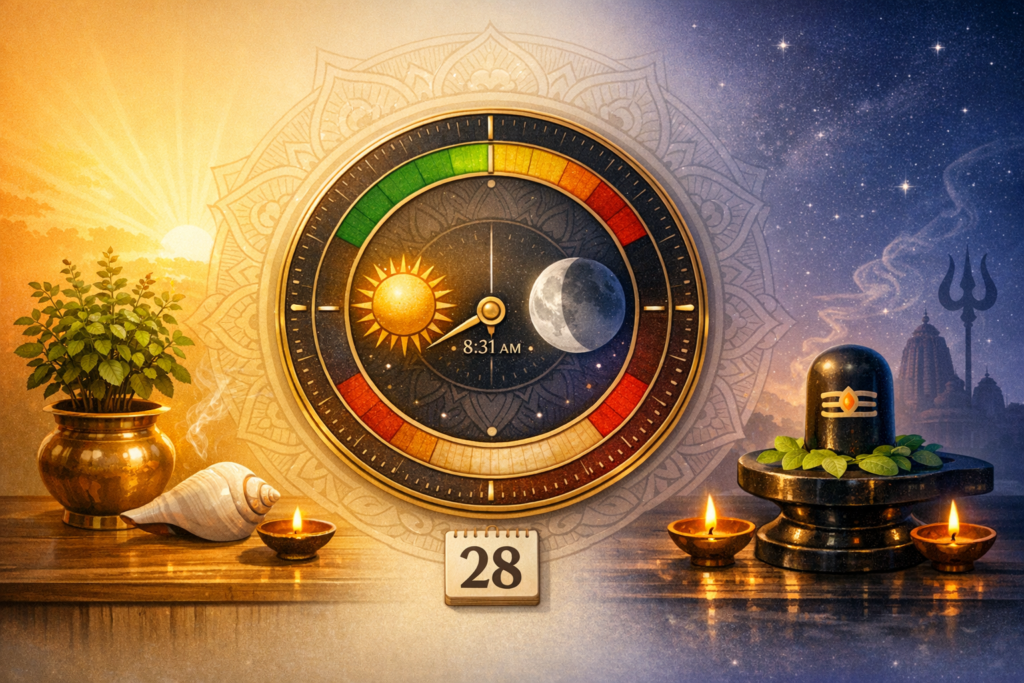
Good Time (Auspicious Muhurta) is selected by more than the tithi alone; Vara (weekday), Nakshatra, Yoga, Karana, and the day’s inauspicious segments (Rahu Kalam, Yamaganda, Gulika Kalam, and Varjyam where relevant) all matter. A practical approach for householders is to begin with tithi and weekday suitability, then refine with Nakshatra and avoidance of Rahu Kalam and Yamaganda. Abhijit Muhurta—centered on local solar noon—is traditionally potent for success-oriented tasks (except on certain days where textual exceptions apply). For journeys and business openings, auspicious Choghadiya during daytime or nighttime can further sharpen selection.
Because Rahu Kalam and related segments depend on the exact duration of daylight at one’s location, the reliable method is computational: divide the time between local sunrise and sunset into eight equal parts. On Mondays, Rahu Kalam occupies the second part of the day; Yamaganda and Gulika Kalam also occupy fixed parts depending on the weekday. This algorithmic approach, standard across Panchang traditions, ensures accuracy without assuming a uniform sunrise (for instance, the oft-cited “7:30–9:00” shorthand presumes a 6:00 AM sunrise and is therefore location-dependent).
Nakshatra refers to the Moon’s placement among the 27 stellar sectors and is crucial for fine-tuning muhurta. Chandra Rashi (the Moon’s sign) complements this by indicating the rashi context of the lunar mind, which many use to guide interpersonal, financial, and travel decisions. Both Nakshatra and Rashi can change within a single civil day; hence, consulting an accurate, location-specific Panchang or trusted almanac is essential for April 6, 2026, especially around the tithi transition at 11:59 AM on April 6.
Yoga and Karana, additional elements of the Panchang’s pañcāṅga schema, nuance the day’s tone. Yoga, derived from the combined longitudes of Sun and Moon, is used to infer overarching qualitative tendencies for the day (e.g., auspicious for diplomacy or better for focused, individual effort). Karana, a half-tithi division, is pivotal for action-level timing (such as beginning a journey, signing documents, or initiating homa). Even when specific values differ regionally due to ayanāṁśa choices (e.g., Lahiri, Raman, Krishnamurti), the interpretive method remains constant.
Regional practice and computational frameworks produce understandable variations across published Panchangs. Differences stem from: (1) sunrise definition (upper limb vs. center, refraction corrections), (2) astronomical ephemerides and ayanāṁśa, and (3) local longitude/latitude and time zone effects. As a result, two almanacs may agree on the tithi shift (here, 11:59 AM) yet propose different optimal windows for rites or travel based on local solar noon and Nakshatra boundaries. This is not a contradiction but a feature of a living, place-conscious calendrical tradition.
In lived experience, aligning daily activity to the Panchang often cultivates calm and intentionality. Householders report that even modest synchronization—avoiding Rahu Kalam for first-time filings, choosing Abhijit Muhurta for crucial calls, or offering a brief Ganesha prayer on Chaturthi—adds a reflective cadence to the day. Students and professionals alike find that Panchang-aware planning channels effort more steadily, especially during the reflective arc of Krishna Paksha.
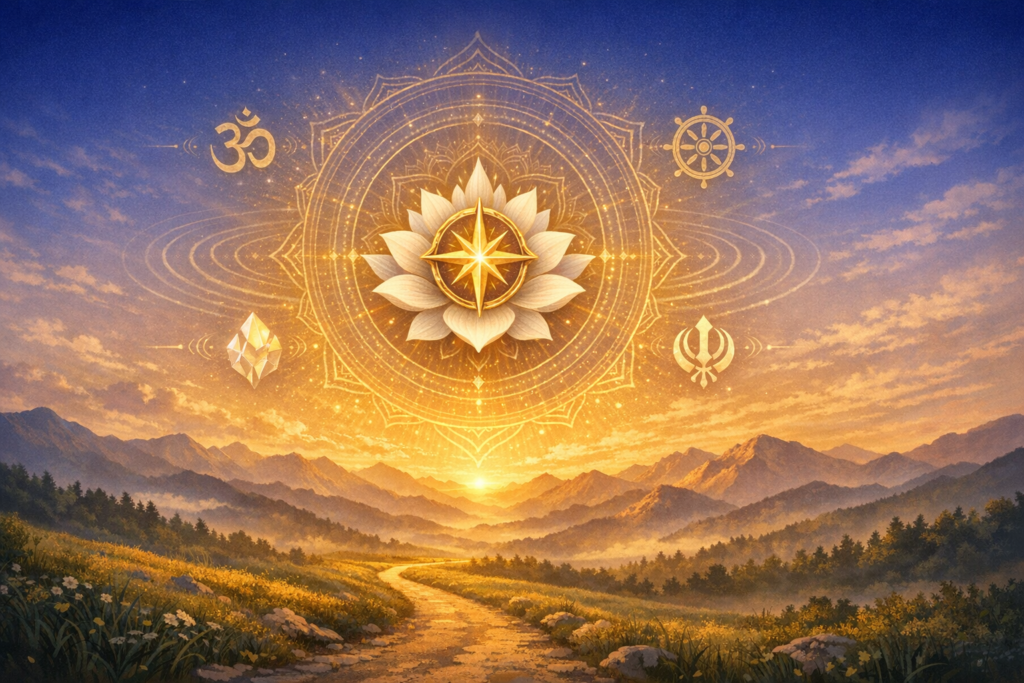
The Panchang’s lunar logic also resonates across the broader dharmic family. While specific observances and calendars vary—Hindu communities consult regional almanacs; many Jains synchronize vratas by tithi; several Buddhist traditions observe lunar uposatha cycles; Sikhs maintain the Nanakshahi calendar with its own structure—the shared reverence for cyclical time, self-discipline, and remembrance fosters unity in diversity. The Panchang thus becomes a bridge: it preserves particular customs while nurturing harmony with Buddhist, Jain, and Sikh rhythms of mindful living.
Practical guidance for April 6, 2026 therefore includes: (1) recognize Krishna Paksha Chaturthi tithi until 11:59 AM on April 6; thereafter, observe the day as Krishna Paksha Panchami; (2) if undertaking a Ganesha-related vrata typically tied to Chaturthi moonrise, confirm local moonrise tithi and follow the convention of one’s community or guru-paramparā; (3) calculate Rahu Kalam and related segments from local sunrise/sunset rather than using fixed clock times; (4) refine important undertakings with Nakshatra, Yoga, and Karana as indicated by a reliable, location-specific Panchang; and (5) hold the ethos of shared dharmic values—clarity, compassion, and steadiness—at the heart of all observances.
In summary, April 6, 2026 offers a textbook illustration of how a mid-day tithi shift shapes ritual choice and everyday planning. By contextualizing tasks within the Panchang’s five-fold lens—Tithi, Vara, Nakshatra, Yoga, Karana—and respecting local computations, one navigates the day with precision and poise. The result is not dogma but disciplined freedom: the calendar serves as a subtle guide to right timing, while intention and devotion complete the picture.
Inspired by this post on Hindu Blog.