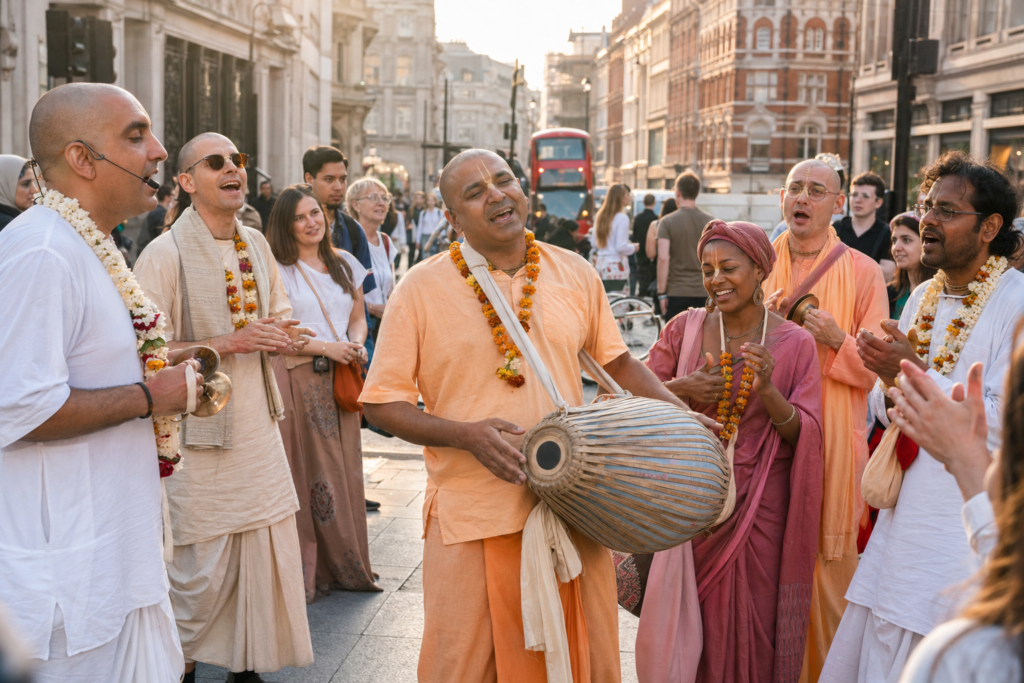
Memorizing shlokas functions as a contemplative discipline that gently occupies mental space with sacred sound. When a verse is learned by heart, its cadence reverberates throughout the day, displacing intrusive thoughts and redirecting attention toward dharma. Across Hinduism, Buddhism, Jainism, and Sikhism, similar practices of mantra, sutra, stavan, and Nitnem recitation illustrate a shared commitment to mindful repetition and ethical living.
The process typically moves from challenge to delight. At first, committing Sanskrit lines to memory requires concentration and method; once internalized, repetition becomes a source of calm, focus, and subtle joy. This rhythm of study and recall supports cognitive focus, emotional balance, and the steady cultivation of bhakti and viveka.
Everyday life readily accommodates such learning. A mother may recite while cooking, another may keep a verse sheet on kitchen tiles to review while washing utensils, and a commuter may place a discreet card on a motorcycle or backpack to glance at during pauses in travel. Some communities even share verses over brief phone sessions, turning ordinary moments into opportunities for chanting and reflection.
These simple methods demonstrate that consistent, bite-sized practice matters more than uninterrupted hours. Pairing a single shloka with a daily activitystirring a pot, waiting for water to boil, or walking to a bus stopreinforces recall through context cues. Over days and weeks, the verse begins to arise spontaneously, creating an inner soundtrack of mantras that steadies attention.
Memorization also strengthens pronunciation and comprehension, especially when supported by slow chanting, careful listening, and basic Sanskrit aids. Many find it helpful to mark pauses, underline sandhi junctions, and align breath with meter, transforming rote repetition into mindful recitation. Such care deepens meaning, whether the verse is from the Bhagavad Gita, Upanishads, or devotional stotras.
Beyond personal benefit, shared recitation builds community. Families, friends, and study circles who learn together report greater cohesion, mutual encouragement, and a sense of collective uplift. The practice thus serves as a unifying thread within dharmic traditions, honoring diversity of paths while celebrating a common discipline of sacred sound.
In sum, memorizing shlokas is a practical, time-tested way to cultivate clarity, resilience, and devotional focus in the midst of daily responsibilities. A single verse carried in the heart can gently guide the mind throughout the dayturning ordinary routines into moments of remembrance, gratitude, and inner joy.
Inspired by this post on Dandavats.