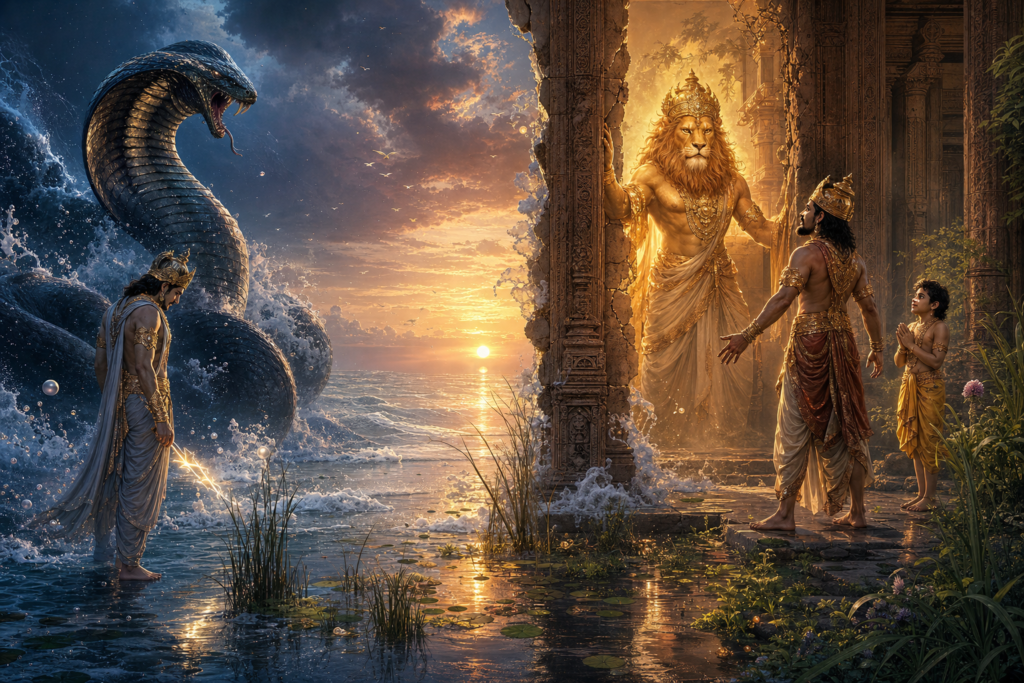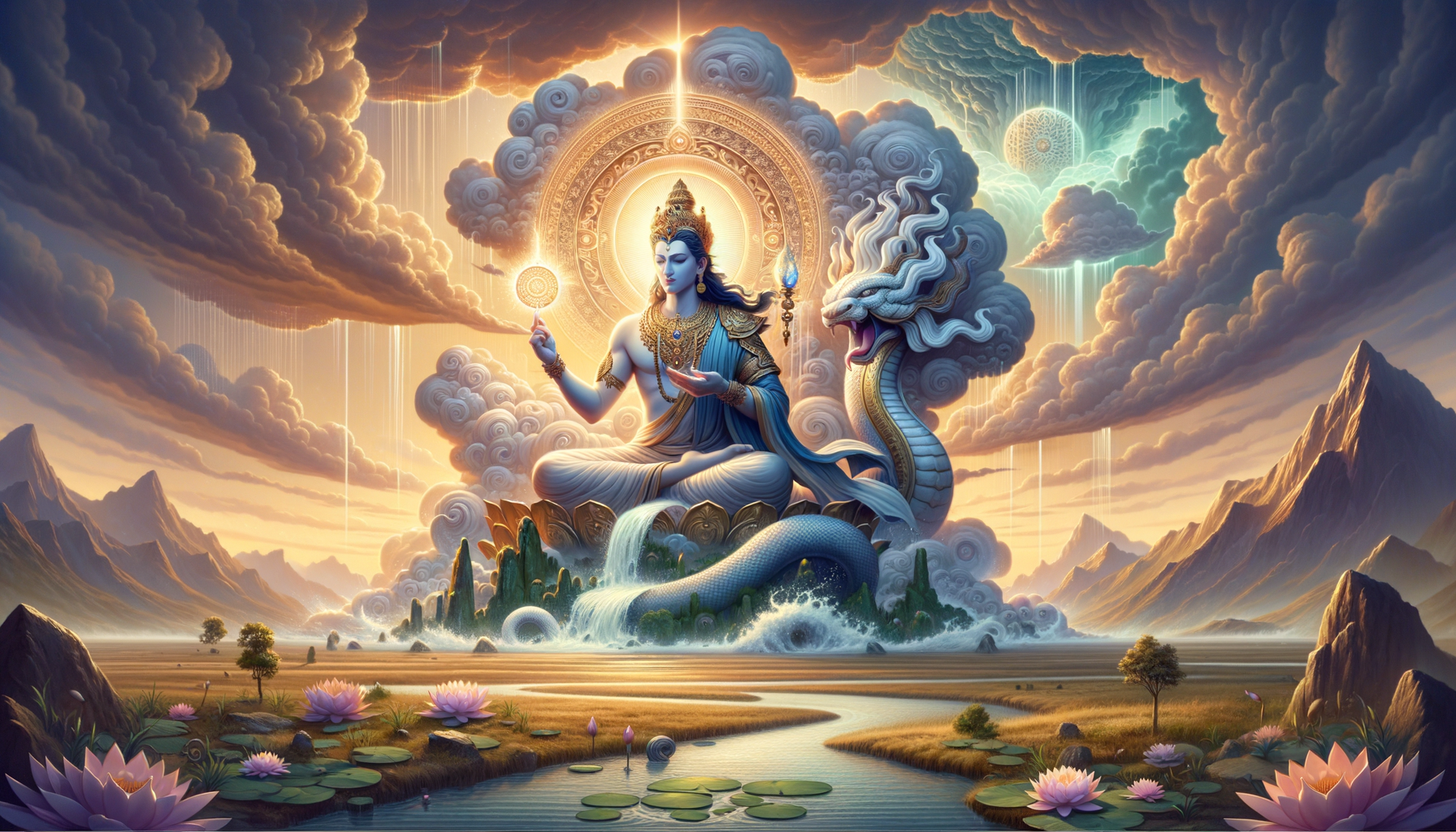
Vritrasura Samhara Murthy is an honorific that recalls Indra’s renowned victory over Vritrasura through the power of the Vajrayudha. In this classical narrative, the leader of the Devas restores balance by overcoming a force of obstruction, thereby earning a title that commemorates the decisive removal (samhara) of adversity.
According to the tradition, a formidable asura named Vrita (Vritrasura) rose in strength and began to harass the Devas, challenging cosmic order and the rhythms of life. Indra confronted this disruption and, armed with the Vajrayudha, prevailed. The account, recognized across Vedic and Purāṇic literature, positions Indra not merely as a warrior deity but as a restorer of ritaorder aligned with dharma.
In literary and ritual contexts, Vritrasura symbolizes constriction, drought, and the damming of life-giving flows. Indra’s Vajrayudha represents enlightened resolve, disciplined strength, and the clarity needed to pierce through stagnation. The epithet Vritrasura Samhara Murthy thus signifies a manifest force that removes inner and outer impediments so that well-being and harmony can return.
This theme resonates across dharmic traditions. The overcoming of Vritra-like obstacles mirrors the Buddhist transformation of kleshas (afflictions), the Jain discipline that subdues kashayas (passions), and the Sikh emphasis on transcending haumai (ego). Read together, these insights affirm a shared civilizational understanding: genuine victory lies in dissolving the conditions that give rise to suffering, restoring balance, and fostering compassion.
As a reflective guide for daily life, the narrative invites readers to recognize personal “Vritras”habitual fears, inertia, or conflictthat constrain growth. In this light, Vajrayudha becomes a metaphor for constructive action: clarity in judgment, courage in adversity, and self-discipline in practice. Many find that when intention aligns with dharma, even entrenched obstacles begin to yield.
Historically, the prominence of Indra evolved over time, yet the symbolism of Vritrasura Samhara Murthy endures in scripture, temple recitations, and cultural memory. By placing moral courage at the center of the tale, the tradition emphasizes responsibility toward social harmony and ecological balanceconcerns that remain pressing today.
Viewed as a study in Dharma and Adharma, the episode underscores a perennial insight: when communities cultivate truthfulness, restraint, generosity, and mutual respect, obstructive forces lose ground. The story’s power lies not in glorifying conflict but in celebrating the restoration of order, compassion, and shared flourishing among all beings.
Ultimately, Vritrasura Samhara Murthy stands as a unifying motif in the broader dharmic tapestryencouraging the faithful and the curious alike to transform adversity into insight, and insight into service.
Inspired by this post on Hindu Pad.