Hindu scriptures present layered narratives where karma, dharma, and spiritual evolution interweave across yugas. Within this tapestry, Surpanakha emerges as a profound lens to examine desire, consequence, and the possibility of transformation. Read alongside the Ramayana and Puranic traditionsincluding discussions associated with the Brahma Vaivarta Puranaher journey illuminates how human longing can become a catalyst for ethical insight and inner refinement.
In the Ramayana, Surpanakha’s impassioned desire for Rama and the subsequent rebuke mark a pivotal turning point. Her encounter, rejection, and the punitive response do more than propel the epic’s plot; they foreground the delicate boundaries of dharma in social and personal realms. The narrative underscores how unchecked longing can transgress propriety, and how such transgression reverberates through individual lives and the wider moral order.
A karmic reading deepens this insight. Desire (kāma) is not vilified outright in Hindu thought; rather, it is understood as needing guidance from dharma and self-restraint. Surpanakha’s actions, seen through this lens, illustrate how impulses disconnected from discernment can invite consequences, while also opening a doorway to learning, humility, and eventual inner clarity. Such a reading shifts attention from punishment toward the possibility of growth.
Later Puranic and regional retellingsamong them traditions that draw from or are associated with the Brahma Vaivarta Puranaoften recast epic figures to highlight spiritual maturation across lifetimes. In these interpretive currents, Surpanakha’s longing is not the end of her story but a stage in a longer karmic arc: a movement from impetuous desire toward refined aspiration, and from outward fixation toward inward devotion. This evolution gestures toward “divine fulfillment” understood as inner transformation rather than external attainment.
Readers frequently sense an emotional tug in Surpanakha’s narrative: the sting of rejection, the vulnerability of desire, and the human search for belonging. That resonance makes the account relatable, not as a defense of transgression, but as an invitation to examine where longing becomes grasping and where affection can be anchored in dignity and wisdom. The story becomes a mirrorencouraging compassion without condoning harm, and urging discipline without erasing empathy.
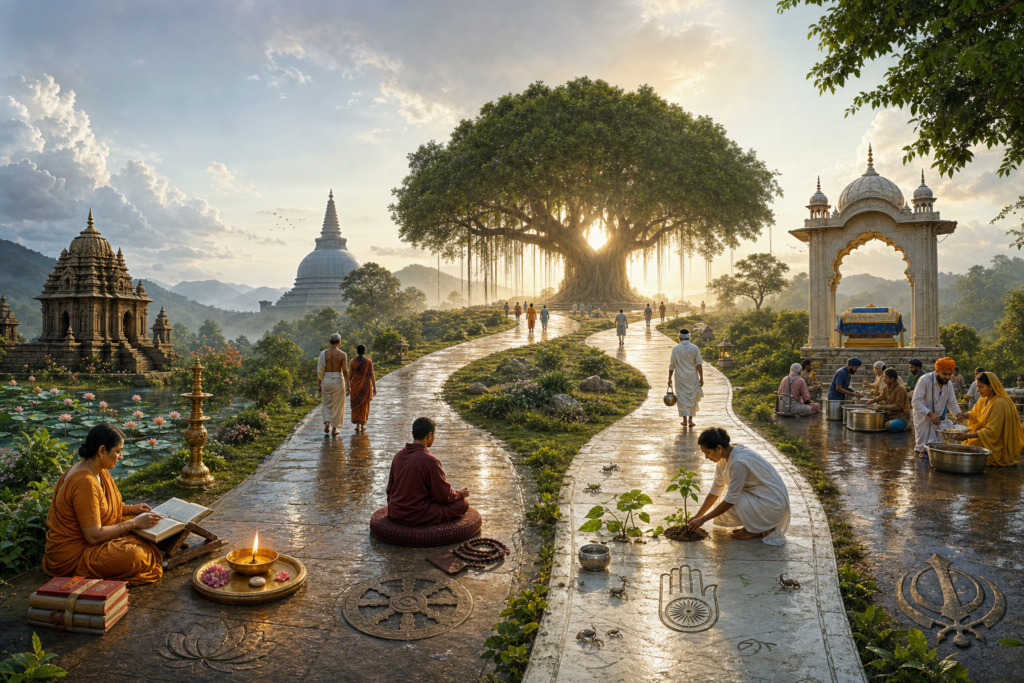
Viewed through a wider dharmic lens, the themes at playkarma, self-mastery, and ethical livingspeak to shared insights across Hinduism, Buddhism, Jainism, and Sikhism. The karmic law, the emphasis on ahiṁsā and right conduct, and the call to truthful, disciplined living suggest a convergent moral horizon. Rather than pitting traditions against one another, Surpanakha’s journey invites a unifying reflection: diverse paths can guide toward the same principles of responsibility, compassion, and inner freedom.
The notion of continuity across yugas and births underscores personal agency: choices refine character, and character shapes destiny. In this sense, Surpanakha’s role extends beyond a single episode in the Ramayana to an emblem of how souls learn over time. The movement from adharma to dharma is gradual yet real, and the scriptures portray this trajectory not as linear triumph but as iterative correction and renewal.
Practically, the narrative encourages channeling desire into sādhanācultivating restraint, clarity, and care for others. It points to everyday disciplines found across dharmic traditions: mindfulness in speech, compassion in action, and steadiness in practice. Such disciplines do not deny emotion; they refine it, aligning aspiration with responsibility and personal fulfillment with collective well-being.
Read together, the Ramayana and Puranas function as pedagogical companions. They do not merely recount events; they educate conscience, showing how justice and mercy can coexist. In foregrounding the complexity of human motivation, they honor plural paths while affirming a shared ethical grammaran ideal echoed in the multi-vocal spirit of India’s dharmic traditions.
Ultimately, Surpanakha’s karmic odysseyinterpreted through the Ramayana and associated Puranic reflections such as those linked to the Brahma Vaivarta Puranastands as a study in transformation. It charts a passage from unexamined desire to discerning devotion, from immediate reaction to reflective responsibility. In that movement lies the story’s enduring relevance: a reminder that every encounter with longing can become a step toward wisdom, unity, and inner liberation.
Inspired by this post on Hindu Blog.