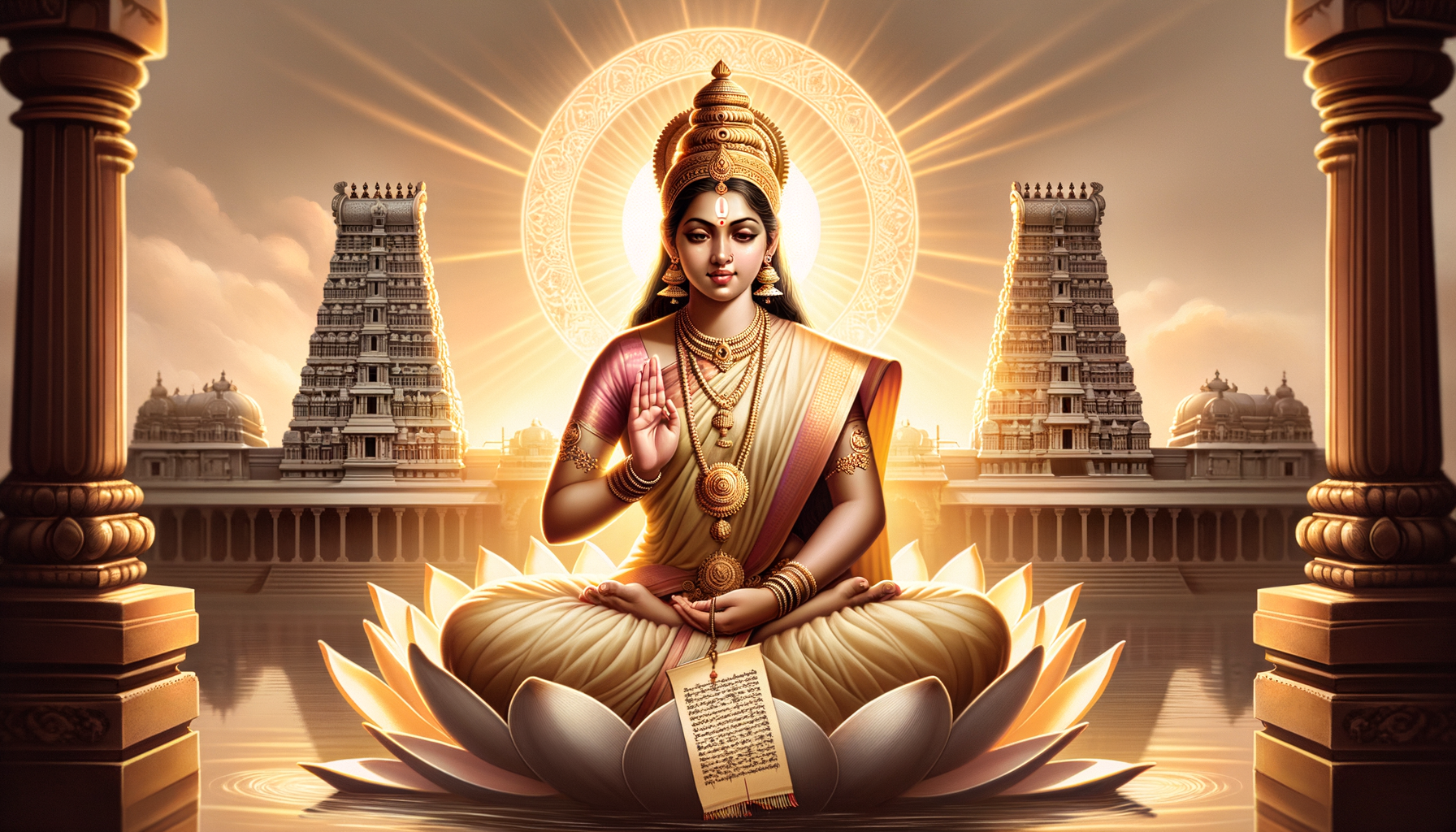
The Mooka Panchashati is a celebrated 500-verse Sanskrit hymn dedicated to Goddess Kamakshi of Kanchipuram. Tradition reveres Mooka Kaviremembered as a mute poet who, through the Goddess’s compassion, found a miraculous voice in poetryfor composing this luminous work that praises her divine form, boundless grace, and sovereign power. As a classic of Hindu scriptures and bhakti literature, it remains a touchstone for devotional contemplation and sacred aesthetics.
In the devotional memory of South India, the hymn stands as an exemplar of how intense surrender refines speech into mantra. The narrative of Mooka Kavi’s transformation is not merely hagiographic; it functions as an enduring metaphor for the way inner silence may ripen into insight when attuned to the Divine Feminine. Readers encounter verses that are accessible as prayer and profound as philosophy, a union characteristic of the bhakti tradition.
The Kamakshi Amman Temple in Kanchipuraman ancient and renowned Hindu templehonors Ma Kamakshi (Ma Shakti Devi) as the compassionate center of Shakti worship. Within the sacred geography of Kanchipuram, this temple anchors living pilgrimage, ritual practice, and classical learning. For many, the temple and the Mooka Panchashati illuminate each other: the shrine offers the living presence of the Goddess, and the hymn offers an interior pilgrimage through Sanskrit sound and meaning.
Poetically, the Mooka Panchashati weaves rich imagery of Kamakshi’s rupa (form), karuṇā (compassion), and śakti (power), while guiding devotees toward contemplative stillness. The verses invite meditation on beauty, ethics, and metaphysics in equal measure, revealing Kamakshi as both the intimate Mother and the transcendent ground of reality. Without requiring specialized training, the hymn gently initiates readers into the philosophical cadence of Hindu scriptures and the devotional heart of ancient Hindu texts.
For contemporary seekers, practical engagement can be simple and transformative: reciting a few verses daily, reflecting on their meanings, and, when possible, integrating temple darśan with home worship. Many devotees report that regular contemplation of these hymns nurtures emotional balance, clarity of purpose, and a felt sense of protectionbenefits consistent with the bhakti tradition’s promise of inner serenity and resilience.
Importantly, the devotional virtues celebrated in the Mooka Panchashaticompassion, wisdom, humility, and unityresonate across dharmic traditions. While honoring Kamakshi as Shakti, the hymn echoes values cherished in Hinduism, Buddhism, Jainism, and Sikhism: reverence for truth, nonviolence, inner discipline, and the recognition of a higher reality that binds all beings. Such shared principles encourage respectful dialogue and a spirit of togetherness within India’s diverse spiritual tapestry.
As a living bridge between temple, text, and practice, the Mooka Panchashati helps preserve Sanskrit heritage while keeping devotion dynamically relevant. Whether approached as literature, theology, or daily prayer, it offers a clear pathway to engage the Goddess Kamakshi with intellect and heart, deepening personal faith and strengthening a broader culture of unity among dharmic paths.
Inspired by this post on Hindu Pad.