“Manasa Snana” and “Mantra Snana” are complementary Hindu practices of purification that emphasize inner intention and sacred sound when physical bathing is not possible. In the dharmashastra tradition, mental bathing (manasa) and bathing through mantra (mantra) offer a compassionate, principle-based alternative for circumstances such as illness, old age, travel, or lack of facilities.
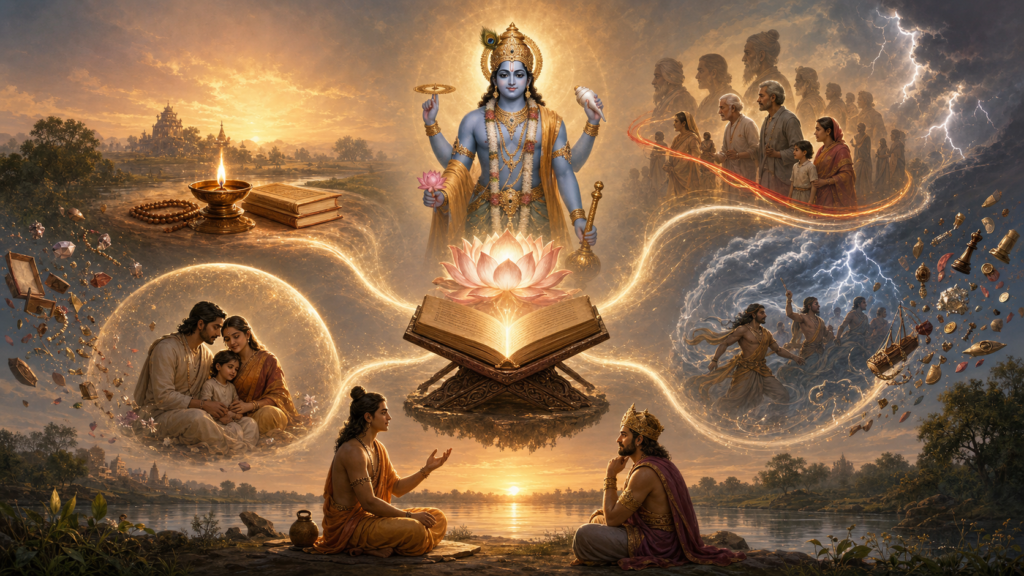
“Manasa Snana” denotes purification through directed awareness: a contemplative, ethical, and devotional recollection that cleanses the mind. Practitioners visualize the sanctity of tīrthas, sacred rivers such as Ganga and Yamuna, and the cool clarity of pure waters, while aligning breath and attention with sattvic intent. This inner rite is grounded in the dharmashastras’ recognition that purity in Hinduism combines both outer conduct and inner disposition.
“Mantra Snana” focuses on the transformative power of Vedic sound, especially hymns from the Rig Veda. The water hymns (for example, Apo hi stha), purificatory mantras for ācamana, and select śānti mantras are traditionally recited to invoke clarity, consecration, and peace. Where water is accessible, practitioners may gently sprinkle or symbolically touch water while chanting; where it is not, the mantric utterance itselfperformed with attention, devotion, and correct intonationis regarded as purifying.
In practical terms, both practices can be approached through three steps: preparation (quiet posture, steady breath, and an ethical resolve), invocation (visualizing sacred waters for “Manasa Snana” or reciting Rig Vedic mantras for “Mantra Snana”), and integration (offering gratitude and maintaining mindful conduct after the rite). This rhythm allows daily lifework, travel, caregivingto harmonize with a living sādhanā that upholds dignity and dharma even under constraints.
These purificatory modes reflect a broader Hindu way of life in which purity is not a mere external requirement but an inner state cultivated through remembrance, devotion, and right action. They also demonstrate how Vedic traditions balance principle and practicality: when śarīra-śuddhi (bodily cleanliness) is not feasible, citta-śuddhi (purity of mind) is carefully safeguarded through visualization and mantra.
In the wider dharmic family, resonances are evident. Buddhism emphasizes mindful presence and metta that refine intention; Jainism upholds inner purification through pratikraman and restraint; Sikh traditions cultivate simran and Nitnem that center consciousness in the Divine. Across Hinduism, Buddhism, Jainism, and Sikhism, the axis of inner remembrance, ethical clarity, and sacred recitation affirms a shared pursuit of purity, compassion, and unity.
When practiced regularly, “Manasa Snana” and “Mantra Snana” can steady emotions, reduce anxiety, and realign conduct with dharma. They prepare the mind for pūjā, japa, study of scriptures, and daily responsibilities, while nurturing reverence for life and a calm, service-oriented outlook.
It is important to note that these are not intended to replace ordinary hygiene when bathing is reasonably possible. Rather, they are sanctioned, compassionate provisions within the dharmashastras for exceptional circumstances, highlighting that intention (bhāva), remembrance (smṛti), and right action (dharma) are central to authentic purity.
Inspired by this post on Hindu Blog.