Shivaratri Jāgaraṇa, the intentional night-long vigil, stands at the heart of Shivaratri Vrat. In the classical understanding of Hindu rituals, Jāgaraṇa is not simply the act of avoiding sleep; it is a conscious discipline of wakefulness aligned to the spiritual arc of the night. Devotees sustain attentive awareness through mantra, dhyāna, and Shivalinga Puja, allowing the mind to transition from tamas (inertia) to sattva (clarity). This practice reaches its most profound expression on Maha Shivaratri, when communities across regions assemble to contemplate the mystery of Śiva as the boundless, formless reality.
Maha Shivaratri occurs on Krishna Paksha Chaturdashi in the lunar month of Phalguna (or Magha in certain regional calendars). Tradition regards this nocturnal threshold as auspicious for inner stillness: the lunar phase symbolically diminishes external restlessness, and the final night before amavasya invites depth of introspection. In many temples and homes, the night is divided into four yāmas or prahars, each dedicated to distinct forms of Rudrābhiṣeka and mantra-japa. The liturgical rhythm of the night steadily guides awareness inward, culminating around midnight with the contemplation of Lingodbhava.
As described in the Shiva Puranam and the Linga Puranam, Lingodhbhavam (also rendered Lingodbhava) narrates the emergence of Śiva as an infinite column of light. When a dispute arose between Brahmā and Viṣṇu regarding supremacy, an endless jyotir-stambha appeared. Viṣṇu sought its base and Brahmā its summit, yet neither limit could be found. Śiva then revealed the teaching: ultimate reality transcends all measures and forms. The linga, literally a “mark” or sign, functions as the aniconic symbol of that formless absolute. In this sense, Lingodbhava is not merely a story but a theological axiom about the unbounded nature of the Divine.
The symbolic depth of Lingodhbhavam illuminates the purpose of Jāgaraṇa. To remain awake is to bear witnessinternally and rituallyto the arising of knowledge that has no edges. In Advaita-oriented readings, the linga points to Brahman, beyond nāma-rūpa (name and form); in devotional frameworks, it reveals Śiva as the compassionate, self-revealing ground of being. Both perspectives converge on the same experiential insight affirmed on Shivaratri night: consciousness, when quieted and clarified, intuits the limitless.
Ritually, Shivaratri night follows a precise sacral architecture. After sankalpa and preliminary purification, Shivalinga Puja unfolds through successive abhiṣekas during the four prahars. Offerings commonly include water, milk, curd, honey, and ghee (panchamrita), as well as bilva leaves, which Purāṇic literature extols for their capacity to please Śiva. Each prahar emphasizes mantras such as Om Namah Shivaya and Vedic hymns to Rudra, allowing mantra-śakti and the sensory symbolism of abhiṣeka to operate together. The cumulative effect is meditative absorption that matures across the night.
The practice of Jāgaraṇa is also a disciplined sādhanā of attention. Rather than mere wakefulness, it calls for luminous wakefulness: refined breath, softer speech, and steady mindfulness. Breathing naturally lengthens and quiets during long mantra-japa, which supports dhyāna. Classical yoga texts link this integrated attention to pratyāhāra and dhāraṇā, stages where mental noise recedes. Contemporary contemplative research similarly observes that sustained meditative attention enhances emotional regulation and cognitive clarityinsights that resonate with the traditional promise of Shivaratri: inner steadiness and ethical renewal.
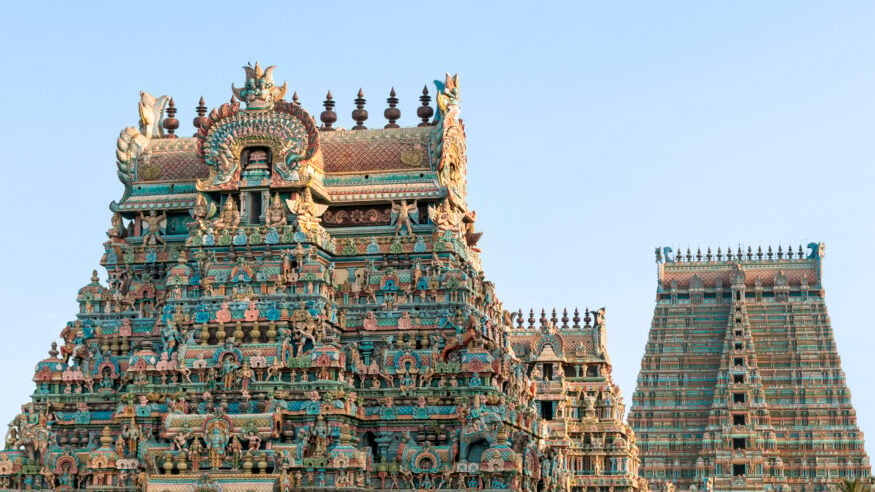
Many South Indian temples mark the ritual apex of the night with Lingodbhava Kalam, a midnight moment devoted to reenacting the emergence of Śiva as light. Temple iconography often includes the Lingodbhava mūrti on sanctum walls, visually encoding the Purāṇic teaching within the sacred space. The accompanying abhiṣeka and alankāra symbolize the devotee’s consent to an inward revelation: when the mind yields its search for beginnings and ends, awareness meets the boundless.
Fasting (upavāsa) during Shivaratri Vrat supports this subtle work. Traditions vary from nirjala (without water) to phalahāra (fruits and light foods), with a shared emphasis on simplicity, non-violence (ahimsa), and truthfulness (satya) throughout the vow. The vrata is ultimately ethical as well as ritual: restraints on speech, generosity (dāna), and forgiveness toward others are encouraged to keep the night sattvic. Practitioners commonly report that such intentional simplicity stabilizes attention and deepens mantra resonance across the vigil.
Bilva (Aegle marmelos) receives special prominence in Shivalinga Puja. Classical sources present bilva as botanically and symbolically auspicious; its tripartite leaf resonates with multiple triads in Shaiva thought (e.g., icchā, jñāna, kriyā). Offering bilva during abhiṣeka is therefore more than custom; it is a mindful articulation of doctrine through ritual gesture. In many households, the careful selection and gentle placement of bilva leaves become moments of quiet instruction for younger generations in the science of worship.
Beyond ritual specifics, Shivaratri Jāgaraṇa addresses an existential challenge: the tendency of consciousness to drift into habitual dullness. The night vigil asserts that wakefulness can be trained, and that such training, when conjoined with devotion and knowledge, reorients a life. While unstructured sleep loss is detrimental, a carefully guided vigil, anchored in dhyāna and mantra, functions as a contemplative retreat concentrated into a single sacred night. The outcome sought is not exhaustion, but a clarified morning mind and a gentler heart.
This observance also resonates with allied dharmic traditions in ways that enrich interfaith understanding. Buddhist communities uphold Uposatha vigils for purification and meditation, Jain traditions emphasize tapas, pratikraman, and night-long reflection during sacred periods, and Sikh congregations often gather for extended simran and kirtan. These parallel disciplines witness to a shared civilizational intuition: sustained, ethical, and mindful wakefulness can transform the inner life. Framed in this spirit, Shivaratri fosters unity among the dharmic paths, honoring their distinctive practices while celebrating common aspirations for compassion, wisdom, and liberation.
For householders, the vrata can be adapted without diluting its essence. Some observe all four prahars with full abhiṣeka; others chant through the night with intervals of silent sitting. Those with health constraints may adopt moderated fasting while preserving the vigil’s contemplative core. Parents often engage children with simple narratives of Lingodhbhavam and gentle mantra practice early in the evening, modeling devotion as joy rather than compulsion.
Devotees frequently recount a palpable stillness at midnighta quiet convergence of sound and silence, ritual and realization. In that hush, the Lingodbhava teaching becomes intimate: what seemed infinite and distant reveals itself as precisely present. By dawn, arati and prasad close the vrata, yet the night’s intent continues into daily conductmore measured speech, steadier attention, and a renewed commitment to ahimsa and satya. In this way, Shivaratri Jāgaraṇa is not an isolated festival but a living pedagogy for ethical and contemplative life.
In sum, Shivaratri Jāgaraṇa and Lingodhbhavam together articulate a complete path: scriptural vision (śāstra), ritual precision (kriyā), contemplative depth (dhyāna), and ethical refinement (dharma). The vigil honors Śiva as the unbounded ground of awareness while training the mind to recognize that ground within. Observed with understanding and kindness toward oneself and others, this sacred night becomes a bridgeuniting communities, strengthening families, and illuminating the perennial quest for inner awakening.
Inspired by this post on Hindu Pad.